REVIEW · ISTANBUL
Turkey Higlights in 7 days
Book on Viator →Operated by Turkey Trips · Bookable on Viator
This week-long route strings together Turkey’s big icons with smart pacing. I love the Blue Mosque and Hagia Sophia combo for architecture fans, and you’ll also get a shot at a hot air balloon ride over Cappadocia’s otherworldly valleys. It’s a great way to see a lot without constantly figuring out tickets, transfers, and logistics.
The main thing to think about is the balloon ride: it’s not included and depends on good weather, so your plan may shift in Cappadocia.
In This Review
- Key points you’ll feel on the trip
- Why This Turkey Route Works (And Who It Fits)
- Day 1 in Istanbul: Airport Meet-Up and a Convenient Old City Home Base
- Day 2 in Istanbul: Sultanahmet Square to Topkapi Palace, Then the Grand Bazaar Maze
- Hippodrome of Constantinople (Sultanahmet Square)
- Blue Mosque (Sultan Ahmed Mosque)
- Topkapi Palace: Power, Wealth, and the Harem
- Hagia Sophia (Ayasofya): A Building That Changed Roles
- Basilica Cistern: Under Istanbul, With Medusa Heads
- Grand Bazaar: Shopping Time With a Real Purpose
- Day 3 in Cappadocia: Valleys, Villages, and One Big Underground Surprise
- Uchisar Castle: Fairy-Chimney Panoramas
- Kızılçukur Valley (Red Valley) for Sunset Vibes
- Çavuşin Village and Rock Churches
- Love Valley: The Classic Fairy-Chimney Walk
- Derinkuyu Underground City: Refuge Engineering
- Pigeon Valley: Quiet Views and Fertilizer History
- Day 4 in Cappadocia: Göreme Open-Air Museum and the “Icon” Valleys
- Göreme Panorama: Balloons in the Sky
- Göreme Open-Air Museum (UNESCO): Churches Carved into Rock
- Avanos Pottery Workshop: The Kızılırmak Clay Connection
- Devrent Valley (Imagination Valley)
- Paşabağları (Monk’s Valley) and Üç Güzeller
- Day 5: Ephesus, Virgin Mary’s House, and the Aegean Side of Ancient Power
- Ephesus Ancient City: The Big Feels Like a Big Deal
- Meryemana (House of the Virgin Mary)
- Temple of Artemis: One Wonder, Even in Remnants
- Isa Bey Mosque: A Smaller Stop With Craft Details
- Day 6: Pamukkale Travertines, Hierapolis Ruins, and Cleopatra Pool Float-Time
- Pamukkale Village Base
- Pamukkale Thermal Pools (Cotton Castle)
- Hierapolis Ancient City: Roman Spa City Ruins
- Cleopatra Pool: Warm Water Among Submerged Columns
- Day 7: Departure Transfers Back to Istanbul Airports
- Price and Value: What You’re Really Paying For
- Guide Quality and Small-Group Feel: Why It Matters
- Should You Book This 7-Day Istanbul–Cappadocia–Ephesus–Pamukkale Tour?
- FAQ
- FAQ
- What is the duration of the tour?
- Where does the tour start?
- Do you get airport transfers?
- Are entrance fees included?
- Are meals included?
- Are domestic flights included?
- Is the hot air balloon ride included?
- What hotels are included?
- How many people are in the group?
- What is the cancellation policy?
Key points you’ll feel on the trip
- Old City Istanbul base near Sultanahmet makes it easy to hit Hagia Sophia, Blue Mosque, and Basilica Cistern
- Guided history stops at Sultanahmet Square and Topkapi Palace, plus time in the Grand Bazaar
- Full Cappadocia day with classic valleys like Red (sunset), Love Valley, and underground-city exploring
- UNESCO-level scenery at Göreme Open-Air Museum and walking the surreal Pamukkale terraces
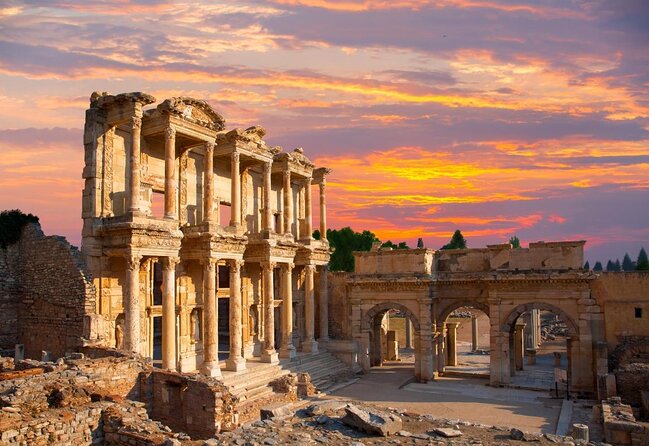
- Ephesus visit built around anchor sights like the Celsius Library and Great Theatre
- Support you can count on: strong English guidance mentioned by reviewers, including Dilek and Mr Erkan
Why This Turkey Route Works (And Who It Fits)
If you want Istanbul, Cappadocia, Ephesus, and Pamukkale in seven days, this tour is built for that exact goal. You’re not just checking boxes. The order makes practical sense: you start in Istanbul (easiest to settle in), then fly to Cappadocia for the rock formations and balloon timing, then head to the Aegean for ancient sites, ending with Pamukkale’s thermal terraces.
You’ll notice the tour also protects your time. Hotel transfers are included, major entrance fees are covered across the guided days, and your domestic flights between regions are part of the package. For many people, that turns Turkey from a research project into a vacation.
This is also a small-group style trip (max 15). That matters on long travel days, because you’re not trying to herd dozens of people through tight ruins, early viewpoints, and museum entrances.
You can also read our reviews of more tours and experiences in Istanbul
Day 1 in Istanbul: Airport Meet-Up and a Convenient Old City Home Base
Your first day is all about landing and getting set. The tour meets you at Istanbul Airport (IST) and also covers arrivals via Sabiha Gökçen (SAW). After pickup, you transfer to your hotel in the Old City near the Blue Mosque area. That location choice is more than a label—being close to Sultanahmet keeps your first big sightseeing day from feeling like a shuttle tour.
Day 1 includes free time, so you can handle jet lag, dinner timing (dinners are not included), and anything you forgot at the airport. Then you sleep in Istanbul and wake up ready for the core Byzantine-and-Ottoman sights.
Practical tip: on arrival day, keep your plans light. Your later days include multiple stops with guided time built in, and it’s easier if you arrive already thinking slow.
Day 2 in Istanbul: Sultanahmet Square to Topkapi Palace, Then the Grand Bazaar Maze
This is the day you’ll remember when you picture “historic Istanbul.” The itinerary strings together the top Sultanahmet-area anchors, and the sequence helps you understand how the city layered its eras.
Hippodrome of Constantinople (Sultanahmet Square)
You start at the Hippodrome area—now Sultanahmet Square—described as the social and political heart in Byzantine and Ottoman times. Even if much of the original structure is gone, the key monuments still make it click: the Obelisk of Theodosius, the Serpent Column, and the Walled Obelisk. This stop is valuable because it gives you context before you step into the “wow” buildings.
Blue Mosque (Sultan Ahmed Mosque)
Next comes the Blue Mosque, built between 1609 and 1616 under Sultan Ahmed I. The naming detail is memorable: more than 20,000 blue İznik tiles decorate the interior. It also runs as a functioning mosque with daily prayers, so the tour notes visitor timing and the need for modest dress.
This is one of those sights where timing matters. When you go outside prayer times, you can actually take in the space—courtyard, stained glass illumination, and the domes.


Topkapi Palace: Power, Wealth, and the Harem
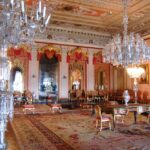
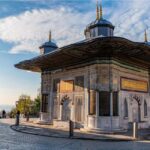
From worship to state power, you move into Topkapi Palace, the Ottoman administrative hub for nearly 400 years. The tour highlights several parts people usually rush past unless guided: the Imperial Treasury, the Harem, and the Chamber of Holy Relics. Even if you’re not a “palace person,” these rooms help explain how the empire ran—who lived where, and what objects symbolized authority.
Topkapi also gives you Bosphorus/Golden Horn views, which can be a breather between heavy history stops.
Hagia Sophia (Ayasofya): A Building That Changed Roles
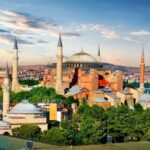
Then it’s Hagia Sophia—originally built in 537 AD as a Byzantine cathedral under Justinian I, later converted into a mosque, turned into a museum in 1935, and reconverted to a mosque in 2020. That alone is a strong reason to visit. You’re not just seeing one style—you’re watching a building adapt to centuries of change.
Basilica Cistern: Under Istanbul, With Medusa Heads
After all the grand surfaces, you go underground to the Basilica Cistern, a water reservoir from 532 AD. It’s huge, with hundreds of tall marble columns and an atmospheric setting created by the lighting and reflections. The stop also points out the Medusa Heads used as column bases, with their origins described as mysterious—one of those small details that makes the visit feel like a puzzle you can still enjoy.
Grand Bazaar: Shopping Time With a Real Purpose
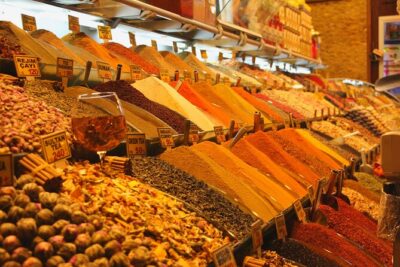
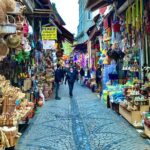
The day ends at the Grand Bazaar, one of the oldest covered markets in the world. The tour emphasizes what’s actually useful: it’s not one shop, it’s a whole maze of domed streets and courtyards, with thousands of stalls. You get about an hour, which is perfect for orientation and browsing—not perfect for thorough shopping.
If you enjoy markets, this is where you’ll want to slow down for a few minutes and just look at materials: jewelry, textiles, ceramics, carpets, spices, and antiques all show up here.
Day 3 in Cappadocia: Valleys, Villages, and One Big Underground Surprise
You fly to Cappadocia after Istanbul. The next day is shaped like a “see it, hike it, and explore it” sampler—some stops are photo time, others are more active.
Uchisar Castle: Fairy-Chimney Panoramas
You begin with Uçhisar Castle, carved into volcanic rock and topped with panoramic views of valleys and fairy chimneys. This is a great “first sight” stop because you instantly understand the terrain you’ll spend the rest of your time in.
Kızılçukur Valley (Red Valley) for Sunset Vibes
Next comes Kızılçukur Valley, known for red and pink rock formations, especially at sunset. The tour notes a roughly two-hour walk through trails with fairy chimneys, churches, and vineyards. This stop is where you trade big-ticket sights for the kind of scenery that stays in your memory because it feels personal and slow.
Çavuşin Village and Rock Churches
Then you hit Çavuşin, a village with rock-carved houses and churches. The highlight mentioned is the Church of St. John the Baptist with frescoes dating to the 5th century. Even if you don’t read every wall label, the village setting helps you see how people lived with the landscape.
Love Valley: The Classic Fairy-Chimney Walk
Love Valley is next, famous for eroded rock formations that look like tall fairy chimneys. The stop is shorter, but it pairs well with balloon thinking—because Love Valley’s shapes are the kind you want in your photo memory when you later see balloons overhead.
Derinkuyu Underground City: Refuge Engineering
Then comes the big turn: Derinkuyu Underground City. The tour describes it as one of the largest and deepest underground cities, built in the 8th–7th centuries BCE era (as stated), and potentially housing up to 20,000 people with livestock. You’ll see multiple levels and features like chapels, storage, kitchens, and a ventilation system.
This is a stop that feels like science mixed with survival. If you like ingenuity, you’ll get a lot out of it.
Pigeon Valley: Quiet Views and Fertilizer History
Finally, Pigeon Valley ties into a clever historical detail: carved pigeon houses used over centuries, with droppings used as fertilizer. The hike is short and scenic, and it connects Göreme to Uçhisar, so the geography matters even on a brief stop.
Day 4 in Cappadocia: Göreme Open-Air Museum and the “Icon” Valleys
If Day 3 is about variety, Day 4 leans into “this is why Cappadocia is Cappadocia.”
Göreme Panorama: Balloons in the Sky
The day starts at Göreme Panorama, a viewpoint over fairy chimneys and valleys. The tour notes balloon dots in the early morning sky, which makes this stop feel like a warm-up for balloon dreams—whether or not you book the ride.
Göreme Open-Air Museum (UNESCO): Churches Carved into Rock
Then you visit the Göreme Open-Air Museum, described as UNESCO and loaded with rock-cut churches and frescoes from the 10th–12th centuries. The tour calls out churches like the Dark Church, Apple Church, and Snake Church. Those names make it easier to remember what you saw and why it mattered.
This stop is where you’ll appreciate having a guide, because frescoes and architectural details are easy to miss if you’re wandering without context.
Avanos Pottery Workshop: The Kızılırmak Clay Connection
Next is Avanos, known for pottery that uses red clay from the Kızılırmak River. The tour mentions workshops and, in many studios, hands-on pottery making. Even if you don’t make anything, you’ll see the craft chain—material, technique, and the designs tied to the region.
Devrent Valley (Imagination Valley)
Then comes Devrent Valley, also known as Imagination Valley, with whimsical rock formations shaped over millennia by wind and water erosion. The fun here is that it’s less about churches and more about shapes—camel, dolphin, and even face-like forms.
Paşabağları (Monk’s Valley) and Üç Güzeller
Finally, you reach Paşabağları (Monk’s Valley) for the famous mushroom-shaped fairy chimneys, some linked to rock-cut chapels and dwellings. Then there’s Üç Güzeller (Three Beauties), the iconic three conical chimneys near Ürgüp.
This pairing works well because you go from one surreal viewpoint to another, with no need to guess which spot is the “postcard one.”
Day 5: Ephesus, Virgin Mary’s House, and the Aegean Side of Ancient Power
After Cappadocia, you transition toward the Aegean. Day 5 is focused on Ephesus and nearby religious sites, with a careful mix of archaeology and pilgrimage history.
Ephesus Ancient City: The Big Feels Like a Big Deal
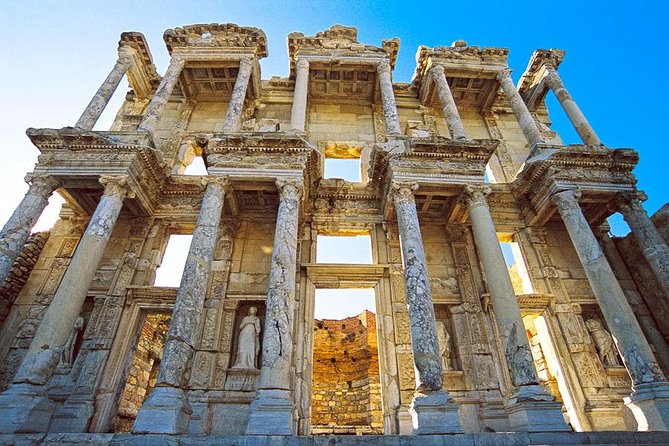
You get Ephesus Ancient City, described as one of the most significant and well-preserved archaeological sites in the Mediterranean region. You’ll understand Ephesus as a trade and religious center, then see specific anchors:
- the Temple of Artemis (not much remains, but the scale and importance are the point)
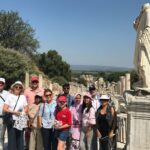
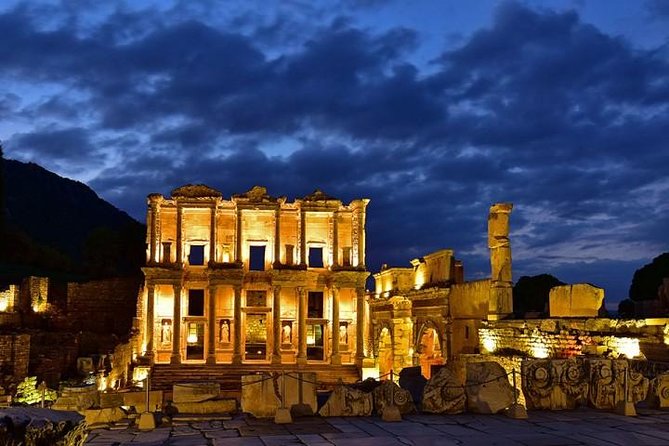
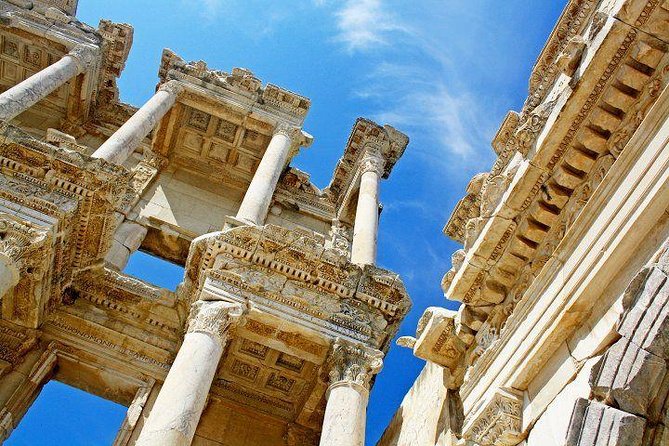
- the Celsius Library façade
- the Great Theatre, seating up to 25,000 and used for performances and gladiator contests
- the Agora as the market center
This is the kind of site where a guide can make it snap into place. The layout matters, and having someone explain what each building was for makes your photos feel smarter.
Meryemana (House of the Virgin Mary)
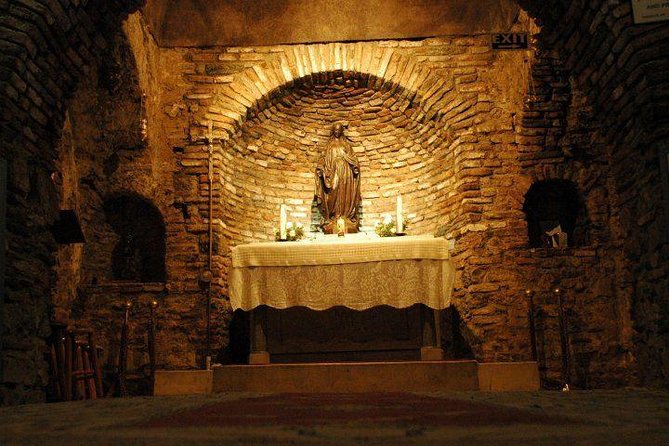
Next is the House of Virgin Mary (Meryem Ana Evi) near Ephesus in Selçuk. The tour presents the Christian tradition that this was Mary’s final residence and also notes that Islam considers it sacred too. You’ll explore a modest stone structure on a hillside and see an area where people tie cloth pieces on the wishing wall.
Even if you’re not religious, the setting is quietly beautiful and gives you a different lens on the same landscape.
Temple of Artemis: One Wonder, Even in Remnants
The tour revisits Temple of Artemis with the stated numbers: built around 550 BCE and dedicated to Artemis, with a huge footprint and lots of columns originally. The attraction here is understanding the ambition—even if only remnants survive.
Isa Bey Mosque: A Smaller Stop With Craft Details
Last in the Ephesus region is Isa Bey Mosque in Selçuk, built in 1375 by Isa Bey. The tour describes stone and brick construction, a Seljuk/Ottoman style blend, and features like a carved courtyard entrance gate, mihrab, calligraphy, plus an imposing dome and minaret.
This stop is short compared to Ephesus, but it’s the kind of place where you can appreciate craftsmanship up close without heavy crowds.
Day 6: Pamukkale Travertines, Hierapolis Ruins, and Cleopatra Pool Float-Time
Pamukkale is a “white terraces” destination, but what makes it special is how the day is planned. You get both the signature walk and the thermal break.
Pamukkale Village Base
You start near Pamukkale Village, positioned as a more authentic, quieter base than the tourist-heavy areas. That’s a practical win: fewer crowds right where you’ll pause, eat, and reset between sightseeing blocks.
Pamukkale Thermal Pools (Cotton Castle)
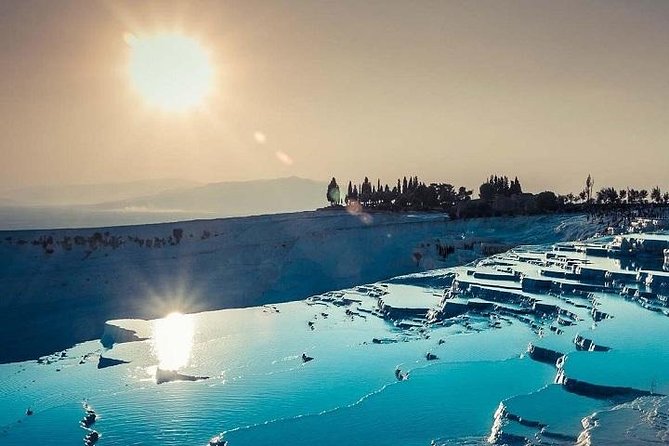
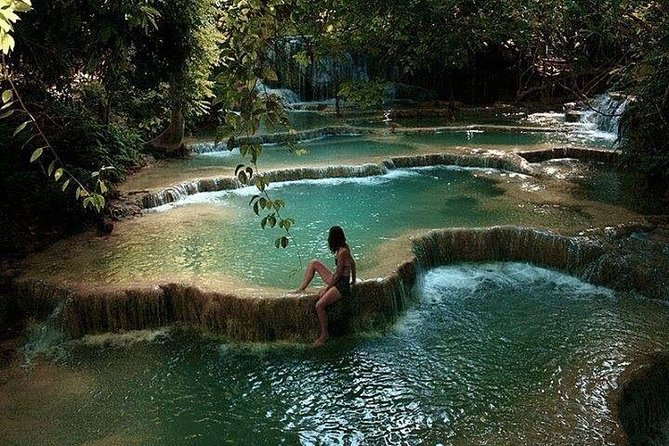
Then you step into the heart of it: Pamukkale Thermal Pools, the Cotton Castle. The tour explains that calcite-laden thermal waters flow from the top and create white deposits over thousands of years. You’ll walk barefoot on the terraces and also relax in warm pools, plus explore nearby ancient ruins at Hierapolis.
This is one of the rare stops where your body gets involved. Plan to slow down, take off footwear only when you’re told, and give yourself time to adjust to the mineral heat.
Hierapolis Ancient City: Roman Spa City Ruins
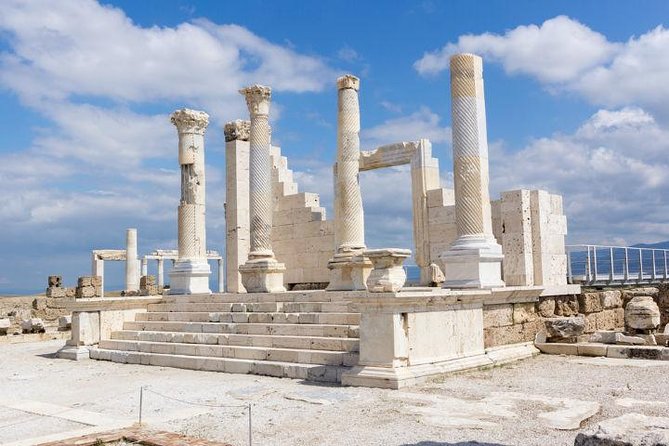
Next is Hierapolis Ancient City, described as a well-preserved Roman spa town with ruins like the Roman Theatre, Temple of Apollo, Nymphaeum, Agora, city walls, and a major necropolis. The stop also links the city’s hot springs to the continuation of bathing traditions, which sets up the next highlight.
Cleopatra Pool: Warm Water Among Submerged Columns
Finally you do Cleopatra Ancient Pool, set in a garden with ruins, including submerged columns and fallen marble stones. The tour notes the legend of Cleopatra and Mark Antony and encourages the experience of floating in the mineral-rich warm water among the remains.
Even if the legend isn’t your main focus, it’s still a unique way to end a history-heavy week with something physical and relaxing.
Day 7: Departure Transfers Back to Istanbul Airports
Your final day is straightforward: transfer to the airport about 4 hours before your flight. The tour covers both IST and SAW routes for airport drop-off. It’s a good buffer, especially if you’re navigating traffic and bag checks after a full week.
Price and Value: What You’re Really Paying For
At $2,315.20 per person, the headline price looks high. But this package isn’t just “a few guided tours.” It’s:
- round-trip flights included (with taxes)
- 3 domestic flight tickets with stated baggage allowance (15kg + 8kg handbag)
- 6 night hotel stays
- guided days with transport, guide, lunch, breakfast, and entrance fees
- airport transfers
When you price it out as a DIY plan, the expensive part is usually the same things this tour bundles: flights between regions, hotels for six nights, and guided entry into major sites that otherwise eat hours.
The one cost that may still hit your budget: the hot air balloon ride, since it’s not included and is paid in Cappadocia if you want it. If you care deeply about ballooning, factor that extra line item early.
Also note the tour includes lunch and breakfast, but dinners and drinks are not included. That means you’ll still make at least a couple choices each night—though it also keeps you flexible to eat local when you find something you like.
Guide Quality and Small-Group Feel: Why It Matters
Two things show up clearly in feedback: strong communication and clear English guidance. One reviewer specifically praised Dilek for being very expressive in English and for being familiar with history and practical arrangement matters. Another praised Mr Erkan and his team and mentioned hospitality and support even after the trip.
That kind of guidance matters most on days like Ephesus and Istanbul, where you’re surrounded by fragments and need help connecting the dots fast. A small group (max 15) also helps you avoid that “everyone is lost” feeling at each new site.
Should You Book This 7-Day Istanbul–Cappadocia–Ephesus–Pamukkale Tour?
Book it if you want a structured week that covers Istanbul’s major landmarks, Cappadocia’s signature valleys and museum, Ephesus’s top ruins, and Pamukkale’s terraces and thermal pool—without having to plan every transfer and ticket day by day.
Skip (or at least think twice) if you’re the type who wants full control of your pace. This route is packed with sights, and the thermal and balloon parts are tied to weather. Also, ballooning is extra, not included, so your budget needs room for that decision.
If you’re traveling with a realistic expectation—see a lot, learn a lot, and take breaks where the itinerary allows—you’ll probably find this is one of the more efficient ways to experience Turkey highlights in seven days.
FAQ
FAQ
What is the duration of the tour?
It’s approximately 7 days, covering Istanbul, Cappadocia, Ephesus, and Pamukkale.
Where does the tour start?
It starts with an airport meet-up in Istanbul, with transfers to a hotel in the Blue Mosque/Old City area.
Do you get airport transfers?
Yes. Airport transfers are included, and drop-off is scheduled about 4 hours before your flight on the final day.
Are entrance fees included?
Yes. Entrance fees are included as part of the guided tour days.
Are meals included?
Breakfast is included for 5 days and lunch is included for 5 days. Dinners and drinks are not included.
Are domestic flights included?
Yes. The tour includes 3 domestic flight tickets with taxes and baggage allowance (15kg checked + 8kg handbag).
Is the hot air balloon ride included?
No. The balloon ride is not included. If you want it, you pay for it in Cappadocia.
What hotels are included?
The tour includes 6 nights of hotel stays, but specific hotel names are not provided in the information given.
How many people are in the group?
The tour has a maximum of 15 travelers.
What is the cancellation policy?
You can cancel for a full refund up to 24 hours in advance. The experience requires good weather, and if it’s canceled due to poor weather, you’ll be offered a different date or a full refund.