REVIEW · ISTANBUL
Istanbul: Turkish Tile Painting & Ceramic Workshop w/ Snacks
Book on GetYourGuide →Operated by Istanbul Workshops · Bookable on GetYourGuide
Three hours of paint, tea, and Turkish patterns. You’ll paint a tabak ceramic plate with a master artist, and I love the calm coaching from instructors like Zeynep, plus the unlimited tea, coffee, and handmade cookies. One consideration: the workshop may end up on the Asian side, so plan for getting there and back.
This is a beginner class with real technique. You’ll get authentic tools and colors, learn how Turkish tile design works, then leave with your finished piece—securely bubble-wrapped for luggage. The meeting point is at Merhaba Pastaneleri Sirkeci, outside the entrance under the vintage signboard.
In This Review
- Key things to know before you paint
- Why this Istanbul workshop is more than a souvenir shop
- Meeting at Sirkeci and the Asian-side reality check
- The 3-hour flow: from motifs to your finished tabak
- 1) First instructions and picking your design
- 2) Painting with authentic tools and colors
- 3) Finishing and getting ready to travel
- The best part: patient teaching (and people who actually stick with you)
- Tea, coffee, and handmade cookies are not a minor detail
- Your take-home souvenir: tabak you actually made
- Price and value: why $31 can actually make sense
- Who should book this workshop, and who might not love it
- Practical tips to get the most out of your tabak painting
- Should you book this tile painting workshop?
- FAQ
- How long is the Istanbul Turkish tile painting workshop?
- Do I need any prior art or painting experience?
- What souvenir do I take home?
- Are drinks and snacks included?
- Will the workshop provide painting materials and tools?
- How will my ceramic plate be packed for travel?
- Where do I meet the guide?
- Is hotel pickup and drop-off included?
- What languages is the instruction offered in?
- Is the workshop on the European or Asian side of Istanbul?
- Is there free cancellation or reserve-and-pay-later options?
Key things to know before you paint
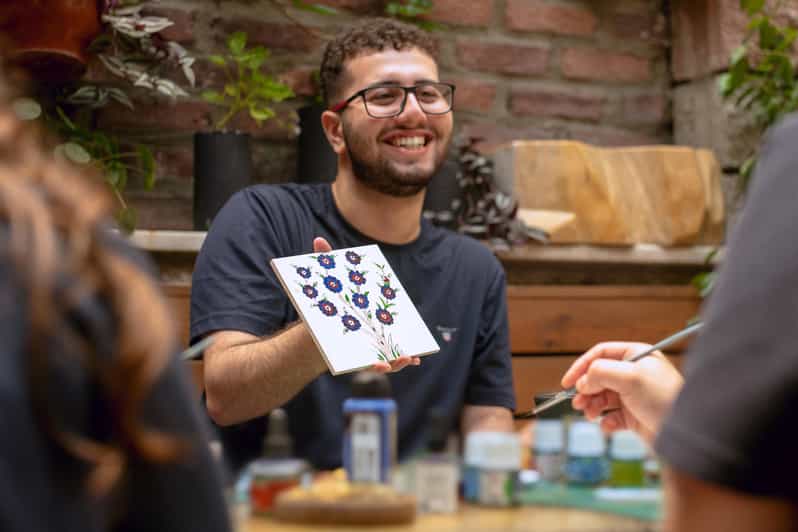
- Hands-on tabak plate: you leave with a custom ceramic souvenir you painted yourself
- Master-level instruction: led by a local artist with a master’s degree in art history
- Unlimited tea and local snacks: Turkish tea, coffee, water, plus handmade cookies
- Pick a motif or invent your own: classic Turkish designs are available, but you’re not stuck
- Take-home safety is built in: your finished plate is bubble-wrapped for travel
- Language support: instruction is offered in English and Turkish
Why this Istanbul workshop is more than a souvenir shop
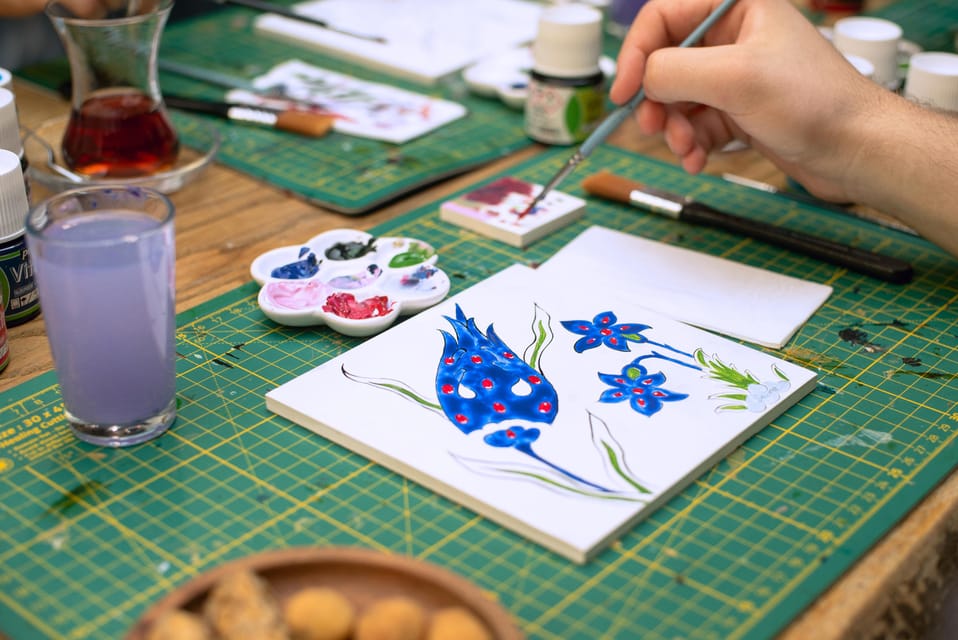
If you’ve ever bought a ceramic in Istanbul and then wondered whether you could have made it, this workshop answers that question. It’s not just “paint this shape.” You’re taught how Turkish tile and ceramic patterns are constructed, what to focus on while painting, and how to get a clean, readable design on your own plate.
Two things make it feel especially worthwhile. First, the instruction is patient and practical—people specifically mention instructors like Zeynep (and also assistants such as Isra) stepping in to guide the progress, not just handing over supplies. Second, the class has a low-pressure rhythm. You’ll be painting for three hours, but you also get time to chat, sip tea, and slow down from Istanbul walking mode.
A final note: this is a short, friendly art session with strong hospitality, not a big cultural lecture. You’ll learn while you create, which is why it works so well even if you’re not “an art person.”
You can also read our reviews of more tours and experiences in Istanbul


Meeting at Sirkeci and the Asian-side reality check
You meet at a historic building in Sirkeci at Merhaba Pastaneleri Sirkeci. Your guide waits outside the entrance. That part is straightforward.
Here’s the logistical twist to take seriously. Multiple experiences mention that after booking, they were contacted that the workshop location is actually on the Asian side of Istanbul, and guides helped with transport (often by assisting you to reach the workshop via metro). In at least one case, the return timing created inconvenience because it was around rush hour.
So what should you do with that information? Keep your plans flexible around the three-hour window, and be ready for the possibility that you’ll cross to the Asian side even though you meet on the European side. If you’re the kind of person who hates surprises, message the organizer ahead of time with one simple question: confirm the exact workshop address and how you’ll get there from Sirkeci.
The 3-hour flow: from motifs to your finished tabak
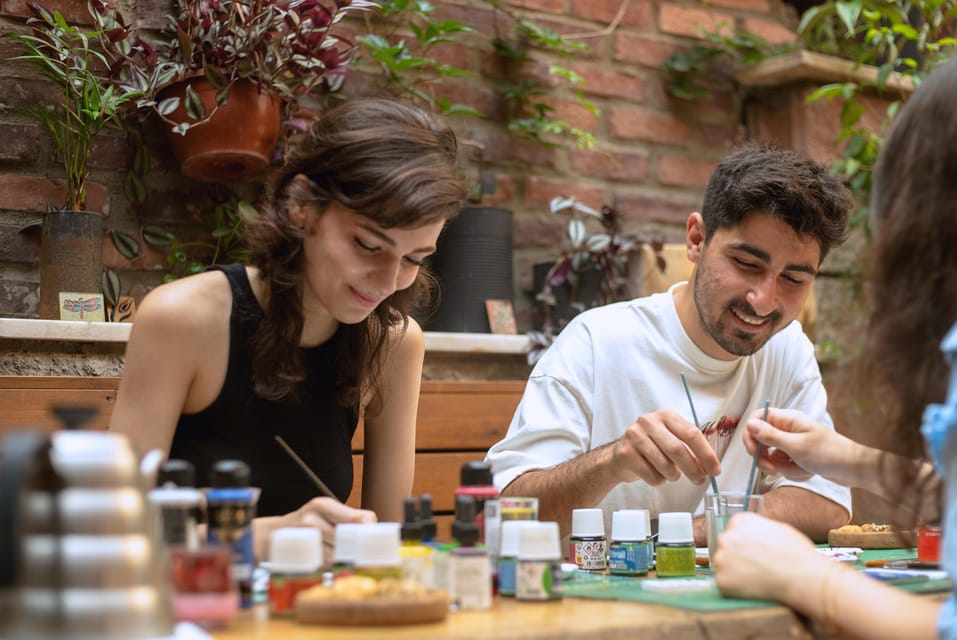
The workshop runs about three hours, and you’ll feel that time as a complete creative loop: settle in, learn the method, paint, and then wrap up with a take-home souvenir.
1) First instructions and picking your design
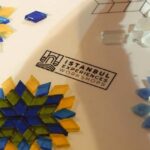
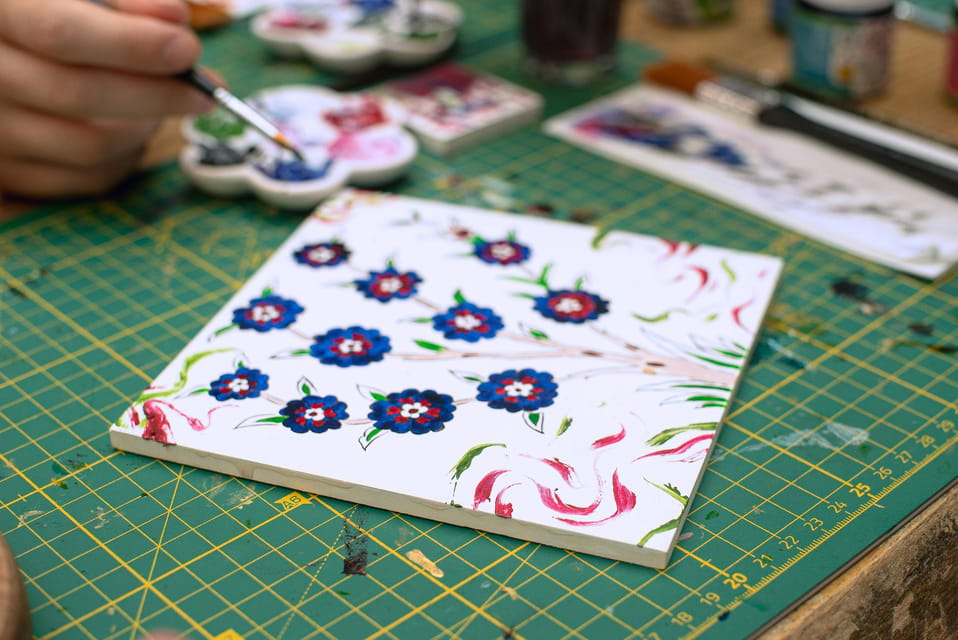
You’ll start with a guided introduction to Turkish tile painting techniques and how traditional patterns are meant to read visually. You can choose a classic Turkish motif, or you can paint whatever comes to mind. That freedom matters. It means you’re not forced to copy a design perfectly, and you can still end up with something that feels personal.
The instruction is offered by a local artist with a master’s degree in art history. Even when the focus is practical, that background tends to show up in how they explain the “why” behind the look—why certain patterns repeat, how symmetry affects the feel, and how to keep your lines controlled.
2) Painting with authentic tools and colors
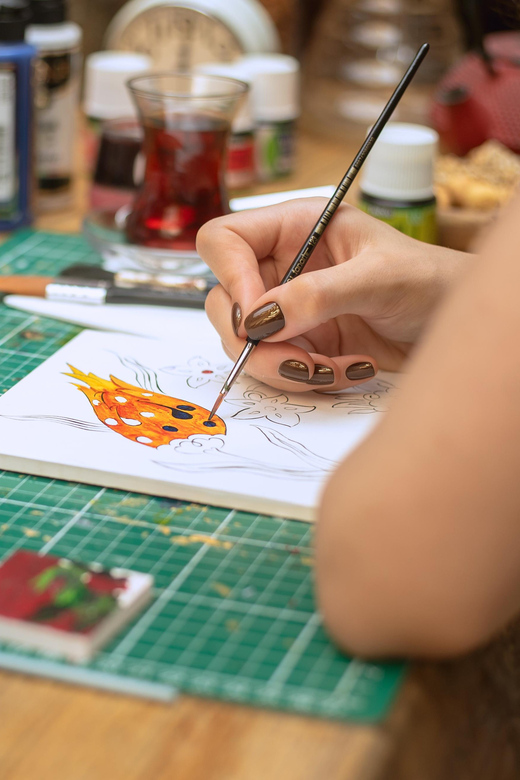
You’re provided high-quality paints, traditional tools, and all workshop materials. This is a key value point: you’re not paying for a generic craft. The class is set up so you can actually apply the techniques you’re learning.
You’ll work at your own pace, and instructors help when you get stuck—people mention getting advice on how to progress with their painting and solutions when needed. One of the nicer details is the social care during the session: staff and guides regularly check in, offer more tea or coffee, and keep the atmosphere relaxed.




3) Finishing and getting ready to travel
At the end, your ceramic plate is securely bubble-wrapped so it survives the trip home. That bubble-wrapping is part of the deal, not an optional add-on.
Some people also reported a framed finish in their particular session, but the consistent promise in the workshop description is the plate being packaged safely for luggage. Either way, you should treat the “final minutes” as your safeguard: don’t assume it’s packed well unless you see it wrapped and secured.
The best part: patient teaching (and people who actually stick with you)
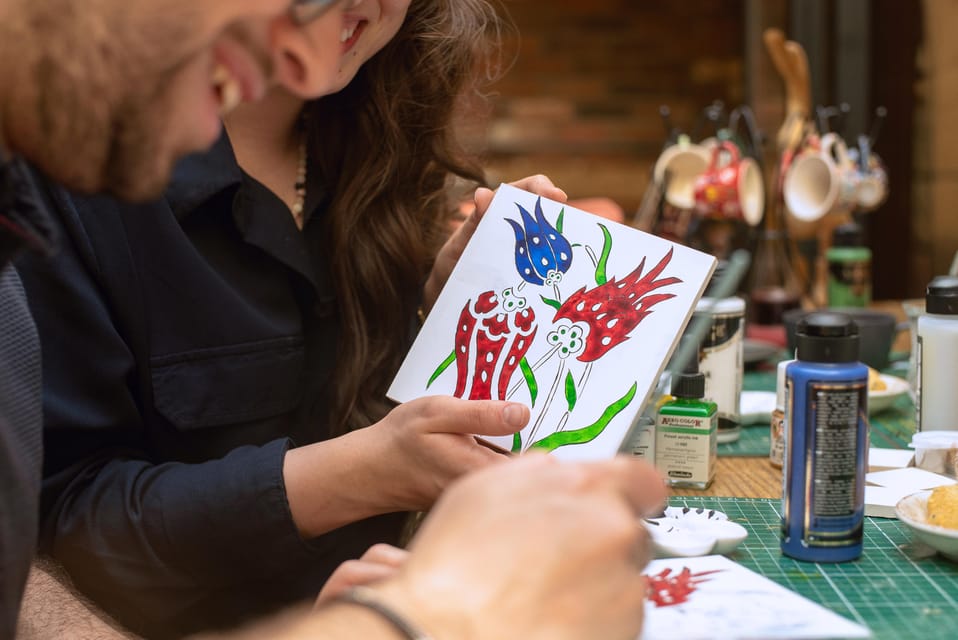
This is the workshop type where the difference between “fun” and “great” often comes down to the instructor’s style. Here, that seems to be a standout.
In multiple experiences, guides are described as patient and helpful, with names like Zeynep and Seyma showing up repeatedly. There are also mentions of a senior artist figure named Mustafa and an assistant named Isra who kept offering tea, coffee, and biscuits while checking on the student’s progress.
What that adds up to for you:
- You get real guidance on what to do next, not just a quick demo.
- You can go slow without feeling embarrassed.
- Beginners can succeed because they’re coached through the steps.
And yes, it’s also just pleasant company. If you like chatting while you work—about Istanbul, about art, about everyday life—this class gives you that time in a controlled setting.
Tea, coffee, and handmade cookies are not a minor detail
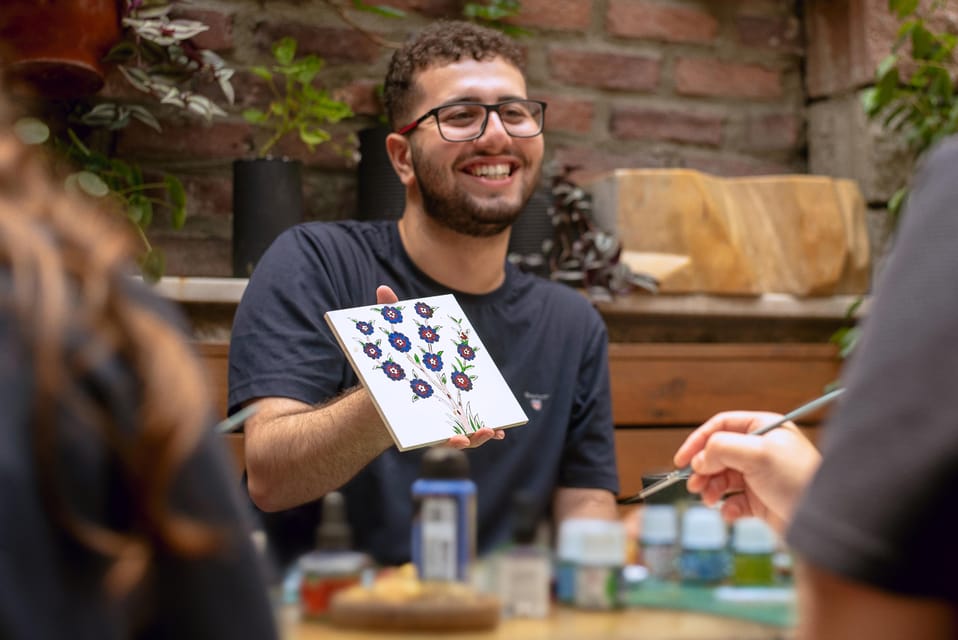
You’re served unlimited Turkish tea and coffee, plus water, along with handmade local cookies. That matters more than it sounds.
First, it keeps the workshop from feeling like a “classroom purchase.” It feels like a small studio hangout where you’re allowed to take a break, reset your hands, and keep going. Second, it makes the three hours comfortable even if you’re tired from sightseeing earlier in the day.
If you’re sensitive to sweet drinks, still take a sip—just don’t overdo it right before you paint. But overall, the snack-and-tea setup is part of what makes the experience land as relaxing rather than rushed.
Your take-home souvenir: tabak you actually made
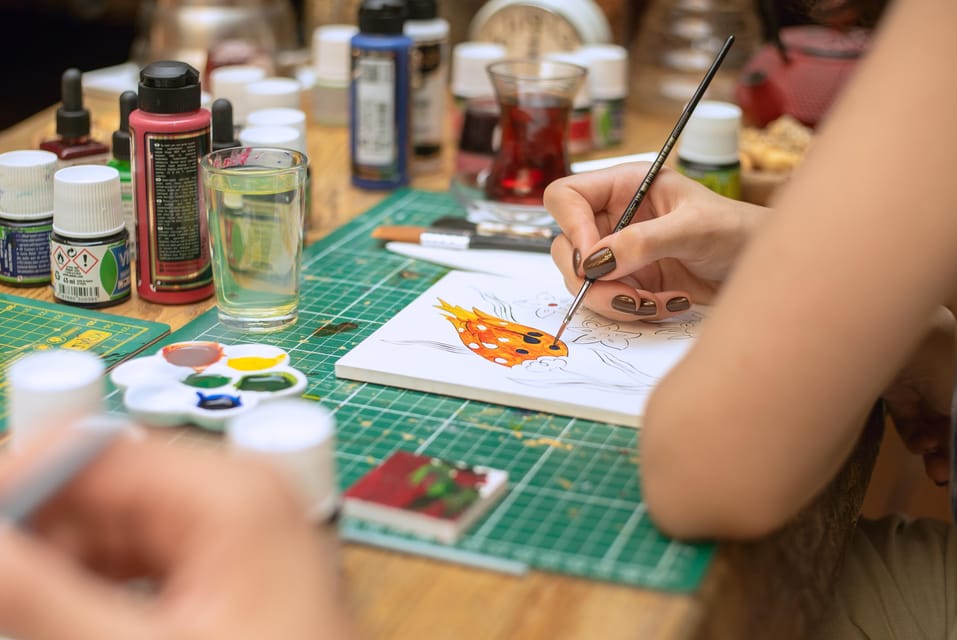
The souvenir is the point, but it’s the kind of point that can go wrong. Cheap craft workshops often leave you with something fragile, generic, or uncomfortably hard to transport.
Here, you paint a ceramic plate called a tabak, and you take it home. You’re also given secure bubble-wrap packaging for safe travel in your luggage. That packaging detail is one of the reasons this experience earns strong recommendations: you don’t have to invent your own packing solution.
One more thing you’ll appreciate when you’re back home: this isn’t a sticker or a magnet. It’s a piece that has your choice of motif, your own brush decisions, and your own learning story. It’s the kind of souvenir that sparks a quick conversation every time you put it on a shelf.
Price and value: why $31 can actually make sense
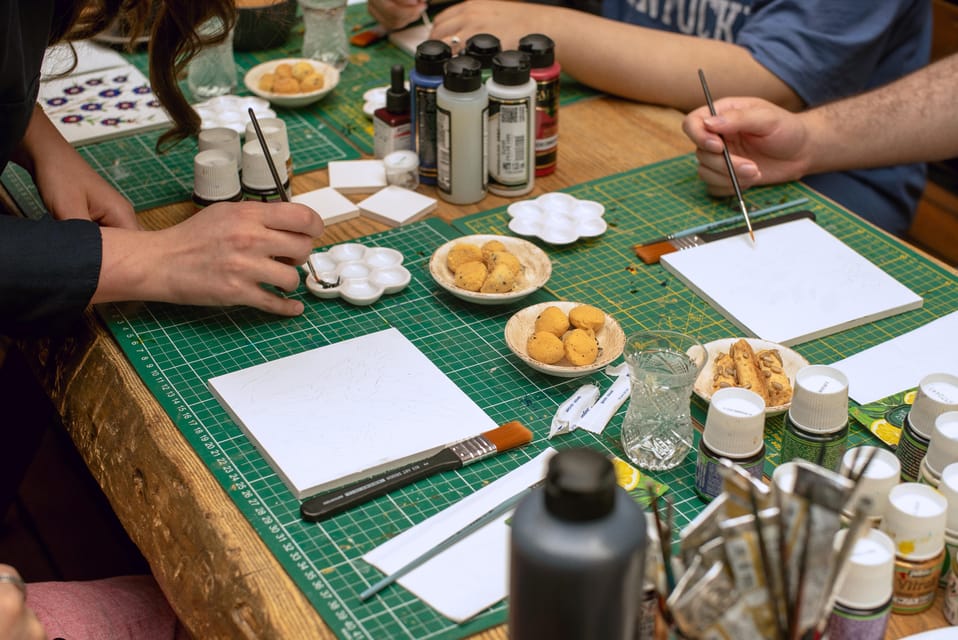
At about $31 per person for a three-hour guided workshop, the value here is fairly clear—because your money covers a lot of practical stuff, not just “access.”
You get:
- expert instruction from a local artist
- a ceramic plate (tabak) to paint and keep
- high-quality paints and traditional tools
- secure bubble-wrap packaging
- unlimited Turkish tea, coffee, and water
- handmade cookies
- history and context while you work
- a verified certificate of completion
If you compare that to the cost of buying a ceramic souvenir alone, the math starts looking decent fast—especially because you’re not only buying an item. You’re buying instruction, materials, time, and a souvenir that’s uniquely yours.
Possible drawback on the value side: if transport ends up being more complicated than you expected (especially due to the Asian-side location), your real “cost” becomes time and hassle. The art part is still good—but if you hate crossing sides of the city for one activity, factor that in.
Who should book this workshop, and who might not love it
This workshop is a strong fit if:
- you want a hands-on cultural activity, not just photos and walking
- you like beginner-friendly classes where people help you finish confidently
- you want a practical souvenir that’s made by you
- you appreciate a relaxed, tea-and-snacks studio vibe
It might be less ideal if:
- you have very strict time limits and hate surprises about location
- you’re traveling with hand-carry only and really don’t want to think about packing breakable items (even though bubble-wrap is provided)
- you already know you want a bigger “performance” like a show or a long guided tour rather than a creative session
If you’re somewhere in the middle—curious about Turkish patterns but not an art person—this is exactly the kind of activity that bridges the gap.
Practical tips to get the most out of your tabak painting
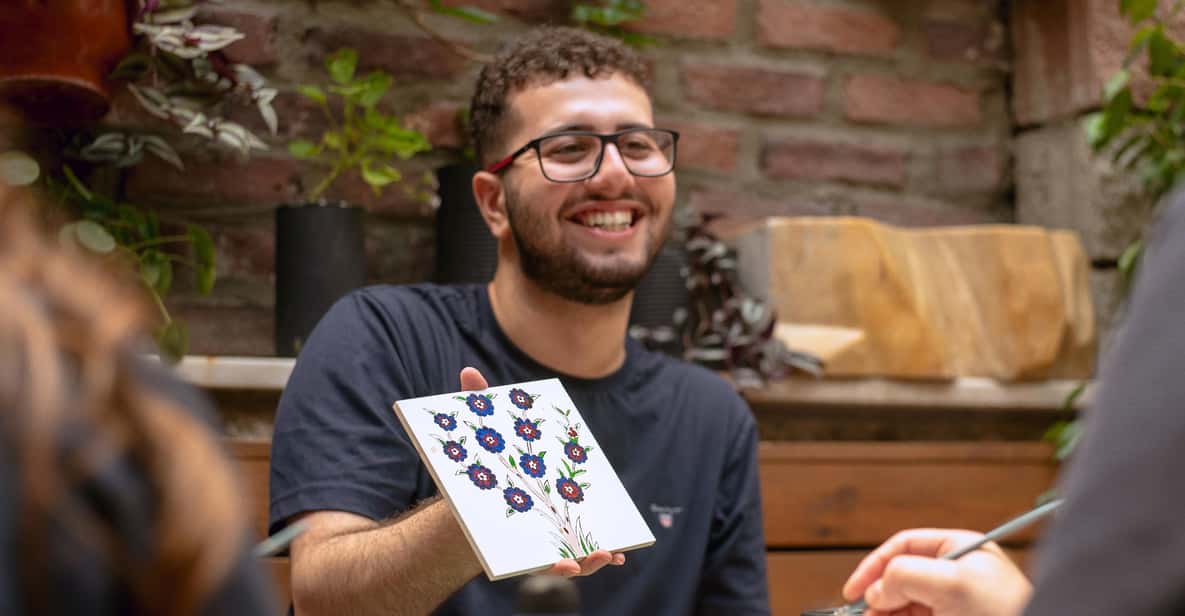
A few practical habits make a difference with classes like this:
- Bring your best patience. Even guided painting is still painting. Take your time on the first layers so your design looks clean.
- Ask for help early. If you wait until the end, there’s less time to fix a line or adjust how a motif is balancing on the plate.
- Pick the style you can commit to. Classic Turkish motifs are offered, but if your own idea feels more fun, go for it—your painting is meant to be personal.
- Plan for the possibility of Asian-side movement after meeting in Sirkeci. If you’re pairing this with another appointment, avoid scheduling something that leaves no wiggle room.
Should you book this tile painting workshop?
Yes, I’d book it if you want a beginner-friendly, guided art class with a real take-home result. The combination of patient teaching, unlimited tea/coffee and handmade cookies, and the bubble-wrapped tabak makes it feel like more than a quick activity. You leave with something you can’t easily buy elsewhere: your own version of Turkish design done with care.
But book with eyes open on logistics. The meeting point is in Sirkeci, yet some experiences point to the workshop being on the Asian side and needing transport coordination. If crossing the city is a headache for your schedule, message ahead to confirm the exact location and how you’ll get there.
If you’d rather spend your time sightseeing than planning transportation, that’s the main reason you might skip. If you’re okay with a short planning adjustment, this is an excellent way to slow down and make something lasting in Istanbul.
FAQ
How long is the Istanbul Turkish tile painting workshop?
It runs for about 3 hours.
Do I need any prior art or painting experience?
No. The workshop is beginner-friendly, and you do not need prior art experience.
What souvenir do I take home?
You paint a ceramic plate called a tabak, and you take that finished plate home.
Are drinks and snacks included?
Yes. You get unlimited Turkish tea, coffee, and water, plus a selection of handmade local cookies.
Will the workshop provide painting materials and tools?
Yes. The class includes high-quality paints, traditional tools, and all workshop materials needed to paint your plate.
How will my ceramic plate be packed for travel?
Your finished plate is securely bubble-wrapped for safe travel in your luggage.
Where do I meet the guide?
Meet at the historic building with a vintage signboard that reads Merhaba Pastaneleri Sirkeci, and look for your guide outside the entrance.
Is hotel pickup and drop-off included?
No. Hotel pickup and drop-off are not included.
What languages is the instruction offered in?
Instruction is available in English and Turkish.
Is the workshop on the European or Asian side of Istanbul?
You meet in Sirkeci, but some bookings are informed the workshop is on the Asian side and that you may be assisted to reach it (for example, via metro). Confirm the final workshop location with the guide.
Is there free cancellation or reserve-and-pay-later options?
Yes. You can cancel up to 24 hours in advance for a full refund, and you can reserve now and pay later.