REVIEW · ISTANBUL
Istanbul City Walk: Colors, Culture & History Fener Balat Tour
Book on Viator →Operated by Tourmania · Bookable on Viator
Colorful stairways and faith collide in Istanbul. I love how this walk threads Fener and Balat together as one story, moving from Jewish landmarks to Greek and Bulgarian Orthodox places. I also love the visual payoff, especially the 19th-century art nouveau stairs that make your camera happy. One thing to consider: the route has stairs and steep, uneven sidewalks, so plan on moderate walking fitness.
You get about 2 hours on foot with an English-speaking guide, capped at 15 people. The tour starts at Balat Merkez Şekercisi in Ayvansaray and ends back at the same spot, with most stops outside and one major indoor visit at the Patriarchate.
In This Review
- Key highlights you’ll actually care about
- Why Fener and Balat feels different from the usual Istanbul route
- Starting point in Ayvansaray: how to get value fast
- Balat’s colorful streets and the Jewish-quarter landmarks
- Photo stairs to Galata Tower: art nouveau steps you’ll want to pause for
- Fener’s Orthodox heart: schools, Greek culture, and active church life
- The Patriarchate of Constantinople and the Fener Rum Patriikhanesi
- Value for $30.17: what’s included in two hours
- Who should book this walk, and who might want to skip it
- Should you book this Fener Balat city walk?
- FAQ
- How long is the Fener Balat walking tour?
- What does the tour cost?
- Is the tour offered in English?
- What is the maximum group size?
- Where does the tour start?
- What is included in the price?
- What if I’m late to the meeting point?
Key highlights you’ll actually care about
- A neighborhood map you can use later: Byzantine-to-Ottoman-to-modern context, tied to what you see on the streets.
- Photo stops with real architectural details: the art nouveau stairway route is built for angles.
- Sites still in use: Greek Orthodox and Bulgarian Orthodox institutions are part of today’s Istanbul.
- Greek education landmarks: the Greek High School area and the Great School of the Nation theme matters.
- Ecumenical Patriarchate access (with admission included): one planned indoor stop that’s worth the time.
- Small group pace: 15 travelers max makes it easier to ask questions and keep moving.
Why Fener and Balat feels different from the usual Istanbul route
Fener and Balat aren’t just scenic streets. They’re a living patchwork of communities, and the tour helps you read that patchwork as you walk. Instead of cramming Istanbul’s big icons into two hours, you get a slower, street-level understanding of how different eras and faiths grew side by side.
I love that the route frames the area like a miniature timeline. You’ll see clues that point to Byzantine, Ottoman, and modern chapters—sometimes just by looking at how buildings and streets were used over time. And because this is a guided walk, you don’t just snap photos; you learn what those places meant and why they mattered to particular communities.
There’s also a practical comfort here. Most stops are short, so you’re never stuck in one place too long. Still, plan for the physical reality: this is a stair-and-hill neighborhood. If you’re the type who struggles with steps, take it slow, wear supportive shoes, and don’t try to rush.
You can also read our reviews of more walking tours in Istanbul



Starting point in Ayvansaray: how to get value fast
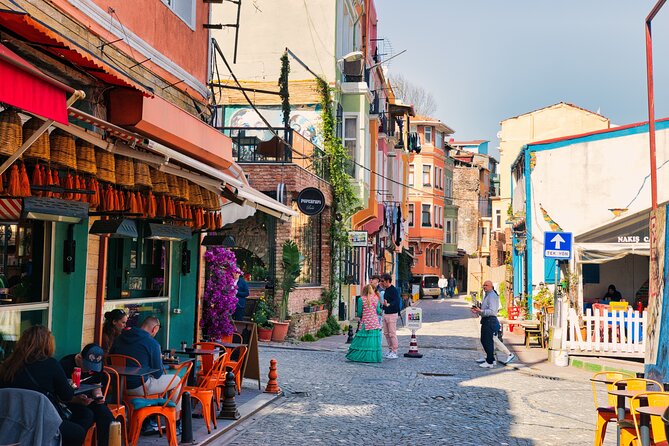
The tour meets near Balat Merkez Şekercisi (Ayvansaray, Leblebiciler Sk. No:33, 34087 Fatih/İstanbul). Getting there is usually manageable because the meeting point is near public transportation, and you’ll finish right back where you started.
That back-to-start design is underrated. You don’t have to negotiate transfers or worry about where you’ll end up. Just come, follow the group, and let the guide do the threading of names, buildings, and context.
Two timing notes matter. First, the tour runs about two hours, so you’ll want to arrive with enough buffer to start on time. Second, the operator asks you not to be more than 5 minutes late, since the guide can’t wait once the walk begins. If you’re cutting it close, I’d rather you be early and grab a quick drink nearby than risk being left out.
Balat’s colorful streets and the Jewish-quarter landmarks
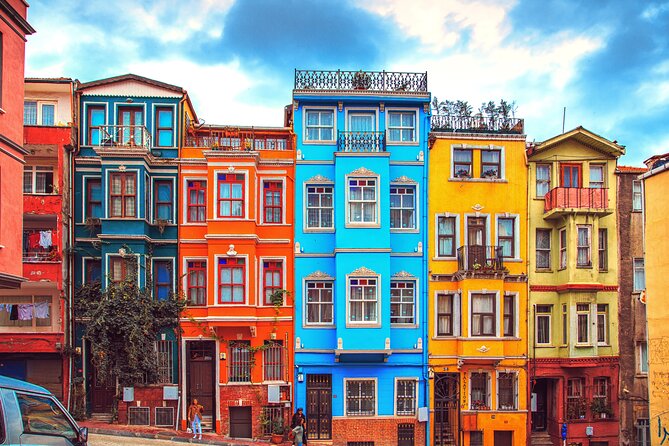
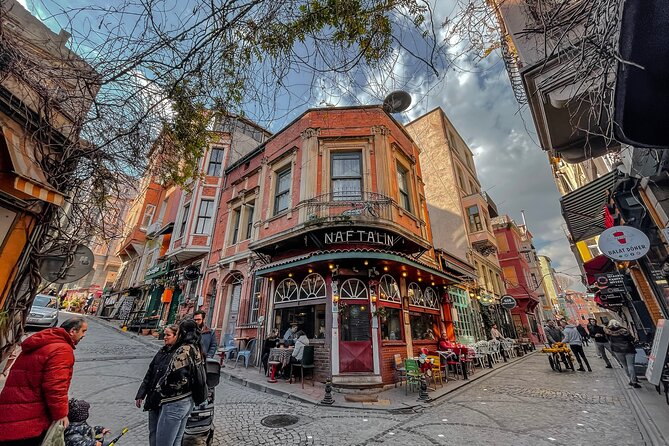
You start in the Balat area with a stop at Balat neighborhood Muhtarligi, a doorway into the historic Jewish quarter feel. The big draw here is the atmosphere: colorful houses, tight streets, and a sense that Balat has always been about everyday life in layered neighborhoods.
From there, you move into the streets where Balat and Fener blend together. This is where the tour’s explanation becomes useful. The neighborhoods of Ayvansaray, Balat, and Fener get described like a “chronicle” across eras—Byzantine, Ottoman, and modern—and that framing makes the walk feel less random.
You’ll also encounter the Ahrida Synagogue area as a key cultural stop. The tour positions it as significant for its historical and cultural importance. Even if you only get a quick look as you pass through the area, knowing what you’re looking at helps you notice the details that most people miss.
A quick tip for this section: don’t rush through the narrow streets. It’s tempting to sprint toward the next photo angle, but Balat rewards slow watching. Look up, check doorways and façades, and let the guide’s context land before you move on.
Potential drawback: since many stops are exterior and street-based, the route’s charm depends on the day. Bright daylight usually makes the colors pop. If weather is bad, some outdoor views are less rewarding.
Photo stairs to Galata Tower: art nouveau steps you’ll want to pause for
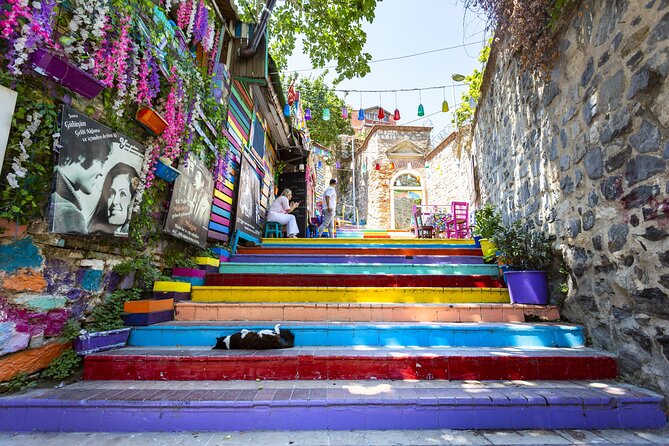
One of the most memorable moments is the stair experience. You’ll hit colorful street segments first, then later reach the standout 19th-century art nouveau stairs en route to the Galata Tower area.
These stairs are famous for a reason: the design gives you instant structure, depth, and that classic Istanbul-curve composition. Even if you aren’t a serious photographer, you’ll appreciate how easily the architecture creates good pictures without you hunting for spots for an hour.
What’s especially nice is that the tour doesn’t treat this as just a photo break. You’re given a sense of why these routes matter in the broader neighborhood story—how communities moved, lived, and built connections between different parts of the city.
Time-wise, this section stays short (about 10 minutes at the stair stop), so you get a break without losing momentum. Still, bring patience. Stairs always attract crowds with cameras, and this neighborhood gets busy at the same time Instagram does.
If you want the best shots, I’d step slightly to the side while the group pauses, then take pictures when the flow slows. Don’t block foot traffic—this is a neighborhood, not a theme park set.
Fener’s Orthodox heart: schools, Greek culture, and active church life
As the walk shifts into Fener, it starts to feel more focused on Orthodox life and Greek community institutions. This part matters because you’re not just looking at buildings as historic objects. The sites here are tied to education, faith, and community continuity.
A stop in the Fener area highlights it as a historic center of the Greek Orthodox community. From there, you’ll pass the Dimitrie Cantemir Museum Cafe area, which works as a calm, in-between moment. Even if you don’t stop for a drink, it’s a useful reset in the route—something less stair-heavy and more “pause and breathe.”
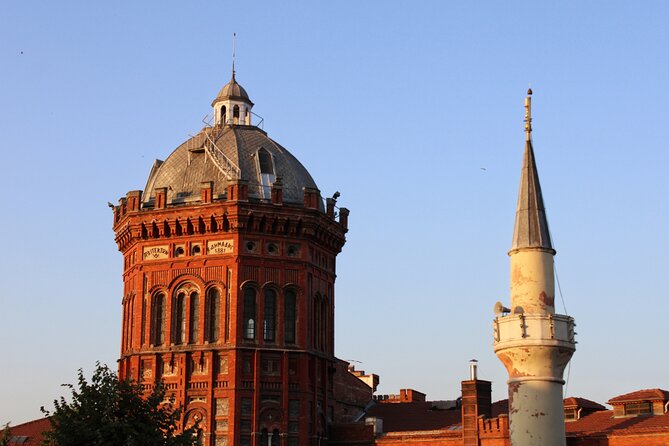
Then come the education landmarks. You’ll visit the private Fener Greek High School area, tied to the legacy of the Great School of the Nation. The tour explanation focuses on the role this school played for education in the Greek language, along with philosophy and history, and it also frames it as a major Orthodox legacy. It’s also presented as something that has faced endangerment of closing in recent times, which adds real weight to the stop.
One extra architectural note in this zone is the neoclassical building connected to the Greek High School areas. The tour treats the building as a beautiful example of neoclassical architecture that’s still standing today. That helps you look beyond the street color and notice the formal design elements.
From education, the route shifts to religious architecture at Saint Stephen’s Bulgarian Orthodox Church, also known as the Bulgarian Iron Church. Since it’s still in use, you’re not just seeing an old façade—you’re encountering a living place of worship.
This is also where your guide’s tone really shows. In one of the guide examples from the tour’s audience feedback, a guide named Furkan was praised for religion and history context, plus being genuinely helpful with questions and even small practical requests. If your guide has that same style, you’ll get a lot more out of these church and school stops than a typical quick walk-by.
Practical caution: Orthodox churches can have rules about visiting and photo behavior. The tour keeps most stops short, but I’d still dress respectfully and follow any guidance you’re given on-site.
You can also read our reviews of more city tours in Istanbul




The Patriarchate of Constantinople and the Fener Rum Patriikhanesi
The centerpiece indoor stop is the Patriarchate of Constantinople area. The tour frames it as the Ecumenical Patriarchate, part of Eastern Orthodox leadership. You’ll learn that it’s headed by the Ecumenical Patriarch of Constantinople, described here as Bartholomew, Archbishop of Constantinople, with the note that he is first among equals in Orthodox hierarchy.
You also get a geographic anchor: the Patriarchate has been located in the Phanar (Fener) district since the late 16th century. That’s the kind of detail that turns a landmark from a name into a location you can remember.
Next, the route includes the Fener Rum Patrikhanesi stop. Even if you only get a shorter look here, it reinforces that you’re in a specific institutional neighborhood, not just passing through scenic streets.
This section is why I like the tour for first-time Istanbul visitors who want meaning, not just scenery. Two hours is short. If the tour didn’t include an indoor institutional visit with context, you’d walk away with photos but not much understanding. Here, you get both.
Possible drawback: indoor timing can feel tight. The group keeps moving, so if you’re the slow-and-savor type, you’ll still want to pay attention to what the guide is pointing out while you have a chance.
Value for $30.17: what’s included in two hours
At $30.17 per person for about 2 hours, you’re paying for three things: a guided route through a compact neighborhood, access to a major stop with admission included, and the ability to skip the guesswork of what to look for.
The best value detail is this: the tour includes a guided walking tour and entrance fees. Many stops are described as ticket free, but the Patriarchate visit has admission included. So you’re not paying for only outside street views.
Also, the small group size (15 max) is part of the value. You can ask questions without feeling like you’re in a cattle line. In church-and-school areas, that kind of conversation matters because context is the difference between noticing and understanding.
Logistics are straightforward but not free. No transfer is included, so you’ll handle getting yourself to the meeting point. The upside is that you don’t need transportation at the end—your route returns you to where you started.
Weather is another practical factor. The experience notes it requires good weather, which makes sense given the stair and outdoor street components. If you’re booking on a forecast-sensitive day, I’d aim for calmer conditions and keep expectations realistic if the sky is gray.
One more value note: this area is often good for shopping. Based on audience experiences tied to the neighborhood, I’d treat Fener and Balat as a place to look for unique small items and potentially better prices before you later go shopping in the most famous market zone of the city.
Who should book this walk, and who might want to skip it
This is a great fit if you:
- want a guided, easy-to-follow route in a compact part of Istanbul
- care about how communities overlap, not just grand monuments
- enjoy architecture details like stairs and building façades
- want a short tour that still includes an indoor institutional visit
You might want to skip or choose a lighter option if:
- stairs and uneven pavement wear you out quickly
- you dislike religious sites and active places of worship (even when visits are respectful and brief)
- you need a fully flat, stroller-friendly walk (the route is built around stair-heavy streets)
If you’re traveling with a friend group, ask about group discounts since the tour lists that option. And if you like a plan with built-in structure, the fact that it returns to the start helps you pair it with other nearby activities.
Should you book this Fener Balat city walk?
I’d book it if you want Istanbul that feels human-sized. This walk gives you colorful neighborhoods, yes, but more importantly it explains why the neighborhoods look the way they do and what institutions like the Patriarchate and Orthodox churches have meant over time.
The biggest reason not to book is physical comfort. If stairs are a dealbreaker, you’ll be doing a lot of step management for two hours. If you’re okay with that, the rest is strong value for the price, especially because admission for the key indoor site is included.
My call: book it, then show up early, wear shoes you can move in, and let the guide turn the streets into a story you can remember.
FAQ
How long is the Fener Balat walking tour?
It runs for about 2 hours.
What does the tour cost?
The price is $30.17 per person.
Is the tour offered in English?
Yes, it is offered in English.
What is the maximum group size?
The maximum is 15 travelers.
Where does the tour start?
The meeting point is Balat Merkez Şekercisi, Ayvansaray, Leblebiciler Sk. No:33, 34087 Fatih/İstanbul, Türkiye.
What is included in the price?
A guided walking tour and entrance fees are included. Transfer is not included.
What if I’m late to the meeting point?
If you are more than 5 minutes late, the guide will not be able to wait, and you won’t be able to join once the tour has started.