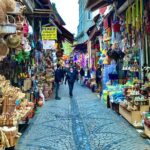
Colorful streets, layered faith. This half-day walk through Fener-Balat turns Istanbul’s side streets into a story you can actually see, from the Greek Orthodox Patriarchate to synagogues, churches, and photo-worthy corners like the rainbow stairs. It’s hip, historic, and very different from the usual Sultanahmet rush.
I especially like that the tour is built for small-group pacing, capped at 20 people, so you get time to ask questions and look closely instead of sprinting. And the guides—often praised for sharp storytelling—bring the neighborhoods to life with names and context you’ll remember, including guides like Kübra, Yunus, and Janus.
One thing to plan for: you’re walking on uneven streets with some hills, and one key stop has clothing rules (no mini skirts/shorts, sleeveless tops, or tank tops). If you show up underdressed for a church, you might be turned away there—worth packing light layers.
In This Review
- Key Highlights You’ll Feel on the Walk
- First Steps in Fener: Where Istanbul’s Old Power Lives
- Ozel Merkez Rum Lisesi: A School That Looks Out Over the District
- Church of St. Mary of the Mongols: The Story Behind the Stones
- Colorful Stairs and Kiremit Caddesi: The Photo Stops That Actually Deliver
- Balat’s Religious Corners: Panagia Paramythia and the Passing of Time
- Where Jewish Life Shows Up in Everyday Streets
- Ahrida Synagogue: A Big Landmark With a Specific Meaning
- Sveti Stefan (Bulgarian Orthodox Church): Secrets and Rivalries
- Walking Pace, Timing, and Why Short Stops Still Work
- Value for $20.39: What You Really Get for the Money
- Who This Tour Suits Best (And Who Might Want Another Plan)
- Should You Book the Half-Day Fener-Balat Walking Tour?
- FAQ
- What is the duration of the Fener-Balat walking tour?
- How much does the tour cost?
- Where does the tour start and end?
- What language is the tour offered in?
- Is there a group size limit?
- Are there dress rules for any stops?
- What is the cancellation policy?
Key Highlights You’ll Feel on the Walk
- Multi-faith streets in one circuit: mosques, synagogues, and churches appear side by side, not in museum display cases
- The Greek Orthodox Patriarchate stop: a big spiritual landmark with practical dress requirements
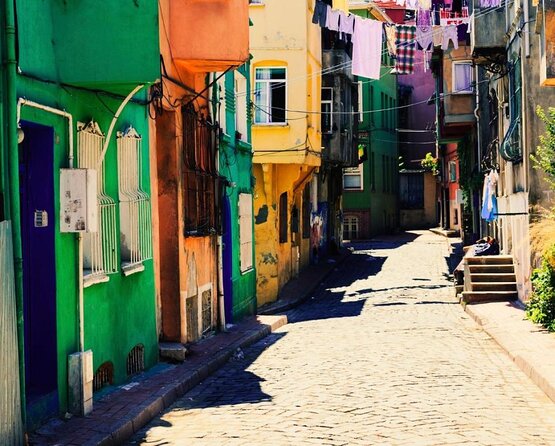
- Rainbow stairs and colorful house streets: short photo moments that actually earn their hype
- Ahrida Synagogue context: you’ll learn why the prayer area matters and how Spanish Jewish communities connect to Ottoman lands
- Balat’s character shops: you’ll hear how daily life and old community history overlap in everyday storefronts
- A guide who tells stories with names: from Kübra to Yunus and Janus, the narration is a core part of the value
First Steps in Fener: Where Istanbul’s Old Power Lives

The tour starts in Fener, in an area that feels like it has a pulse even when you pause. The streets sit just far enough from the postcard crowds that you can hear regular life—steps on stone, chatter outside small shops—while still landing in places tied to empire-level history.
The big first stop is the Greek Orthodox Patriarchate site in Fener (Fener Rum Patrikhanesi). It’s scheduled for about 45 minutes, and while the tour notes an admission ticket that’s free there, the tour package includes the entrance fee for this stop. That matters because religious sites can be strict about timings, and having the entrance handled makes the visit smoother.
Dress rule alert (do this before you go): the Greek Orthodox Patriarchate does not allow people in mini shirts/skirts, sleeveless tops, or tank tops. So if you’re planning a summer outfit, bring a light layer—think scarf, cardigan, or another cover-up you can throw on quickly. This is the kind of detail that decides whether your morning stays relaxed or turns into a scramble.
You can also read our reviews of more walking tours in Istanbul



Ozel Merkez Rum Lisesi: A School That Looks Out Over the District
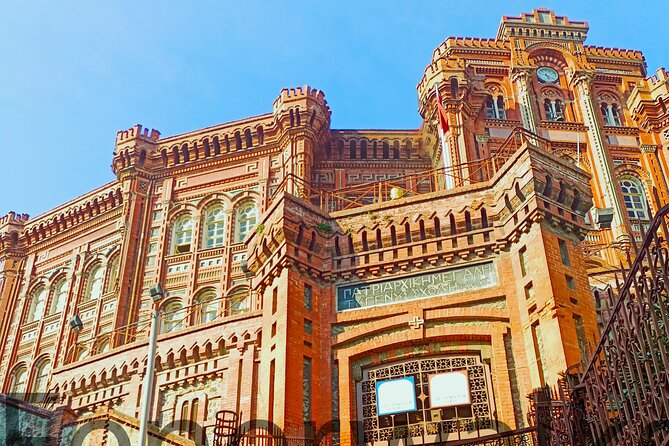
Next is the Ozel Merkez Rum Lisesi, a Greek Orthodox high school, about 30 minutes. Even without going into classroom life, the setting matters. Schools like this tend to function as community anchors, and the tour frames the building as something holding on to its roots—positioned “on top of Fener like an eagle,” which is a poetic way of saying you’ll get a better sense of the district’s shape as you move.
This is a good stop for two reasons:
1) it breaks up the religious landmarks with something educational and local
2) it helps you orient yourself, so the next streets feel less random
If you like architecture and how buildings reflect identity—rather than just how they look for selfies—this is one of those “small stop, big payoff” moments.
Church of St. Mary of the Mongols: The Story Behind the Stones
Then you head to the Church of St. Mary of the Mongols, around 20 minutes. This one comes with a very specific narrative: the tour ties the church to a brave woman sent from Constantinople toward the lord of steps, Mongolia. Even if you don’t remember every name after the tour, you’ll remember the feeling of Istanbul: one city, multiple directions of influence.
What makes this stop worth it is how it connects the Ottoman-era neighborhoods to wider historical threads. It’s not just local nostalgia. It’s a reminder that Istanbul was a crossroads, and faith traveled with people.
A quick heads-up: churches often have quieter spaces and tighter flow. You’ll likely get short time windows to look, so keep your camera ready—but also take a few seconds to simply stand and absorb.
Colorful Stairs and Kiremit Caddesi: The Photo Stops That Actually Deliver

Now comes the part many people are secretly waiting for: the Colorful Stairs. It’s only about 10 minutes, but it’s timed well—long enough to get photos without making it a whole production.
These stairs are famous because they’re visually loud: painted facades, bright colors, a staircase that looks like a mural. The real value of a guided stop here is not the photo—it’s how the guide points out why these streets became a scene, and how that look fits into the neighborhood’s everyday life.
After that, you pass by the Dimitrie Cantemir House, tied to the Romanian prince and Lord of Bogdan (Moldovia). It’s not listed with a long time block, but it adds a layer of Eastern European presence right in the mix of Ottoman-era communities. Even when the stop is brief, these name-based pauses help the walk feel like a timeline, not a random wander.
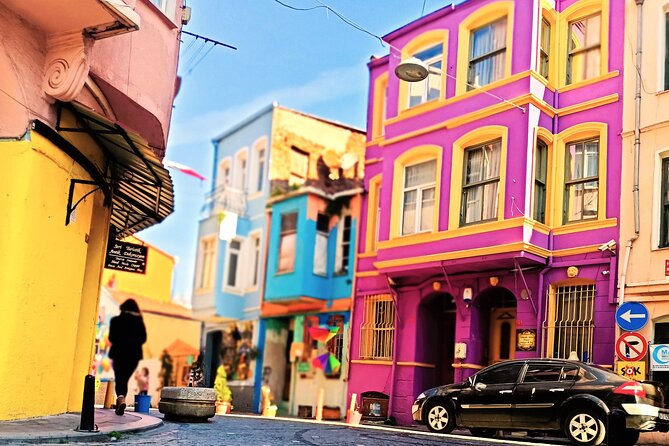
Then you reach Kiremit Caddesi, with the colorful houses for photos. This is another short stop—about 10 minutes—yet it’s one of the moments where the guide’s pacing helps. If you go too fast, the colors blur. If you slow down, you’ll start noticing details like door shapes, window placement, and the way buildings sit close together.
Balat’s Religious Corners: Panagia Paramythia and the Passing of Time
The Balat section begins with Panagia Paramythia Church, about 5 minutes. The tour frames it as an Orthodox church in its last days, before its last visitors see it. That’s a tough phrase, but it matches what you’ll feel standing there: this is a place where time is not waiting for anyone.
Short stops like this are easy to dismiss. Don’t. This is exactly where a guided walk earns its value. You’re not just checking off another church—your guide helps you understand why it matters that a community space is fading, and what that says about neighborhoods changing around it.
If you’re someone who likes “current Istanbul” as much as famous Istanbul, this brief stop will land.




Where Jewish Life Shows Up in Everyday Streets
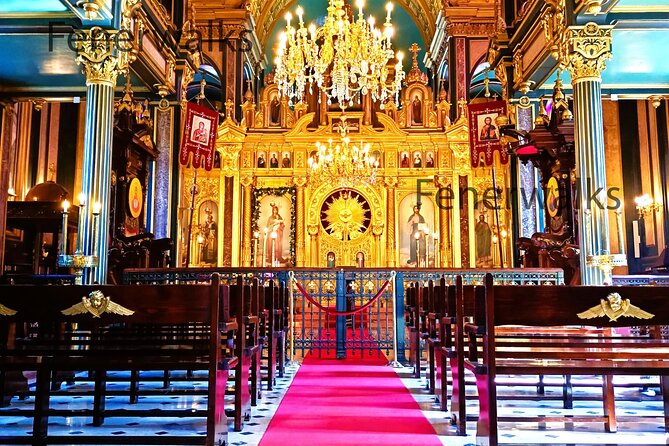
Next, the tour shifts into the story of Jewish presence in Balat, even in an everyday setting: a Jewish essence within an alcohol seller store. The tour describes it as a store that once was a hot place for many rich and youngs.
You might not get a museum-style exhibit here. Instead, you get the thing you can’t easily spot on your own: the idea that history isn’t only behind glass. It can be embedded in ordinary storefronts, neighborhood habits, and the way one community once gathered in a place that later changed its identity.
This stop is brief, but it’s the kind of moment that makes the whole morning feel more real. You’re learning how communities overlap, not just how they separated.
Ahrida Synagogue: A Big Landmark With a Specific Meaning
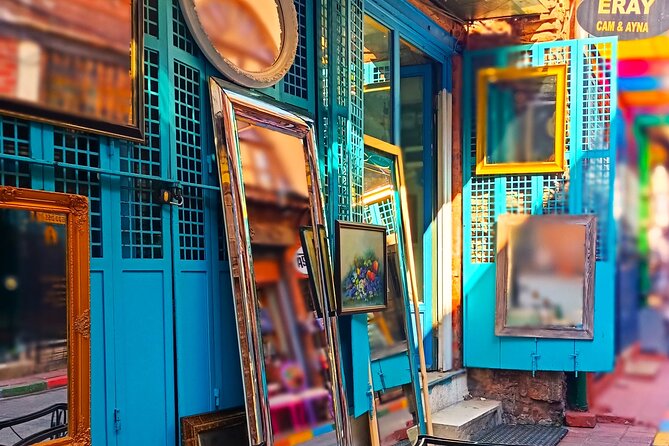
Ahrida Synagogue is scheduled for about 15 minutes, and it’s described as the biggest synagogue of Balat. This is one of the most meaningful cultural stops on the walk because it links a local landmark to a larger story: the prayer area reminds you of Jewish people coming from Spain to Ottoman lands.
That’s a powerful context detail, because it turns the building from a standalone site into a chapter in a much bigger migration story. You’ll likely notice how architecture and the layout of a praying space communicates identity—and why the tour gives you time here to look.
If you’re the type who likes to understand what you’re seeing, this stop is worth slowing down for. It’s not long, but it’s not shallow either.
Sveti Stefan (Bulgarian Orthodox Church): Secrets and Rivalries
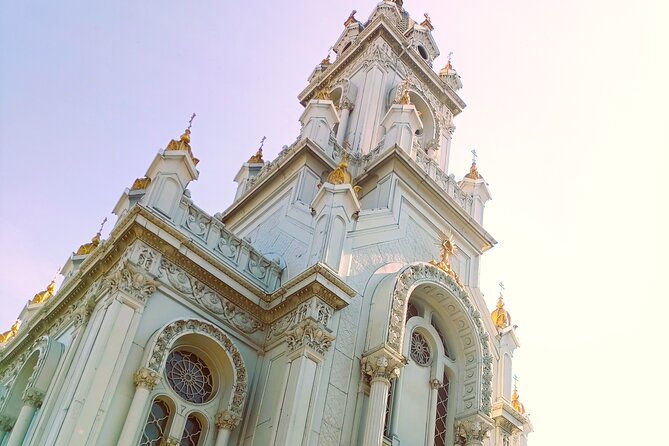
The Bulgarian Orthodox Church—Sveti Stefan Church—is about 20 minutes. The tour frames it as a masterpiece of Bulgarians, with secrets tied to how they built their own church in view of the Greek Patriarchate.
That detail is what makes this stop more than a pretty building. It hints at community boundaries, permissions, and competition in religious life. In Istanbul, religion wasn’t only spiritual—it was political and cultural too.
If you want a single stop that shows how different communities negotiated space and status, this is it. You’ll see the church, but you’ll also leave thinking about who had the right to build what, and why that mattered.
Walking Pace, Timing, and Why Short Stops Still Work
This tour runs about 3 hours, and it keeps things moving without feeling like a nonstop sprint. Most stops are around 5 to 30 minutes, with photo and look time baked in.
That structure is practical for real life:
- You get variety fast: churches, schools, synagogues, and streets with color
- You avoid museum fatigue: the stops are shorter than a full-day plan
- The guide can correct the story: you’re not left guessing what you’re looking at
There is one caution from the style of this walk: it’s a neighborhood walk. The itinerary involves walking through hilly streets, and you’ll want a shoe choice you trust.
If you have moderate mobility or you don’t love uneven pavement, consider going slower, planning breaks, and wearing supportive footwear. This is still manageable for most people with reasonable mobility, but it’s not a flat-city stroll.
Value for $20.39: What You Really Get for the Money
At $20.39 per person for about 3 hours, the price is about what you’d pay for a half-day guided experience in Istanbul, but the value comes from how the tour is assembled.
Here’s why it feels worth it:
- The tour includes all fees and taxes
- It specifically includes entrance for the Greek Orthodox Patriarchate and the Bulgarian Church
- You get a guided narrative across multiple communities, instead of paying separately for a couple of major sights
And because it’s capped at 20 travelers, it avoids the “big group blur” problem. You’ll still spend time walking, but you’re walking with context—names, reasons, and what to pay attention to.
You’re also getting language support: the tour is offered in English, and the ticket is mobile. That’s not flashy, but it’s the kind of convenience that makes the whole morning smoother.
Who This Tour Suits Best (And Who Might Want Another Plan)
This is a strong pick if you:
- want a side of Istanbul that feels less tour-bus crowded
- like seeing different faiths and communities in one compact loop
- enjoy photo stops but also want the meaning behind them
- want a guide who tells stories with specific details (you’ll hear names, places, and connections)
It may be less ideal if you:
- hate walking hills or uneven streets
- are sensitive to strict entry rules at religious sites (plan your outfit for the Greek Orthodox Patriarchate)
Should You Book the Half-Day Fener-Balat Walking Tour?
Book it if you want an Istanbul morning that mixes colorful streets with real-world community stories, and you’d rather learn from a guide than wander and guess. The price is reasonable, the group size stays intimate, and the itinerary is built around short, high-impact stops like Ahrida Synagogue and the rainbow stairs.
If your schedule is tight, this half-day format is also perfect. It ends back at the meeting point, so you can transition to lunch and keep exploring on your own without feeling like you’re stuck inside a long guided block.
FAQ
What is the duration of the Fener-Balat walking tour?
It runs for about 3 hours.
How much does the tour cost?
The price is $20.39 per person.
Where does the tour start and end?
It starts at FenerBalat, 34087 Fatih/İstanbul, Türkiye, and it ends back at the meeting point.
What language is the tour offered in?
The tour is offered in English.
Is there a group size limit?
Yes. The tour has a maximum of 20 travelers.
Are there dress rules for any stops?
Yes. For the Greek Orthodox Patriarchate, there are clothing rules. Mini shirts and skirts, sleeveless tops, and tank tops are not allowed.
What is the cancellation policy?
Free cancellation is available up to 24 hours in advance for a full refund. If you cancel less than 24 hours before the start time, the amount paid will not be refunded.