REVIEW · ISTANBUL
Crossroads of Humanity: Istanbul Half-Day Tour
Book on GetYourGuide →Operated by Gray Line Turkey · Bookable on GetYourGuide
If you want Istanbul with a purpose, this half-day private route walks you through the city’s most meaningful Byzantine Christian landmarks. I like how the story is told by what you can actually see on the ground, from church mosaics to monastery layouts.
The two big wins: you get skip-the-ticket-line museum access bundled in, and the guide ties each stop to a clear historical thread instead of tossing names at you. One thing to consider is schedule sensitivity: St. Chora is closed on Wednesdays, so your plan can change day-to-day depending on what’s open.
In This Review
- Key highlights you’ll feel right away
- A 4-Hour Byzantine Route Through Istanbul’s Holy Layers
- Start at Fener’s Patriarchate: Constantine’s Decision in Stone and Location
- Panagia of Blachernae and the Hagiasma Holy Water Legend
- St. Savior in Chora (Kariye Museum): Mosaics and Frescoes You Can’t Rush
- Zeyrek’s Pantocrator Complex: When Monastery Life Meets Today
- Fethiye (St. Mary Pammacaristos): Paleologan Refinement in 11th-Century Ruins
- Balıklı and Zoodochos Pege: The Underground Cistern and the Fish Miracle
- St. Sergius and Bacchus: A Hagia Sophia Precursor You’ll Notice
- Price and What $354 Covers (And Why It Might Be Worth It)
- Timing, Hotel Pickup, and How to Protect Your Half-Day
- What Makes the Guiding Experience Feel Different
- Who This Tour Suits Best
- Should You Book Crossroads of Humanity?
- FAQ
- How long is the Istanbul Half-Day Tour?
- Is this tour private, and what language is the guide?
- Where does hotel pickup happen?
- What are the pickup time windows?
- Are museum tickets and donations included?
- Does the tour include skip-the-line entry?
- What happens if St. Chora is closed?
- What do I need to bring?
- Are pets allowed, and can I smoke?
Key highlights you’ll feel right away
- Fener’s Patriarchate focus: start with Orthodox Christianity’s power center in Istanbul
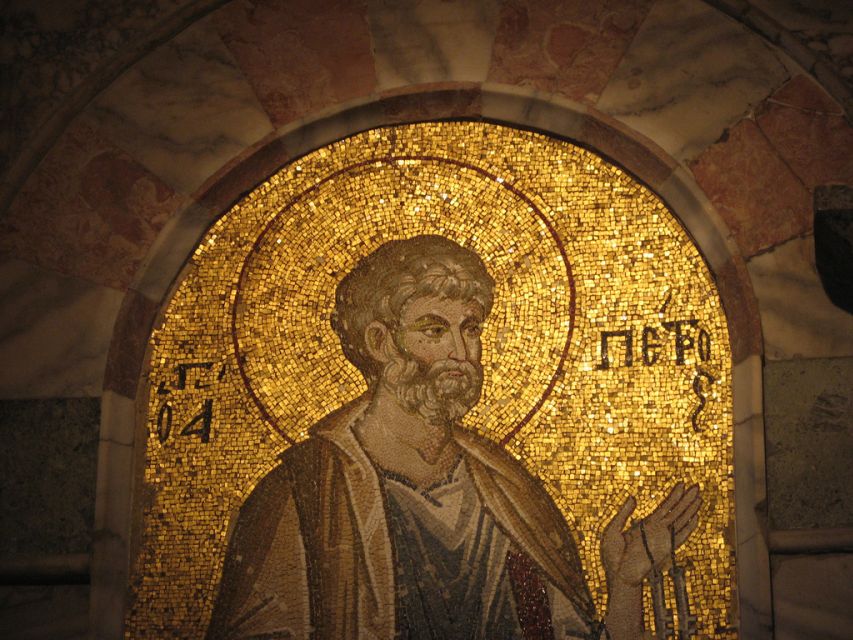
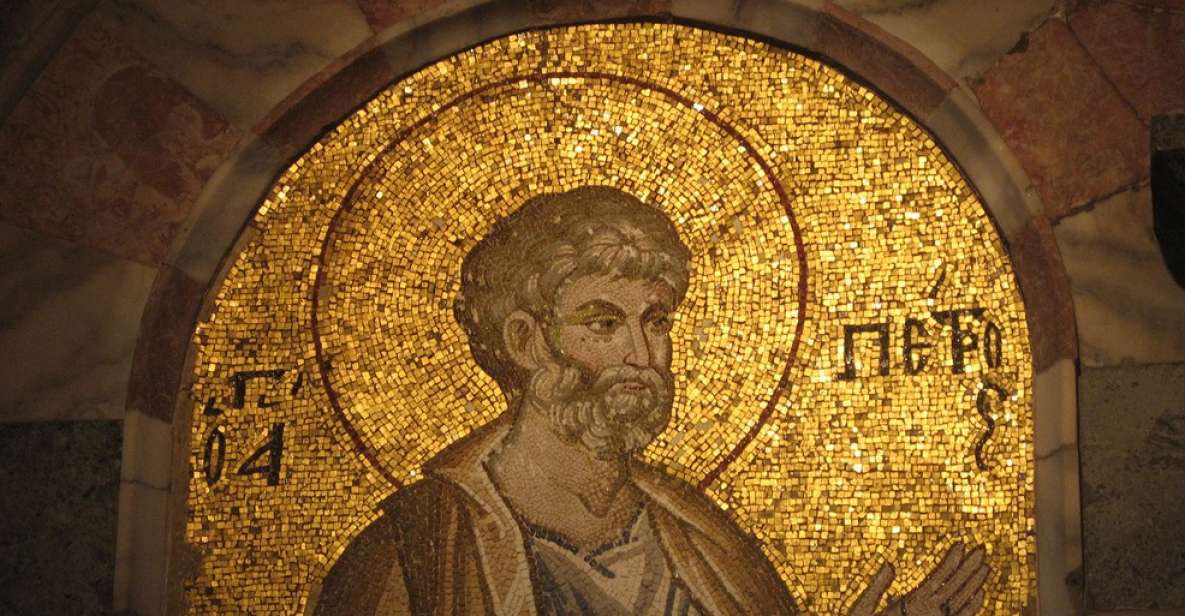
- Chora mosaics and frescoes: see why St. Chora is treated like a visual star
- Zeyrek’s Pantocrator complex: churches, chapels, baths, hospice areas, and even traveler use today
- Paleologan-era refinement at Fethiye: 11th-century ruins with artistic polish
- Balıklı’s Zoodochos Pege cistern: an underground water feature connected to the fish miracle
A 4-Hour Byzantine Route Through Istanbul’s Holy Layers
This is not a “see everything Istanbul” day. It’s a focused Christian-history walk through the Marmara Region side of the city, built for people who want context, not just photos. In about four hours, you’ll hit major church sites tied to Orthodox tradition, Byzantine architecture, and the way Istanbul became a crossroads for empires.
You’ll also get a big advantage from the format: private guiding in English or Spanish, plus private A/C transportation. That matters here because these landmarks are spread out, and the time you save lets the guide actually explain what you’re looking at instead of rushing.
One more practical note: this tour includes donations and museum entrance fees. That’s a small detail, but it prevents the annoying end-of-the-day scramble where you’re trying to figure out what was supposed to be paid where.
You can also read our reviews of more tours and experiences in Istanbul

Start at Fener’s Patriarchate: Constantine’s Decision in Stone and Location
The tour starts at the Patriarchate at Fener, which is the heart of Orthodox Christianity in Istanbul. Your guide will frame the whole journey here, because it’s not random that these stories gather around Fener.
The key idea you’ll hear is how Constantine the Great declared Christianity as the religion of the Roman Empire, then moved the seat of the church to Istanbul. Whether you already know that story or you’re new to it, I like the way this beginning gives you a lens: later stops won’t feel like separate monuments. They’ll feel like chapters in the same long argument about faith, power, and place.
What you can expect: a guided introduction before you start hopping between sites, so your brain gets organized early. If you tend to forget names once you’re moving, starting with a central explanation is a smart move.
Panagia of Blachernae and the Hagiasma Holy Water Legend
Next comes the Church of Panagia of Blachernae, linked to the story of the Hagiasma—a fountain of Holy Water said to cure health troubles. You’ll hear that even an emperor made the pilgrimage for cleansing.
This stop is a good example of why this tour works for more than history buffs. You’re not just looking at architecture; you’re learning how people once used sacred spaces for everyday life. In other words, this isn’t only about theology. It’s about how belief shaped routines, including healing rituals.
Drawback to keep in mind: as with many religious sites, what you can access may depend on ongoing conditions and hours. You’ll still get the explanation and context, but you might not always get the same level of access everywhere.
St. Savior in Chora (Kariye Museum): Mosaics and Frescoes You Can’t Rush
Then you move to St. Savior in Chora (Kariye Museum), once a Byzantine monastery dedicated to Jesus. Here, you’re promised something very specific: beautifully preserved mosaics and frescoes.
This is likely the emotional peak of the route, because the artwork is the part that’s hard to fake with memory later. It’s also the stop where the guide’s job really matters. Without context, mosaics can blur into “pretty church pictures.” With context, you start seeing the logic behind the scenes and the style choices that identify the Byzantine world.
One big scheduling note: St. Chora is closed on Wednesdays. If your travel dates land on a Wednesday, don’t assume the tour will magically swap in the same experience. Ask before booking if the itinerary adjusts so you’re not paying for a highlight you can’t see.
The good news: the tour includes the museum entrance fee, and you get skip-the-ticket-line. That helps you spend more time looking and less time waiting while your feet protest.
Zeyrek’s Pantocrator Complex: When Monastery Life Meets Today
Your next stop is Pantocrator (Zeyrek), a labyrinthine complex with multiple layers of use. The list is impressive: churches, funerary chapels, baths, a hospice for the aged, and even a hostel for travelers arriving today.
This is the kind of site that rewards slow attention, but you won’t get to be slow for long in a four-hour tour. The trick is to go in ready to listen: your guide’s explanations help you interpret the layout, so you understand why one corner feels public, another feels private, and another feels like it served a specific life stage.
What I like here is how the tour shows Byzantine ingenuity without turning it into a museum lecture. You see function built into the architecture, and you realize these places were designed for whole communities, not only ceremonies.




Fethiye (St. Mary Pammacaristos): Paleologan Refinement in 11th-Century Ruins
Moving toward the water, you reach the remains of the Church of St. Mary Pammacaristos (Fethiye). These are 11th-century ruins, and they’re described as displaying the aesthetic refinement of the Paleologan Age.
Ruins can go two ways on a tour: either they feel like sad leftovers, or they feel like evidence. Here, the story turns ruins into evidence. You learn what used to be significant and how the site links to the patriarchate after conquests.
What to expect: more looking, less “walk inside and see everything.” Ruins reward curiosity and a guide who can explain what you’re missing. If you’re the type who likes to mentally reconstruct what stood there, this stop will click.
Balıklı and Zoodochos Pege: The Underground Cistern and the Fish Miracle
At Zoodochos Pege at Balıklı, the tour focuses on an unusual feature: an underground cistern filled with gold fishes, connected to the miracle of fishes.
This stop is a nice contrast to the artwork-driven Chora museum. You’re dealing with a living legend tied to water, animals, and sacred geography. It’s also memorable because it’s not typical “another church stop.” It’s different enough that you’ll likely talk about it afterward.
You’ll also have a chance to connect it to the next church stop, since this area is part of a broader cluster of Byzantine Christian identity in Istanbul.
St. Sergius and Bacchus: A Hagia Sophia Precursor You’ll Notice
The final sequence includes St. Sergius and Bacchus, presented as prime examples of Byzantine architecture. You may notice something your guide will likely help you frame: it looks like a miniature Hagia Sophia, and it’s described as a precursor to that larger temple.
This is one of those architectural comparisons that makes a tour feel smarter in real time. Instead of learning Byzantine style as an abstract label, you connect it to a landmark you already recognize.
What I’d do in your shoes: keep your eyes open for shape, rhythm, and repetition. Even in a half-day, you can train yourself to see architectural “grammar,” and this is a good place to start.
Price and What $354 Covers (And Why It Might Be Worth It)
At $354 per person for a 4-hour private tour, it’s not a budget impulse buy. But it’s also not just you paying for a ride and a checklist.
Here’s what’s built into the price:
- Private A/C transportation
- Donations to churches
- Museum entrance fee
- Private guiding in your chosen language (English or Spanish)
- Parking and VAT (18%)
- Free pick-up/drop-off from centrally located hotels
- Skip the ticket line
Value math you can actually use: the museum entrance plus skip-the-line advantage can save time and hassle, especially if you’re visiting during a busy season. The private transport and guiding also help because Byzantine landmarks are not “one-block wonders.” You want the logistics handled so your brain stays on history instead of transit.
If you’re traveling with friends and you like guided context, this price can feel fair. If you prefer wandering on your own and reading on the way, you may find it expensive for four hours.
Timing, Hotel Pickup, and How to Protect Your Half-Day
The tour offers free pick-up from centrally located hotels, but you’ll want to plan for the shuttle. After booking, you need to call the local supplier to learn the exact pick-up time and whether shuttle service is available.
Pickup windows are described clearly:
- Offered between 08:00 and 09:00 or between 13:00 and 14:00
- Shuttle takes 45 to 60 minutes
So even though the tour itself is four hours, your day starts earlier than you might expect. If you have another reservation right after your tour window, give yourself a buffer.
Also pay attention to this: pick-up is only for centrally located hotels. If your hotel isn’t accessible, the supplier will suggest alternative meeting points. That’s worth confirming quickly after booking so you don’t waste time coordinating on the day.
What Makes the Guiding Experience Feel Different
A theme in the tour experience is how the guide handles pacing and explanations. One praised guide named Ertuğrul, along with an assistant, was described as calm, sophisticated, and patient, which is exactly what you want when you’re learning dense history in a short time.
This tour also has a built-in “you can’t miss it” structure. You move from major sites to major sites, and each stop is framed with a story you can remember. That’s the difference between collecting photos and collecting understanding.
One more benefit: because it’s private, your guide can slow down if you’re curious about details, or speed up if you’re mostly there for the highlights.
Who This Tour Suits Best
This experience is a strong fit if:
- You want Orthodox and Byzantine Christian history through real landmarks
- You care about how architecture connects to power, faith, and community life
- You prefer a guided plan in a short time over long self-guided wandering
You might feel less satisfied if:
- You hate structured itineraries and want total freedom
- You’re mostly looking for scenic views and street-level atmosphere
- Your schedule is tight and you can’t absorb the 45–60 minute shuttle plus the Wednesday closure risk
Should You Book Crossroads of Humanity?
I’d book it if you want Istanbul’s Christian layers without spending a full day chasing sites. The combination of private guiding, included entrances/donations, and the Byzantine-to-Orthodox storyline is the reason it works.
But I’d be careful if you’re visiting on a Wednesday. St. Chora is closed that day, and that stop is one of the most visually defining pieces of the route. If your trip date makes that a problem, consider adjusting your dates or asking how the itinerary adapts.
If you love history you can point to, not just read about, this tour is a smart use of time. It gives you a clean thread through Istanbul’s past—and you’ll leave with names, places, and details that actually stick.
FAQ
How long is the Istanbul Half-Day Tour?
The tour duration is 4 hours.
Is this tour private, and what language is the guide?
It includes private guiding, available in English and Spanish.
Where does hotel pickup happen?
Pickup is included from centrally located hotels in Istanbul. If your hotel can’t be accessed, the supplier will advise an alternative meeting point.
What are the pickup time windows?
Free shuttle pick-up is offered between 08:00 and 09:00 or between 13:00 and 14:00, depending on your booking time, and it takes 45 to 60 minutes.
Are museum tickets and donations included?
Yes. The price includes museum entrance fee(s) and donations to churches.
Does the tour include skip-the-line entry?
Yes, skip-the-ticket-line is included.
What happens if St. Chora is closed?
St. Chora is closed on Wednesdays, so the visit would not be possible that day.
What do I need to bring?
Bring a passport or ID card.
Are pets allowed, and can I smoke?
Pets are not allowed, and smoking is not allowed.