REVIEW · ISTANBUL
Eyup, Pierre Loti Hill, and Kariye Museum: Guided Day Tour from Istanbul
Book on Viator →Operated by Experta Tours and Events · Bookable on Viator
One morning like this can reset your whole Istanbul mental map. This guided route threads together Eyüp Sultan Mosque and Chora Museum with big Golden Horn viewpoints, so you see the city’s layers instead of just ticking off postcards.
What I like most is the focus: you get a guided walk through Misir Çarşısı’s old-world spice chaos, then you slow down at Chora to actually read the art in context. I also like that the pacing leaves room for the cable car rise to Pierre Loti and a short coffee pause with a skyline view. The main drawback is practical: it’s a half-day of mosque-and-market walking, and lunch plus drinks aren’t included, so you’ll want to budget and plan for a meal break.
In This Review
- Key reasons this day tour works
- A Best-Of Day Around the Golden Horn
- Getting There: 9:00 Start, Minivan Ride, and Small Groups
- Misir Çarşısı Spice Market: More Than Souvenirs
- Chora Museum: Late Roman Mosaics in a Compact Church
- Halic and the Golden Horn Story: Why Constantinople Existed
- Süleymaniye Mosque and the Sinan–Süleyman Connection
- Eyüp Sultan: Cable Car Views, Mosque Time, and Ottoman Graves
- Pierre Loti Hill: Coffee With a Golden Horn Perspective
- Lunch, Comfort, and What to Pack for This Day
- Price and Value: When $290 Makes Sense
- Who This Tour Is For (and Who Might Prefer a Different Day)
- Should You Book This Guided Day Tour?
- FAQ
- How much does the Eyüp, Pierre Loti Hill, and Kariye Museum guided day tour cost?
- How long is the tour?
- What time does the tour start?
- Is pickup included?
- What’s included in the price?
- What’s not included?
- What language is the tour offered in?
- How many people are in the group?
Key reasons this day tour works
- Small group size (max 10): you’re less likely to feel rushed between stops.
- Chora mosaics up close: the church is compact, so the artwork feels more immediate than in larger mega-sites.
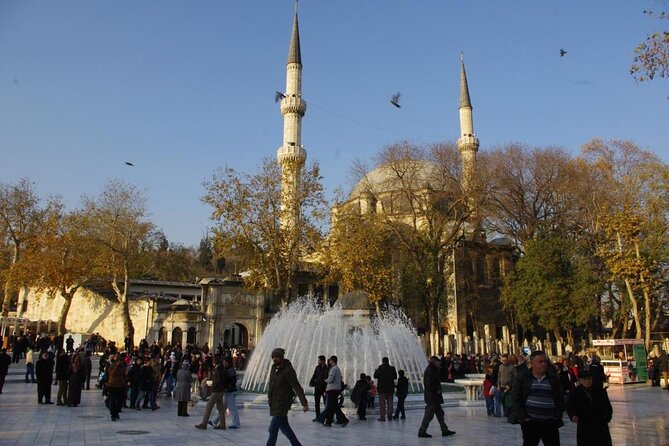
- Eyüp Sultan adds depth: it’s not just pretty views; you’ll also see the Ottoman cemetery setting.
- Golden Horn viewpoints are built in: Halic and Pierre Loti Hill both frame the same story from different angles.
- Guides like Ece and Emel set the tone: patient explanations plus practical, on-the-ground tips.
A Best-Of Day Around the Golden Horn
This tour is built around one core idea: Constantinople’s location wasn’t an accident. The Golden Horn is the geographic reason the city grew, traded, and fought its way through history. You feel that logic in the sequence of stops, from water-level perspective (Halic) to the hilltop lookouts (Pierre Loti Tepesi), and then into the spiritual and civic heart of old Istanbul near Eyüp.
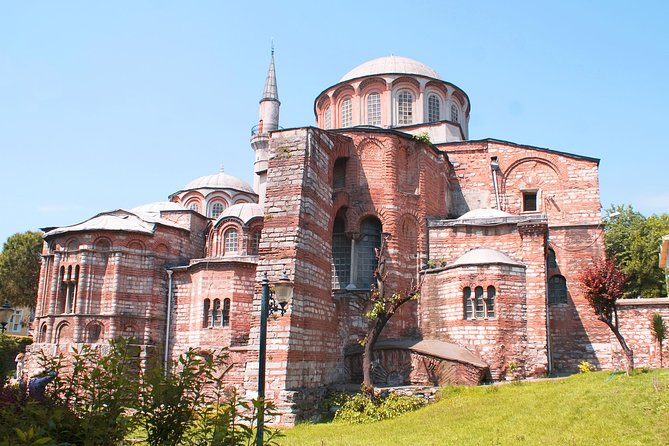
I also like that you’re not stuck only in the usual headline stops. You’re going to Chora Church (Chora Museum) for late Roman-era mosaics and frescoes, and you’ll spend time in the Eyüp district, where the religious geography of the city is still very real.
The tone is more “guided sightseeing with meaning” than “hurry and pose.” If you like learning why things are where they are, this kind of route is a good fit.
You can also read our reviews of more guided tours in Istanbul


Getting There: 9:00 Start, Minivan Ride, and Small Groups
The day begins at 9:00 am, and the tour runs about 5 to 7 hours. That timing matters because Istanbul’s traffic and crowd flow can change fast once the day heats up. Starting earlier helps you spend more time at the sights and less time stuck in transit.
You’ll ride in an air-conditioned minivan, and the tour includes hotel drop-off. Pickup is offered, but you should expect it to depend on group size—so it’s worth sending your full hotel details when you book.
This matters for comfort and value. At $290 per person, you want transportation that actually removes friction, and a small group that makes the guide’s attention feel personal. With a maximum of 10 travelers, the whole day stays manageable.
Misir Çarşısı Spice Market: More Than Souvenirs
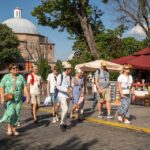
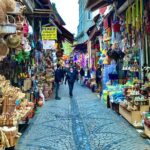
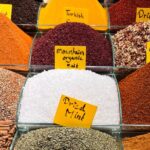
The route opens at Misir Carsisi (Spice Market), a place with about 400 years of history. Your guide walks you through the market and shares stories tied to shop owners, regular customers, and the rhythms of trading there. Instead of treating it like a quick photo stop, you get a guided orientation that helps you understand what you’re seeing.
It’s also short—about 20 minutes—which is a blessing if you don’t want a long, exhausting market slog. You’re encouraged to go into shops and enjoy the flavors, but you’re not trapped in vendor talk for the entire time.
One thing to keep in mind: this is a sensory-heavy area. Spices, smells, and crowds can feel intense, especially if you’re arriving straight from a hotel room where you had your normal routine. I recommend arriving ready to slow down for a few minutes and just take it in.
Chora Museum: Late Roman Mosaics in a Compact Church
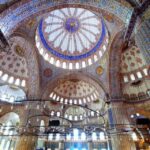
If you care about artwork that feels specific instead of generic, Chora Museum is the highlight for many people for a reason. You’ll spend around 1 hour here, focusing on frescoes and mosaics said to be among the best examples from the late Roman era.
Here’s the practical advantage: the church space is relatively small. That makes a difference. You’re closer to the details, and your eye doesn’t have to sprint across huge rooms trying to locate the art. The guide helps you connect what you’re seeing to its meaning, so it turns into more than just looking at pretty tiles.
Your guide will also explain the church history and the meanings behind the scenes. That interpretive layer is a big part of the value in this kind of museum visit. Without it, you can end up admiring surfaces while missing the story the surfaces are telling.
Halic and the Golden Horn Story: Why Constantinople Existed
Next comes Halic, tied to the Golden Horn—portrayed in the tour as the reason Constantinople existed in the first place. You get about 25 minutes here, and it’s one of those stops that can be easy to undervalue if you skip it. Don’t.
This is where the day’s big theme clicks into place. Istanbul’s waterways shaped where power concentrated and how the city worked. Even if you only get a few minutes of view time, the guide’s explanation helps you understand what you’re looking at, and why it mattered long before modern city lines existed.
Think of this stop as the “geometry lesson” before the “art and spirituality lesson.” You’ll be able to link the hilltop viewpoints later to the earlier water-level story.
You can also read our reviews of more museum experiences in Istanbul



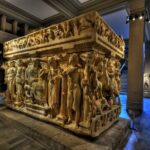
Süleymaniye Mosque and the Sinan–Süleyman Connection
Then you’re at Süleymaniye Mosque, with about 25 minutes on the site. The tour frames the mosque through the partnership of Sultan Süleyman and the architect Sinan—one of the best-known names in Ottoman architecture.
This is a meaningful stop because it anchors the day’s mix: Golden Horn geography, late Roman religious art, and then Ottoman monumental architecture. You’re not just seeing buildings; you’re seeing how different eras shaped the same urban space.
A quick practical note: mosque visits come with rules around behavior and usually dress expectations. You might need to adjust clothing on the spot, so it helps to wear something easy to manage. If you’re unsure what to wear, plan for modest basics rather than fashion statements.
Eyüp Sultan: Cable Car Views, Mosque Time, and Ottoman Graves
Eyüp is where the tour turns spiritual and historical at the same time. You’ll spend about 1 hour in the area, starting with the cable car ride up toward Pierre Loti Hill for Golden Horn views, then moving into Eyüp Mosque and the 600-year-old Ottoman cemetery.
This stop is powerful because it’s not only about architecture. Eyüp has a sacred feel tied to centuries of belief, and the cemetery adds a grounded, human dimension that you don’t always get at major city monuments. The tour also points out that Eyüp has been sacred across eras, even beyond the Islamic period.
The cable car segment matters too. One minute you’re in the city’s bustle; the next you’re rising above it. That vertical shift changes how you understand Istanbul—how it stacks water, hills, and neighborhoods into one layered scene.
If views are your thing, this part of the route is built for you. If you want a quieter, reflective moment, the cemetery setting tends to do that.
Pierre Loti Hill: Coffee With a Golden Horn Perspective
After Eyüp’s mosque and cemetery time, you get the final scenic moment at Pierre Loti Tepesi. The stop is 15 minutes—short, but positioned well. This is where you’re meant to absorb the view of the Golden Horn after you’ve already been told how it connects to the city’s origin story.
There’s also a simple treat included: you can enjoy a cup of Turkish coffee here. It’s not just a beverage break—it’s a way to make the viewpoint feel like an actual pause, not a rushed stop.
My advice: don’t treat this as a quick screenshot location. Take a moment, look for the shape of the waterway, and mentally connect what you saw earlier at Halic to what you’re seeing from above. That mental link is the payoff.
Lunch, Comfort, and What to Pack for This Day
Lunch is not included, and drinks aren’t included either, so you’ll want to set aside money for a meal. The good news is that this tour format usually keeps things flexible enough for you to eat somewhere your guide recommends. Guides on this route are known for being street smart and practical, which helps when you’re navigating local options on a tight schedule.
Comfort-wise, think about what this day asks from your body:
- You’ll move between markets, museums, and mosques, with some walking and stairs likely in the mix.
- Chora and Eyüp are indoor/outdoor blends, so you’ll feel temperature swings.
Pack for ease. Wear comfortable shoes. Bring a light layer. If you like taking photos, have a charged phone/camera and a plan for keeping it dry in market areas.
Also, since the tour is in English, it’s a good match if you want explanations you can follow without straining. The guide’s role is big here, and the pacing depends on that shared language.
Price and Value: When $290 Makes Sense
At $290 per person, this tour is not a budget day. So the value question is fair.
Here’s what you’re paying for, in real terms:
- Air-conditioned minivan transport that reduces stress.
- A local guide who explains what you’re seeing, especially at Chora.
- Entrance-related inclusions for key stops (Chora and Süleymaniye are listed as included; Pierre Loti Tepesi is included).
- A route that combines several major “Istanbul stories” into one coherent day: Byzantine art at Chora, Ottoman grandeur at Süleymaniye, and Eyüp’s sacred district plus Golden Horn viewpoints.
If your priority is getting the most out of one limited day in Istanbul, this price can be reasonable. If you’re traveling independently and you love building your own route, you may find a cheaper DIY approach. But you’d have to manage timing, transit, and the interpretive layer yourself.
For me, the biggest value lever is Chora. A guided explanation turns mosaics into understanding, and that’s hard to replicate casually on your own unless you’re reading a lot ahead of time.
Who This Tour Is For (and Who Might Prefer a Different Day)
This day tour fits best if you want:
- Golden Horn views plus meaningful context, not just photos
- a guided visit to Chora’s mosaics
- an Eyüp day that goes beyond one iconic mosque shot
It might be less ideal if you want a long, relaxed day with lots of free time. The route is structured, with stops timed tightly (like Misir Çarşısı at 20 minutes and Pierre Loti Tepesi at 15). You’ll see a lot, but it’s not a wandering day.
Also, since you’re visiting mosques and a cemetery area, you’ll want to be comfortable with respectful sightseeing and some slower moments.
Should You Book This Guided Day Tour?
Yes—if you’re the kind of traveler who likes your Istanbul days to connect the dots. This tour’s strongest ingredient is how it pairs views (Golden Horn from Halic and Pierre Loti) with cultural explanation (Chora’s art and the Süleymaniye-Sinan-Süleyman story). It’s also reassuring that the group size stays small, which helps the guide manage pace and questions.
I’d hold off if you’re only interested in the biggest headline sights or you don’t want a scheduled route. For that style, you might enjoy a looser plan with fewer stops.
If you do book, bring comfortable shoes, budget for lunch and drinks, and go into Chora ready to look closely. That’s where this day has the most lasting impact.
FAQ
How much does the Eyüp, Pierre Loti Hill, and Kariye Museum guided day tour cost?
The tour costs $290.00 per person.
How long is the tour?
The duration is approximately 5 to 7 hours.
What time does the tour start?
The start time is 9:00 am.
Is pickup included?
Transport by air-conditioned minivan is included, and hotel drop-off is included. The tour indicates pickup is offered, but hotel pick up is listed as not included, with instructions that pick-up depends on group size and your provided hotel details.
What’s included in the price?
Included: transport by air-conditioned minivan, a local guide, and hotel drop-off. Admission is included for key stops like Chora Museum and Süleymaniye Mosque, and Pierre Loti Tepesi is also listed as included.
What’s not included?
Lunch and drinks are not included. Hotel pick up is also listed as not included, depending on group size.
What language is the tour offered in?
The tour is offered in English.
How many people are in the group?
The tour has a maximum of 10 travelers.