REVIEW · ISTANBUL
Byzantion Walk Path and City Walls of Istanbul
Book on Viator →Operated by Taha Guide of Turkiye · Bookable on Viator
Walk the walls that outlasted empires. This is a sharp, story-led route along the defenses of Constantinople, built for real-world siege warfare, and topped off with Chora Museum for some of the most moving Byzantine art you’ll see in Istanbul. I especially love how the Theodosian Walls get explained as a layered system, not just a set of rocks, and how the stops include major gates with free admission where you can actually picture the city’s defensive logic. One consideration: Chora Museum’s admission is not included, and the museum is closed on Fridays—so plan your day around that.
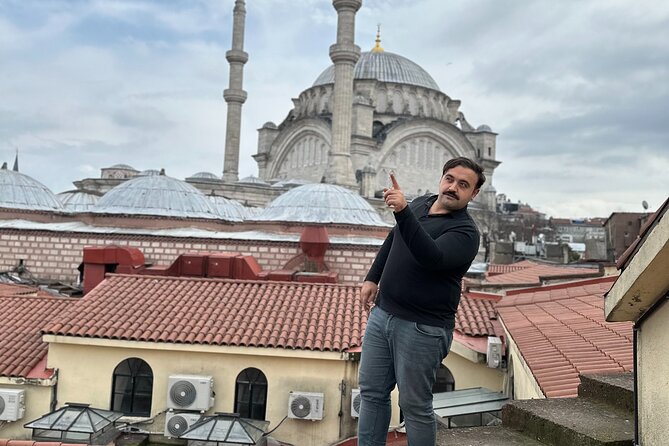
I’ve also picked up from this tour style that the guide matters a lot here. Guides tied to this experience (including Taha Guide of Turkiye, and in some groups guides such as Ally or Taja) keep the walk moving but never rush you, and you can ask for pauses along the way. It’s private too, meaning your group sets the tempo and you’re not stuck watching someone else’s agenda.
In This Review
- Key highlights you’ll care about
- Why the Byzantion Walls walk feels different
- German Fountain meeting point and the 9:00 am start
- Yedikule and the Golden Gate: where the walls look huge
- Silivrikapı: a shorter stop with standout construction details
- Mevlanakapı and the story of Theodosian defense engineering
- Chora Museum: the ticketed finale for mosaic lovers
- Price, group size, and what you’re really paying for
- Practical tips for a smooth wall-and-museum morning
- Who should book this Byzantion Walls and Chora route
- Should you book this tour or pass?
- FAQ
- How long does the Byzantion Walk Path and City Walls of Istanbul tour last?
- Is the tour admission included for the stops on the walls?
- Is Chora Museum included in the tour, and is it ever closed?
- Is this a private tour?
- What is the meeting point and start time?
- Is the tour suitable if I have leg problems?
- How does transportation work during the tour?
- What happens if the weather is bad?
Key highlights you’ll care about
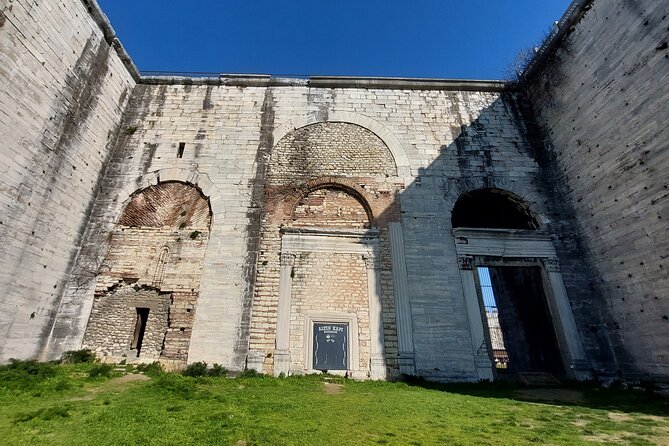
- Golden Gate at Yedikule: you get a big look at the walls and the Ottoman-era dungeon area in the same area.
- Silivrikapı’s Byzantine detail: irregular stone and brick-row repairs in the Late Byzantine period.
- Theodosian Walls explained in plain terms: you’ll learn how the moat, outer wall, and ~12-meter inner wall were meant to stop siege equipment.
- Chora Museum’s mosaic-focused stop: a museum visit timed for about 1 hour 20 minutes, with Palaeologan-style art front and center.
- A private group route up to 15: one guide, one plan, and the walk stays flexible for your group.
- Free admissions for the wall gates: the walking portions are free, with the only ticketed major stop being Chora.
Why the Byzantion Walls walk feels different
Most Istanbul tours give you highlights in a hurry. This one gives you a defensive spine.
You’re walking where Constantinople’s strength was engineered: gates, towers, and walls designed to absorb punishment. Instead of treating the walls like scenery, you’ll get the “how it worked” story—why certain layers mattered and how attackers were forced into disadvantageous angles and sequences. Even if you’re not a military history buff, it lands fast because the architecture does the talking.
And then you switch gears at Chora Museum, which is where the emotional side of Byzantine culture shows up. The contrast is part of the value: stone that survived sieges, followed by images made to move the human heart.
You can also read our reviews of more walking tours in Istanbul



German Fountain meeting point and the 9:00 am start
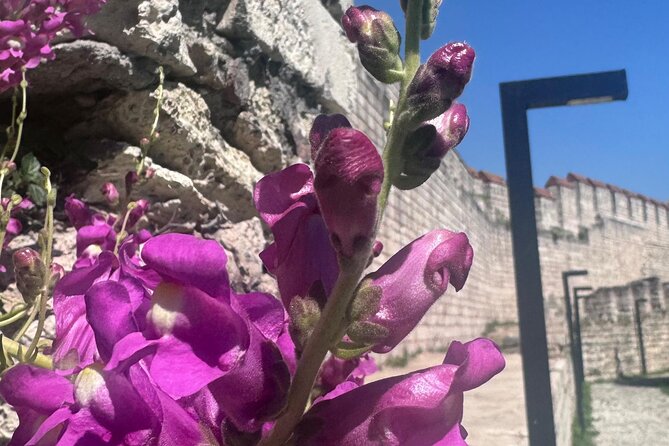
You meet at the German Fountain area (At Meydanı Cd, Fatih). The tour starts at 9:00 am and ends back at the same meeting point, which makes logistics easier than tours that strand you across town.
You’ll also be near public transportation, which matters when part of the route uses taxi or public transportation to reach the Yedikule area. So you’re not locked into one long chain of walking from the start.
The tour duration is listed as about 1 to 5 hours, and in practice that range usually depends on how long you spend on the museum stop and the pace your group takes. This is a private tour, so your guide can adjust the timing to your comfort level.
Yedikule and the Golden Gate: where the walls look huge
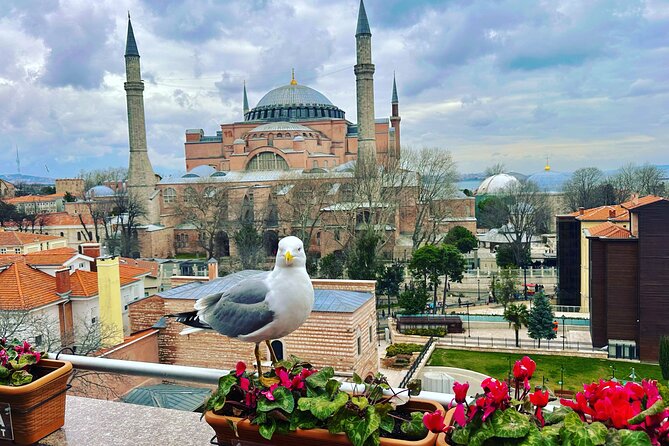
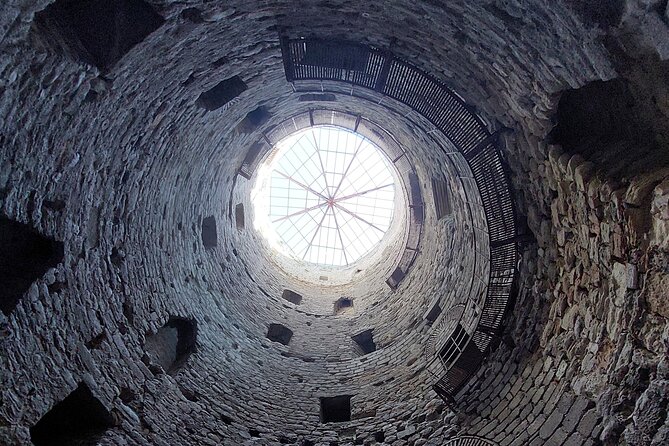
The walk kicks into gear at Yedikule, one of the places where the city walls feel real and physical. You’ll spend about 1 hour 30 minutes here, with a focus on the biggest part of the city walls in this stretch and The Golden Gate.
Yedikule has a layered past. It was important as a gate long before the Ottomans, and the area is also tied to dungeons during the Ottoman period. That mix helps the whole wall story feel less like a textbook diagram. You’re looking at a boundary that different empires treated as strategic—and often punished people within.
Admission for this stop is free, which is a big practical win. It means you can spend time at the walls themselves without constantly worrying about ticket timing.
Watch-out for your feet: this is a historic route along defenses, so wear shoes that handle uneven surfaces and don’t pinch.
Silivrikapı: a shorter stop with standout construction details
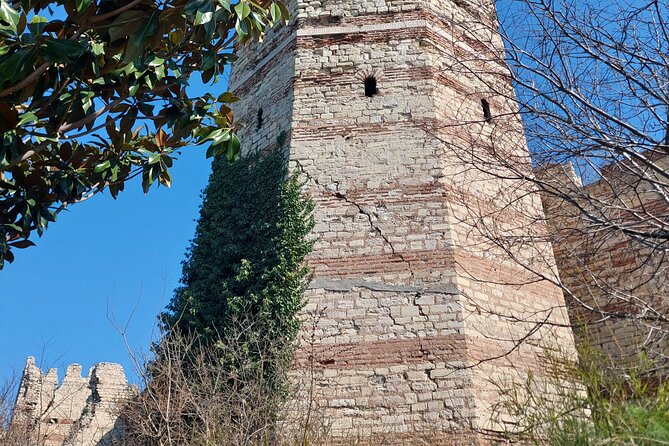
Next comes Silivrikapı, the next main gate to the north of Belgrad Kapı. This part is shorter—around 40 minutes—but it’s the kind of stop that rewards close looking.
The defining detail here is the gate’s setting between two polygonal gateway towers. Even if you move quickly, you’ll spot how the gate sits like a crafted passageway, not just an opening in stone.
In the Late Byzantine period, this gate was renewed with a mix of irregular stones and brick rows laid in between. That kind of patchwork is exactly what you want on a wall walk: it shows you the wall isn’t frozen in time. It was maintained, altered, and reinforced as needs changed.
Admission is free, so this is one of the best value stops on the route.
Mevlanakapı and the story of Theodosian defense engineering
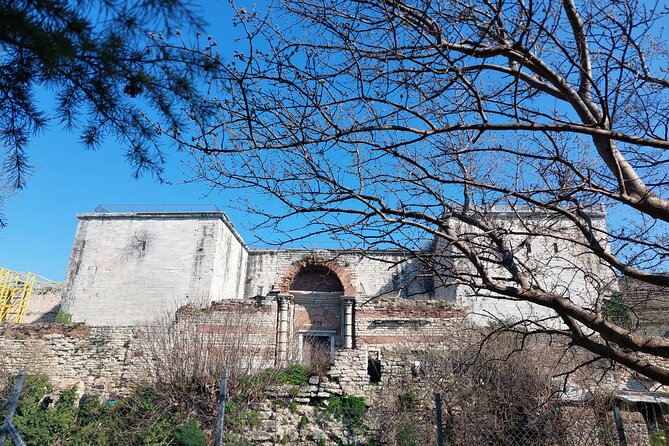
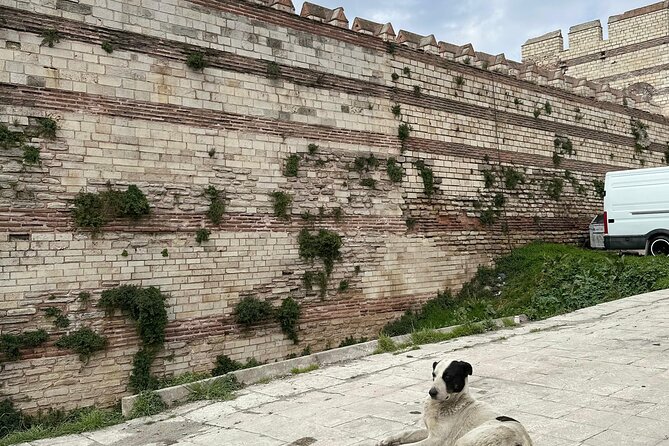
Then you walk along the defenses at Mevlanakapı. Expect around 45 minutes here, focused on the monumental Theodosian Walls.
What makes this stop click is that the guide doesn’t just point and name. You’ll get the defense logic as a multi-layer system:
- a deep moat
- an outer defense wall
- a massive inner wall about 12 meters high
The point isn’t trivia. It explains why attackers couldn’t just charge at one wall and call it a day. The layers were designed to absorb pressure, slow movement, and make siege engines less effective. In a city built to endure long sieges, the system mattered as much as any single tower or gate.
Also, the guide framing here helps you understand why this “walk path and city walls” concept is so compelling. You’re not only seeing the remains. You’re learning how they were meant to break an enemy’s momentum.
Admission for this stop is free, so you’re paying for interpretation and time, not tickets.
You can also read our reviews of more city tours in Istanbul



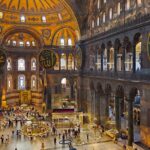

Chora Museum: the ticketed finale for mosaic lovers
The final major stop is Chora Museum, usually about 1 hour 20 minutes.
This is the one place where you need to plan for costs because admission is not included. It’s also closed on Fridays, so if your dates land on a Friday, you’ll either need to reschedule or pick a different tour.
Here’s why Chora matters on a Byzantine walls day: it’s not only Byzantine art. It’s Byzantine art that shows a shift in style.
The museum began as the Church of the Holy Savior in Chora, and the surviving masterpieces are associated with the 14th century. The key theme you’ll hear is the Palaeologan Renaissance, when artists leaned toward more naturalism and more human feeling than earlier Byzantine works often show. If you’ve ever wanted to see that “people are people” side of Byzantine iconography, this is where it shows up loudest.
Think of this as your emotional payoff after the hard-edged siege engineering. Stones that defended the city, then mosaics that convey what it meant to live through it.
Price, group size, and what you’re really paying for
The price is listed as $372.07 per group (up to 15), for private guided time. That’s a math-friendly setup:
- If your group fills all 15 spots, it’s about $24.80 per person.
- If fewer people join, it obviously costs more per person, but you still get a private guide and a tight route.
In Istanbul, private guided tours can get expensive fast. The value here is that several stops are free admissions, so your guide time is doing the heavy lifting: turning stone and gates into a story you can actually remember.
Two costs to keep in mind:
- Chora Museum ticket not included
- Lunch not included, listed roughly as 300 to 6000 Liras
If you already plan to visit Chora, this kind of combined route can feel like a bargain because you’re not paying for a separate day just to get to that museum.
Also, this experience tends to get booked ahead (on average 112 days). So if you have a firm travel window, I’d lock in early rather than assuming you can last-minute it.
Practical tips for a smooth wall-and-museum morning
This one asks for moderate physical fitness. It’s not recommended for anyone with leg problems. That doesn’t automatically mean it’s brutal, but it does mean you shouldn’t treat it as a stroll.
A few things that help:
- Plan on walking along city wall terrain that may feel uneven or steep in places.
- Bring water and a hat or light layer if the weather turns warm.
- If you need breaks, use them. The guide style for this experience includes checking in and adjusting to your comfort.
Transportation-wise, it’s mostly straightforward. You meet near transit, and the route uses taxi or public transportation for the segment heading to Yedikule. So you’re not left guessing how to get from one wall section to the next.
One more note: service animals are allowed. If that applies to you, this is a helpful detail to know ahead of time.
Finally, the tour requires good weather. If weather is poor, the experience may be offered on a different date or you may get a full refund.
Who should book this Byzantion Walls and Chora route
Book it if you fit at least one of these:
- You want more than famous landmarks and want to understand how Istanbul protected itself.
- You like art that has a real emotional pulse, not just gold-and-glory decoration.
- You’re visiting for the first time and want a guide who can stitch walls and mosaics into one coherent day.
It’s especially strong for couples and small groups because it’s private, but it also works for larger groups up to 15 if you all want the same focus.
Skip it if:
- Walking is a problem for your legs.
- You’re only interested in quick photos and don’t want the architecture story.
Should you book this tour or pass?
I’d book it if you want a guided wall experience that explains the logic of Constantinople’s defenses, then finish with Chora Museum’s standout mosaics and frescoes. The mix is rare: hard architecture in the morning, human-centered Byzantine art in the afternoon.
The main reasons to pause are the practical ones: Chora’s admission cost is on you, and the museum is closed on Fridays. If your schedule hits a Friday and you can’t move dates, you may want to switch plans.
If your dates work and you’re okay with moderate walking, this is the kind of day that makes Istanbul’s layers feel connected instead of random.
FAQ
How long does the Byzantion Walk Path and City Walls of Istanbul tour last?
The duration is listed as about 1 to 5 hours, depending on timing and pace across the wall stops and the museum visit.
Is the tour admission included for the stops on the walls?
Yedikule, Silivrikapı, and Mevlanakapı are listed as having free admission. Chora Museum admission is not included.
Is Chora Museum included in the tour, and is it ever closed?
Chora Museum is included as a stop, but it is closed on Fridays.
Is this a private tour?
Yes. It’s a private experience, and only your group participates.
What is the meeting point and start time?
You meet at the German Fountain (At Meydanı Cd, 34122 Fatih/İstanbul) and the start time is 9:00 am.
Is the tour suitable if I have leg problems?
It is not recommended for anyone with leg problems.
How does transportation work during the tour?
You’ll visit the Yedikule area by taxi or public transportation, and the meeting area is near public transit.
What happens if the weather is bad?
The tour requires good weather. If it’s canceled due to poor weather, you’ll be offered a different date or a full refund.