REVIEW · ISTANBUL
3 Days Ephesus, Pamukkale, Priene, Miletus and Didyma Tour from Istanbul
Book on Viator →Operated by Puerto Travel Turkey · Bookable on Viator
Aegean ruins, cotton-white terraces, and fast logistics.
This 3-day western Turkey plan strings together Ephesus with the quieter Ionian stops of Priene, Miletus, and Didyma, then caps it off at Pamukkale’s thermal “Cotton Castle.” You’re not just hopping between sites; you’re moving with private transfers, guided timing, and a route designed to make the ruins easier to absorb.
What I like most is how the day-to-day order reduces stress and boosts what you remember. I also love that the tour includes major entrances (including Ephesus Experience Museum, Hierapolis, and Pamukkale’s terraces) and pairs big names with the less-visited cities. The one possible drawback: the pace is intense and you’ll need a moderate fitness level for walks (including stairs at Ephesus Terrace Houses), plus two popular add-ons cost extra (the Terrace Houses entry and the Cleopatra thermal pool swim ticket).
In This Review
- Quick Hits Before You Go
- Istanbul to Izmir: How the Trip Actually Works
- Virgin Mary’s House: A Calm Start in Selçuk
- Ephesus the Easy Way: Upper Gate to Celsus, Theatre, and More
- Ephesus Terrace Houses: Luxurious Roman Life (And Extra Tickets)
- Ephesus Experience Museum: The 360-Degree Memory Helper
- Selçuk Break and the Temple of Artemis Photo Moment
- Kusadasi Hotel Night: Where You Recover Between Worlds
- Priene: The Peaceful City With Alexander’s Footprint
- Miletus: Maritime Power and St. Paul’s Farewell Context
- Didyma on the Coast: Temple of Apollo’s Scale Shock
- Road Back to Kusadasi: Cotton Fields and Olive Groves
- Pamukkale Day Trips: Hierapolis First, Then the White Terraces
- Hierapolis Archaeology Museum: Statues, Sarcophagi, and Roman Craft
- Cleopatra Pools: Swim Access Costs Extra
- Pamukkale’s Cotton Castle: Barefoot Terraces and Thermal Water
- Lunch, Last Transfers, and Flying Back to Istanbul
- Value for Money: What You’re Really Paying For
- Who This Tour Fits Best (And Who Might Prefer Something Else)
- Should You Book This Ephesus to Pamukkale 3-Day Tour?
- FAQ
- Do I need to arrange the flights separately?
- Is pickup offered from Istanbul?
- How many people are in the group?
- What language is the tour guide?
- Are entrance fees included?
- What meals are included?
- What is the lodging like during the tour?
- Is the tour physically demanding?
Quick Hits Before You Go
- Small group max of 15 with English-speaking guiding
- Ephesus starts from the Upper Gate so you walk downhill through the highlights instead of fighting the crowds
- Priene and Miletus add depth beyond the usual Ephesus-only route, with viewpoints over the Meander Plain
- Didyma’s Temple of Apollo is a scale shock with underground tunnel access to the inner area
- Pamukkale gives you both history and geology (Hierapolis + thermal terraces)
- Two extra-ticket moments to plan for: Ephesus Terrace Houses and Cleopatra Pools swim access
Istanbul to Izmir: How the Trip Actually Works
This tour is built around flights, not bus-and-boat heroics. You’re picked up from your Istanbul hotel and driven to the airport so you can meet the flight schedule without last-minute scrambling. The key idea: you’re gaining a whole day of sightseeing by letting logistics happen before you’re even thinking about ruins.
When you land in Izmir, the handoff is clear. You look for the driver holding your name at the exit gate, then you’re transferred to Selçuk (about an hour). After that, you meet your guide and your group starts moving like a team. Having that structure matters because Ephesus and Pamukkale are the kind of places where one missed timing window turns the whole day into a shuffle.
The tour runs in English and keeps the group to 15 travelers max. That size is big enough for a lively feel but small enough that your guide can actually manage the pace at archaeological sites.
You can also read our reviews of more tours and experiences in Istanbul

Virgin Mary’s House: A Calm Start in Selçuk
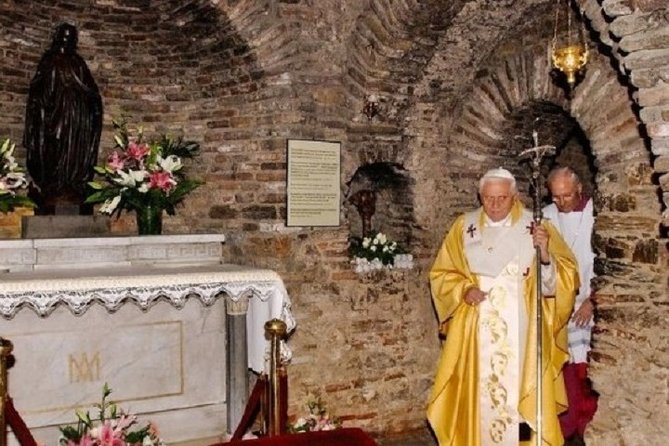
Day 1 begins with the House of the Virgin Mary in the Mount Koressos area. The smart part here is timing: you go early enough that the mood stays quiet, with time to sit, reflect, and take in the setting before crowds build.
You get about 45 minutes there with admission included. You also have the option to light a candle and leave a note on the wishing wall. Even if you’re not traveling for religious reasons, it’s a nice reset before you hit stone-on-stone Roman grandeur.
Practical note: this is not a drive-by photo stop. It’s an on-foot, contemplative visit, so wear comfortable shoes and treat it like a real stop, not a quick detour.
Ephesus the Easy Way: Upper Gate to Celsus, Theatre, and More
Ephesus can feel overwhelming if you arrive with no plan. This route helps you. You enter from the Upper Gate and walk downhill through the main marble streets, which naturally lines up the ruins in a way that makes sense on the ground.
You visit the Celsus Library and the Temple of Hadrian, then you sit in the Great Theatre where St. Paul is traditionally connected with preaching. Admission is included, and the guided approach helps you see not just what the stones are, but why they mattered—Ephesus as a major city in the Roman world.
You’ll spend about 3 hours inside Ephesus, which is a realistic window: long enough to cover the big sights, not so long that you’re stuck in a heat haze with your brain on airplane mode.
If you’re the type who loves “stand here, picture it, and move on,” you’ll get a lot out of this pacing. If you’re the type who wants to linger on every carving, you might wish there was more time at Ephesus—but the tour has to fit in the rest of western Turkey.
Ephesus Terrace Houses: Luxurious Roman Life (And Extra Tickets)
Next up are the Ephesus Terrace Houses—often described as a museum within a museum. They’re covered by protective roofing, so you get a clearer view of mosaics, frescoes, and the design of private elite homes.
Here’s the catch: the Terrace Houses admission is not included. Also, there’s a stair element inside the structure, and the route is not for people who want everything flat and easy.
What makes this stop worth considering is contrast. Ephesus isn’t only temples and theatres. These homes show how wealth lived day-to-day—heating systems, decorated floors, and the quiet “behind-the-scenes” version of Roman life. If you hate paying extra for sites, you can skip it, but if you like interior details, it’s one of the most interesting parts of the Ephesus story.
Ephesus Experience Museum: The 360-Degree Memory Helper
After walking among ruins, your brain needs help connecting dots. That’s where the Ephesus Experience Museum comes in. It uses 360-degree screens, 3D audio, and sensory effects to reconstruct parts of the city’s daily life.
Admission is included, and the time is short—about 30 minutes—which is perfect. It’s not meant to replace the ruins; it’s meant to make the ruins stick in your mind.
I like this format because it solves a common problem: Ephesus can feel like “a lot of rocks” if you don’t get context. The museum helps you mentally replay what the street level might have looked like.



Selçuk Break and the Temple of Artemis Photo Moment
Between the heavy history stops, you get a food break in Selçuk. You’ll have about 1 hour at a selected local restaurant for Turkish cuisine—meze, hot mains, desserts. Lunch isn’t included, but this meal time is part of the tour day, so it’s built in rather than left for you to solve while hungry.
Then you head to the Temple of Artemis area, a Seven Wonders site. Even though only a single column remains, it’s still one of those “scale lessons” in archaeology. You can often photograph the layered history in one frame: the pagan temple column, the Isa Bey Mosque area, and the Basilica of St. John.
This stop is about 30 minutes, with no admission fee mentioned. It’s a compact closing note that gives you a sense of scale before you move toward your hotel.
Kusadasi Hotel Night: Where You Recover Between Worlds
After Ephesus and Selçuk, you transfer to the seaside town of Kuşadası and check into a 4-star hotel. The evening is free, which is important. You’ll be tired in the good way—sun-warmed legs and a head full of Roman names—so you can keep the night simple.
Think of this night as your reset button. Take a slow walk on the promenade, or find seafood nearby if you feel like leaning into the Aegean theme. Either way, you’ll sleep better knowing you’re not rushing to another site the same night.
Priene: The Peaceful City With Alexander’s Footprint
Day 2 starts with Priene, often called the Pompeii of Anatolia. The big difference from Ephesus is atmosphere. Priene is quieter and sits in a more open, pine-and-hill setting, which makes it easier to focus without the same crowd pressure.
You’ll walk its ancient grid streets, visit sites like the Bouleuterion (Senate House), and stand by the Temple of Athena, which is connected to funding by Alexander the Great. You’ll also get a view over the Meander Plain that feels like a reward for surviving the walking.
Admission is included, and the time is about 1.5 hours. This stop is valuable because it shows another side of the Greek world—planned cities and civic architecture, not only grand ruins.
Miletus: Maritime Power and St. Paul’s Farewell Context
Then you move to Miletus, a former maritime power and a birthplace of western philosophy (Thales is associated here). You see the massive Grand Theatre rising above the plains, and you also visit the Baths of Faustina.
If you’re interested in biblical history, this is also the region linked with St. Paul’s farewell speech to the elders of Ephesus (from Acts 20). Even if that’s not your focus, Miletus works because it’s less overhyped than Ephesus, and that helps you notice what the place is trying to communicate.
Time is about 1 hour, with admission included. This is a good slot: short enough to stay fresh, long enough for the main architecture to register.
Didyma on the Coast: Temple of Apollo’s Scale Shock
Didyma is next, and the plan gives you a real break first. You arrive in Didyma and stop at a restaurant, with time to eat—fresh seafood is a good bet here if it’s on offer. The meal break is about 1 hour, free of extra admission pressure.
Then comes the star: the Temple of Apollo. This isn’t really described as a city; it’s an oracle center, second only to Delphi in sacred importance (as the tour frames it). The scale hits fast. You stand by massive columns and feel small, then you continue into the interior area through dark tunnels, which makes the experience feel more like discovery than sightseeing.
A highlight is the Head of Medusa sculpture. Admission is included, and you’ll have about 1 hour here.
This is one of those sites where guide explanation can make a big difference, because ruins at this scale can feel abstract if you don’t know what to look for. If you want a strong finale to your Ionian route, this is the stop that delivers.
Road Back to Kusadasi: Cotton Fields and Olive Groves
After Didyma, you drive back toward the coast through cotton fields and olive groves. The tour doesn’t treat this like empty transit time; you get scenery and a breather between monumental sites.
You arrive at your Kusadasi hotel in the late afternoon, which sets you up for Day 3 at Pamukkale. This timing matters because Pamukkale usually deserves full attention once you get there.
Pamukkale Day Trips: Hierapolis First, Then the White Terraces
Day 3 starts with pickup from your Kusadasi hotel and a drive to Pamukkale (about 2.5 to 3 hours). The route passes through the Meander Valley with cotton fields, fig orchards, and Turkish villages. Even if you’re not sightseeing in the strict sense, this scenic drive helps you settle in instead of jumping straight into heat and walking.
Once you reach Hierapolis, you start with the Necropolis, including the large Frontinus Gate and then the Theatre area for panoramic views of the white terraces. Admission is included, and the stop is about 2 hours.
Hierapolis is a big step from the Ionian sites: it’s more religious and funerary, and it’s built into the landscape in a way that makes you think about how people used to move between life, death, and pilgrimage.
Hierapolis Archaeology Museum: Statues, Sarcophagi, and Roman Craft
Next you visit the Hierapolis Archaeology Museum, set inside a restored ancient Roman bath area. It’s about 30 minutes, with admission included.
You see sarcophagi, statues, and friezes from Hierapolis and nearby Laodicea. The highlight is the Hall of Statues, featuring mythological figures and gladiator reliefs. This stop is valuable because it shifts you from ruins-as-rocks into ruins-as-artwork—what got saved, studied, and displayed.
If you’re someone who likes museums but hates spending half a day indoors, this timing is just right.
Cleopatra Pools: Swim Access Costs Extra
Then you reach the Cleopatra Pools. You can walk through the pool area (entrance there is free), but to actually swim you need an extra ticket. The pool is described as having submerged ancient marble columns from the Temple of Apollo, exposed after an earthquake legend.
This is one of those optional moments that can change your whole day. If you want the physical experience—warm mineral water and the feeling of “swimming next to history”—budget for the swim ticket. If you’d rather keep costs controlled or you’re not comfortable with pool entry, you can still enjoy the setting and photos.
Your time here is about 45 minutes, depending on how long you hang around the water area.
Pamukkale’s Cotton Castle: Barefoot Terraces and Thermal Water
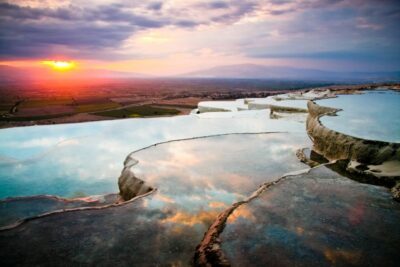
Now for the famous part: the Pamukkale Thermal Pools. The “Cotton Castle” name comes from snow-white limestone terraces formed over millennia by calcium-rich thermal springs.
You take off your shoes and walk barefoot on warm terraces. The walk time is about 45 minutes, with admission included. You’ll want to bring your best “photo feet” attitude: you’ll get the photos, but you’ll also feel the warmth and the texture underfoot.
This is worth treating as the main event of Day 3. Everything else supports it, but the terraces are the show.
One practical note: you’ll want to plan your pace. It’s easy to rush and end up with sore ankles and half the photos you wanted.
Lunch, Last Transfers, and Flying Back to Istanbul
After the terraces, you stop for lunch at a selected local restaurant in Pamukkale. The lunch time is about 1 hour, and lunch isn’t listed as included—so treat it like your own choice meal within the day.
Then the tour drives you back for your flight. You go to Denizli Cardak Airport (about a 1 hour drive from Pamukkale area), with enough time for check-in. A private driver drops you at the departure gate, then you fly back to Istanbul.
Once you land, you’re met outside the terminal at the designated meeting point and taken by private transfer back to your hotel door.
Value for Money: What You’re Really Paying For
At about $1,017.48 per person, this isn’t a budget afternoon jaunt. But it’s not a “pay for nothing” price either. You’re paying for a lot of friction removal:
- Private transfers with air-conditioned vehicle for hotel-to-airport and between major stops
- Professional guiding in English across multiple archaeological sites
- Accommodation in local hotels (with a 4-star hotel in Kuşadası specifically mentioned)
- Entrance fees to many key sites and museums, including major Ephesus items, Hierapolis, and Pamukkale terraces
- Breakfast (2) included
What’s not included is also clear: lunch and dinner, personal expenses and tips, Terrace Houses and Cleopatra swim ticket, plus domestic flight tickets. That last one is important for comparing total cost. If you’re trying to judge value quickly, look at what you would pay in entrances and guided time on your own, then compare it to the convenience of handling flights, transfers, and timing in one package.
Where this tour looks especially good value is if you want depth without the mental load. Ephesus alone is big. Adding Priene, Miletus, and Didyma makes the history feel more complete, and the itinerary supports that goal.
Who This Tour Fits Best (And Who Might Prefer Something Else)
This works well for you if you want a structured plan across western Turkey in a short time, with English guiding and included entrance fees at the headline sites.
You’ll likely enjoy it if you’re curious about how the Greek world, Roman world, and early Christian context overlap across the region. The mix of Ephesus + Ionian cities + Hierapolis/Pamukkale gives you a more rounded picture than a single-site itinerary.
It may feel too much if you prefer slow travel, lots of free wandering, or if you dislike stairs and long museum walking. Also, if you’re very budget-conscious, the extra-ticket items (Terrace Houses and Cleopatra swim) can add up fast.
A helpful tip: based on prior experiences with guides such as Güfte, Ogun, and Yavuz, this type of small-group touring can adjust to your interests. If you care about shopping, extra photo time, or pacing, ask early and calmly. It’s easier when you set expectations before the day gets busy.
Should You Book This Ephesus to Pamukkale 3-Day Tour?
If you want the highlights plus the strong supporting cast—Ephesus, Priene, Miletus, Didyma, Hierapolis, and Pamukkale—this is a sensible way to do it. The included entrances and the small-group structure keep you from wasting vacation time on logistics, and the pacing gives you enough structure to actually remember what you saw.
Book it if:
- you’re okay with a packed three days and some walking and stairs
- you want guide context, not just photos
- you’re willing to pay extra if you want the Terrace Houses and Cleopatra swim
Skip it or consider a lighter alternative if:
- you prefer unhurried exploration
- you strongly dislike extra-ticket add-ons
- you’re trying to keep total trip cost ultra-low once flights, lunch, and optional swims are added
FAQ
Do I need to arrange the flights separately?
Yes. The tour notes that domestic flight tickets are not included. The operator says you should reach out before purchasing flights so they can help you book the most appropriate flights based on the tour schedule.
Is pickup offered from Istanbul?
Yes. Pickup is offered, and you’ll be met in your Istanbul hotel lobby and taken to the airport before your flight.
How many people are in the group?
The tour has a maximum of 15 travelers.
What language is the tour guide?
The tour is offered in English.
Are entrance fees included?
Many are included. Entrance fees are included for places like Virgin Mary’s House, Ephesus, Ephesus Experience Museum, Priene, Miletus, Temple of Apollo, Hierapolis, and Pamukkale thermal pools, while some items are not included such as Ephesus Terrace Houses and the Cleopatra Antique Swimming Pool swim access.
What meals are included?
The tour includes breakfast (2). Lunch and dinner are not included.
What is the lodging like during the tour?
You stay in local hotels, and the plan specifically mentions a 4-star hotel in Kuşadası.
Is the tour physically demanding?
It’s listed as requiring moderate physical fitness level, with walking involved at multiple archaeological sites, including stairs for the Terrace Houses.