REVIEW · ISTANBUL
Multi 2 Days Private Guided Istanbul Iconic Landmarks City Tour
Book on Viator →Operated by Istanbultourmatt · Bookable on Viator
Two days, four centuries of Istanbul. This private guided tour is a smart way to see the headline sights without wasting time, and I like that you meet your guide each day at the best spot for you. I also like the practical pace built into the plan, plus the fast track option that helps you avoid long ticket-line stress.
One watch-out: your wallet will feel the impact of major site entry fees. Big draws like Hagia Sophia and Topkapi aren’t included, and one guest flagged how quickly expenses add up when you count everything together.
In This Review
- Key highlights that actually matter
- How good is this 2-day Istanbul plan?
- Where the “private” part shows up
- Day 1: Sultanahmet icons in a logical order
- Blue Mosque (Sultan Ahmed Mosque): the “blue tiles” moment
- Hagia Sophia Grand Mosque: a building with multiple identities
- Basilica Cistern (Yerebatan Sarayı): underground Roman vibes
- Topkapi Palace: Ottoman power in courtyards and collections
- Hippodrome area: old monuments in a modern square
- Grand Bazaar: shopping with history in the background
- Day 2: Bosphorus splendor and Beyoğlu viewpoints
- Dolmabahçe Palace: European style meets Ottoman setting
- Taksim Square: Republic Monument and city energy
- Istiklal Avenue: a walk with history, shops, and the red tram
- Galata Tower: Genoese roots and a panoramic view
- Bosphorus Strait boat tour: the skyline reset
- Suleymaniye Mosque: hilltop views and imperial architecture
- Spice Bazaar (Misir Çarşısı): end with scent, color, and souvenirs
- Money and value: what $400 gets you, and what you must budget
- Guides make the difference (and you’ll feel it)
- Who this tour is best for
- Should you book this 2-day Istanbul tour?
- FAQ
- What does the tour price include?
- Are tickets to all attractions included?
- How long is the tour?
- Where will the guide meet us?
- Is this a group tour?
- What weather and activity level should we expect?
Key highlights that actually matter
- Private, not packed-group sightseeing: it’s only your group, with a guide who can steer the day to your questions and pace.
- Fast track ticket option: you can often skip the worst of the ticket queues at top sights.
- Two geographic swings: Day 1 stays in Sultanahmet, Day 2 hops to the Bosphorus and Beyoğlu.
- Iconic monuments plus classic markets: you get palaces and mosques, then you finish with Grand Bazaar and the Spice Bazaar.
- Great guide factor: multiple guides were mentioned by name in the feedback, including Sabit, Mehmet, Ali, Matt, and Ege.
- Scenic payoff built in: the Bosphorus boat stop is timed for views rather than box-checking.
How good is this 2-day Istanbul plan?
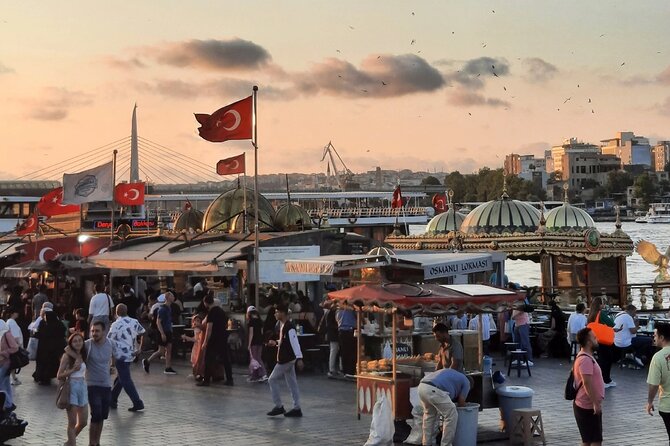
This is the kind of Istanbul tour that works best when you want two things at the same time: the big visual hits (blue tiles, giant domes, Ottoman palaces) and the stories that make them make sense. The tour is built around two clusters, so you spend less time fighting across the city and more time looking up.
It’s also genuinely flexible for a fixed itinerary. Your guide meets you each day at the most convenient departure point, including central hotels, Airbnb locations, or Galataport (Sali Pazarı area). That sounds minor until you’re standing in Istanbul trying to coordinate where to meet a group of strangers. With a private setup, you don’t do that math.
The other practical advantage is time efficiency. Some of the most popular sights have real queues. With fast track ticket support (skip-the-line where available), you lose less of your day to ticket windows and more to actual exploring.
You can also read our reviews of more guided tours in Istanbul


Where the “private” part shows up
A private guide matters most at high-demand stops. You’ll get explanations while you’re standing in front of the building, not after you’ve already moved on. And if something grabs you—an architecture detail, a specific monument, or a viewpoint—your guide can generally adjust your walking rhythm rather than forcing everyone to march together.
Day 1: Sultanahmet icons in a logical order
Day 1 is built like a classic Istanbul introduction. You start with the skyline-defining mosque, then move through the massive Byzantine-to-Ottoman story at Hagia Sophia, descend underground into the Basilica Cistern, and keep going into Ottoman power at Topkapi. The day closes with Ottoman-era public space at the Hippodrome area and ends in shopping mode at the Grand Bazaar.
Here’s what to expect at each stop, and what to watch for.
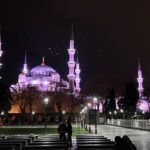
Blue Mosque (Sultan Ahmed Mosque): the “blue tiles” moment
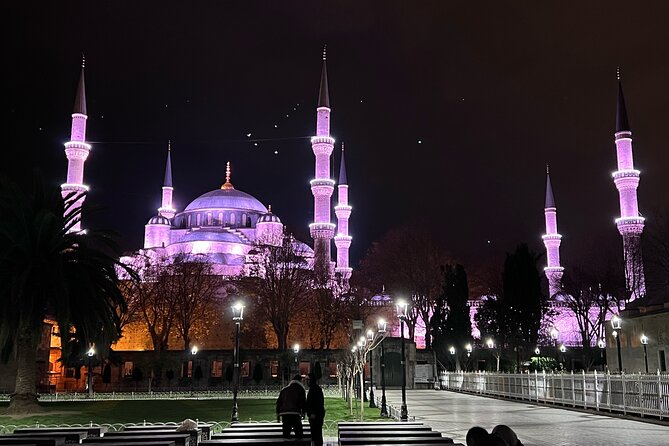
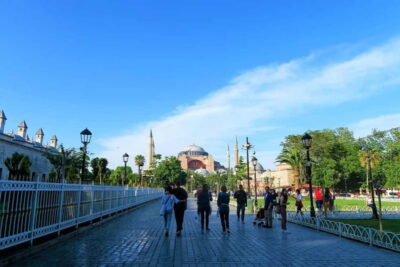
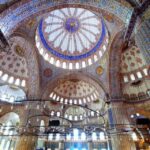
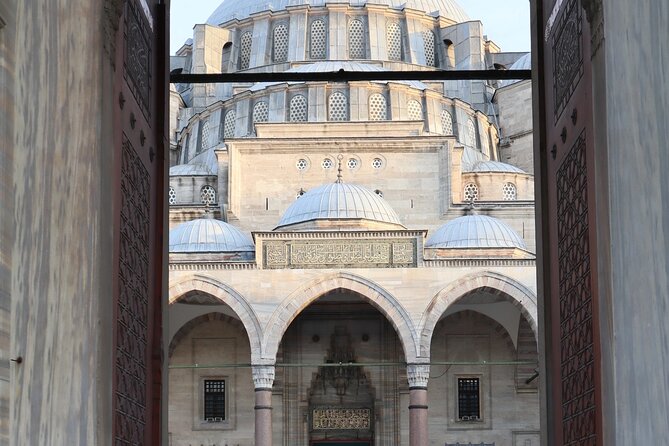
Plan on around 45 minutes here. The Sultan Ahmed Mosque (built between 1609 and 1616) is famous for two things you can see immediately: the six minarets on the exterior and the striking blue tilework inside. It’s a skyline landmark, so even if you’ve only seen photos, you’ll recognize it once you’re nearby.
This is a good first stop because it sets the tone for the whole area. Day 1 is about layers—Byzantine, Ottoman, and modern tourism coexisting in the same square miles. Starting with the Blue Mosque helps you read what you’re about to see.
Tip for your pacing: after the Blue Mosque, you’ll move into even bigger visual spaces. If you want photos, do a quick exterior round before going inside, so you don’t rush later.
Hagia Sophia Grand Mosque: a building with multiple identities
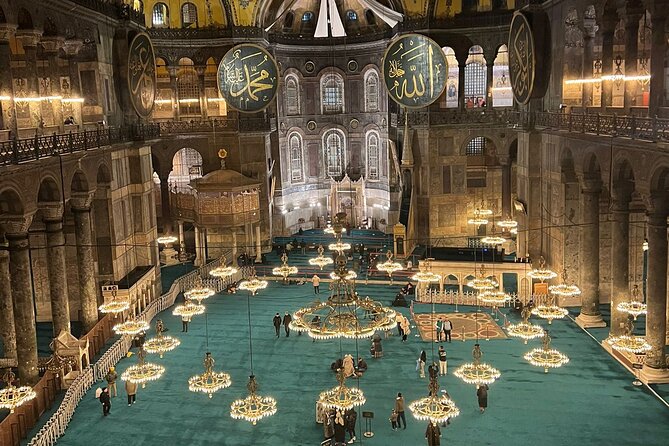
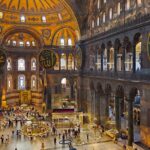
Next is Hagia Sophia, with about 1 hour on the plan. Admission is not included. What makes this stop more than just a famous postcard is the building’s shifting role over time: it started as the biggest cathedral in the world under the Byzantine Empire in the 6th century, became a mosque during Ottoman rule, turned into a museum in 1935, and was reconverted into a mosque in 2020.
You’ll spend your time on the scale—especially the famous dome—and on mosaics that reflect the building’s long identity journey.
One consideration: because it’s such a major site, crowds can happen. The fast track option helps where available, but you should still expect a high-energy atmosphere.
You can also read our reviews of more city tours in Istanbul



Basilica Cistern (Yerebatan Sarayı): underground Roman vibes
Then you go underground for about 45 minutes at the Basilica Cistern, also nicknamed Yerebatan Sarayı or Sunken Palace because of the water and the forest of marble columns rising from it. This is a Justinian-era project from 527 to 565, and it’s described as being on the site of the former Stoa Basilica.
A cool context point: it’s known in popular culture too. The cistern has been referenced in Inferno by Dan Brown and in From Russia with Love by James Bond, and it’s also noted that former U.S. President Bill Clinton visited.
Practical side: keep an eye on your energy levels here. It’s fascinating, but it’s also a steady indoor walk in an underground space. If you’re prone to getting tired on humid days, pace your photo breaks.
Topkapi Palace: Ottoman power in courtyards and collections
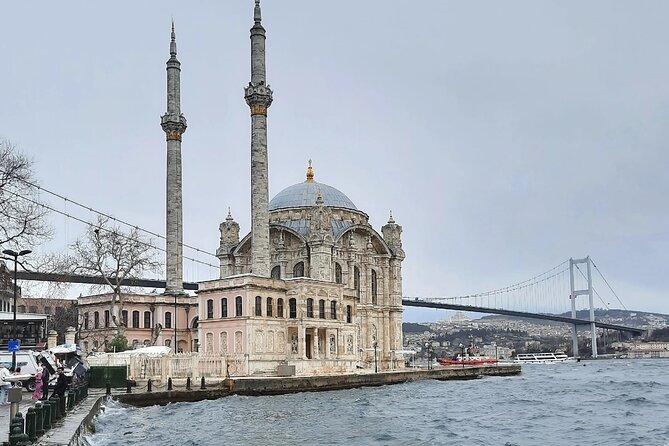
Topkapi gets around 2 hours, and again, entry fees aren’t included. The palace complex was the Ottoman sultans’ main residence and administrative base for nearly 400 years.
What makes Topkapi work for a guided visit is that it’s a huge complex of courtyards and buildings. You’re not just walking into one room—you’re moving through spaces with specific functions. Your guide will help you connect what you’re seeing with the bigger political and cultural story.
The tour notes special areas like the Imperial Harem and the Treasury, where you’ll find famed objects including the Spoonmaker’s Diamond and the Topkapi Dagger.
Watch for this drawback: because the palace is spread out, the day can feel like a lot if you love every single room. If you know you’ll want to linger, tell your guide early so they can manage your time.
Entrance fee listed: TRY 2,400 per person.
Hippodrome area: old monuments in a modern square
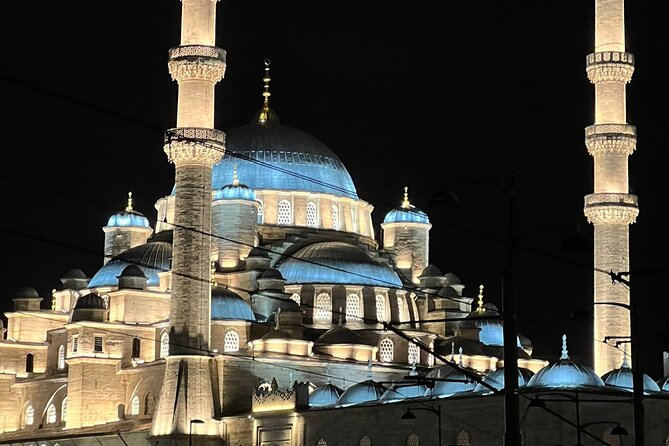
Then the plan shortens to about 30 minutes at the Hippodrome of Constantinople, now in the Sultanahmet Square area. This was a Byzantine-era chariot racing and public event center, and it left behind visible relics.
What you’ll likely notice: monuments like the Obelisk of Theodosius, the Serpent Column, and the Column of Constantine. Even though you’re in today’s public square, this stop makes the layers feel tangible.
This is a nice break from heavy indoor sightseeing. Use the time to reset, grab water, and then mentally shift back into market mode.
Admission listed as free for this stop.
Grand Bazaar: shopping with history in the background
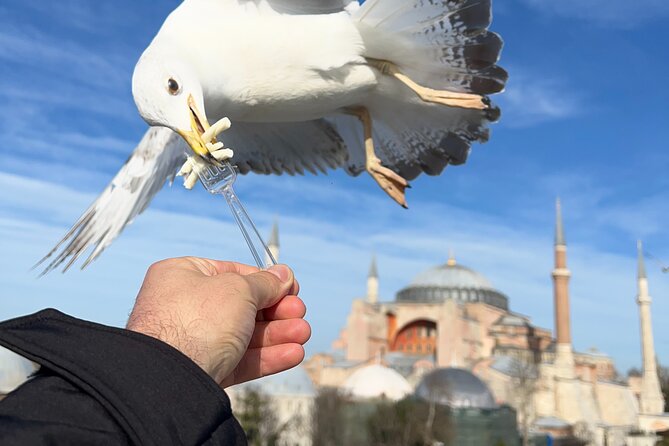
Finally, Day 1 ends at the Grand Bazaar for about 2 hours. Entry is free on the tour details. The Bazaar is one of the world’s oldest and largest covered markets, dating to the 15th century, with over 60 streets and alleys and more than 4,000 shops.
If you’re shopping, this is the place where you can actually compare quality and price across stall types: jewelry, carpets, textiles, ceramics, spices, leather goods, and Turkish crafts. If you’re not shopping, it can still be a great cultural stop because the layout itself feels like a mini city.
One practical note: the Grand Bazaar can be loud and crowded depending on the hour. A private guide is helpful here because they can help you avoid turning a simple walk into an hour-long maze of wrong turns.
Day 2: Bosphorus splendor and Beyoğlu viewpoints
Day 2 shifts to the European side of Istanbul and spreads out more. You’ll start with Dolmabahçe Palace on the Bosphorus, then head into Taksim and Istiklal Avenue, climb to the Galata Tower for views, and get a boat around the Bosphorus. After that, you return to the hilltop Suleymaniye Mosque viewpoint area and end with the Spice Bazaar.
This mix is a good balance: architecture indoors, city street life, then skyline views, then a final sensory market stop.
Dolmabahçe Palace: European style meets Ottoman setting
Dolmabahçe Palace takes about 1 hour. Entry fees are not included, listed as TRY 1,500 per person.
This palace is on the European shore of the Bosphorus and served as a later Ottoman administrative center and royal residence. It’s known for a blend of European styles with Ottoman design. Expect ornate interiors, including crystal chandeliers, detailed woodwork, and lavish decorations.
Two standout features named in the tour details:
- the Crystal Staircase, described as made from Baccarat crystal, brass, and mahogany
- the Ceremonial Hall and its chandelier gifted by Queen Victoria
Why this stop is worth it with a guide: Dolmabahçe can look like “just another palace” until someone helps you understand what the design choices were trying to say in the context of Ottoman modernization.
Taksim Square: Republic Monument and city energy
Next you’ll visit Taksim Square for about 45 minutes, with admission listed as included for this stop. The tour details highlight its role as a lively hub of hotels, restaurants, and shops, plus its political and social importance.
The main landmark here is the Republic Monument (Cumhuriyet Anıtı), featuring Atatürk and symbolic figures connected to Turkey’s independence struggle.
Even if you’re not a monument person, this stop helps you understand Istanbul beyond the old city. It’s a reminder that modern Turkey’s center of gravity sits in the same city as the medieval skyline.
Istiklal Avenue: a walk with history, shops, and the red tram
From there, it’s about 45 minutes on Istiklal Caddesi (Istiklal Avenue), also listed as admission included.
You’ll walk a pedestrian stretch in Beyoğlu about 1.4 kilometers long, lined with historic late Ottoman and early Republican buildings, shops, cafés, and galleries. The tour also points out a practical detail: the nostalgic red tram runs along the avenue.
This is a good “slow down” segment. It’s less about one museum object and more about getting your bearings on the European-side feel of Istanbul.
Galata Tower: Genoese roots and a panoramic view
Then you head to the Galata Tower for about 45 minutes. Entry is not included, but this stop is one of the easiest ways to “see the city in one frame.”
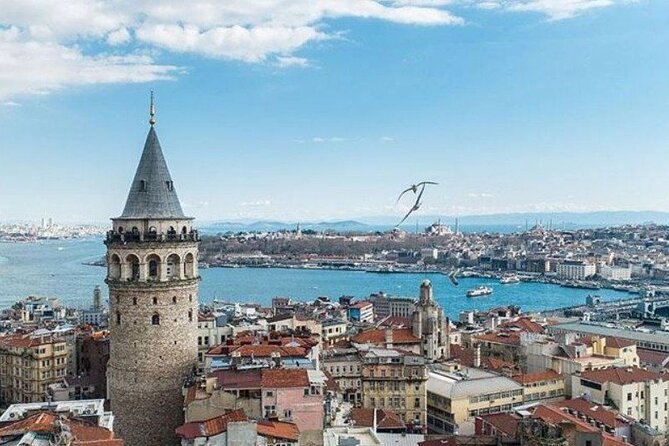
The tower is described as originally built in the 14th century by the Genoese as part of their defense system in Constantinople. Over time it served multiple roles, including watchtower, fire lookout, and even prison.
It rises to about 66.9 meters, and there’s an observation deck for views over the Bosphorus and Istanbul.
Practical note: if you’re sensitive to heights or crowds, time your visit inside carefully. Views are great, but observation decks can get packed.
Bosphorus Strait boat tour: the skyline reset
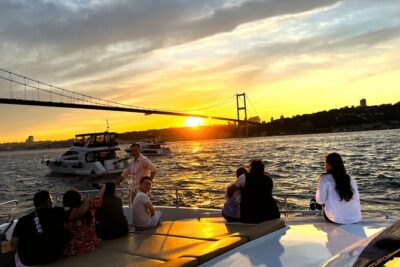
Next is the boat tour around the Bosphorus, listed as about 2 hours. Entry fees for the boat are not included; the tour details list TRY 250 per person.
This part is all about views and perspective. Istanbul from water shows you how the city’s geography drives everything: the strait, the skyline, and the way neighborhoods line up along the shore.
A small consideration: boat experiences can be weather-dependent. Since the tour requires good weather, plan around forecast reality on the days you book.
Suleymaniye Mosque: hilltop views and imperial architecture
After the boat, you stop at Suleymaniye Mosque for about 30 minutes, with admission listed as free.
The mosque sits on one of the seven hills of Istanbul and is presented as offering among the best city views. It was built between 1550 and 1557 by Mimar Sinan under Suleyman I.
Even if you don’t plan to spend lots of time inside, this is a strong viewpoint stop. You’ll understand why people came to the hills to build where the city could be seen.
Spice Bazaar (Misir Çarşısı): end with scent, color, and souvenirs
Finally, you wrap up at the Spice Bazaar for about 45 minutes. Admission is listed as included for this stop.
It’s famous as the Egyptian Bazaar and is described as a long-running center of trade. What you’ll notice fast is the sensory side: displays of spices, herbs, dried fruits, nuts, teas, and Turkish delight.
The tour also highlights architecture details like vaulted ceilings and decorative tile work, plus the chance to sample local products as you walk.
This is a smart closing stop because it’s less about marching through big monuments and more about letting your senses take over.
Money and value: what $400 gets you, and what you must budget
The tour price is $400 per group up to 15 people, for about 2 days, with a private professional guide and pickup. In other words, you’re paying for time, logistics, and interpretation, not just access to landmarks.
Where value can slip is in entries. Several of the headline stops are not included:
- Hagia Sophia: €25 per person
- Basilica Cistern: TRY 1,500 per person
- Topkapi Palace: TRY 2,400 per person
- Dolmabahçe Palace: TRY 1,500 per person
- Bosphorus boat: TRY 250 per person
Spice Bazaar is listed as included, and a few stops list free admission (like Blue Mosque, Hippodrome area, Grand Bazaar, and Suleymaniye Mosque).
So here’s my practical take: if you’re aiming for multiple paid landmarks anyway, a private guide plus skip-the-line support can be a good deal. If you’re trying to minimize entry fees and want only free sites, this plan probably won’t fit your budget.
Guides make the difference (and you’ll feel it)
A strong theme from the experience feedback is that the guide can turn the same monuments into something personal and usable.
Names that came up include Sabit (praised for a great Old City tour), Mehmet (credited for extensive coverage in two days and strong English), Ali (highlighted for kid-friendly patience and practical food recommendations), Matt (noted for covering many major attractions and adding local cuisine), and Ege (praised for detailed explanations and pacing).
That’s not just trivia. It affects how much you get out of:
- Hagia Sophia’s layered identity
- Topkapi’s maze of courtyards and collections
- the Basilica Cistern’s Roman-era design logic
- Dolmabahçe’s mixed stylistic language
One downside to be aware of: one account mentioned a guide turning up late and rushing day one, plus concerns about spending time. That’s the one scenario you should guard against by clarifying your must-see priorities early and letting your guide know if you want slower pacing at specific stops.
Who this tour is best for
This works especially well for you if:
- you want a first-timer style route with classic sights plus good structure
- you hate ticket-line chaos and want fast track support
- you want a private guide who can answer questions on the spot
- your group includes kids or mixed ages and you need someone to manage pace and attention
It may not be ideal if:
- you’re on a tight budget for entrance fees
- you prefer spending lots of hours in only one place instead of covering major highlights across two days
- you’re worried about walking and stairs. The tour notes strong physical fitness is needed.
Should you book this 2-day Istanbul tour?
I’d book it if your goal is clear: get the major Istanbul icons organized into a sane, efficient two-day flow, with a private guide and help skipping the line at key stops. The mix of old city power (Blue Mosque, Hagia Sophia, Topkapi, Basilica Cistern) and city-wide perspective (Dolmabahçe, Galata Tower, Bosphorus boat, Suleymaniye views) makes the trip feel like more than a checklist.
Before you commit, do two quick checks:
- Count your paid entries in your budget using the listed prices (Hagia Sophia, Topkapi, Basilica Cistern, Dolmabahçe, Bosphorus).
- Pick what you can flex. If a palace room or viewpoint matters most, tell your guide early so the day matches your pace.
If you want Istanbul to feel connected instead of random, this is a strong way to do it.
FAQ
What does the tour price include?
The private tour includes a professional private guide and pickup at central Istanbul hotel, Airbnb locations, or Galataport (Sali Pazarı). Fast track ticket support is available to help you skip the line where offered.
Are tickets to all attractions included?
No. Some major sites list admission as not included, including Hagia Sophia, Basilica Cistern, Topkapi Palace, Dolmabahçe Palace, and the Bosphorus boat tour. The tour details show specific fees for these.
How long is the tour?
It runs for 2 days (approx.). Day 1 includes stops at Blue Mosque, Hagia Sophia, Basilica Cistern, Topkapi Palace, Hippodrome, and the Grand Bazaar. Day 2 includes Dolmabahçe Palace, Taksim Square, Istiklal Avenue, Galata Tower, a Bosphorus boat tour, Suleymaniye Mosque, and the Spice Bazaar.
Where will the guide meet us?
Pickup is available from central Istanbul hotels, Airbnb locations, or Galataport (Sali Pazarı). The guide also meets you each day at the best departure point for you.
Is this a group tour?
No. It’s a private tour/activity, and only your group participates. The price is listed as per group up to 15.
What weather and activity level should we expect?
The experience requires good weather and may be adjusted or refunded if canceled due to poor weather. It also notes travelers should have a strong physical fitness level.