REVIEW · ISTANBUL
Istanbul: Hodjapasha Rhythm of The Dance Show
Book on GetYourGuide →Operated by HodjaPasha Culture Center · Bookable on GetYourGuide
Dance in a real Ottoman bath. The Hodjapasha Rhythm of the Dance show turns a restored 15th-century hammam (about 550 years old) into a front-row seat for Turkish folk dance, with costumes, live music, and even video projections, all at the Hodjapasha Culture Center in Istanbul.
What I like most is how much energy the professional dancers bring, and how clearly the show connects dance to live music instead of treating it like a staged museum demo. You also get a real sense of Turkish culture through performances drawn from different regions of Anatolia.
One thing to plan for: seating is first-booked first-served, so earlier ticket times usually mean an easier path to a comfortable view.
In This Review
- Key things to know before you go
- Why Hodjapasha Is the Perfect Stage for Turkish Folk Dance
- Your 65-Minute Rhythm: What the Show Feels Like
- The Dance Styles You’ll See (and What They Mean)
- Costumes, Lighting, and Video Projections
- Finding the Hodjapasha Culture Center Without Losing Your Weekend
- Pricing and Value: Is $32 for 65 Minutes Worth It?
- Who Should Book This Show (and Who Might Prefer Something Else)
- Should You Book the Hodjapasha Rhythm of the Dance Show?
- FAQ
- FAQ
- How long is the Hodjapasha dance show?
- What is the price per person?
- Where do I meet for the show?
- Is pickup service included?
- What is included with the ticket?
- Are seats assigned?
- Is the venue wheelchair accessible?
- Does the show take place in a historic Ottoman bath?
- What if I need to cancel?
- Can I reserve and pay later?
Key things to know before you go
- A show inside a restored Ottoman hammam: history isn’t on a poster here; it’s around you.
- 65 minutes of nonstop programming: short enough for an easy evening plan.
- Different regions of Anatolia: folk dance variety is the point, not a single style.
- Live music plus lighting and projections: the production is staged, but still feels like performance art.
- Assigned seating, but it’s first come first served: book early if you’re picky about where you sit.
- No pickup service: you’ll need to make your own way to the Hodjapasha Culture Center.
Why Hodjapasha Is the Perfect Stage for Turkish Folk Dance
If you only pick one “cultural performance” in Istanbul, this is the kind that makes sense. It’s not just a dance show in a generic hall. You’re in the Hodjapasha Culture Center, housed in the Hodjapasha Hamam, a restored 550-year-old Ottoman bath connected to a former hammam built in the 15th century. That setting changes your expectations fast.
A hammam is all about atmosphere: stone, echoes, and that feeling of being inside something meant for rituals of daily life. Here, the ritual is entertainment. Turkish folklore dances and live music come alive in the same space that once served travelers, locals, and families who came to bathe and socialize. You’ll notice how the architecture holds the sound and how the performance lighting interacts with the room.
Before the show starts, you can also check out the Dervish exhibition in the foyer area. It’s a small add-on, but it helps you place what you’re about to see. Even if you’re not an expert on Ottoman-era spiritual traditions, it gives you context for the dance language the program will use.
The vibe you’re aiming for is simple: show up ready to watch with your whole attention. This isn’t background entertainment. The room and the performers ask for eye contact—whether it’s through movement, music cues, or those quick moments where a performer clearly reacts to the crowd.
You can also read our reviews of more tours and experiences in Istanbul

Your 65-Minute Rhythm: What the Show Feels Like
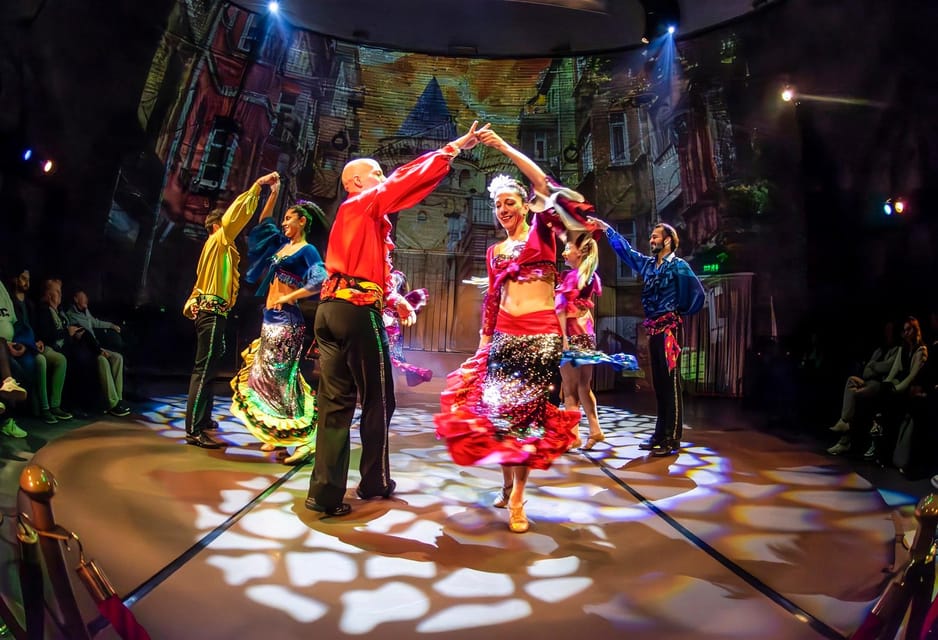
The show runs about 65 minutes, and it mostly moves like a live concert: one act flows into the next without long breaks. Reviews highlight the same theme again and again—people stay focused because the program keeps its tempo. That’s good news if you’re dealing with jet lag or you just want a fun evening that doesn’t eat your whole night.
You’ll get a program booklet along with your ticket. It’s helpful for placing styles and names as the dances change. It also makes the show feel more intentional, like you’re not just catching random segments—you’re watching a curated sequence of folk traditions.
A key part of the experience is the production rhythm:
- It starts energetic.
- Then it keeps switching between groups and solo moments.
- It builds with music intensity and visual effects.
- And it ends with a strong final punch rather than petering out.
Live drumming and musicians play an important role here. The rhythm isn’t just soundtrack. It drives how the dancers hit their marks—especially during fast footwork sections and any higher-energy folk segments. And in at least some performances, the musicians add extra flavor by interacting with the audience.
One practical tip: plan to arrive on time. The venue is small enough that the overall feel depends on everyone settling in smoothly. Also, since seats are allocated on a first-booked first-served basis, arriving a little earlier (not late, not rushed) helps you get the best match to your priorities—front, center, or just a clear view of the stage.
The Dance Styles You’ll See (and What They Mean)
The big promise of this show is Turkish folklore dances from different regions of Anatolia. That matters because Turkish dance isn’t one uniform style. Different regions have different rhythms, hand movements, posture, and costume shapes. When a performance actually rotates through multiple styles, you get to see the range of “Turkishness” beyond food photos and souvenirs.
You should expect a mix of:
- folk dance sequences rooted in regional traditions
- professional choreography that keeps the movement crisp and stage-ready
- costuming that signals where the style might belong in the cultural map
- musical variety that supports each section with the right pulse
A standout for many people is belly dance. The program includes a belly dance presentation, and the lighting and music help it feel like more than a novelty act. This part tends to be a showstopper because belly dance rewards attention: you’re watching for control, timing, and how the performer uses the music’s accents.
You may also see modern touches blended with traditional material. Some programs include a modern solo Sama-inspired moment (a dervish-style dance idea presented in a more contemporary way). Even if your interest is mostly in folk dance, that kind of solo can act like a breathing space in the middle of faster group sequences.
If you’re new to Turkish dance, here’s how I’d read the show:
- Group dances often show community energy—patterns, lines, and synchronized footwork.
- Solo moments often highlight technique and personal expression.
- When lighting and projections kick in, the show is telling you to watch for shape and motion, not just steps.
Costumes, Lighting, and Video Projections
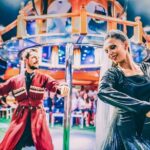
This is a dance show that understands stagecraft. The costumes aren’t just pretty; they give your eyes something to follow as movements change speed and level. During faster sections, the costume details help you track turns and arm lines instead of losing the performer in the lighting.
The lights matter a lot. Many people single out the lighting effects for adding drama to solo dances. That’s not a small detail. In dance, lighting affects the perceived angle of a body, the crispness of motion, and how “clean” turns look from your seat.
Then there are the video projections. You should think of them like a mood setter rather than a full “screen show.” In this kind of performance, projections tend to support the mood and transitions—especially when the choreography shifts mood or energy. The best sign that it’s working is if you stop thinking about the technology and start watching the performers again.
Also, the show uses color and stage lighting to keep the pace visually interesting. Since the venue is indoor and intimate, the production has to do some extra work to make each act feel distinct. The good news is that it does.
Finding the Hodjapasha Culture Center Without Losing Your Weekend
The meeting point is the Hodjapasha Culture Center, and that’s the part where you want to keep your expectations realistic. The location sits in an area with lots of narrow lanes, and it can feel like you’re walking through Istanbul’s version of a puzzle game.
Give yourself extra time to find the door. If you’re coming by foot, double-check the last turn you take. Once you’re there, things are straightforward: you get seated, you get your booklet, and then the performance rolls.
Inside, the show feels designed to keep the experience smooth. People often comment on how seating helps avoid crowding at the entrance. That’s a comfort point, especially if you’re traveling with someone who doesn’t love a rush.
Also note: there isn’t a bar as far as the provided info goes, but bottled drinking water is included. Even if you don’t usually care about water at shows, it’s one less thing to worry about on an evening plan.
One more practical note: wheelchair access isn’t offered here. The venue is not suitable for wheelchair users, so plan an alternative if that affects you.




Pricing and Value: Is $32 for 65 Minutes Worth It?
At $32 per person for about 65 minutes, you’re paying for three things at once:
1) the performance itself (professional dancers + live music)
2) the production value (costumes, lighting, and video projections)
3) the venue setting (a restored Ottoman hammam, not a generic theater)
Where this becomes good value is that you’re not spending hours in transit or waiting around. One hour can be the perfect Istanbul night segment—especially after a busy day at the mosques, markets, and viewpoints.
It’s also a fair deal if you want variety. The program isn’t just one dance style. It rotates through folk dances from different regions of Anatolia, and it includes recognizable highlights like belly dance. That mix makes it appealing even if someone in your group isn’t a hardcore dance fan. People tend to leave knowing they watched multiple things, not one.
Is it expensive compared to a street performance? Sure. But it’s also not the same experience. This is a controlled, professional show in a historic building with live musicians, and you’re paying for the package.
If you’re trying to choose between “a big meal” and “a cultural show,” this often wins because it adds a clear story to your trip. You’re not just seeing Istanbul; you’re watching how Turkish culture expresses itself through rhythm and costume.
Who Should Book This Show (and Who Might Prefer Something Else)
This is a strong fit if you:
- want live performance rather than a screen-based show
- love music with clear rhythm, especially drumming
- enjoy costume-focused stage shows
- want an easy first-night plan that doesn’t run too long
- are curious about Turkish culture through dance and music
It’s especially friendly for first-time Istanbul visitors because the show gives a “culture snapshot” in a compact block of time. It also works well if you want something fun but not chaotic.
It may be less ideal if you:
- need full wheelchair accessibility
- hate being in an older indoor venue environment
- prefer long, detailed explanations (this is mainly visual and musical, not lecture-based)
Also, because seats are first-booked first-served, I’d treat this like a “pick your spot” situation. If you really care about view angles, book sooner rather than later.
Should You Book the Hodjapasha Rhythm of the Dance Show?
I’d book it if you want a focused, high-energy cultural evening in a truly unusual setting. The restored 550-year-old Ottoman hammam makes the show feel like something you can’t replicate at home or in another city. Add in professional dancers, live music, and production touches like lighting and projections, and you get an experience that feels worth your time.
I’d skip or rethink it only if accessibility is a deal-breaker for your group or if 65 minutes feels too short for your taste. Otherwise, it’s the kind of Istanbul night plan that pays off quickly: you arrive, you settle in, and an hour later you’re still humming the rhythms on your way out.
FAQ
FAQ
How long is the Hodjapasha dance show?
The performance lasts about 65 minutes.
What is the price per person?
The price is $32 per person.
Where do I meet for the show?
The meeting point is the Hodjapasha Culture Center.
Is pickup service included?
No. Pickup service is not included.
What is included with the ticket?
Your ticket includes performance admission, a program booklet, and bottled drinking water.
Are seats assigned?
Seats are allocated on a first-booked first-served basis.
Is the venue wheelchair accessible?
No. The show is not suitable for wheelchair users.
Does the show take place in a historic Ottoman bath?
Yes. It’s inside the restored Hodjapasha Hamam, a 550-year-old Ottoman bath, and described as a former hammam built in the 15th century.
What if I need to cancel?
Free cancellation is available up to 24 hours in advance for a full refund.
Can I reserve and pay later?
Yes. You can reserve now and pay later to keep your plans flexible.