REVIEW · ISTANBUL
Istanbul Classics Tour
Book on GetYourGuide →Operated by Gray Line Turkey · Bookable on GetYourGuide
Three icons, one tight half-day. I like how this tour aims straight for the Hagia Sophia and Blue Mosque, then keeps moving through the Ottoman-Byzantine core without wasting your daylight. I also like the way the Hippodrome stop gives you names you’ll remember later, not just photo stops. The main drawback to plan for is that queues and day-of-week access rules can squeeze your time.
You’ll be based in Sultanahmet, where Istanbul’s biggest monuments sit close enough that a 3-hour guided loop actually makes sense. Pickup from centrally located hotels helps a lot, and the separate entrance is designed to cut down entry faff. Just know that the day’s schedule can shift slightly, like the Blue Mosque being outside-only on Friday mornings or Hagia Sophia swapping on Mondays.
In This Review
- Key things I’d watch for on this tour
- Old City Starting Point: Sultanahmet at 08:00
- Hagia Sophia: What 3.5 Hours Means for a World-Icon
- Blue Mosque Rules, Tiles, and the Best Way to Use Your Time
- Hippodrome Footsteps: Chariot-Race Landmarks You Can Name
- Grand Covered Bazaar Time: Shopping With a Guide’s Map
- Price and Logistics: What $104 Gets You in Real Life
- Service Quality and Guide Experience: Friendly, Skilled, and Sometimes Messy
- Who This Tour Fits Best (and Who Should Skip It)
- Should You Book the Istanbul Classics Tour?
- FAQ
- How long is the Istanbul Classics Tour?
- What are the main sights included in the tour?
- Is the Hagia Sophia visit always included?
- Can I enter the Blue Mosque on Friday mornings?
- What happens on Sundays when the Grand Covered Bazaar is closed?
- Does the tour include hotel pickup?
Key things I’d watch for on this tour
- Separate entrance for entry lines: It’s meant to save time, but crowding can still slow things down.
- Hippodrome stops with real monuments: You’ll see the Serpentine Column, the Obelisk of Theodosius, and the German Fountain of Wilhelm II.
- Grand Bazaar time is real, not a drive-by: You get a chance to wander among thousands of shops and bargain.
- Day-of-week swaps are built in: Sundays replace the Grand Covered Bazaar; Mondays can replace Hagia Sophia with Yerebatan Cistern.
- Blue Mosque access can change: Friday mornings before 1:00 PM can mean outside viewing only.
- Guide language may not match expectations: The tour runs in English, German, and Spanish, but some departures have had language mix-ups—worth double-checking.
Old City Starting Point: Sultanahmet at 08:00
This tour is built for an early start, which is smart in Istanbul. The meeting point is in front of Tamara Restaurant or The Marmara Taksim Hotel at 08:00, depending on where you’re told to go. If you’re in a centrally located hotel, you’ll usually get complimentary pick-up and then ride to the Sultanahmet area in air-conditioned comfort.
One practical detail: the free shuttle pick-up window runs between 8:00 AM and 9:00 AM, and that transfer can take 45 to 60 minutes based on your hotel. If you’re staying near Taksim, you’ll likely spend more time on the ride than if you’re closer to the Old City. Either way, it’s better than trying to navigate Istanbul traffic on your own while carrying a daypack.
Also, keep your day simple for the start: bring an ID or passport and wear comfortable shoes. The tour rules are strict about no oversize luggage or large bags, and pets aren’t allowed. It’s a small thing, but it prevents delays at the pickup point when people are still figuring out what counts as luggage.
You can also read our reviews of more tours and experiences in Istanbul.


Hagia Sophia: What 3.5 Hours Means for a World-Icon
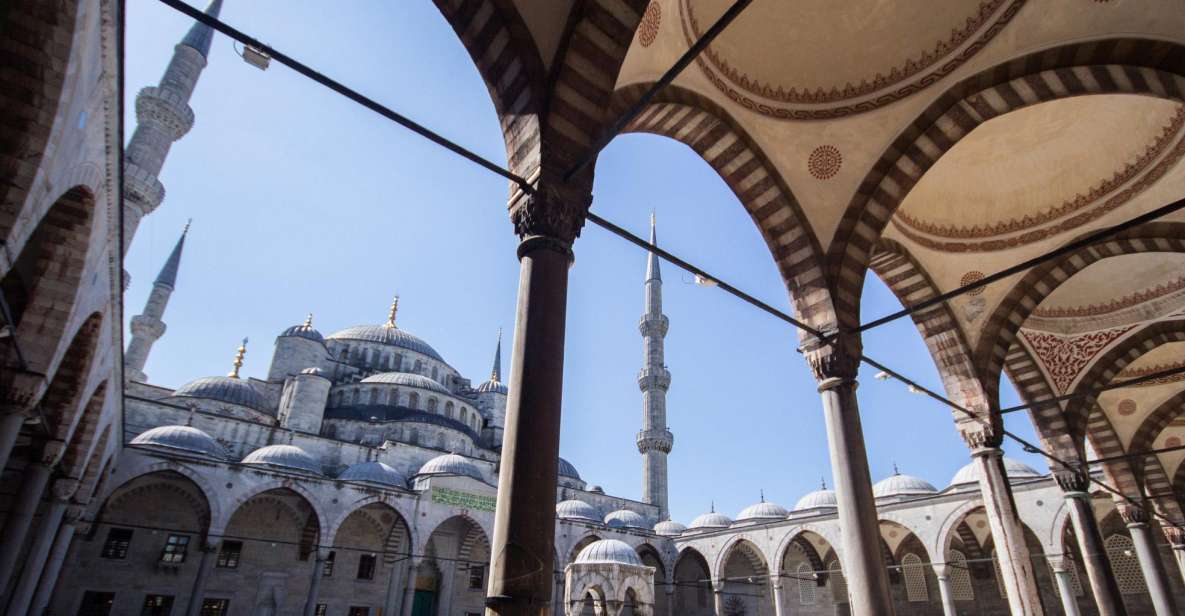
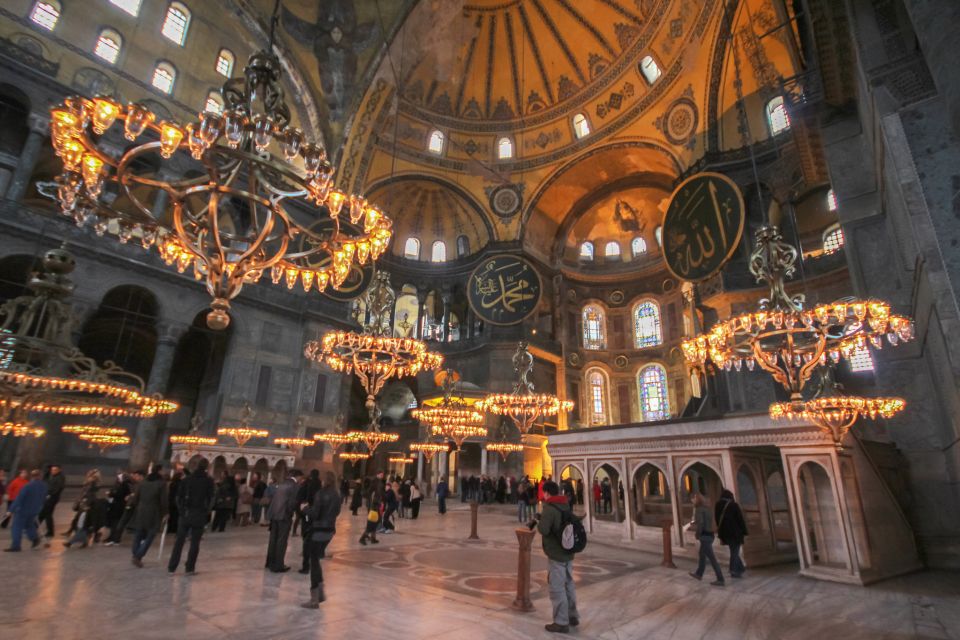
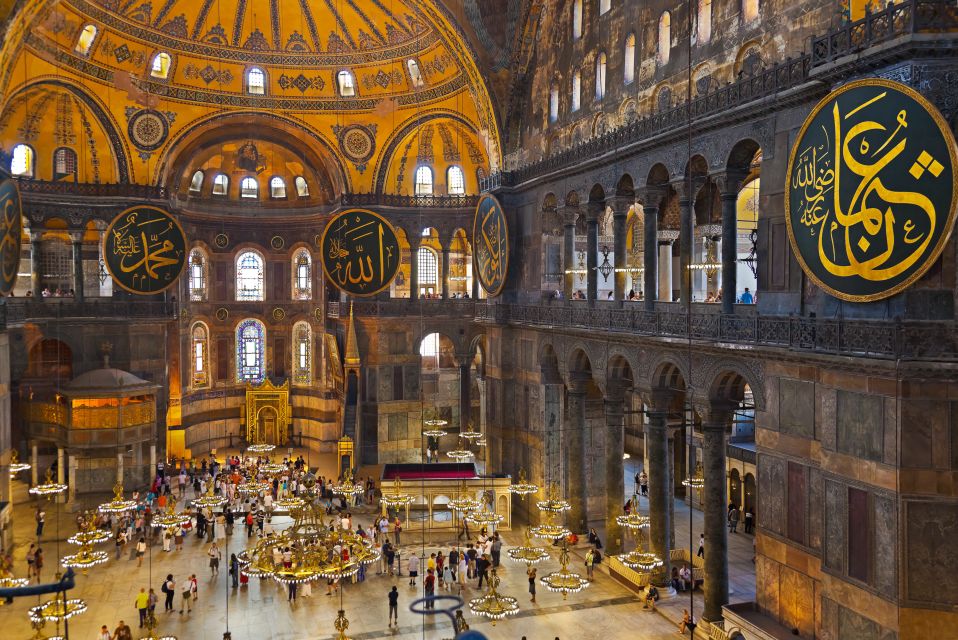
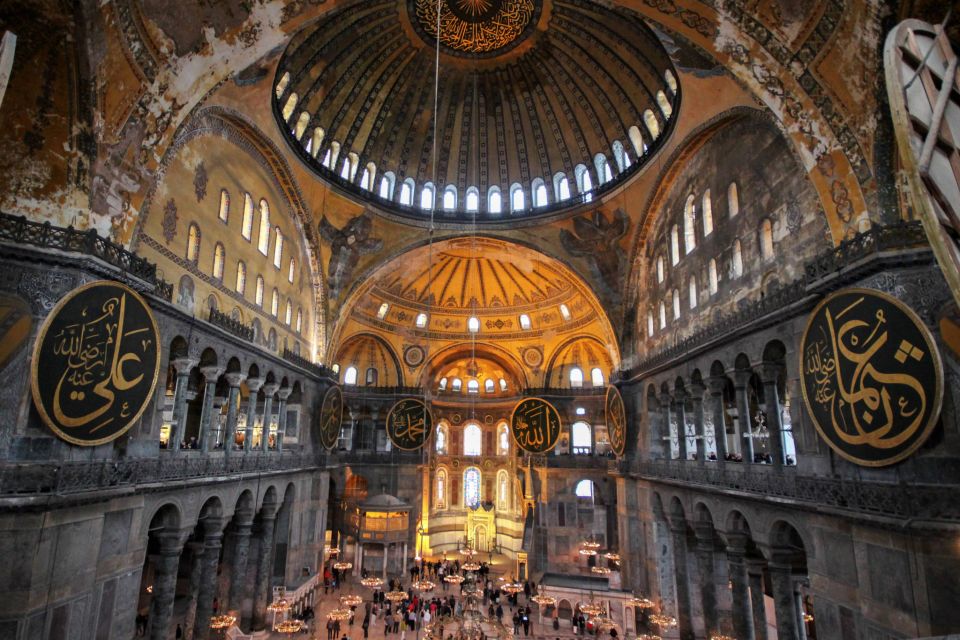
Hagia Sophia is the star attraction for a reason. You’re walking into a building with layers: originally built as a basilica in the 6th century by Emperor Justinian, then reshaped over the centuries into the landmark Istanbul is known for. Even if you only spend part of the visit time inside, your guide should help you connect what you see to why it mattered—how this place became a seat of power and worship across empires.
Here’s what you should do so your visit doesn’t feel rushed. Go in thinking about two things: scale and structure. The dome and interior proportions do most of the talking. Then use the guide to point out what to notice beyond the obvious photos, like how the building’s design helped it feel both monumental and controlled.
Timing is the swing factor. There may be long waiting times for entry, even with a separate entrance. And on Mondays, the situation can change: Hagia Sophia is closed on Mondays, and that portion of the tour is replaced by a visit to the Yerebatan Cistern. The tour info also notes that Hagia Sophia may not be closed on Mondays in high season, so don’t assume it’s always the cistern day—just expect it might be.
If you want maximum value from the time, don’t plan other tight activities right after the tour. You’re going to be standing, walking, and then absorbing a lot of visual information quickly.
Blue Mosque Rules, Tiles, and the Best Way to Use Your Time
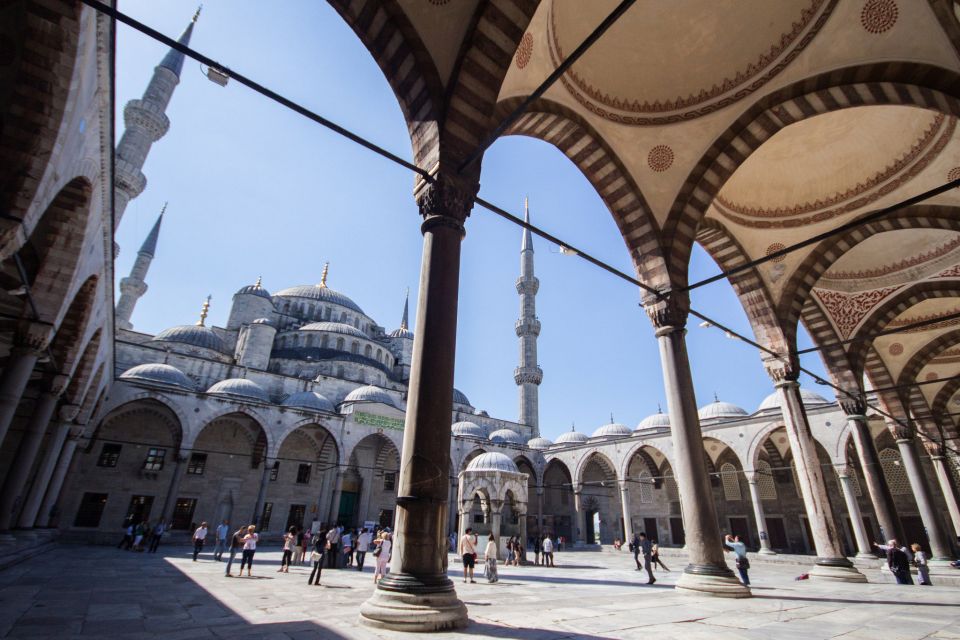
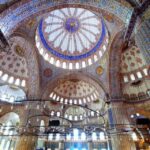
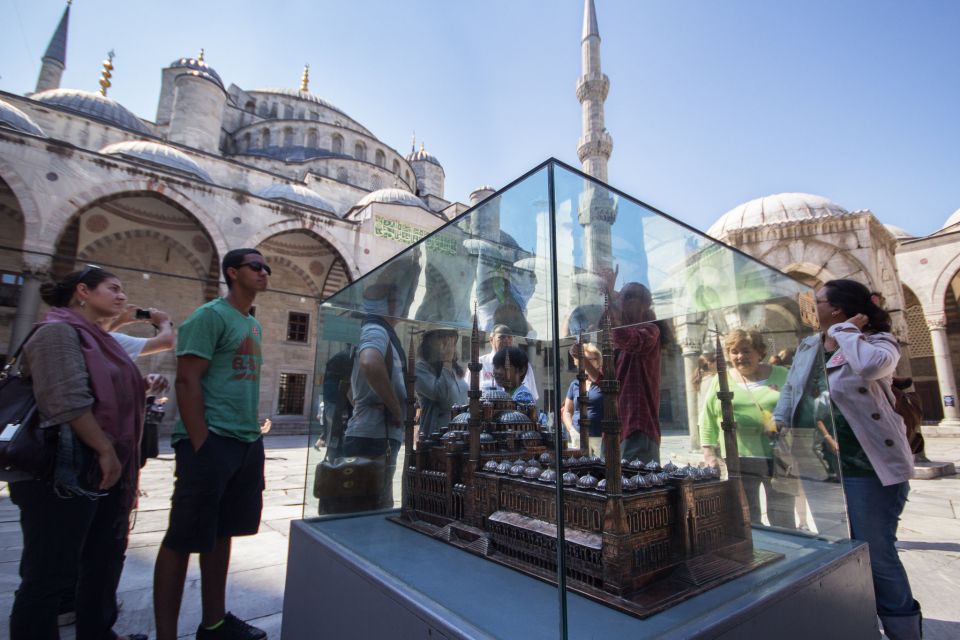
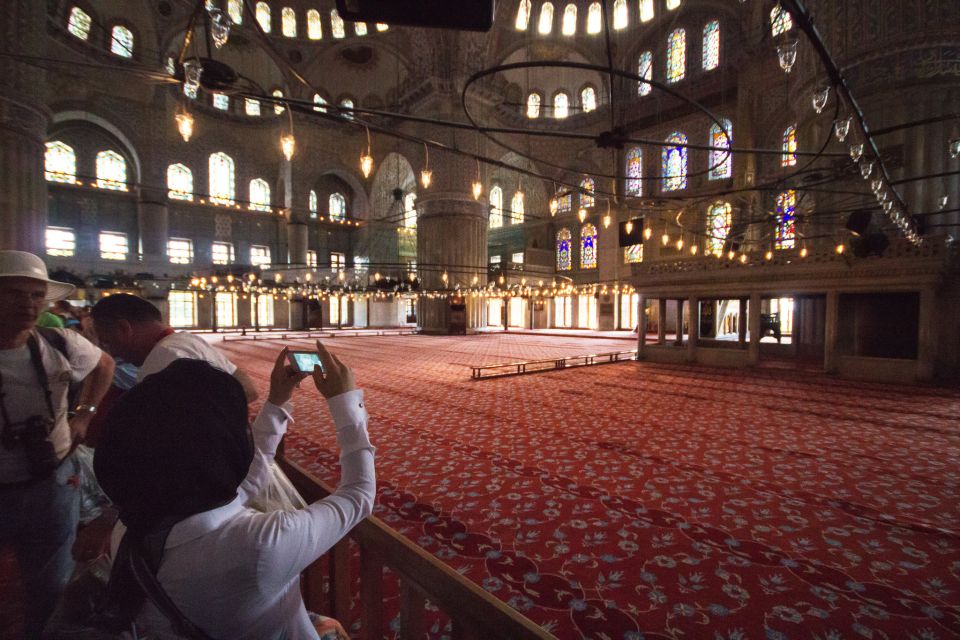
Next up is the Blue Mosque (Sultanahmet Mosque), famous for the interior İznik tiles and the iconic silhouette with six minarets. The design isn’t subtle. Even from outside, it reads instantly as Istanbul. Inside, the tilework is the kind of detail that makes you slow down, look up, and realize the photos you’ve seen don’t fully capture the color and pattern.
This tour is usually scheduled so you can experience the mosque visit with a guide explaining the significance. But day-of-week timing can change what you get. On Friday mornings before 1:00 PM, the Blue Mosque is visited only from the outside due to the noon prayer. And the info also warns about potential long waiting times, so it helps to be mentally ready for queues.
If you’re visiting on a day with limited access, focus on what you can still do well:
- Take a few minutes to study the exterior lines and minarets from different angles.
- Use your guide to understand what you’re seeing and why it’s arranged the way it is.
- Save your best tile-spotting energy for a future return if you truly want the full interior experience.
One more tip: this is a religious site, so dress expectations and behavior matter. The tour only lists practical packing and comfort rules, but you’ll still want to act respectfully and keep your pace low inside.
Hippodrome Footsteps: Chariot-Race Landmarks You Can Name
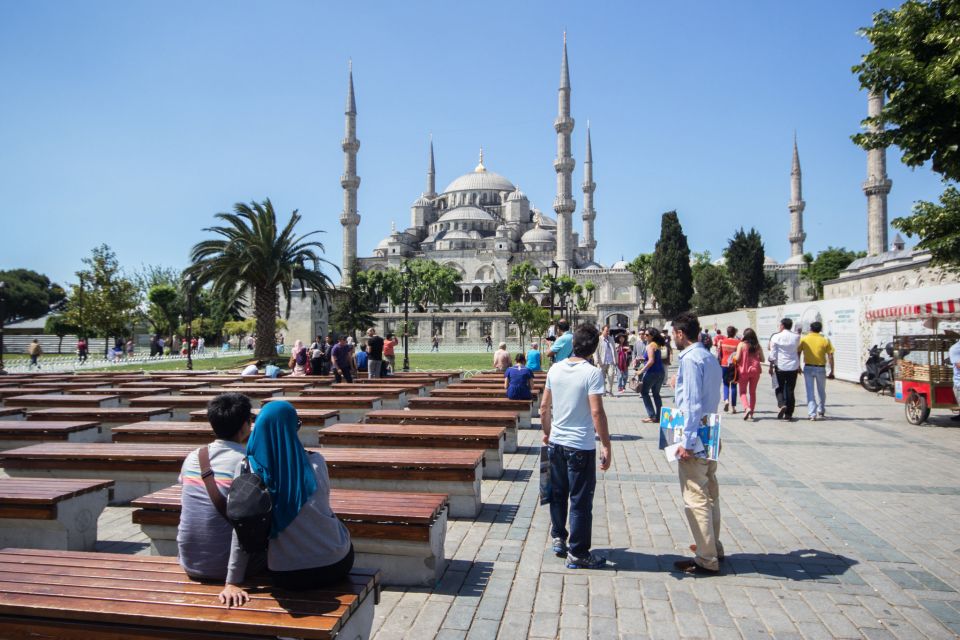
The Hippodrome stop is where the tour becomes more than just a checklist. This is the ancient center of chariot races, athletic events, and political activity. It’s not a museum you walk through; it’s more like reading a story from fragments. Your guide should point out how these monuments connect to the spectacle of ancient Istanbul.
You’ll see named pieces that make the site feel real instead of vague:
- the Serpentine Column
- the Obelisk of Theodosius
- the German Fountain of Wilhelm II
This is exactly the kind of stop that pays off later. When you look at photos of Istanbul landmarks, you’ll start recognizing these historical layers. And unlike the bazaar, this part of the itinerary is usually easier to understand in the moment because it’s tied to clear functions—races, public events, and political theater.
Time matters here too. Since this is a half-day tour, you won’t be lingering for hours. The win is that you get a guided frame for the sight, so your brain files it under: this mattered.
If you hate rushed viewing, you might find the overall schedule a bit tight. But if you like getting the key monuments covered with interpretation, this stop is a strong value add.
Grand Covered Bazaar Time: Shopping With a Guide’s Map
Then comes the Grand Covered Bazaar experience—one of Istanbul’s most famous places to shop. You’ll have free time to wander the Grand Covered Bazaar, described as the largest souk in the world, with 4,000+ shops covering everything from antiques and jewelry to carpets, leather goods, and souvenir items.
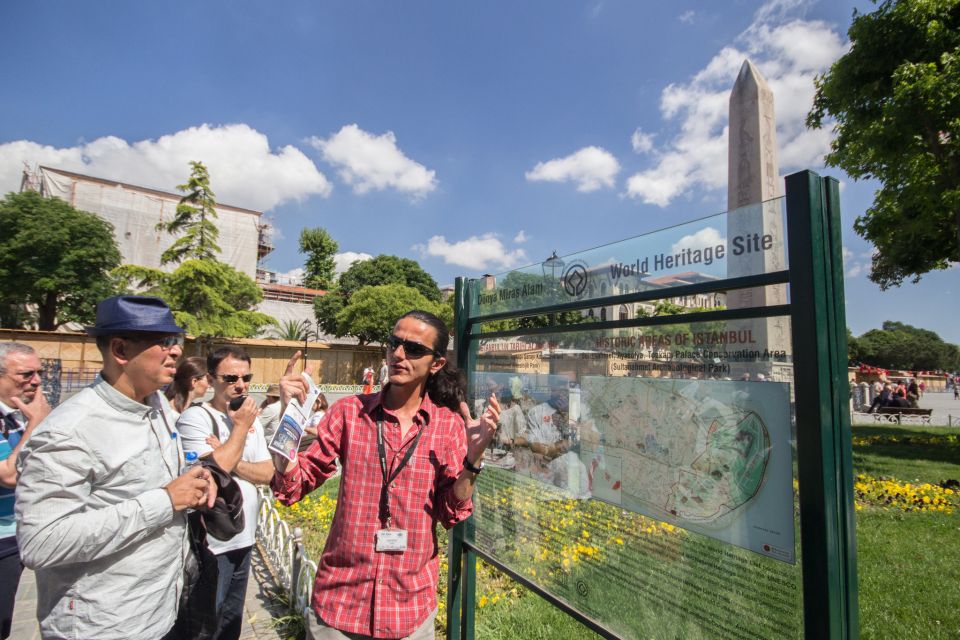
This is where your guide can help even if you don’t plan to buy. A good guide helps you get oriented: where the better browsing zones are, how to move without getting herded, and what kinds of shops are worth your time if you’re hunting something specific. The tour emphasizes souvenir bargaining, and honestly, it’s half the fun. I’d go in expecting you’ll need to practice a little patience with negotiating.
One day-of-week rule changes this stop. The Grand Covered Bazaar is closed on Sundays, and on that day the tour replaces it with a visit to an authentic shop. So if you’re coming on a Sunday, adjust expectations: you may still shop, but it won’t be the same floor-to-ceiling maze of stalls.
Also note a small pacing reality. The bazaar visit is free time, which means the quality of your experience depends on how quickly you decide what you want. If you drift, you can burn your best hour and end up buying whatever is closest. If you buy with a plan—one item category, one budget range, one or two stores you want to compare—you’ll feel much happier with the results.



Price and Logistics: What $104 Gets You in Real Life
At $104 per person for a 3-hour tour, the big question is value: are you paying for access, interpretation, or simply the convenience of not figuring it out on your own?
Here’s what you’re getting that matters:
- A live tour guide in English, German, or Spanish
- Air-conditioned transportation plus complimentary pick-up from centrally located hotels
- A designed separate entrance to help with entry flow
- A guided route that hits Hagia Sophia, the Blue Mosque, the Hippodrome area, and the Grand Bazaar
If you tried to do all of this solo, you’d spend time coordinating transit, figuring out meeting points, and dealing with ticket and entry logistics while staying oriented. So part of the price buys sanity.
That said, the tour is not long. You’re paying for highlights, not depth. If you’re the type who likes museum-style time at every stop, this might feel like a fast walk through monumental places. And even with separate entrance wording, crowds are crowds, and waiting times can still happen.
I’d also keep an eye on what your tour language will actually sound like. The tour is offered in multiple languages, and the guide is supposed to deliver in your language. But there have been accounts of departures where the language didn’t match the booking expectations, along with reports of extra waiting time that didn’t match the faster-entry promise. I can’t guarantee what you’ll get, but it’s worth confirming your language before you arrive.
Service Quality and Guide Experience: Friendly, Skilled, and Sometimes Messy
A tour lives or dies by the guide. In this case, the tour information promises a live guide and multiple language options, and the experience is built around explanations at major stops.
Some guides have been praised for being friendly and answering questions well, including one named Eray, who was described as cordial and clear in directing what visitors should focus on. I’d treat that as a sign of potential here: when the guide knows what to highlight, you get much more out of Hagia Sophia and the Blue Mosque than just looking at façades.
On the flip side, a few practical issues have shown up in accounts: late starts, language switching, and even guidance that ended a short walk earlier than expected before the bazaar. None of that means the tour is a disaster—sometimes logistics in Istanbul are chaotic—but it does mean you should give yourself a little buffer mindset.
If you want to reduce risk:
- Confirm your language requirement when you book.
- Arrive at the meeting point on time even if pickup windows exist.
- Have a Plan B shopping strategy in your head: if the group timing feels tight, focus on one or two categories you truly want.
This tour is ideal when you use the guide for context and let the locations do the heavy lifting.
Who This Tour Fits Best (and Who Should Skip It)
This is a great choice if you:
- Want Old City highlights without building a whole itinerary
- Have limited time and want Hagia Sophia, the Blue Mosque, and the Hippodrome in one guided arc
- Like getting a shopping introduction to the Grand Covered Bazaar without feeling totally lost
- Prefer hotel pickup over navigating transit on your own
It’s less ideal if you:
- Want slow, detailed time inside both Hagia Sophia and the Blue Mosque (queues and limited visiting rules can shrink the interior experience)
- Are very sensitive to language mismatch
- Hate group pacing and want full control over time and shopping stops
Also, if you’re visiting on a day that triggers access limits—like Friday mornings before 1:00 PM—your interior expectations for the Blue Mosque should adjust. And if you’re in town on a Monday, expect the Hagia Sophia portion to be swapped with Yerebatan Cistern (or double-check if it’s high season and exceptions might apply).
Should You Book the Istanbul Classics Tour?
If you want a high-effort half-day with major monuments and a guided route that keeps you moving, I’d say yes—with a few smart expectations. You’re paying for convenience plus interpretation, not for total control over every minute. The Hippodrome and the named monuments are a real payoff, and the Grand Bazaar browsing time can be fun if you go in with a shopping plan.
I’d only hesitate if your priority is deep, unhurried time at Hagia Sophia and the Blue Mosque interiors, or if your comfort depends heavily on the tour being in a specific language with flawless timing. For many people, that early start plus guided context is exactly what makes this part of Istanbul feel coherent.
My practical bottom line: book it if you want the classics, and treat it like a guided highlights sprint through Sultanahmet.
FAQ
How long is the Istanbul Classics Tour?
It runs for about 3 hours (listed as a half-day tour taking roughly 3.5 hours of guided time).
What are the main sights included in the tour?
You’ll visit Hagia Sophia, the Blue Mosque, the Hippodrome area (with monuments like the Serpentine Column, Obelisk of Theodosius, and German Fountain of Wilhelm II), and then have time at the Grand Covered Bazaar (unless it’s closed that day).
Is the Hagia Sophia visit always included?
No. Hagia Sophia is closed on Mondays, and on that day this part is replaced with a visit to Yerebatan Cistern. The tour info also notes that it may not be closed on Mondays in high season.
Can I enter the Blue Mosque on Friday mornings?
On Friday mornings before 1:00 PM, the Blue Mosque is only visited from the outside due to the noon prayer. Waiting times can still occur on other days.
What happens on Sundays when the Grand Covered Bazaar is closed?
On Sundays, the Grand Covered Bazaar is closed, and the tour replaces that stop with a visit to an authentic shop.
Does the tour include hotel pickup?
It includes complimentary pick-up from centrally located Istanbul hotels. If you’re not within the pickup area, you should go to the meeting point at 08:00 in front of Tamara Restaurant or The Marmara Taksim Hotel.