REVIEW · ISTANBUL
Istanbul: Basilica Cistern Skip-the-Line Entry & Audio Guide
Book on GetYourGuide →Operated by Istanbul Tourist Pass® · Bookable on GetYourGuide
Cooler than Istanbul summer? Head underground. You’re buying your way into the Basilica Cistern faster, but the real payoff is the guided storytelling: Medusa-head myths, the cistern’s real engineering (aqueducts, storage, and water flow), and the spooky-cinematic photo spots people come for. It’s also a smart add-on day stop, because you get context that ties the cistern to what you’ll see around Sultanahmet.
I especially like that the experience balances facts and atmosphere. Guides like Oğuzhan Gürkcü (and others you might be paired with, such as Emre Eriskon) are the difference between seeing columns and actually understanding why this place mattered. One possible drawback: you still can’t skip security, and there may be some wait at the entrance, plus parts of the site can be under restoration.
In This Review
- Key highlights you’ll feel fast
- Entering The Basilica Cistern: What makes it special
- Skip-the-line entry: worth it, but know the limits
- The 52 steps and the engineering story you’ll remember
- Medusa heads: myth meets architecture
- Spotting From Russia with Love (Bond fans, you’ll smile)
- Beyond the cistern: Hagia Irene and Istanbul views
- Audio guide and eSIM: small extras that help you keep moving
- What about crowds, noise, and renovations?
- Price and value: is $54 a good deal?
- Who this tour is best for
- Should you book this Basilica Cistern skip-the-line ticket?
- FAQ
- How long is the Basilica Cistern skip-the-line experience?
- Is hotel pickup included?
- Does the ticket include skip-the-line entry?
- Is an audio guide included, and what language is it?
- Do I need passport or ID?
- Can I skip the security lines with this ticket?
- Is eSIM internet included?
- What’s the cancellation policy?
Key highlights you’ll feel fast
- Skip-the-line entry to the Basilica Cistern (if you choose that option)
- 52 stone steps down into a 4th-century space rebuilt and expanded in 532 AD
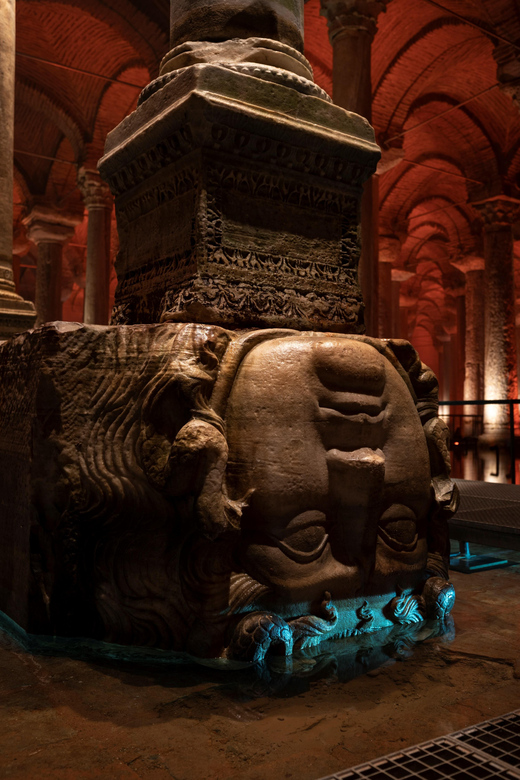
- Medusa heads and the myths your guide connects to the cistern’s layout
- A pop-culture bonus: a James Bond connection you can spot while you’re there
- Expect a “cooling down” break from Istanbul heat, with colorful lighting inside
Entering The Basilica Cistern: What makes it special
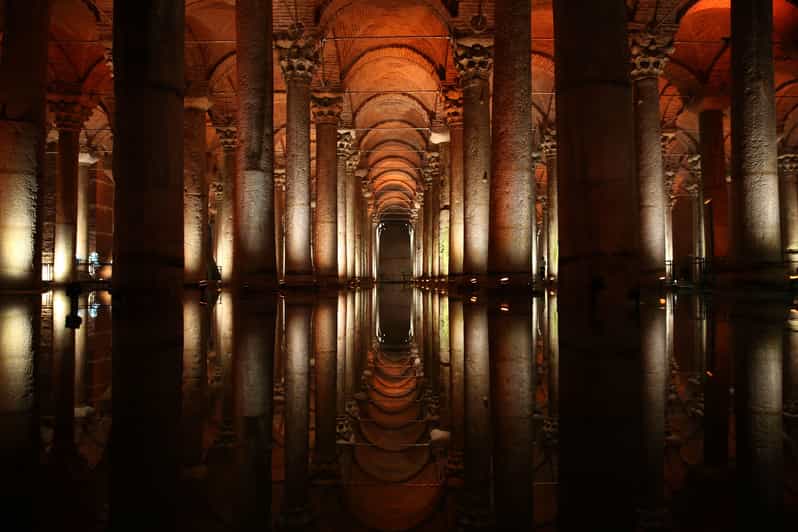
The Basilica Cistern is not just a pretty underground room. It’s a piece of city infrastructure that survived wars, empires, and changing ideas of what Istanbul needed to run day to day.
Here’s the core story you’ll hear on the visit: the cistern was built in the 4th century, then enlarged in 532 AD under Emperor Justinian I. In Byzantine times it served as water storage, and it was built big enough to hold up to 80,000 cubic meters of water. That number matters. It tells you this wasn’t a small “aqueduct stop.” It was a system meant to keep the Great Palace supplied.
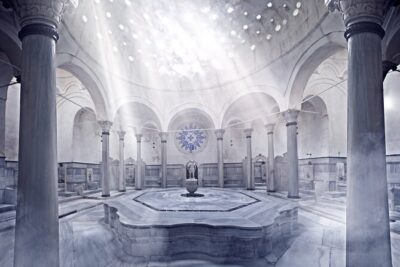
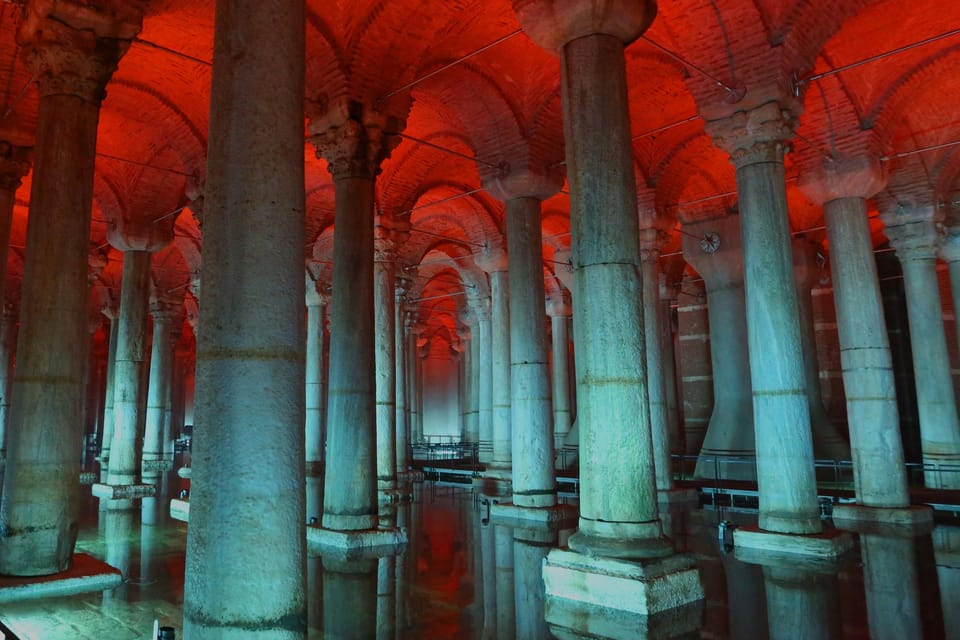
When you descend, you’re going from bright stone steps into a cathedral-sized underground chamber. The experience is dark, damp, and quietly dramatic. Even if you know the famous image of the Medusa heads, seeing them in the actual lighting and layout makes them feel less like a postcard and more like a clue in an old city puzzle.
You can also read our reviews of more guided tours in Istanbul



Skip-the-line entry: worth it, but know the limits
This ticket is designed to save your time at the busiest point: the entry line to the Basilica Cistern. If you pick the skip-the-line option, you’re set up to get inside without the worst crowd bottleneck.
But here’s the honest catch: you cannot skip security lines. You’ll receive entry ticket QR codes by email (sent separately from Istanbul Tourist Pass), and that QR code still has to be scanned through standard security. And yes, there could be a line at the entrance even with the timed approach.
Still, the skip-the-line portion tends to pay off in two ways:
- You start the experience sooner, so you spend more time inside and less time waiting.
- If you’re juggling Istanbul in one day, moving faster here helps you keep your rhythm elsewhere.
If you hate crowds, picking a first or earlier slot can make the cistern feel calmer. The room is atmospheric either way, but it’s a lot more enjoyable when you’re not constantly threading around elbows.
The 52 steps and the engineering story you’ll remember
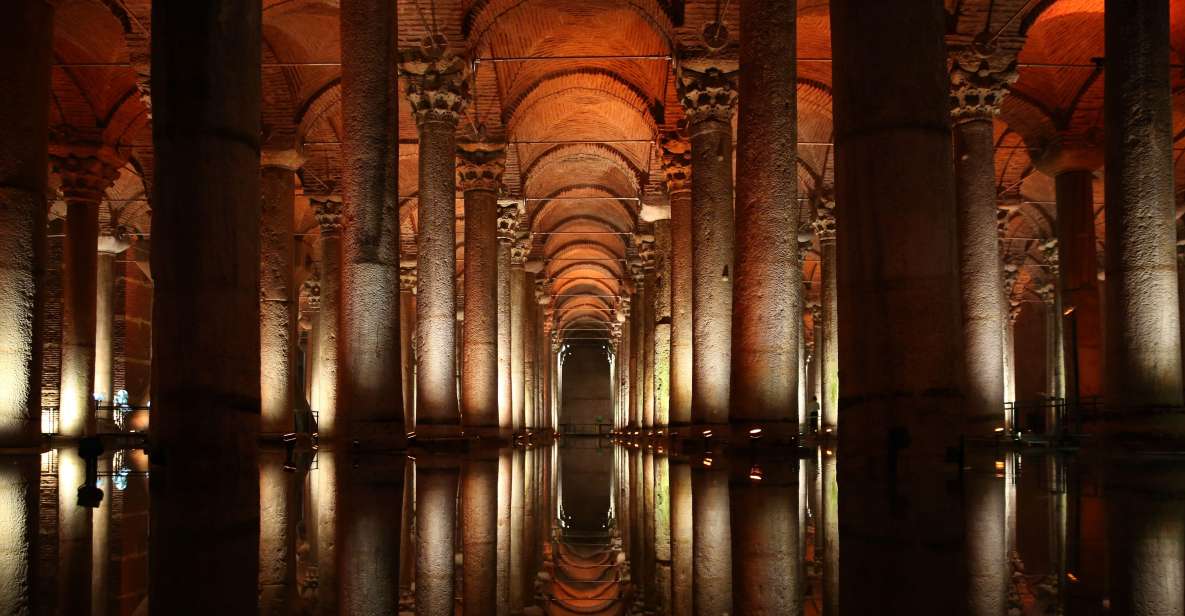
One reason this visit works so well as a guided experience is how much engineering your guide connects to what you see.
As you enter the cistern area, you go down 52 stone steps. Then you get the “how it worked” explanation in a way that clicks. Your guide points out the cistern’s walls and waterproofing approach: a firebrick wall with 4-meter thickness, coated with waterproofing mortar.
Then comes the aqueduct math. You’ll hear that the water system used about 20 kilometers of aqueducts to move water toward the cistern, with specific links like:
- The Eğrikapı Water Distribution Center in the Belgrade Forest
- The Valens Aqueduct at 971 meters
- The Mağlova Aqueduct at 115 meters
You don’t need to become a civil engineer to enjoy this part. The point is that you’re not just walking through old ruins—you’re witnessing how a huge city solved a basic, urgent problem: getting water reliably underground.
Medusa heads: myth meets architecture
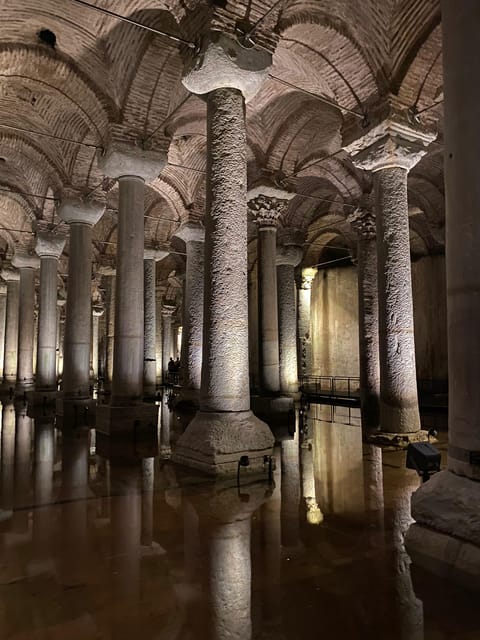
Let’s talk about the Medusa heads, since they’re the headline you’ll recognize immediately. Your guide explains the Medusa element through the lens of Greek mythology and how it shows up here in the cistern’s setting.
The experience gets more satisfying when you see these heads as part of the overall arrangement, not as isolated “mystery objects.” A good guide helps you understand what you’re looking at and where your attention should go next—usually pointing out the best angles for photos and the most interesting nearby details.
You might also hear about other memorable features as you move through. One example from the experience: the Slaves’ Tears column is often included in the guided route. Even if you’ve only heard of the Medusa heads, this kind of extra stop gives you more to carry home from the visit.
And lighting plays a big role. The cistern is famous partly because it looks theatrical under illumination. Inside, you’ll notice the colorful lights that make the water, columns, and carvings feel more alive than you’d expect from a damp underground storage space.
Spotting From Russia with Love (Bond fans, you’ll smile)
Another highlight built into the experience is a James Bond connection. If you know the film From Russia with Love, you’ll get pointed toward a scene reference you can recognize while you’re standing in the cistern.
This is the kind of detail that turns a history stop into a “memory stop.” You’re not just learning facts; you’re connecting culture to place. It’s especially fun if you’re traveling with someone who loves film trivia, because suddenly the cistern feels like more than a static attraction.
Don’t worry if you’re not a Bond person. Even without that connection, the guide’s explanation of the scene tends to make you look around with new eyes, not just straight down at the famous carvings.
You can also read our reviews of more tours and experiences in Istanbul




Beyond the cistern: Hagia Irene and Istanbul views
The Basilica Cistern sits near Sultanahmet’s major sights, so a smart guided visit often includes quick connections to nearby landmarks. You may hear about Hagia Irene, described as the second biggest church in Istanbul, as part of the story thread your guide weaves through the area.
You can also expect your guide to bring in the bigger-picture geography. The highlights call out views over the Golden Horn and the Bosphorus, which helps you mentally place the cistern in the city’s larger structure. That matters more than it sounds: once you connect the underground world to the city’s waterfront and hills, your photos look better and your orientation improves.
Even if you don’t get sweeping views from inside the cistern (it’s underground, after all), the guidance on what you’re seeing nearby can make your Istanbul day feel more connected instead of like a checklist.
Audio guide and eSIM: small extras that help you keep moving
This experience includes an audio guide, and it’s described as English. Even if you’re already listening to the guide in person, the audio layer can be useful for a second pass on your own time.
You also get an eSIM with internet included for a limited time. That’s a practical little perk in Istanbul, where navigating neighborhoods and checking transport times can get annoying without data. The eSIM won’t replace planning, but it helps you stay in touch with friends and handle the little “where are we now?” questions on the fly.
Think of these as low-friction extras: the cistern is the main event, but these add-ons make the rest of your day run smoother.
What about crowds, noise, and renovations?
Underground sites come with real-life issues, and this one has a few you should mentally plan for.
- Noise: If a school group is nearby, it can get loud. On at least one occasion, the guide adjusted and handled the situation well, which can make the visit feel more orderly.
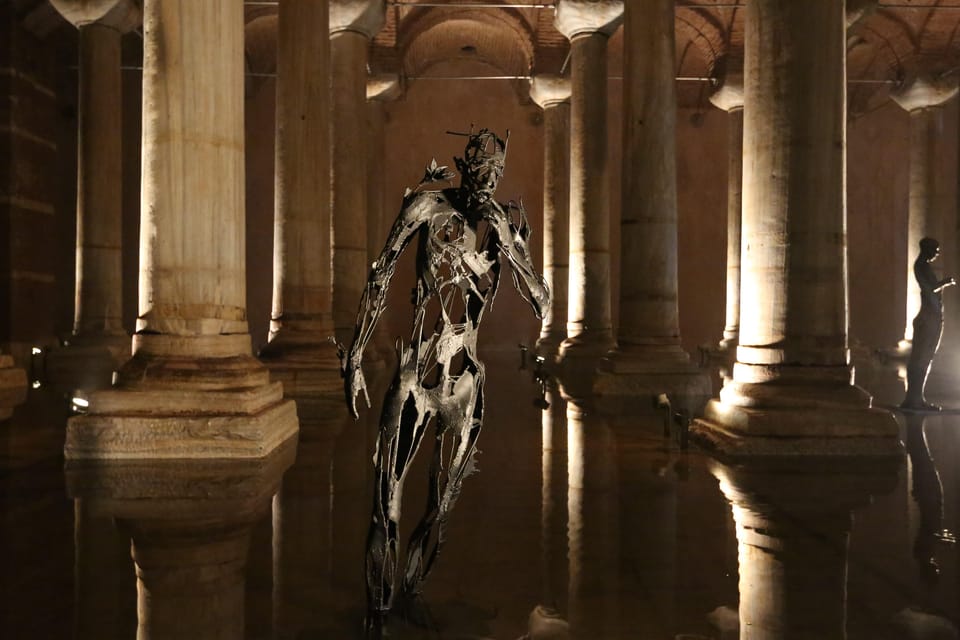
- Restoration changes: Some parts of the sight can be under repair, and you might notice modern installations or changes after restoration (including changes to entrance pathways). That doesn’t ruin the cistern, but it can affect the “classic” photo setup you expected.
- Crowd level: Skip-the-line helps, but the building can still be busy because it’s a top Istanbul attraction. If you’re sensitive to crowds, choosing an earlier time slot can help you start with more breathing room.
If you’re the type who wants everything pristine and silent, just adjust expectations. This is still one of Istanbul’s most memorable underground spaces.
Price and value: is $54 a good deal?
At $54 per person with a guided visit, audio guide, and skip-the-line entry option, this is priced for convenience and context—not budget travel.
Here’s how I’d judge the value:
- If you’re going to spend money at all, paying for skip-the-line is usually the most rational splurge at the busiest sights.
- A guide isn’t required to see the cistern, but it changes what you get out of it. The engineering details (aqueduct lengths, storage volume, waterproofing approach) and the storytelling around Medusa heads are exactly the kind of stuff you miss when you’re just walking and snapping.
- The included eSIM nudges the value higher if you don’t already have reliable internet.
In plain terms: if you’re the kind of traveler who likes your historic sights with an explanation (and you want to avoid waiting), this price can feel fair. If you’d rather wander freely with no structure and you don’t mind longer entry waits, then you might not need this specific add-on.
Who this tour is best for
I’d point you toward this experience if:
- You want a short, high-impact Istanbul stop (the duration is listed as 1 hour to 75 minutes).
- You like history that’s told in a way you can actually picture—especially engineering and city logistics.
- You’re going in hot season and want a built-in cool-down.
- You’d enjoy a mix of myths, architecture, and a pop-culture reference like Bond.
You might skip the guided version if you:
- Prefer independent pacing with minimal talking.
- Are traveling with someone who hates group logistics.
- Plan to only spend a few minutes there for photos.
Should you book this Basilica Cistern skip-the-line ticket?
If your goal is to see the Basilica Cistern without losing time and without leaving your questions unanswered, I’d book it. The skip-the-line setup, plus the guided context around Medusa heads and the cistern’s water system, makes the experience feel smarter than a quick photo stop.
One practical reason I’d lean yes: you get a tight timeframe that still leaves you time to enjoy the space yourself afterward. That balance matters when Istanbul is packed and you want your day to feel like a series of wins, not one long waiting session.
If you’re flexible on timing, consider an earlier slot to reduce crowd pressure and get in while the cistern feels calmer.
FAQ
How long is the Basilica Cistern skip-the-line experience?
The duration is listed as 1 hour to 75 minutes. Exact start times depend on availability.
Is hotel pickup included?
No, hotel pickup is not included.
Does the ticket include skip-the-line entry?
It includes skip-the-line entry ticket for the Basilica Cistern if that option is selected.
Is an audio guide included, and what language is it?
An audio guide is included, and the information provided notes English as the audio guide language.
Do I need passport or ID?
Yes. You should bring a passport or ID card.
Can I skip the security lines with this ticket?
No. It is not possible to skip the security lines, and security screening is mandatory for all visitors. There could also be a line at the entrance.
Is eSIM internet included?
Yes. Internet with eSIM is included for a limited time.
What’s the cancellation policy?
You get free cancellation up to 24 hours in advance for a full refund.
If you tell me your travel month and roughly what time you’ll be near Sultanahmet, I can suggest the best kind of slot strategy for avoiding peak crowd energy.