REVIEW · ISTANBUL
Istanbul Ancient Monasteries Full-Day Tour with Lunch
Book on Viator →Operated by Istanbul Walks · Bookable on Viator
Mosaics, mosques, and monastery ruins in one long walk. This full-day Constantinople tour strings together Byzantine-era religious sites across the European side, where churches became mosques, dynasties left traces, and you learn how the city’s faith changed without erasing the buildings. I love how the route makes you slow down and look closely at surviving fragments instead of only chasing the headline monuments like Hagia Sophia or the Blue Mosque.
Second, I like the small-group feel (max 4) and the way guides such as Diana, Ilker, Lutfallah, and Serhat bring context that connects one stop to the next. One drawback to plan for: expect a lot of walking, and many locations are viewed from the outside, so comfy shoes matter.
In This Review
- Key takeaways before you go
- Byzantine monasteries in Constantinople’s footprints
- Small-group comfort: pickup, timing, and how hard it really is
- Sarachane first: St Polyeuktos and the 6th-century Christian center
- Pantocrator area and the cistern clue
- Fethiye Mosque and Pammakaristos mosaics you can actually focus on
- Lunch in Fatih: a two-course meal built for a long day
- Chora Church Museum time: the Byzantine art moment of the day
- Tekfur Sarayi and the Palace of the Porphyrogenitus walk
- From walls to schools: how the city guards its past
- Vlaherna, the Mongols church, and Molla Zeyrek’s layered past
- St John the Forerunner and the monastery chapel feeling
- Price and value for a $781.90 group tour
- Who should book this Constantinople walking day
- Should you book this tour? My practical recommendation
- FAQ
- Is this tour only for English speakers?
- Where does hotel pickup happen?
- How long is the tour?
- What size is the group?
- Will we visit the sites inside or outside?
- Is lunch included, and what does it include?
- Is the tour physically demanding?
- Are there admission tickets included?
Key takeaways before you go
- Chora Church art: big focus on Byzantine mosaics and frescoes
- Church-to-mosque stories: you’ll see how older sanctuaries were repurposed over time
- Sarachane morning start: St Polyeuktos ruins set the tone for the whole day
- Tekfur Sarayi (Palace of the Porphyrogenitus): royal palace atmosphere with Ottoman-era perspective
- Lunch is built into the plan: typically a 2-course meal with soup or salad plus meat and eggplant
- Small group attention: better pacing and more Q&A than the big bus tours
Byzantine monasteries in Constantinople’s footprints
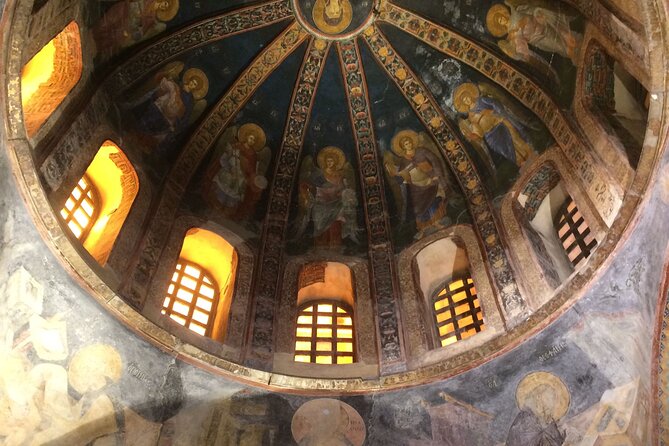
This is the kind of day that changes how you see Istanbul. Instead of sprinting between the most famous sites, you follow the thread of Constantinople’s religious life through smaller churches, mosque conversions, and monastery remains.
The best part is the “before and after” feeling. Even when a building no longer functions the way it once did, you can still read the past in details like architecture, layout, and the survival of sacred art—especially at Chora Church.
You’ll also get a stronger sense of how Ottoman rule didn’t wipe everything clean. It often adapted existing religious spaces, which is exactly what this tour highlights as you move from church spaces to mosque spaces.
You can also read our reviews of more tours and experiences in Istanbul

Small-group comfort: pickup, timing, and how hard it really is
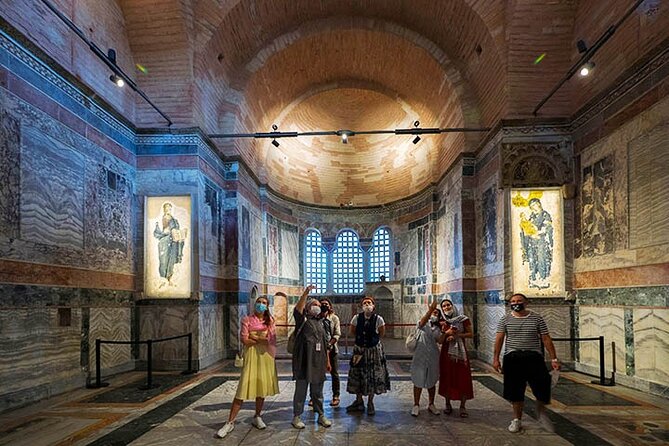
You start at 9:00 am, and the tour runs about 6 hours 40 minutes to 7 hours 30 minutes. Pickup and drop-off are included from centrally located European Side hotels, which helps you avoid wasting time getting yourself across neighborhoods.
The group is capped at 4 travelers, which is a big deal on a walking-heavy route. Smaller groups mean fewer bottlenecks at viewpoints, and it’s easier for your guide to adjust pace when streets get tight.
One important heads-up: you’ll want moderate physical fitness. The program is designed around walking between religious landmarks and older streets, not around short stops with long sits. If you’ve got average legs and average shoes, you’ll be fine—just don’t show up in brand-new sneakers that need a day to break in.
Sarachane first: St Polyeuktos and the 6th-century Christian center
The day starts in Sarachane on the European side. That matters because it keeps the mood grounded in real neighborhoods instead of only the most tour-busy zones.
First up is a walk through the carved remains of St Polyeuktos Church, tied to the 6th century. Even if what you see is partial ruin, it’s a powerful way to begin. You’re not looking at a perfectly restored monument; you’re looking at what time left behind, and your guide helps you make sense of why it mattered.
This opening stop also sets your expectations for the rest of the day. Constantinople wasn’t one big intact complex. It was a city full of religious institutions—some surviving well, others reduced to fragments—so you learn to read the place like a puzzle.
Pantocrator area and the cistern clue
After St Polyeuktos, the tour continues through the Church of Pantocrator area. In the Byzantine era it was a major monastery church built in the 12th century, and later it was converted into a mosque.
One detail I’d pay attention to: the ancient cistern connected to the site. Cisterns don’t sound romantic, but they explain a lot about how Constantinople worked. Water storage helped keep a dense capital alive, especially during times when neighborhoods depended on older infrastructure.
If you like understanding how religion, politics, and daily life intersected, this part is satisfying. It gives you a “why” behind the buildings instead of just a “what.”
Fethiye Mosque and Pammakaristos mosaics you can actually focus on
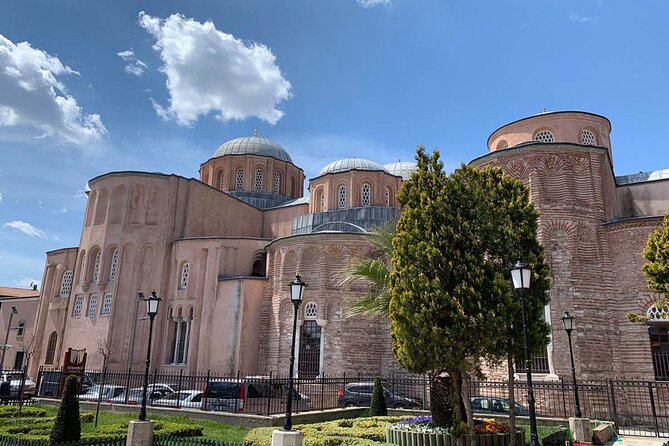
Next comes Fethiye Mosque, formerly the Pammakaristos Church. This is the stop where Byzantine art becomes very tangible. You’ll see the funerary chapel’s mosaic work—one of the reasons this route appeals to people who already saw the big-ticket Istanbul sights.
The key angle here is conversion. The building changes function, but the visual language of Byzantine mosaics remains readable. That’s what makes this tour different from a standard museum day: you’re seeing sacred art inside the life of a living city.
Also, the tour moves at a guided, story-driven pace. With the art in front of you, your guide can explain what the mosaics depict and why the church was important in its original setting.
You can also read our reviews of more tours and experiences in Istanbul


Lunch in Fatih: a two-course meal built for a long day
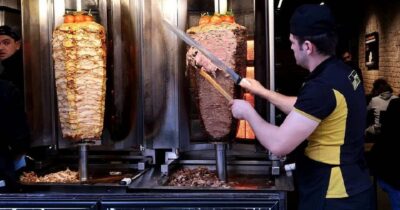
Lunch is included, and it’s usually a 2-course setup: soup or salad first, then a meat-and-eggplant entree. That’s the kind of meal that works after hours of walking and looking—comfortable, filling, and not trying to be a show.
From the guide stories I’ve heard about this route, the lunch is often treated as part of the cultural experience, not just fuel. At least some departures include home-cooked Anatolian style food, which is exactly the sort of contrast that makes a tour like this feel less touristy.
That said, not every lunch is the same. One caution from feedback: for the price, some people felt the restaurant could be better. My advice is to go in with realistic expectations: you’re paying for the whole guided art-and-architecture route, and lunch is meant to keep you strong, not win a Michelin star.
Chora Church Museum time: the Byzantine art moment of the day
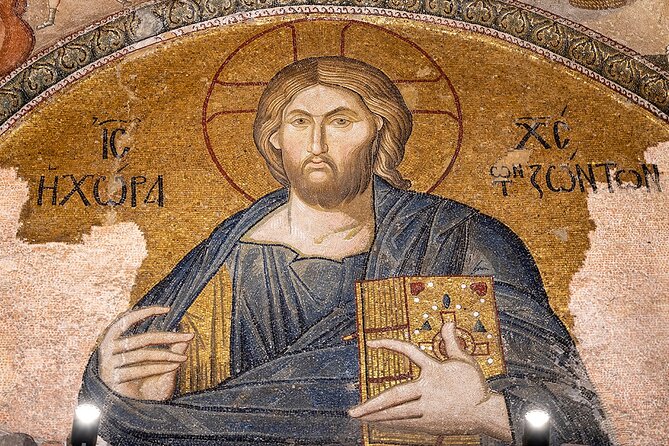
If you care about mosaics and frescoes, this is the centerpiece. The tour heads to Chora Church, also known as the Church of the Holy Saviour in Chora.
This is where you’re meant to slow down and look. The Byzantine art here is famous for detailed imagery connected to the life of Christ, and your guide helps you see it in a way that feels more like learning than just sightseeing.
One tricky point: the trip info also notes that all places in the itinerary are visited from the outside. But the description also says you enter Chora Church with your guide to marvel at mosaics and frescoes. So do yourself a favor and confirm whether Chora is fully interior for your specific departure. Either way, it’s the stop most people plan the day around.
Practical tip: take your time at Chora. If you rush, you’ll miss the storytelling your guide is giving you through the art.
Tekfur Sarayi and the Palace of the Porphyrogenitus walk
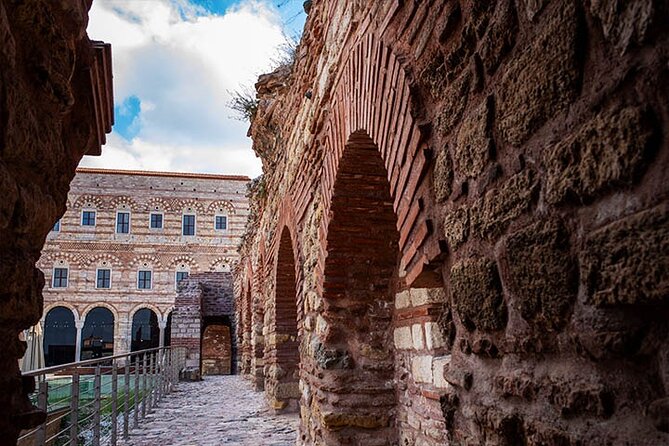
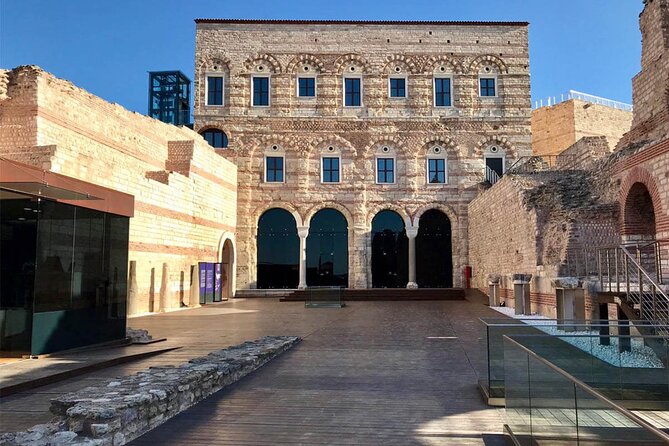
After Chora, the tour includes a walk through Tekfur Sarayi, the Palace of the Porphyrogenitus. This is a former royal palace site, and the atmosphere helps you understand why rulers built in certain styles and in certain locations.
You’ll wander through archways and around courtyards, and you’ll also hear about how the palace functioned until the 15th century, around the beginning of Ottoman reign. That timeline matters, because it shows you that these buildings were never static. They shifted with power.
If you like sites where you can picture daily life from traces in stone, this stop delivers. You’re not just looking at a facade; you’re walking the kind of spaces where people once lived and received visitors.
From walls to schools: how the city guards its past
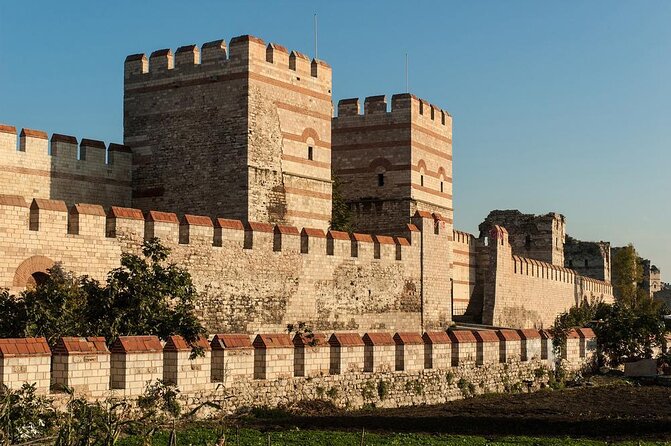
The route then connects to older defensive and community landmarks, including the walls and gates of Constantinople. Viewing the walls like this adds context fast. It’s easier to understand why the city’s neighborhoods clustered where they did when you see the fortifications.
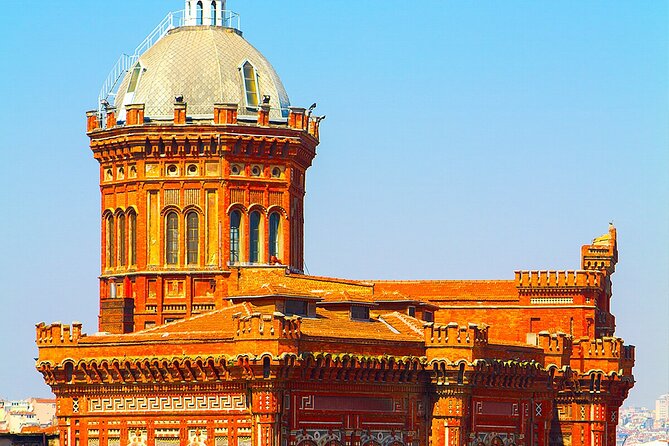
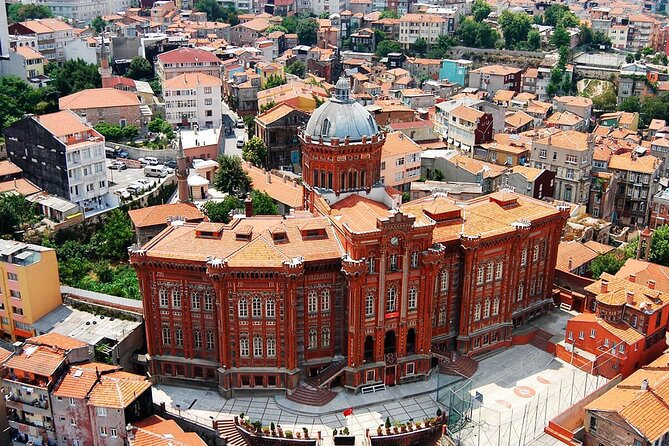
Another stop is the Private Fener Greek High School, described as the oldest surviving and most prestigious Greek Orthodox school in Istanbul. That kind of institutional continuity is a different form of heritage. It’s not only buildings; it’s education and identity living on through centuries.
And then you hit the Fener Rum Patrikhanesi, the Ecumenical Patriarchate of Constantinople. Even from the outside, it’s a reminder that Constantinople’s religious influence didn’t fade once political power changed. It carried forward.
Vlaherna, the Mongols church, and Molla Zeyrek’s layered past
The itinerary threads through multiple church-related landmarks that show different outcomes for Byzantine structures.
You’ll see Vlaherna Meryem Ana Church (Eastern Orthodox). You’ll also visit the Church of St. Mary of the Mongols—notable because it has never been converted to a mosque and has remained open to the Greek Orthodox Church.
That contrast is useful. Some buildings get repurposed; some stay in their original religious use. Seeing both types in one day helps you understand Istanbul’s religious patchwork.
Another layer comes with Molla Zeyrek Mosque, which is made of two former Eastern Orthodox churches and a chapel. If you enjoy architecture that reflects compromise and reuse, this is the kind of stop where the buildings’ “stacked identities” make sense once your guide points them out.
St John the Forerunner and the monastery chapel feeling
The day also includes the Monastery Chapel of St John the Forerunner. The plan describes it as a place to relax at a local eatery before lunch, which suggests the goal is to slow your pace and shift from exterior-only looking to a more reflective moment.
Even if what you see isn’t the grandest preserved structure, it adds one more piece to the day’s theme: monasteries as both spiritual centers and physical anchors within the city.
If you’re the kind of traveler who likes the “in-between” sites, this stop will feel like a relief after the big names.
Price and value for a $781.90 group tour
The price is $781.90 per group, up to 4 travelers. That sounds high until you calculate the per-person cost based on group size.
- If the tour runs with 4 people: about $195 each
- If it runs with 2 people: about $391 each
- If it’s just you: you’d be covering the full group price
Here’s where the value argument becomes real: this isn’t a quick hop between monuments. It’s a guided, story-led walking day across multiple Constantinople-era religious sites, plus lunch and hotel pickup/drop-off. Also, guides doing this route well can turn “ruins and conversions” into a coherent picture, which is hard to replicate on your own.
There’s also an efficiency angle. Many stops are marked as free admissions in the plan, and the tour visits places from the outside for several locations. You’re paying for guidance, pacing, and interpretation, not for ticket lineups across multiple paid attractions.
Who should book this Constantinople walking day
This works best for you if:
- You already did the headline Istanbul sites and want a different angle
- You enjoy Byzantine art (especially mosaics and frescoes)
- You like learning why religious buildings changed function without losing their visual identity
- You’re comfortable with a full day of walking and looking at buildings from streets and courtyards
It may be a mismatch if:
- You want mostly indoor, ticketed museum-style time the whole day
- You get cranky after long walks (this tour is not a sit-and-watch affair)
- You’re expecting a luxury restaurant lunch; opinions on lunch quality can vary
Should you book this tour? My practical recommendation
I’d book it if you want a guided day focused on the Constantinople layer of Istanbul—churches, monasteries, conversions, and art—without the big-crowd feeling. The fact that it’s small-group capped at 4, starts with an expert-led sequence through the European side, and includes lunch makes it feel like a complete plan rather than a random list of stops.
If price is your sticking point, watch the group size. This one becomes a bargain when it fills, and a bigger splurge when it doesn’t. If you’re traveling solo or as a couple, it’s worth booking only if you truly care about the Byzantine-to-Ottoman religious timeline and you’re ready for the walking.
FAQ
Is this tour only for English speakers?
Yes. The tour is offered with an English-speaking guide.
Where does hotel pickup happen?
Pickup is included from centrally located hotels on the European Side of Istanbul.
How long is the tour?
The duration is about 6 hours 40 minutes to 7 hours 30 minutes.
What size is the group?
The group is limited to a maximum of 4 travelers.
Will we visit the sites inside or outside?
The information provided says all places in the itinerary will be visited from outside, but the description also notes entering Chora Church to see its mosaics and frescoes. You should confirm what’s interior for your departure.
Is lunch included, and what does it include?
Lunch is included. It’s usually a 2-course meal—often soup or salad, plus a meat and eggplant entree.
Is the tour physically demanding?
It’s recommended for travelers with moderate physical fitness, since there is a lot of walking.
Are there admission tickets included?
Many stops are listed with admission ticket free in the plan. Still, if you want to be sure about any specific interior access (especially at Chora), confirm details before you go.