REVIEW · ISTANBUL
Hagia Sophia Fast Track Online QR-Ticket with optional Tour
Book on Viator →Operated by SKIPTHELINES.COM.TR · Bookable on Viator
Skip the line. Then soak up the details.
This Hagia Sophia experience pairs a fast-track QR ticket with an optional English professional guide and a free phone audio guide in 23 languages. I like that the tour keeps you moving through the key sights fast—Grand Dome, Byzantine mosaics, and calligraphy—while giving context for the building’s shift from cathedral to mosque. I also like that non-Muslims get access to the second floor for great views of the first floor and prayers. One real consideration: you still must queue for security and ticket control, which can take 10 to 45 minutes in peak season.
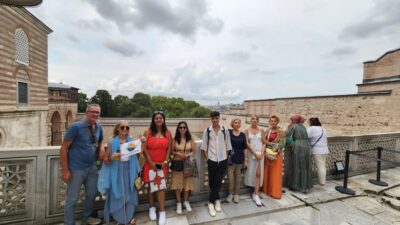
You’ll meet in Sultan Ahmet and stay nearby for about 40 to 45 minutes, in a group capped at 25 travelers. You’re near public transportation, the pace is best for moderate walking, and strollers are not recommended (so plan hands-free if you can). And even though it’s short, you can stay inside until closing time, so you’re not forced to rush right after the guided portion.
Access rules matter here. The first-floor prayer area is limited to Turkish citizens, and women must cover hair with a scarf while men should avoid knee-length shorts. Plan your outfit and expectations up front, and the visit goes much smoother.
In This Review
- Key points before you go
- Hagia Sophia fast-track QR: what you’re really buying
- Meeting point in Sultan Ahmet and how to avoid the late-minute scramble
- Inside Hagia Sophia: the story you’ll hear in 40–45 minutes
- Stop focus: Grand Dome, mosaics, calligraphy, and the big timeline
- Christian remnants you can spot
- The second-floor access rule: what it means for your visit
- Phone audio guide in 23 languages: how to use it well
- Dress code and “small” clothing rules that can cost you entry
- Security lines, timing, and why 10 minutes matters
- Group size (max 25): what that changes for your experience
- Price and value: is $12.05 worth it for a 40–45 minute visit?
- Who should book this Hagia Sophia experience
- Guides and the kind of storytelling you can expect
- Should you book the Hagia Sophia fast-track QR ticket with optional tour?
- FAQ
- How long should I plan for this Hagia Sophia experience?
- Is it really skip-the-line if I still have to wait for security?
- What language is the tour guide?
- Can non-Muslims visit Hagia Sophia?
- Are there areas I cannot enter?
- What dress code rules should I follow?
- What if I’m late to the meeting point?
- Can I cancel for free?
Key points before you go
- Fast-track QR ticket helps you cut the ticketing steps, but security lines can still be long at busy times
- 23-language phone audio guide means you can follow the story even if the guide is hard to hear
- Non-Muslims visit the second floor for views down to the first floor and prayer space
- Dress code is enforced (women scarf coverage; men no knee-length shorts)
- Small group size (max 25) keeps the tour manageable and easier to coordinate
- You can stay until closing time, even if the guided portion is only about 40–45 minutes
Hagia Sophia fast-track QR: what you’re really buying
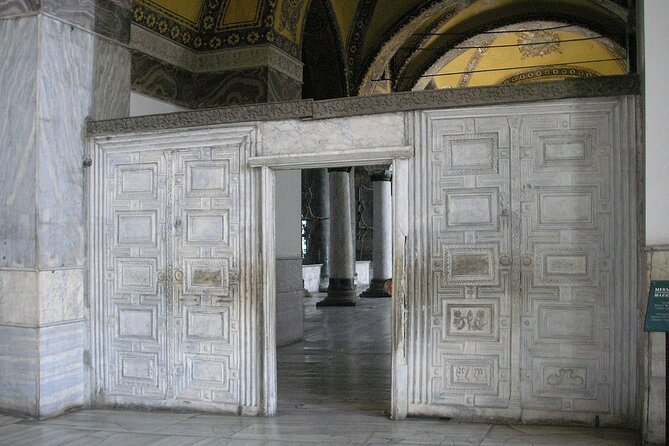
You’re paying for less friction at a site that’s almost always busy. The core product is a Hagia Sophia skip-the-line ticket delivered as a QR voucher, plus optional guided interpretation. In real life, the “skip-the-line” part mainly means fewer delays on the ticket-handling side, so you can spend your time inside where it counts.
That said, this is still Hagia Sophia in Istanbul. You should expect to stand in the security and ticket control line. The provided guidance is blunt: 10 to 45 minutes depending on the season and crowds. If you arrive late, you also risk a hard stop—there’s no refund if you don’t attend or are late, with a maximum waiting duration of 10 minutes. Translation: show up early and treat timing as part of the experience.
You can also read our reviews of more tours and experiences in Istanbul

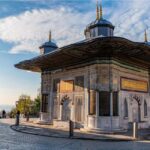

Meeting point in Sultan Ahmet and how to avoid the late-minute scramble
Your start point is in Sultan Ahmet, Babı Hümayun Cd. No:8, 34122. Your end point is at the mosque itself: Hagia Sophia Grand Mosque, Sultan Ahmet, Ayasofya Meydanı No:1, 34122.
Because you’re within the Sultan Ahmet area, you’ll likely combine this with nearby sights like the Blue Mosque and Topkapi Palace. The tour’s location is helpful: it keeps you from spending your limited time on long transfers through traffic.
My practical advice: plan a buffer. With a 10-minute maximum wait for late arrivals, it’s not enough to “be nearby.” Aim to be at the meeting point early enough that you can handle a slow walk, a wrong turn, or a quick photo stop outside.
Inside Hagia Sophia: the story you’ll hear in 40–45 minutes
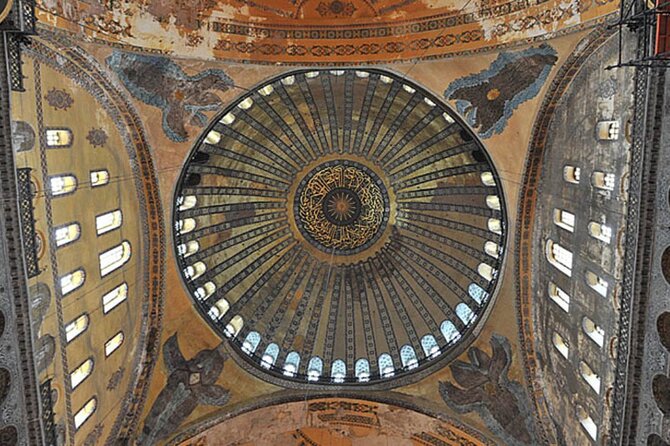
The Grand Mosque’s layout can feel like a maze at first glance. That’s exactly where a guide helps. This experience is built around a short, focused route that hits the main visual anchors and then connects them to the building’s identity over time.
Stop focus: Grand Dome, mosaics, calligraphy, and the big timeline
Your visit centers on Hagia Sophia Grand Mosque and its architectural showpieces. You’ll get a guided look at:
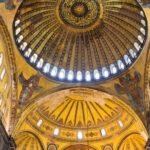
- the Grand Dome, an architectural masterpiece dating to 537 AD
- Byzantine mosaics
- intricate calligraphy
- the building’s layered religious past, once a cathedral and now a mosque
The key value isn’t just seeing the details. It’s learning what the details mean. The guide style here is geared toward tying those elements together so the space feels coherent instead of random.
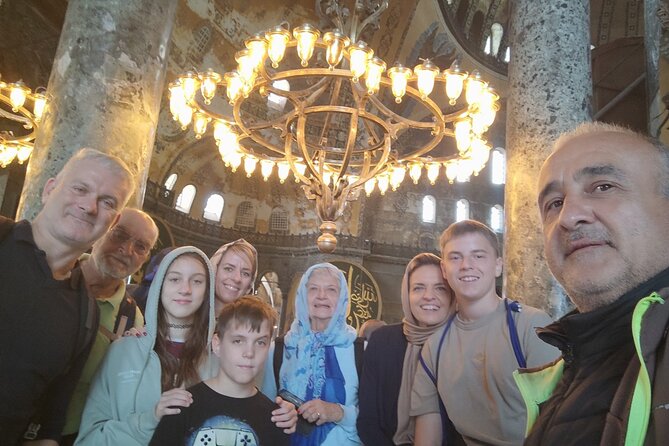
Christian remnants you can spot
Even though it’s now a mosque, you’ll also be guided toward remnants of the earlier Christian era, including frescoes tied to its time as a cathedral. This is one of those “wait, I can see that” moments that happens when someone points out what you might otherwise overlook.
If you care about how empires repurpose sacred buildings, this stop hits hard. And if you don’t want a school lecture, the structure is short enough to keep it lively.



The second-floor access rule: what it means for your visit
This is one of the most important logistics pieces, because it affects what your photos and views will look like.
- Non-Muslims can visit the second floor.
- From the second floor, you can see the first floor and the prayer area.
- The prayer area on the first floor can only be entered by Turkish citizens, and that area is noted as not included in this experience.
So don’t plan your expectations around entering every space. Instead, plan to use the second floor strategically: it’s where you’ll get the best “look down” perspective without running into restricted entry.
Also, keep this in mind if someone in your group has mobility limitations. You should have moderate physical fitness, and you’re moving within an active, regulated public site.
Phone audio guide in 23 languages: how to use it well
You get a free audio guide to your smart phone in 23 languages. Even if you take the guided option, the audio guide is a smart backup. It lets you replay key points if the guide is talking to someone nearby or if you’re distracted by a mosaic you don’t want to miss.
Practical tips (no guesswork—just common sense):
- Bring your phone with enough battery for the visit.
- If your audio settings are easy to manage, use headphones or keep volume low so you can follow without annoying others.
- Use the audio to fill gaps during pauses, so you don’t feel like you’re “behind” the story.
This is especially useful because Hagia Sophia has crowds and constant movement. Audio helps you control your own pace while still following the tour structure.
Dress code and “small” clothing rules that can cost you entry
These rules are not optional. You should follow them to avoid delays or problems at the entrance:
- Women’s hair should be covered with a scarf.
- Men should not wear knee-length shorts.
If you’re traveling light, toss a scarf into your day bag. If you might wear shorts, choose longer options. Hagia Sophia is historic, famous, and crowded—but the entry standards don’t care. Plan your outfit like it’s part of the ticket.
Security lines, timing, and why 10 minutes matters
Let’s be real: the thing that can sour a “skip-the-line” plan is arriving at the wrong time. The experience clearly warns that you must wait in the security and ticket control line—10 to 45 minutes in peak season.
Then there’s the late-arrival rule: no money refund if you don’t attend or are late, and the maximum waiting duration is 10 minutes. Put those together and you get a simple strategy: arrive early enough to deal with both walking time and potential checks.
A short tour can feel easy to fit into a schedule. But at Hagia Sophia, crowds can turn a short visit into a stressful one if you don’t respect the queue.
Group size (max 25): what that changes for your experience
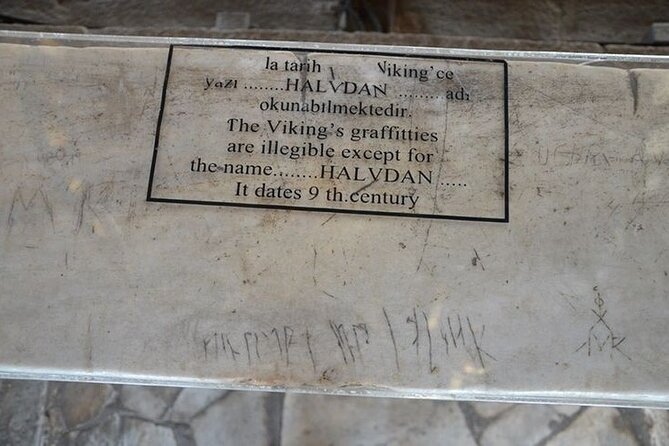
A maximum group size of 25 travelers is usually where the tour stays personal enough to feel guided, without feeling like you’re trapped in a crowd surge. In this kind of setting, that matters.
Here’s what you can expect from a group that size:
- you move through the space as a unit without losing everyone
- you’re more likely to hear explanations as the guide shifts attention across the group
- you’re less likely to spend your entire time stuck behind strangers
If you hate big bus tours, this cap is a big plus.
Price and value: is $12.05 worth it for a 40–45 minute visit?
At $12.05 per person, this sits in the “easy yes” category for many visitors—mainly because you’re getting more than a ticket. You’re also getting:
- a professional tourist guide (when you choose the guided option)
- a free phone audio guide in 23 languages
- an instant voucher and confirmation
- the entrance fee is listed as included
There’s one internal detail worth double-checking in your voucher wording: the itinerary text includes a line that says admission ticket not included, but the included section lists entrance fee. The safest move is to confirm what your voucher says before you show up. Either way, the intent of the package is clear: you should not be left hunting for basic entry paperwork right at the start.
If you’re deciding between a self-guided visit and this, your choice comes down to how you want to spend your time. If you like knowing what you’re looking at—dome, mosaics, calligraphy, the Christian-to-mosque conversion—this package helps you get value in a short window.
Who should book this Hagia Sophia experience
This fits best if you:
- want a time-managed first visit to Hagia Sophia
- like history explained in place, not from a distance
- want audio support in many languages so you don’t miss the story while crowds swirl
- plan to combine Hagia Sophia with nearby Sultan Ahmet sights
It’s less ideal if:
- you rely on a baby stroller (not recommended)
- you need access to areas outside the second-floor and general visitor zones (the first-floor prayer area is restricted)
- your group can’t follow the dress code rules (scarf coverage and short length matter)
Guides and the kind of storytelling you can expect
Even with a short timeline, the guide component is built for storytelling. In particular, one name that has shown up with this operator is Ergin (also seen as Ergin Karakoyun). The style described is engaging: connecting architecture to the human story, using humor, and keeping the pace controlled. Another guide name that comes up is Elgrin—and the feedback there focuses on clear English and friendly explanations.
You may or may not get the exact same guide, of course. But the pattern matters: you’re not just buying access. You’re buying a way to understand what you’re seeing before the crowd and the noise blur it.
Should you book the Hagia Sophia fast-track QR ticket with optional tour?
I’d book it if you want a smooth first visit and don’t want to gamble on figuring out the key sights on your own. For most people, $12.05 is a fair price when you factor in guide time, phone audio in 23 languages, and the chance to see the second floor with context.
I wouldn’t book it if you:
- are the type who wants zero structure and doesn’t care about guided explanations
- are traveling with a stroller or someone who struggles with moderate walking
- are likely to arrive late or show up without a solid plan for security queues
If you like practical travel wins—getting inside, knowing what to look at, and saving time for photos and nearby stops—this is a smart way to tackle Hagia Sophia without turning your visit into a line-standing contest.
FAQ
How long should I plan for this Hagia Sophia experience?
The guided portion is about 40 to 45 minutes. You can stay inside until closing time after that.
Is it really skip-the-line if I still have to wait for security?
You’ll still wait in the security & ticket control line. The provided range is 10 to 45 minutes in peak season, so the biggest time savings are on the ticketing side rather than security.
What language is the tour guide?
The experience is offered in English, and you also get a free audio guide in 23 languages for your smart phone.
Can non-Muslims visit Hagia Sophia?
Yes. Non-Muslims can visit the second floor. From there, you can see the first floor and prayers.
Are there areas I cannot enter?
The prayer area on the first floor can only be entered by Turkish citizens, and it is noted as not included in this experience.
What dress code rules should I follow?
Women should cover their hair with a scarf. Men should not wear knee-length shorts.
What if I’m late to the meeting point?
You must not be late. There is no money refund if you do not attend or are late, and the maximum waiting duration is 10 minutes.
Can I cancel for free?
Yes. You can cancel up to 24 hours in advance for a full refund.