REVIEW · ISTANBUL
Private Topkapi Palace and Harem Tour with Skip Line Entry
Book on GetYourGuide →Operated by Aussie Tours Travel Agency · Bookable on GetYourGuide
Topkapi Palace and the Harem are the kind of place that makes time feel stretchy. You’ll see opulent Ottoman rooms and intricate Harem tilework with a licensed English guide, plus skip the worst of the waiting. One thing I like a lot is how the tour is built around the palace’s real layout, so it clicks fast instead of feeling like a museum maze.
My second favorite part is the chance to connect the palace to the people who lived there, including the sultan’s family quarters. The main drawback to plan for is stamina: this is not wheelchair-friendly and it involves steady walking on uneven surfaces.
In This Review
- Key reasons this tour is worth your time
- Topkapi’s Harem: where power lived
- Getting oriented fast: the courtyards that make sense of it all
- First Courtyard and the Imperial Gate
- Second Courtyard: council, books, and food
- Inside the Third Courtyard: the Harem section
- A note on pacing
- Tilework and opulence, explained without getting lost
- Treasury stop: the Topkapi Dagger and Spoonmaker’s Diamond
- The Pavilion of the Holy Mantle: relics inside a palace
- The Circumcision Room: another layer of ceremonial life
- Value and logistics: what $136 really buys you
- Meeting at Orient Market: simple, central, and easy to find
- What to bring (and what will slow you down)
- Who this tour fits best
- Should you book this Topkapi Palace and Harem tour?
- FAQ
- How long is the Topkapi Palace and Harem private tour?
- Where do we meet the guide?
- Is skip-the-line entry included?
- What tickets are included?
- Is food and drinks included?
- Can I use flash photography or bring a backpack?
Key reasons this tour is worth your time
- Skip-the-line entry keeps your palace time focused, not stuck in queues
- Harem access includes the most talked-about private quarters and rooms
- Treasury must-sees include the Topkapi Dagger and Spoonmaker’s Diamond
- Pavilion of the Holy Mantle brings the religious relic element into the story
- Private-group pacing makes it easier to ask questions and move at a human speed
Topkapi’s Harem: where power lived
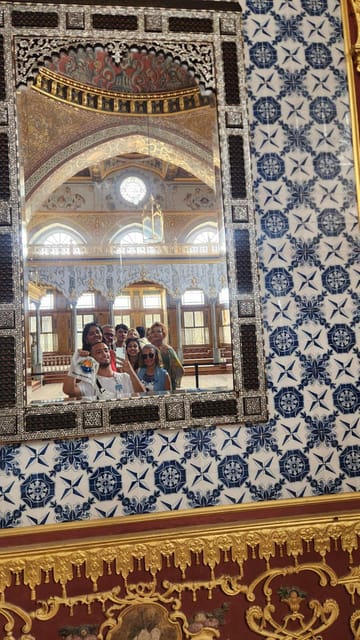
The Harem at Topkapi is famous for a reason, but what makes it work on the ground is the detail. You’re not just seeing “pretty rooms.” You’re stepping into the private world of the sultan’s family, with spaces that reflect status, routine, and hierarchy. The guide’s job here matters, because the palace can look like one long swirl of corridors without context.
The setting also helps. Topkapi is on Seraglio Point, a promontory above the Golden Horn, the Bosphorus, and the Sea of Marmara. Even when you’re indoors, you feel that this wasn’t random architecture. It was designed to run an empire and control a view.
You’ll also notice the shift in atmosphere as you move deeper into the complex. The first courtyards feel administrative and public-facing. The Harem feels quieter, more enclosed, and more personal—like you’re walking into a different chapter of Ottoman life.
You can also read our reviews of more private tours in Istanbul


Getting oriented fast: the courtyards that make sense of it all
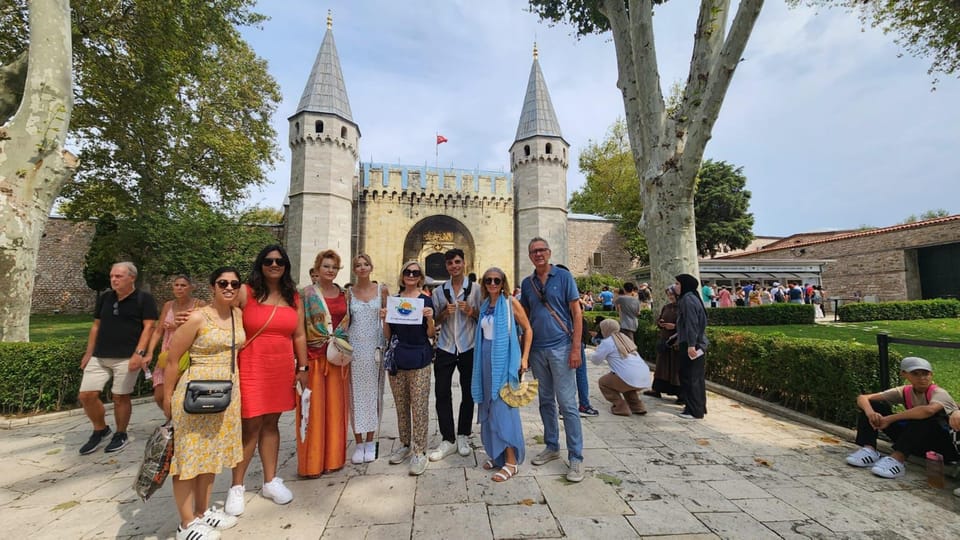
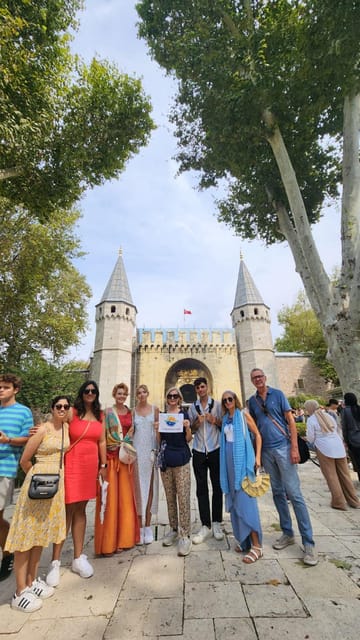
One smart thing about this tour is that it doesn’t throw you straight into the most famous rooms. It builds a map in your head as you go. You start with the palace’s First Courtyard, which is open to the public and includes gardens and the Imperial Gate. That first step matters, because Topkapi is huge. Without a sequence, it’s easy to feel lost.
From there you move into the Second Courtyard and see key landmarks that explain how the palace functioned day-to-day. You’ll pass the Imperial Council Hall, visit the Library of Ahmed III, and stop by the Palace Kitchens. These aren’t just “extra stops.” They show the palace as a machine: politics, learning, and supply all under one roof.
If you like architecture and layout, you’ll enjoy how the guide ties spaces together. A palace is more than rooms. It’s pathways, boundaries, and purpose.
First Courtyard and the Imperial Gate
This area gives you your bearings. It’s where the palace presents itself. The gardens also help break up the intensity—good if you’re visiting in warmer months or you need a calm moment before the inner sections.
Second Courtyard: council, books, and food
The Imperial Council Hall is where the state operated. The Library of Ahmed III shows a different side of power: knowledge as a tool of rule. Then the Palace Kitchens remind you that a royal residence isn’t only decoration. It’s logistics, staff, and daily life.
Inside the Third Courtyard: the Harem section
Eventually, you reach the Third Courtyard, and this is where the tone changes for most people. This courtyard leads into the Harem—described here as the private quarters of the sultan’s family—and that’s your core focus.
What makes the Harem section feel real is the mix of rooms and courtyards you’ll cover. You’ll see the Sultan’s Apartments and the apartments connected to his family life, including the Queen Mother’s Apartments and the Sultan’s Consorts’ Apartments. There’s also the Harem Courtyard, which gives you space to pause and process what you’ve just walked through.
And yes, the visuals are a big deal. Expect intricate tilework and richly decorated interiors. But more importantly, you’ll understand what you’re looking at. The guide’s commentary keeps the rooms from being just a photo stop.




A note on pacing
This tour is private, which changes the feel. You’re not constantly pushed forward to make room for the next group. That matters in Topkapi, where congestion can happen inside galleries and corridors.
Tilework and opulence, explained without getting lost
The Harem is visually intense. Even if you’re not a “decorations person,” you’ll probably find yourself slowing down. The tilework has a rhythm to it—patterns, repetition, and careful color choices. Rooms can blend together if you’re alone, but with a guide you’re more likely to catch the differences.
I like that the route includes both the living/ceremonial spaces and the courtyard areas. You get context for how the Harem wasn’t just a set of rooms. It was a functioning place for daily movement.
The guide also helps you link the Harem to the larger palace. That’s how the experience becomes more than sightseeing. You start to see Topkapi as a system: public authority outside, family life within, and the boundary lines between them.
Treasury stop: the Topkapi Dagger and Spoonmaker’s Diamond
One of the most practical reasons to book a guided tour here is the Treasury. It’s easy to walk through and miss what makes the displays significant. With a guide, you’re pointed to the highlights, including the Topkapi Dagger and the Spoonmaker’s Diamond.
The Treasury is where you really feel the imperial mindset. These objects aren’t just jewelry or weapons as artifacts. They’re symbols of wealth, craftsmanship, and legitimacy—things that announce authority even before anyone explains them.
You’ll also get a look at other key elements in the same area, including religious and ceremonial components tied to the palace’s status. That pairing—treasured objects plus sacred relic space—helps the whole visit feel cohesive rather than scattered.
The Pavilion of the Holy Mantle: relics inside a palace
Your tour also includes a visit to the Pavilion of the Holy Mantle, which houses religious relics. This part can be emotionally different from the rest of the palace. Instead of focusing on rooms of living and luxury, you’re stepping into a space tied to belief and reverence.
It helps that the guide frames it as part of Topkapi’s identity. The palace wasn’t only a residence and government center; it was a place where sacred meaning and political power could share space. That context changes how you view the environment around you.
If you prefer structured sightseeing, this stop gives you a clear storyline. It’s not just “look, another room.” It has a purpose in the palace puzzle.
The Circumcision Room: another layer of ceremonial life
You’ll also see the Circumcision Room as part of the palace/Harem complex route. This is one of those stops that makes Topkapi feel less like a frozen set and more like a lived-in institution. Even if you don’t know the background, the guide’s direction helps you understand it as ceremonial space inside the broader residential setting.
For me, these smaller, specific rooms are often what turn a palace visit from generic to memorable. They suggest what kinds of life events mattered—and where those events were likely staged.
Value and logistics: what $136 really buys you
At $136 per person, you’re paying for a private guided experience that includes skip-the-line entry and museum tickets. That matters because Topkapi can be time-consuming to access, and waiting is the one thing you can’t get back later in your day.
Here’s what’s included based on the tour details:
- Professional English licensed tour guide
- Skip-the-line entry
- Entrance tickets to Topkapi Palace Museum
- Entrance tickets to the Harem section
- Private group format
What you don’t get:
- Hotel pickup and drop-off
- Food and drinks
So the value question comes down to this: are you short on time and want the guide to handle the palace flow? If yes, this is a solid deal. If you’re traveling slowly, don’t mind lines, and don’t care about interpretation, you might spend less on your own ticketing. But most people don’t go to Topkapi twice, and having someone explain the palace’s layout is the difference between collecting photos and understanding the place.
The duration is listed as 3 hours, and the guided tour portion is noted as about 3.5 hours. Either way, it’s a focused hit without turning into an all-day marathon.
Meeting at Orient Market: simple, central, and easy to find
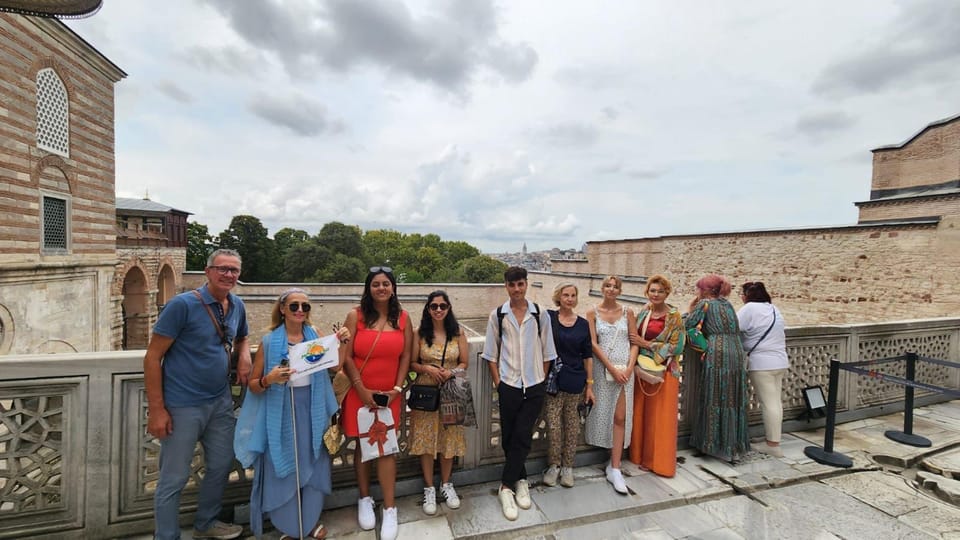
You meet in front of ORİENT MARKET at Sultanahmet, and your guide holds a MANOLYA TOURS flag or umbrella. That’s a helpful detail because Sultanahmet is crowded and signage can be chaotic.
The tour ends back at the same meeting point. So you’re not getting shipped across town or stuck figuring out a return. If you’re planning other stops in Sultanahmet afterward, this makes the day easier.
Also, because there’s no hotel pickup, you’ll want to plan your route in advance. Metro-like precision isn’t required, but arriving early and calm helps. Topkapi mornings can be rushed even when everything is organized.
What to bring (and what will slow you down)
Wear comfortable shoes. Even “easy walking” inside a large historical complex means uneven floors and lots of stair-and-corridor movement.
Bring:
- Comfortable shoes
- Hat
- Camera
- Water
Avoid:
- Flash photography (not allowed inside)
- Backpacks (not allowed)
Large bags and backpacks must be checked at the entrance. That’s one of those rules that can ruin your timing if you show up with the wrong bag.
One more practical note: this tour is not suitable for mobility impairments and wheelchair users. If that applies to you, I’d look for a different Topkapi option designed for easier movement.
Who this tour fits best
This private tour is a great match if you want:
- A guided explanation of how Topkapi works as a palace and administration center
- The Harem as a primary focus, not a quick “pass-through”
- Skip-the-line entry so you can use your time inside wisely
- Clear highlights in the Treasury, including the dagger and the diamond
- Religious and ceremonial stops, like the Pavilion of the Holy Mantle
It’s also well-suited for first-timers. Topkapi is too big to freestyle comfortably, especially if you want both the Harem and the Treasury without spending your day bouncing between entrances.
If you’re more of a slow wanderer who loves getting lost on purpose, you might find the structured flow limits your freedom. But for most people, the structure is the point.
Should you book this Topkapi Palace and Harem tour?
I’d book it if you’re aiming for maximum meaning in a short time window and you want skip-the-line entry plus tickets handled for you. The private, English-guided format helps you understand what you’re seeing, especially once you get into the Harem’s private quarters and the palace’s ceremonial spaces.
I wouldn’t book it if you can’t handle steady walking or if you strongly prefer unguided museum drifting. Also, if you’re hoping to take lots of interior photos with flash, you’ll need to rethink that—flash is not allowed.
If your goal is a guided, high-impact Topkapi visit that hits the rooms people come to see, this one checks the boxes.
FAQ
How long is the Topkapi Palace and Harem private tour?
The duration is listed as 3 hours, with the guided tour portion noted as about 3.5 hours. Starting times depend on availability.
Where do we meet the guide?
You meet in front of ORİENT MARKET at Sultanahmet. The guide will be holding a MANOLYA TOURS flag or umbrella.
Is skip-the-line entry included?
Yes. The tour includes skip the line entry.
What tickets are included?
Entrance tickets to Topkapi Palace Museum and entrance tickets to the Harem section are included.
Is food and drinks included?
No. Food and drinks are not included.
Can I use flash photography or bring a backpack?
Flash photography is not allowed inside. Backpacks are not allowed, and large bags and backpacks must be checked at the entrance.