REVIEW · ISTANBUL
Gobekli Tepe & Mountain Nemrut Tour-2 Days 1 Night From Istanbul
Book on Viator →Operated by Travel See Life · Bookable on Viator
Two ancient worlds in two days. This trip stacks Mount Nemrut at sunset with Göbekli Tepe and Şanlıurfa museum time, all in a tight, well-paced loop that starts with a flight from Istanbul. I love the moment you reach Nemrut’s terraces and get that long, slow look at the massive stone heads and bodies. I also like that the day isn’t just ruins on a hill—museums are built into the schedule, so the context clicks into place.
One thing to think about: this route includes mountain viewpoints and windy driving, so if you get motion sickness, plan accordingly. The upside is that you’re not doing this solo—this tour keeps a small-group rhythm (max 15), and guide teams such as Sercan and Kerem have a real talent for translating the big ideas into what you can actually see.
In This Review
- Key highlights at a glance
- Getting to Adıyaman fast: flights and a tight, smart schedule
- Nemrut Mountain at golden hour: terraces, statues, and photo time
- Karakuş Tumulusu, Cendere Bridge, and Arsemia: the day-before context
- Sanlıurfa museums and the fish-lake vibe: a very different Day 2
- Göbekli Tepe (Potbelly Hill): why it feels like a timeline problem
- Balıklıgöl and Abraham’s cave: sacred stories in a small area
- Price and logistics: what $1,189.57 buys you in reality
- What you should pack and how to pace yourself
- Who this 2-day Göbekli Tepe and Nemrut tour suits best
- Should you book this Göbekli Tepe & Nemrut 2-day trip?
- FAQ
- What is included in the tour price?
- How do I get between Istanbul, Adıyaman, and Şanlıurfa?
- Is the tour physically demanding?
- What languages is the tour offered in?
- What weather conditions are required?
- What is the group size?
Key highlights at a glance
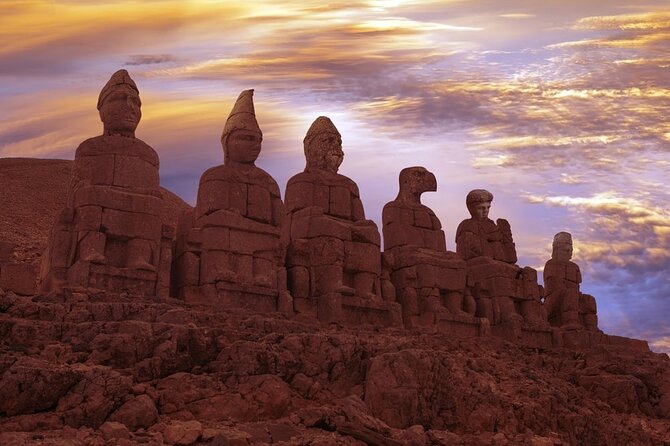
- Nemrut sunset from the East and West terraces with time to photograph the valleys
- Göbekli Tepe (Potbelly Hill)—a stop that rewires how you think about early rituals
- Hands-on context via included museums in Şanlıurfa and the mosaic museum
- A packed Day 1 foundation: Karakuş Tumulusu, Cendere Bridge, and Arsemia
- Small group size (max 15) that keeps the experience organized without feeling rushed
Getting to Adıyaman fast: flights and a tight, smart schedule
This tour works because it cuts the boring part: long overland travel from Istanbul. You’re picked up from your hotel around 08:30, then transferred to Istanbul airport. The plan is to fly to Adıyaman and meet your team on arrival, so your Day 1 starts building history immediately rather than losing half a day to transit.
Once you land, the day turns into a classic “layer cake” approach. First you warm up with nearby Commagene-era sites, then you head to Mount Nemrut for sunset. That matters because Nemrut is an outdoor viewing experience. You want daylight to walk and time to settle in for the light shift, and this itinerary is set up to give you that.
Expect a full program both days. It’s not a slow travel crawl. It’s more like: fly, drive, see, eat, walk, watch the sunset, then do the same the next day in a different region—Şanlıurfa—where the stories shift from kings and gods to ancient sacred sites.
You can also read our reviews of more evening experiences in Istanbul


Nemrut Mountain at golden hour: terraces, statues, and photo time
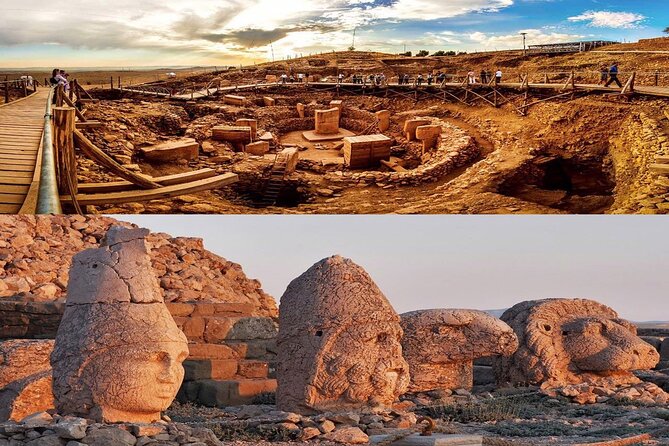
The core moment of Day 1 is Mount Nemrut. At about 2,134 meters, the summit is where King Antiochus I Theos of Commagene built a tomb-sanctuary and installed giant stone figures—around 8–9 meters high—including representations of himself, lions, eagles, and multiple gods. Even if you’ve seen photos before, the scale is what hits you first: these aren’t decorative sculptures. They were designed to dominate the view and the idea of power and worship.
What you’ll do there is very specific: you’ll be guided through the site, then you’ll have time to enjoy the view from both the East and West terraces. The schedule explicitly calls out the sunset as a main event. Practically, that means you should plan your clothing like a mountain stop, not a beach day—bring layers and wear shoes you’re comfortable walking in. Even with short walks, mountain stone and uneven ground can be annoying if you’re in soft sandals.
There’s also time afterward for photos in the neighboring valleys before heading back toward the hotel. That buffer is valuable because sunset moments don’t always behave. Clouds happen. Wind happens. People take longer to find the right angle. You’re not locked into a single quick viewing window.
One consideration: the mountain’s experience can be affected by site condition. The information you’ll get is that Nemrut’s statues and setting have been impacted over time, including earthquake damage. The result is that what you see may not match the cleanest postcards—but that’s also part of the authenticity. You’re witnessing a real archaeological site, not a recreated theme park.
Karakuş Tumulusu, Cendere Bridge, and Arsemia: the day-before context
Before the summit, Day 1 builds context with three stops that help you understand why Nemrut matters.
Karakuş Tumulusu is a funerary monument connected to the Commagene royal family—Queen Isias and princesses Antiochis and Aka I—built under Mithridates II of Commagene in the late BCE period. The “Karakuş” name means black bird, and that detail ties to the monument’s column topped with an eagle. The site’s layout includes groups of Doric columns and reliefs/statues of animals. You’ll spend about 1 hour here, and the guide explains what the monument represents and how an inscription points to a royal tomb meant to hold three women.
Then comes Cendere Bridge, a late Roman bridge near Arsemia (today known as Eskikale). It crosses the Cendere Çayı (Chabinas Creek) and is associated with ancient roads and settlement patterns. You’ll spend about 1 hour, and the guide will tie it back to the larger area you’re visiting—how imperial infrastructure and later memory sit together in the landscape.
Finally, Arsemia Antik Kenti gives you the cultural anchor: it was once a summer residence of the Commagene kings. One highlight described in the program is a relief showing Heracles (or potentially Artagnes, a Persian deity linked to Heracles through Greek interpretation) shaking hands with King Mithridates of Commagene around 50 BC. There’s also a major Greek inscription noted as one of the greatest in Anatolia. This stop is shorter—about 1 hour—but it gives you the “why” behind the region’s reputation.
Practical note: these sites are outdoors and spread out. You’ll want water, sun protection, and a steady pace. The benefit is that you won’t arrive at Nemrut feeling lost. You’ll already recognize names, symbols, and the general political-religious ambition that made Nemrut possible.
Sanlıurfa museums and the fish-lake vibe: a very different Day 2
After breakfast, Day 2 heads to Şanlıurfa. This is a shift in tone: instead of summit statues, you’re looking at layered sacred tradition, mosaics, and museum collections tied to the wider region.
You’ll start with Urfa Archaeological Museum and the Aleppo Bahce Mosaic Museum, where the program says you’ll see major collections founded from the broader Harran and Göbeklitepe area. If you care about how artifacts move from excavation to interpretation, this is where the pieces start fitting. The included museum time matters because it turns the Göbeklitepe visit from a stand-alone “wow” into part of a longer human story.
Next, the itinerary includes holy sites at Aynzelha, described as a lake with millions of domesticated fish. Then you’ll visit the cave where the prophet was born (as your tour describes it). After that, you’ll walk through the covered bazaar in Sanlıurfa and into town to spot everyday life alongside historical layers.
Lunch is included, with kebabs called out in the plan. That’s not a throwaway stop. In tours like this, food is where you reset your brain before the next big archaeological hit.
Then, after the bazaar and museums, the schedule moves to Göbekli Tepe. That sequencing is smart. You’re already in “ancient time” mode when you arrive at Potbelly Hill, so the emotional hit is stronger, and the questions you’ll have are more specific.
Göbekli Tepe (Potbelly Hill): why it feels like a timeline problem
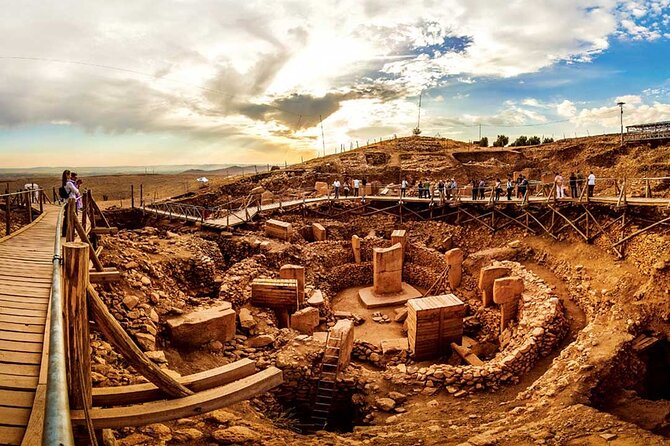
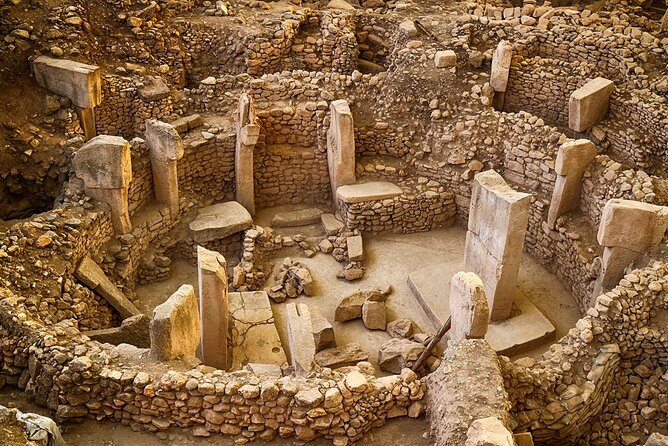
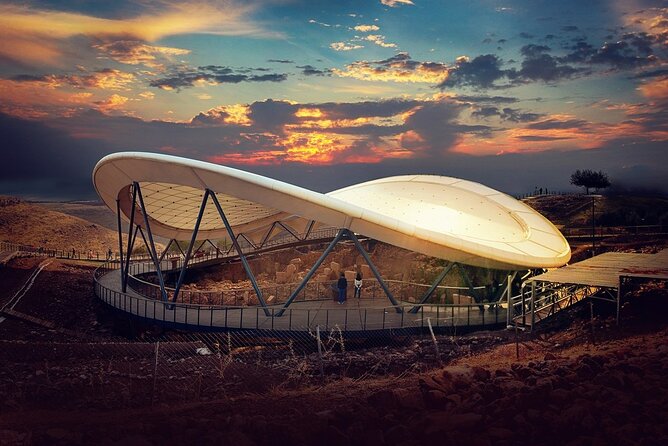
If you only remember one site name, make it Göbekli Tepe—also called Potbelly Hill in the itinerary. You’re given about 2 hours there, including guided explanation and time to take it in.
The core pitch is straightforward: the site dates back as far as 12,000 years ago, built before writing or pottery, and it’s considered the world’s oldest ritual complex. That’s the kind of statement that sounds grand until you’re standing on the ground and seeing the scale of the work and the meaning of the carvings.
What makes Göbekli Tepe so important for you is the way it changes the assumptions behind early human history. If you came expecting “civilization begins when people start farming and writing,” this site nudges your thinking toward older social planning and ritual behavior.
Also, note the included museum access listed for Göbekli Tepe-related material. Even if the main visit is the outdoor site, the museum context you see in Şanlıurfa supports what you’re seeing. It helps you connect the dots: symbols, time depth, and the idea that the planning and labor behind a ritual space would have required cooperation.
A practical point: Göbekli Tepe is not a long hike in the “sport” sense. But it is an archaeology site where you’ll walk and look and stop often. Wear comfortable shoes and keep your water plan simple. If it’s hot, shade and breaks become your best friend.
You can also read our reviews of more tours and experiences in Istanbul



Balıklıgöl and Abraham’s cave: sacred stories in a small area
After Göbekli Tepe, the program includes a stop called Balıklıgöl with additional sacred-site time: Abraham’s cave and the Pool of Prophet Abraham, described as the place where Prophet Abraham was thrown into the fire by Nimrod.
The duration here is about 1 hour 30 minutes, and it’s a good “cool down” in the sense that you’re shifting from prehistory into religious storytelling at a local sacred complex. It’s also a chance to slow your pace. Museums and megaliths can wear you out. Sacred sites give you different textures: the sound of the place, the flow of pilgrims, and the vivid, everyday presence of the pools.
If you’re the kind of person who likes to see how belief and place connect, this is worth paying attention to, not just photographing. The guide’s explanation is part of the value here—especially because the itinerary frames each location with a specific story tied to the site.
Price and logistics: what $1,189.57 buys you in reality
At $1,189.57 per person, you’re paying for a lot more than entrances. The included list is the big story:
- Domestic roundtrip flights (Istanbul ↔ Adıyaman, and the return flight back to Istanbul on Day 2)
- All airport transfers
- Museum tickets for the Şanlıurfa stops
- Entry/admission to Nemrut Mountain National Park, Karakuş Tumulusu, Arsemia, Mount Nemrut, Göbekli Tepe (Potbelly Hill), and Balıklıgöl
- Breakfast and two included lunches
This is where the value math comes in. If you tried to DIY it—flights, guides at each site, museum tickets, and organizing transfers—you’d likely spend similar money and still feel stressed about timing. Here, the schedule is built so you’re not guessing when to arrive at Nemrut for sunset or how to connect between regions.
The itinerary is also set for efficiency. It has a start time listed as 8:00 am, and the program explicitly includes pickups within a defined area. That removes the uncertainty of where to meet and helps you keep the morning moving.
One more logistical detail that matters: it’s offered in English, with a maximum of 15 travelers. For me, that smaller group ceiling is part of why this kind of tour feels manageable instead of chaotic.
What you should pack and how to pace yourself
This trip includes mountain viewing, outdoor archaeology, and multiple walking blocks in towns. The good news is the itinerary isn’t a long-distance hiking plan. The practical challenge is heat, sun, and uneven ground at ancient sites.
Here’s what I’d do to stay comfortable without overpacking:
- Wear shoes you can walk on stone with.
- Bring a hat and sunscreen for the open terraces and outdoor ruins.
- Plan for a layered day: warm sun at lower elevations, cooler air as you head up.
- If you get motion sickness on windy roads, consider your usual strategy before you go.
The schedule also notes a moderate physical fitness level is appropriate. That’s a fair statement for steps and walking at multiple sites—not extreme, but not “sit on a bus all day” either.
Who this 2-day Göbekli Tepe and Nemrut tour suits best
This is ideal if you want to hit two of Turkey’s most famous “deep time” destinations without spending a week piecing it together.
I think it fits best for:
- People who enjoy archaeology and symbolism, not just scenic stops
- Anyone who wants guided interpretation at each major site
- Visitors who like a structured plan that handles flights, transfers, and tickets
- Those who want sunset photography time at Nemrut without worrying about the timing
It may not be for you if:
- You strongly prefer slow travel and long unplanned breaks
- You’re highly sensitive to car motion and windy roads (the route includes plenty of driving)
- You need a lot of downtime every evening—this is a packed, two-day sprint
Should you book this Göbekli Tepe & Nemrut 2-day trip?
Yes, I’d book it if your priority is a well-run route that pairs Göbekli Tepe’s prehistory shock with Nemrut’s sunset spectacle and ties them together with museums and guided context. The biggest reason to choose this one is not just the famous names—it’s that the price includes the things that normally make DIY plans stressful: flights, transfers, site admissions, and museum time.
Before you book, check one thing carefully: you’re dealing with a mountain and outdoor ruins, and the experience requires good weather. If you’re flexible on dates, that’s a plus. And if motion sickness is an issue for you, prep for windy roads.
If you want the short version: this is a smart choice for people who want big history in two days, with guidance that keeps you from wandering around wondering what you’re looking at.
FAQ
What is included in the tour price?
The price includes breakfast, all airport transfers, domestic roundtrip flights, museum and site entry tickets (including Nemrut Mountain National Park, Karakuş Tumulusu, Arsemia, Mount Nemrut, Urfa museum areas, Göbekli Tepe, and Balıklıgöl), plus two lunches.
How do I get between Istanbul, Adıyaman, and Şanlıurfa?
You’re picked up from your hotel in the morning, transferred to Istanbul airport, and fly to Adıyaman. Day 2 takes you by road within the Şanlıurfa area for museums and sites, and then you drive to the airport for your evening flight back to Istanbul.
Is the tour physically demanding?
The tour notes a moderate physical fitness level is recommended. You’ll be walking and spending time at outdoor sites, including at Mount Nemrut.
What languages is the tour offered in?
The tour is offered in English.
What weather conditions are required?
The tour requires good weather. If it’s canceled due to poor weather, you’ll be offered a different date or a full refund.
What is the group size?
The tour has a maximum of 15 travelers.