REVIEW · ISTANBUL
Bohemian Istanbul: Fener and Balat’s Charm-Private Walking Tour
Book on Viator →Operated by Food Trail Istanbul Tours · Bookable on Viator
One turn down a side street and you get Istanbul’s real “neighborhood Istanbul.” This private walking tour threads together major late-antique walls, working churches, and standout landmarks in Fener and Balat, with a guide who keeps the story moving. I especially loved the mix of big monuments and everyday religious life, and how the route lands you in places that feel lived-in, not staged. The one catch: you’ll walk a lot and you may hit some steep hills.
Another highlight for me was the guide’s attention to details, from explaining what you’re looking at to adding extra access when possible. Mine was Ali, and he took nearly 60 photos during the walk and sent them afterward—nice souvenir, even if you never pull out your camera. The main consideration is that this is a walking tour, so you’ll want comfortable shoes and a realistic pace for roughly 5 hours.
In This Review
- Key points before you go
- Fener and Balat: the Istanbul you feel in your legs
- Meeting up and pacing for a 5-hour private walk
- Theodosius Land Walls: why 5th-century stone still matters
- Vlaherna Meryem Ana Church and the Hagiasma fountain
- Ahrida Synagogue and the many faiths of the Golden Horn
- St Stephen of the Bulgarians Church: the cast-iron miracle
- The Greek school at the edge of the neighborhood
- Fener & Balat neighborhoods: churches, houses, and the street-level view
- Fener Rum Patrikhanesi and St George: spiritual center on the Golden Horn
- Tekfur Palace: the lone surviving piece of Blakernia
- Skip-the-line priority: what you’re actually paying for
- Price and value: $250 for up to 8 people, not per person
- Who this tour fits best (and who might want another option)
- Should you book this Bohemian Istanbul Fener and Balat private walking tour?
- FAQ
- How long is the Bohemian Istanbul Fener and Balat private walking tour?
- What is the price for this tour?
- Is this tour private?
- Is pickup included?
- What if my hotel is not in those areas?
- What language is the tour in?
- Are museum tickets included?
- Is lunch included?
- What main sights are covered?
- Is the tour suitable for most people, and are service animals allowed?
- What is the cancellation policy?
Key points before you go
- Private group up to 8 means the route can feel more flexible and personal.
- Skip-the-line priority for museum tickets helps when you need tickets for certain sights.
- You’ll see Theodosius Land Walls, then move into working religious sites around the Golden Horn.
- The route includes the cast-iron St Stephen of the Bulgarians Church with its unusual shipping story.
- Expect a strong uphill/downhill day: plan on about 8 to 10 miles at a walking pace.
Fener and Balat: the Istanbul you feel in your legs
Fener and Balat sit on the Golden Horn side of the old city, and they work because they aren’t just “pretty streets.” These were once the Greek Orthodox and Jewish quarters, and you still sense that layered identity in the churches, synagogues, and the sheer variety of architecture. The vibe is more local than tourist-core—like the city is still doing its daily routines, only you’ve been invited into the background.
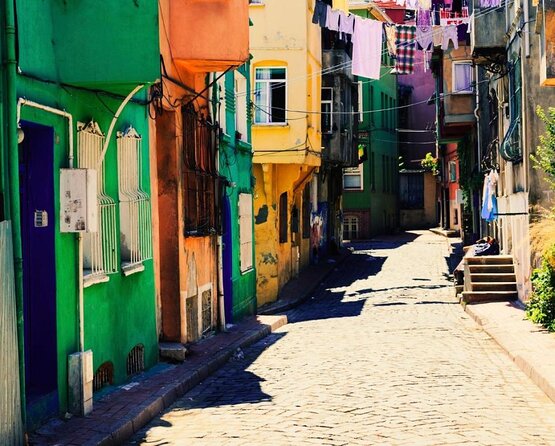
On this tour, you get the must-sees, but you also get the neighborhoods as a living context. You’ll spend time in areas famous for colorful old wooden houses, vintage shops, and designer cafés, yet you’re not stuck in a single “shopping” lane the whole time. The walk is structured so you move between religious landmarks and the streets around them, which is where the story makes sense.
A quick practical note: because the focus is walking and sightseeing, you should bring your energy for stairs and hills. One strong review described exactly that—steep grades and a lot of walking—and they were right.
You can also read our reviews of more walking tours in Istanbul



Meeting up and pacing for a 5-hour private walk
You can start with pickup if you stay in central areas: Sultanahmet, Sirkeci, Karakoy, or Taksim. If your hotel is outside those zones, you’ll set a meeting point after booking. The tour includes a mobile ticket, and it runs in English.
Because it’s private for your group (up to 8), the pace usually stays in your control, but it still won’t turn into a slow stroll. This is a “see a lot, connect the dots” route, and that means frequent stops plus steady movement between them.
What I’d recommend:
- Wear shoes with good grip. Hills and uneven sidewalks are part of the deal here.
- Bring a light layer. Istanbul can change temperature fast, and you’ll work up a sweat while still being exposed to wind near the water.
- Pace yourself. Even if you’re not sightseeing nonstop, the cumulative walking time adds up quickly. In one case, the walk was estimated around 8–10 miles.
And yes, the guide really can help you manage your day. On my tour, once we hit the “we’re ready to stop” moment, the guide walked us back toward the hotel area. That’s not a small comfort when you’re finishing a long loop.
Theodosius Land Walls: why 5th-century stone still matters
You start at one of the most impressive late-antique monuments in the city: the Theodosius Land Walls. These were built in the 5th century during the early reign of Emperor Theodosius II (408–450). The key point isn’t just age—it’s the fact that these walls held off attacks for centuries, until 1453.
Standing near the line of these walls helps you understand Istanbul’s geography as power. The city wasn’t just a collection of buildings; it was a fortress system. Once you see that, the later sights around the Golden Horn and the city walls feel less random.
This is one of those “history without the lecture” segments. Your guide can point out what to notice and how the walls shaped movement, defense, and where later communities built churches and institutions nearby.
Vlaherna Meryem Ana Church and the Hagiasma fountain
Next comes Vlaherna Meryem Ana Church, close to the northern tip of the Theodosian walls. The church is tied to imperial patrons: it was built by Empress Pulcheria (ca. 450–453) and her husband, Emperor Marcian. It’s a small shrine, but it has a powerful focus—the Hagiasma, described as the fountain of holy water.
Here’s the detail that makes it memorable: water is said to have flowed out of the hands of a marble statue of the Virgin Mary. Even if you treat these stories as faith history rather than literal fact, the idea shows how religious spaces were designed to create physical and spiritual meaning.
The stop is about 45 minutes, and there’s no admission ticket required listed for this part, which keeps the flow smooth. It’s also a great pause before you shift into other religious communities.
Ahrida Synagogue and the many faiths of the Golden Horn
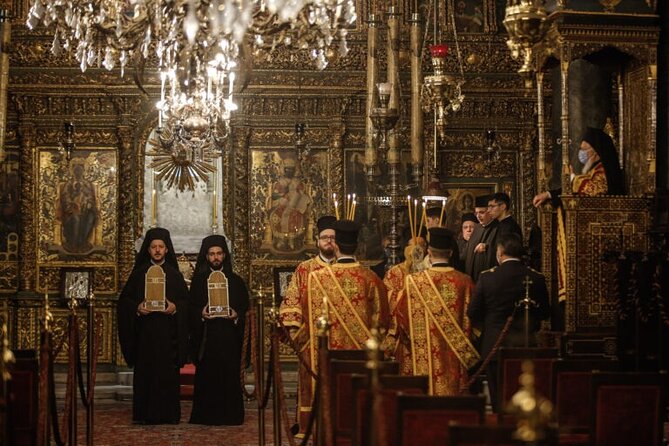
I like this tour’s rhythm here: you don’t jump from one church to the next like a stamp collection. Instead, you shift communities and styles so you start seeing the bigger pattern of Istanbul’s multi-faith religious life.
One stop highlights the Ahrida synagogue, dating back to the early 15th century. It’s described as a beautiful example of mosaic work—so you get a different kind of artistic storytelling than you’ll see in the stone and icon traditions of Orthodox churches.
This is one reason I think the tour works so well for first-timers: you see a cluster of religious landmarks in a compact area, but the guide frames them so they feel connected. The Golden Horn isn’t just scenic; it’s a corridor of communities, rituals, and art.
You can also read our reviews of more private tours in Istanbul



St Stephen of the Bulgarians Church: the cast-iron miracle
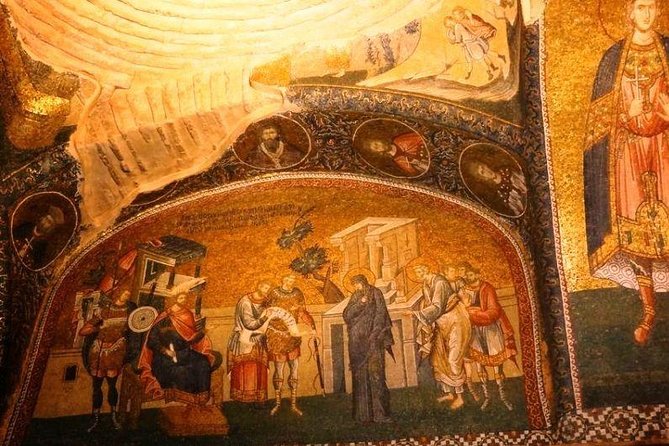
Then you reach St Stephen of the Bulgarians Church (Sveti Stefan), a real standout: a cast-iron church on the Golden Horn. The construction story is what turns it into more than a photo stop.
The church was made with poured iron slabs that were floated on cargo ships from Vienna, down the Danube River, across the Black Sea, through the Bosphorus, and then mounted on-site. That’s a logistics epic, and your guide can help you picture how a structure like this became possible.
This is a 45-minute stop and listed as free for admission. Even if you know little about church architecture, you’ll likely get the same reaction I did: the building feels almost impossible for how it ended up here.
The Greek school at the edge of the neighborhood
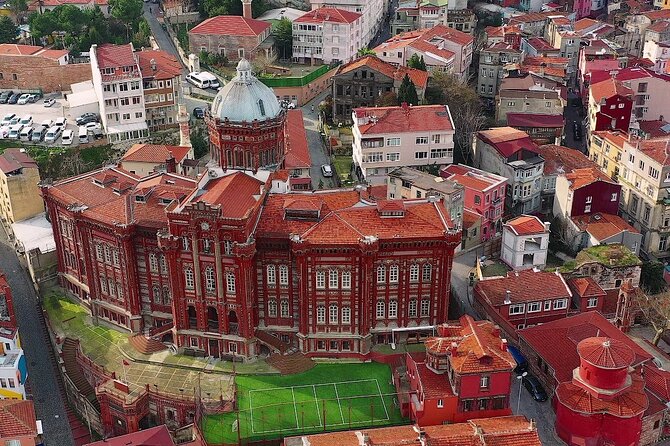
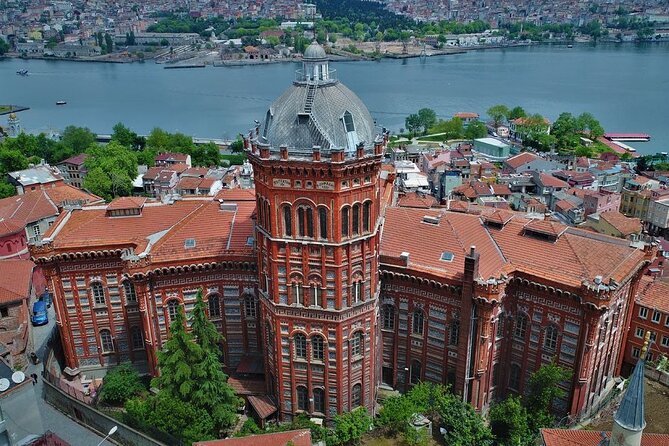
Between religious landmarks, the route includes the Red School, one of the few remaining Greek Orthodox schools. It’s not a “museum building” in the usual sense—you experience it more as a surviving institution.
The exterior is tied to education under the Ottoman Empire. The school educated children of prominent Greek and Bulgarian families connected to the Ottoman period. That detail matters because it reframes the building: it’s not only architecture. It’s evidence of how communities invested in the future right where they lived.
One strong highlight from a previous tour experience was the way the school’s relatively newer architectural style can look out of place in the neighborhood. That mismatch is exactly why it’s interesting. It shows you change didn’t erase identity—it just layered it.
Fener & Balat neighborhoods: churches, houses, and the street-level view

After the formal stops, the tour shifts into the streets themselves. You’ll spend about 1 hour in Fener & Balat, neighborhoods famous for:
- vintage stores and designer cafés
- colorful old wooden houses
- and churches you can spot even when you’re not aiming at them
This is where the tour becomes “useful memories.” You walk through the shape of the area rather than just standing at famous points. If you like architecture, you’ll notice how the streets and facades work together. If you care more about culture than buildings, you’ll feel the difference in how the neighborhoods function day-to-day.
You’re also reminded that these places were once Greek Orthodox and Jewish communities. Today, the visual mix still points back to that history.
Fener Rum Patrikhanesi and St George: spiritual center on the Golden Horn
Next comes the Fener Greek Orthodox Patriarchate Istanbul, also referred to as Fener Rum Patrikhanesi. It’s described as the spiritual center of the Greek Orthodox world since around 1600.
The compound sits behind sea walls facing the Golden Horn, which means your sight lines and the overall mood change as you move in. The focal point mentioned here is the beautiful 19th-century Patriarchal Church of St George.
This stop is about 45 minutes and listed with free admission. Even if you’re not a “church architecture” person, it’s worth going slowly here. The setting and the purpose help you understand why this site became important enough to anchor a global religious network.
Tekfur Palace: the lone surviving piece of Blakernia
To cap the tour, you’ll see the Byzantine Tekfur Palace. It’s described as the only surviving structure of Blakernia Palace, used mostly between the 11th and 15th centuries.
Tekfur Palace is a three-story Byzantine palace located just within Istanbul’s city walls near Edirnekapı gate. The most striking part of the description is that it’s said to be the only Byzantine palace left standing in the world.
This is where the tour’s theme clicks: you’ve moved from late-antique walls to imperial religious sites, then into neighborhood faith institutions—now you finish at a surviving palace structure that ties the city’s power past into a physical, still-standing form.
Depending on timing and local access rules on the day, you might mainly focus on the structure’s exterior and setting. Either way, the location inside the city walls gives you a “how this all fits together” view.
Skip-the-line priority: what you’re actually paying for
The tour includes skip-the-line priority for museum tickets. That detail can matter in Istanbul, where lines and entry processes can eat time, especially on busier days.
Now the balanced truth: several stops here list free admission (like Vlaherna Meryem Ana Church, St Stephen’s Church, Fener Rum Patrikhanesi, plus the Red School and Fener & Balat time). So the priority matters most if the route involves a museum-style ticket purchase day-of, like for places such as Tekfur Palace if ticketing is required.
Either way, the real value isn’t just the skip-the-line label. It’s that your guide keeps your time tight while still giving you context at each location. A tour that saves 30–60 minutes can easily turn a “rushed highlights loop” into a steady experience.
Price and value: $250 for up to 8 people, not per person
At $250 per group (up to 8), this is priced like a private neighborhood tour rather than a per-person big-bus experience. That’s important for value.
If you’re traveling with friends or family, the math can look great fast because:
- you’re not paying four separate times for guide time
- you get a private route pace for your group
- you also get the guide’s help with photo moments, navigation, and site timing
The duration is about 5 hours, and you’re covering serious terrain—both historically and physically. If you’re the kind of traveler who wants to understand what you’re seeing (walls, emperors, religious communities) and not just collect pictures, this can be a very sensible spend.
Who this tour fits best (and who might want another option)
This tour is best for you if you:
- want a private walking plan with a guide you can ask questions to
- enjoy historical context tied to real places (walls, churches, institutions)
- are comfortable walking for hours and tackling hills
- like religion-and-architecture variety without feeling like you’re on a checklist
It may be less ideal if you:
- have mobility constraints and can’t handle steep hills or long distances
- want minimal walking and lots of sitting time
One more practical tip from the style of day this tour creates: bring water and pace breaks. When the group gets tired, the guide can help you manage the final stretch—like walking you back toward your hotel zone once you’re done.
Should you book this Bohemian Istanbul Fener and Balat private walking tour?
I’d book it if you want Istanbul that feels specific—neighborhood-focused, church-to-church, and grounded in the Golden Horn area. The best reason is the guide experience. In my case, Ali didn’t just explain stops; he also made the day easier to remember with a photo follow-up, and he added an extra church visit when it was possible.
You should think twice only if you don’t want a long walking day. This isn’t a light stroll. Plan for hills, comfortable shoes, and a realistic expectation of 5 hours plus the effort of a full route.
FAQ
How long is the Bohemian Istanbul Fener and Balat private walking tour?
It lasts about 5 hours.
What is the price for this tour?
It costs $250 per group, for up to 8 people.
Is this tour private?
Yes. It’s a private tour for your group only.
Is pickup included?
Pickup is offered from centrally located hotels in Sultanahmet, Sirkeci, Karakoy, and Taksim.
What if my hotel is not in those areas?
For non-central hotels, the meeting point can be set by the guest after booking.
What language is the tour in?
The tour is offered in English.
Are museum tickets included?
Museum tickets are not included, but the tour includes skip-the-line priority to buy museum tickets.
Is lunch included?
No, lunch is not included.
What main sights are covered?
You’ll see Theodosius Land Walls, Vlaherna Meryem Ana Church, Ahrida Synagogue, St Stephen of the Bulgarians Church, the Red School, Fener & Balat, Fener Rum Patrikhanesi, and Tekfur Palace.
Is the tour suitable for most people, and are service animals allowed?
Most travelers can participate, and service animals are allowed. The tour is also near public transportation.
What is the cancellation policy?
You can cancel for a full refund up to 24 hours before the experience starts. If you cancel less than 24 hours before, the amount paid is not refunded.