REVIEW · ISTANBUL
Blue Mosque: Art and Symbolism Guided Group Walking Tour
Book on GetYourGuide →Operated by TripGuru Turkey · Bookable on GetYourGuide
The Blue Mosque is more than beautiful walls. This 1.5-hour guided walking tour turns Sultan Ahmed Mosque into a story you can read, not just a view you pass. I especially loved the focus on blue ceramic tile detail and the way the guide explains why specific features matter. One thing to consider: it’s a standing-and-walking visit, and the mosque area can be tight if you have breathing or heart issues.
You’ll start outside at the German Fountain, then step in to learn how Ottoman and Islamic design work together. I like that you’re not left to wander with a guidebook. You get a clear route through the key sights, plus help finding better photo angles for social media posts.
In This Review
- Key Points to Know Before You Go
- Why the Sultan Ahmed Mosque Looks Blue (and What You’ll Learn)
- German Fountain: The Easy Start to a Tight 1.5-Hour Visit
- Stepping Inside: Blue Tiles, Stained Glass, and the Art You Can Spot
- The Elephant-Foot Pillars: A Detail With Real Meaning
- Gold Minarets: Why They Matter in the Overall Design
- Tile Flowers: How Motifs Become Symbolism
- Mehmet Aga and the Ottoman-Islamic Architecture Connection
- Photo Angles and the Quick Fix for Social Media Shots
- What the 90 Minutes Feels Like (and How to Make It Go Smoothly)
- Price and Value: Is $140 Worth It?
- Who This Tour Suits Best (and Who Should Think Twice)
- Should You Book This Blue Mosque Guided Walking Tour?
- FAQ
- Where do I meet the guide?
- How long is the tour?
- Is there a fee to enter the Sultan Ahmed Mosque?
- What’s included in the price?
- What languages are available for the live guide?
- What should I bring?
Key Points to Know Before You Go
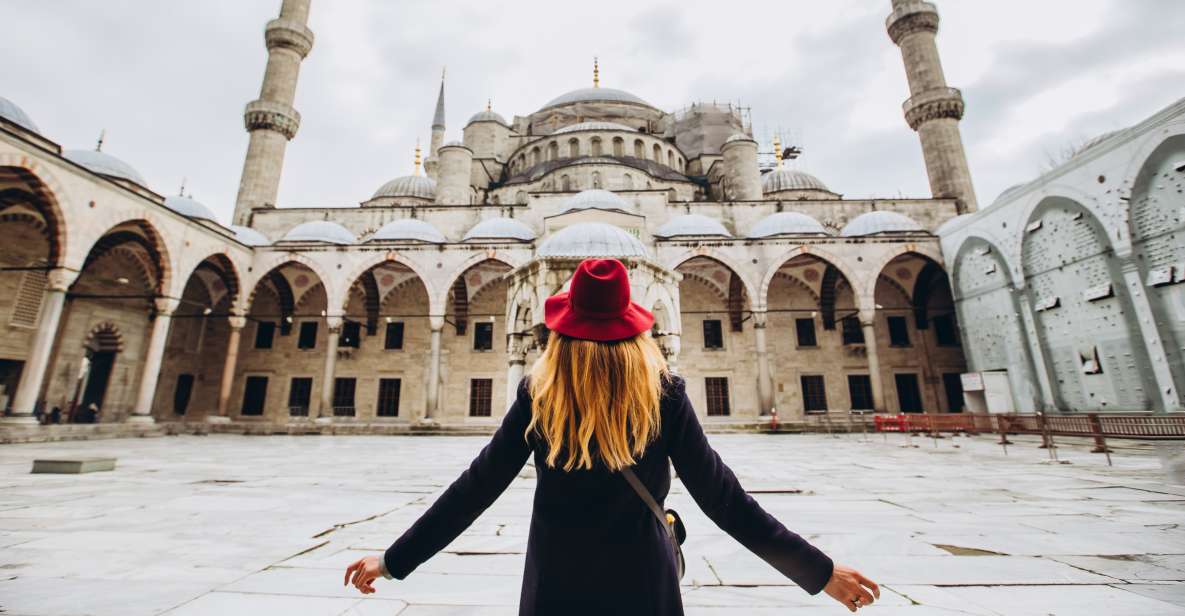
- German Fountain meet-up makes the start easy to find, with a TripGuru shirt/sign to spot your guide.
- 20,000+ handmade blue ceramic tiles is the real star, and the guide shows you how to notice what you’re seeing.
- Elephant-foot pillars, tile flowers, and gold minarets each come with a meaning, not just a description.
- Mehmet Aga’s design choices are explained in a way that makes the architecture feel logical.
- Photo help is part of the experience, so you’re not guessing where to stand.
- No entry fee to enter Sultan Ahmed Mosque, which makes the guided portion feel more directly worth it.
Why the Sultan Ahmed Mosque Looks Blue (and What You’ll Learn)
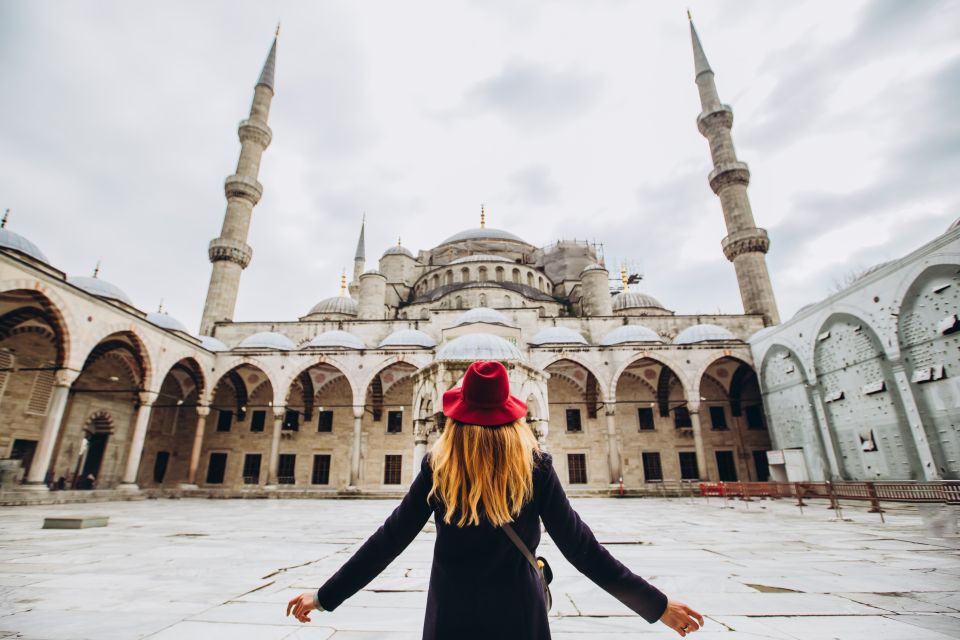
The nickname Blue Mosque isn’t only about color. Yes, Sultan Ahmed Mosque is wrapped in blue tilework, and yes, the stained-glass look can feel like a soft spotlight when the light hits just right. But the real reason it earns that name is that the building uses color as a design system—patterns, repeat motifs, and surfaces all working together.
On this tour, you’ll get a tour that treats the tilework like a language. The guide points out what most people miss: the layers of decoration and how different elements carry religious and cultural meaning. The highlight for me is the combination of seeing the beauty and understanding the symbolism at the same time, so the mosque stops being a photo stop and turns into a place you actually process.
You can also read our reviews of more walking tours in Istanbul



German Fountain: The Easy Start to a Tight 1.5-Hour Visit
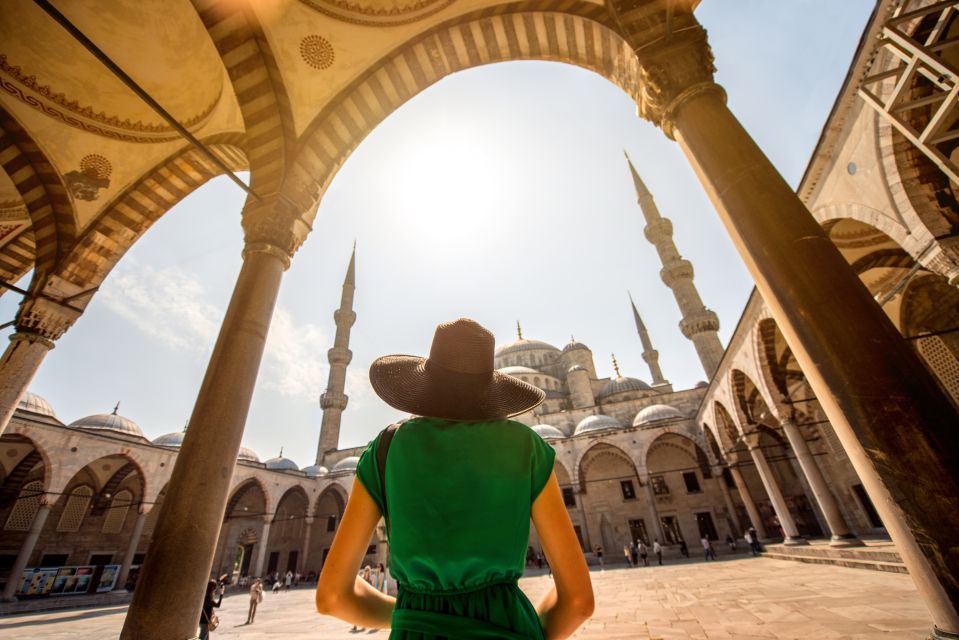
You meet at the German Fountain and look for a guide wearing a TripGuru shirt or holding a TripGuru sign. That matters in Istanbul. In a busy historic area, “meet at the mosque” can be vague. Here, the meeting point is specific, which helps you avoid wasting precious time figuring things out.
The tour is 1.5 hours, and that timing shapes the whole experience. You’re not doing a slow museum-style walkthrough. You’re moving with purpose: seeing a handful of major features, then returning again and again to the same idea—how design elements work together. If you like compact, high-impact sightseeing, this format fits well.
The downside is simple: you’ll want comfortable shoes. There’s no hotel pickup, and you’re doing a walking experience inside a place where people flow can be unpredictable.
Stepping Inside: Blue Tiles, Stained Glass, and the Art You Can Spot
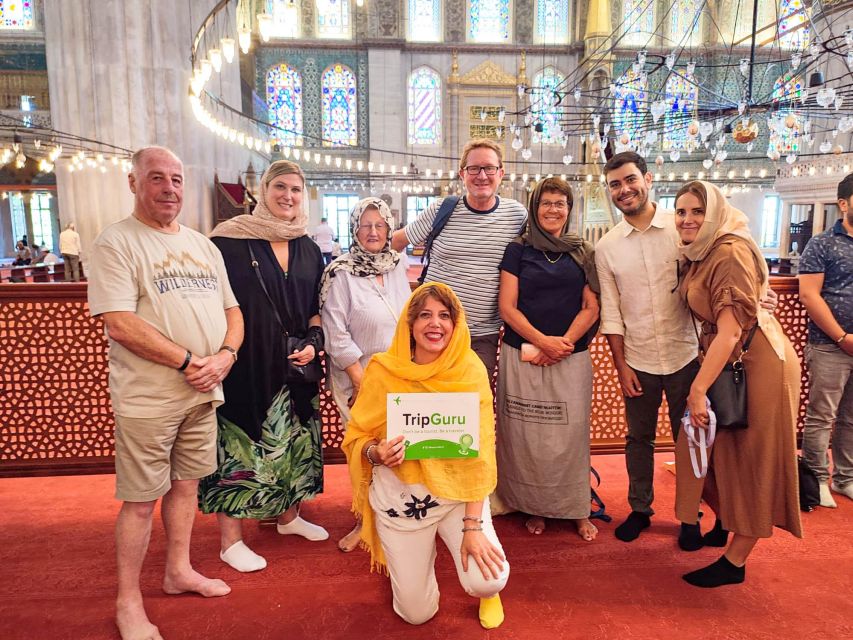
Once you enter, you’re surrounded by a world of color and craft. This mosque is famous for more than 20,000 handmade blue ceramic tiles, and the effect is immediate. But the best part of the guided approach is that you learn what to look at first.
You’ll see the blue stained-glass presence alongside the tile surfaces, and the guide helps you connect how those visuals support the overall spiritual feel of the space. Instead of staring randomly at patterns, you start noticing structure—how designs repeat, where attention naturally pulls your eye, and what different decorative elements are doing.
One practical tip: bring a camera and don’t assume you’ll have unlimited angles. Inside, you may be close to other visitors. The guide’s job includes helping you choose better spots, which is especially helpful if you’re trying to post photos that don’t look like you shot between shoulders.
The Elephant-Foot Pillars: A Detail With Real Meaning
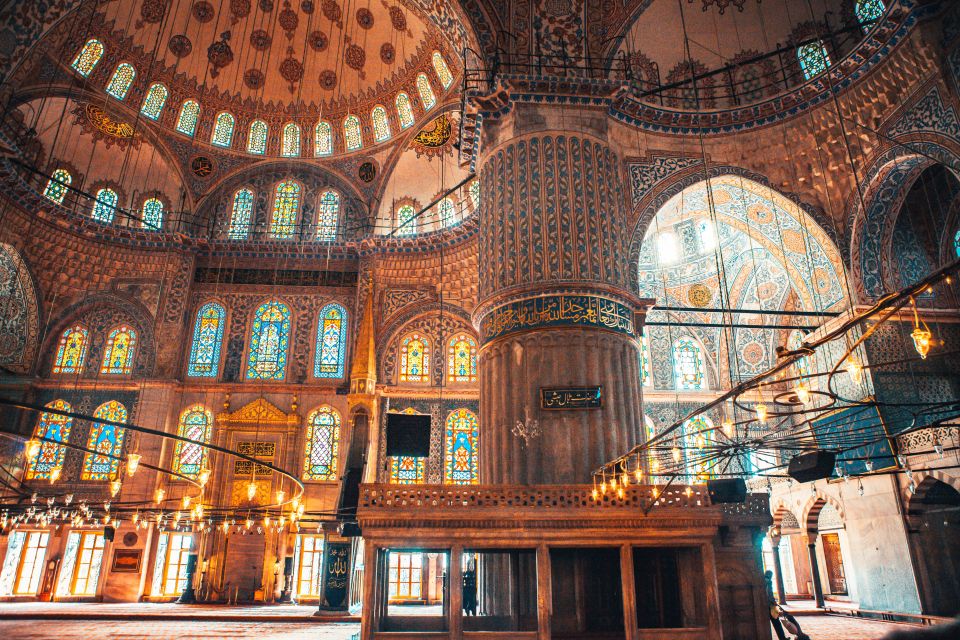
A lot of famous buildings have “one cool thing” people photograph. Here, it’s not just one. The tour specifically calls out the elephant-foot pillars, and the explanation is the point.
These pillars are a distinctive architectural feature, and the guide walks you through why they’re significant. Even if you don’t care about architecture, you’ll usually remember this part because it’s visually unusual. It also gives you a mental anchor: once you’ve understood the pillars, the rest of the decoration makes more sense. You stop seeing the building as scattered decoration and start seeing it as a coordinated design.
If you like explanations that turn small details into bigger understanding, you’ll get what you came for in this stop.
Gold Minarets: Why They Matter in the Overall Design
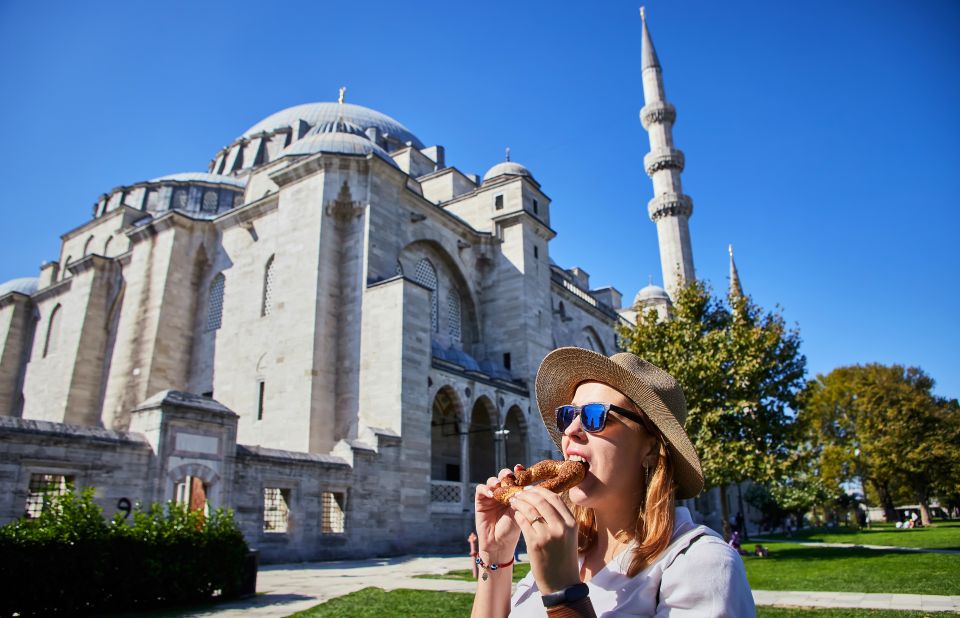
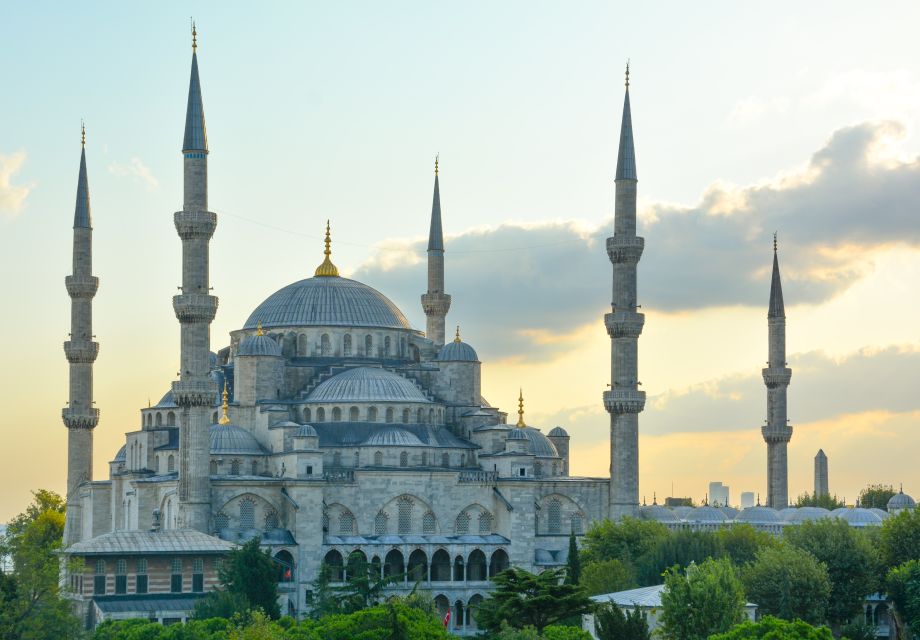
The tour also highlights the gold minarets. Minarets are often treated as skyline icons, but inside-and-nearby, they function differently: they help complete the mosque’s identity and influence how you read the architecture as a whole.
In a guided visit, the minarets become more than a distant backdrop. You learn how these elements fit the mix of Ottoman and Islamic architecture that Sultan Ahmed Mosque is known for. That helps you see the building as a single system rather than an assortment of impressive parts.
Photo tip that’s worth listening for: if you want minaret shots, the guide can help you position yourself so the angles work with the surrounding structures. That can make the difference between a tall-minaret photo that looks crowded and a clean shot that actually reads as the Blue Mosque.
You can also read our reviews of more guided tours in Istanbul





Tile Flowers: How Motifs Become Symbolism
Here’s where this tour earns its price. The guided focus isn’t only on big obvious features. You’ll discover the story and symbolism behind details like the tile flowers.
Flowers might sound decorative, but in Islamic art they’re often more than simple ornament. The guide explains how flower motifs function within the larger decorative program. Once you understand that, you’ll notice the patterns more clearly. You start seeing tile flowers not just as pretty shapes, but as meaningful repeats in a larger visual language.
This is also a great moment for slow down-and-look behavior. Stop. Point your camera at one section. Then let the guide’s explanation land. You’ll leave remembering specific motifs, not just the color.
Mehmet Aga and the Ottoman-Islamic Architecture Connection
Sultan Ahmed Mosque is tied to its 17th-century context, and the guide explains the famed architect Mehmet Aga and how his choices shaped what you see today.
Why this matters for you as a visitor: architecture can feel intimidating. If you don’t have a guide, it’s easy to admire the building and still not understand what makes it special. Here, the connection between the Ottoman and Islamic elements becomes easier to grasp because the tour frames the mosque as a deliberate blend, not a random mix.
I like that you come out with a clearer sense of the mosque’s overall design logic. That’s the kind of understanding that keeps working after you leave—on your next walk near the historic sights, you’ll spot design cues faster.
Photo Angles and the Quick Fix for Social Media Shots

If you care about photos, you’ll appreciate the tour includes help finding a good angle for capturing the Blue Mosque. That matters because the mosque’s most photogenic features often require positioning.
Inside, you may not control crowds, and outside, you may have the wrong perspective if you stand too close or too far. A guide can shorten the trial-and-error phase, helping you get shots that show the design instead of only the biggest color blocks.
I also suggest you bring a scarf and use it for practical reasons too: it can help you feel more comfortable in a place where visitors dress more conservatively than everyday street style.
What the 90 Minutes Feels Like (and How to Make It Go Smoothly)
This is a walking tour, and it’s designed to be efficient. You’ll start at the German Fountain, then focus on Sultan Ahmed Mosque as the core experience. You’ll spend the majority of your time inside the mosque, where the decoration and symbolism are concentrated.
To get the most out of 1.5 hours:
- Wear comfortable shoes and plan for standing in active visitor areas.
- Have your camera ready early, because the best details are easiest to photograph before you start feeling rushed.
- Bring a scarf, especially if you want an easy solution for covering when you feel it’s needed.
- Consider insect repellent and cash, since practical needs pop up around historic sites even if you’re not doing shopping.
And remember: there’s no fee to enter the Sultan Ahmed Mosque. That means you’re paying primarily for the explanation, the route, and the photo help—not for basic entry access.
Price and Value: Is $140 Worth It?
At $140 per person, this tour is not a budget add-on. So here’s the honest value question: what are you buying for that money?
You’re paying for:
- An English-speaking guide (and guides can cover multiple languages on request/availability)
- A structured walking visit focused on the most meaningful details
- Interpretation of symbolism (elephant-foot pillars, tile flowers, minarets)
- Help getting better photo angles
If your plan is to walk in on your own and wander until you feel inspired, you could do that for less. But if you want the mosque’s art and architectural features to connect into one understandable story, a guided format like this saves you time and confusion.
The best value angle is simple: you’ll feel smarter walking out. Instead of only remembering the color, you’ll remember the “why” behind the design features that created the Blue Mosque reputation.
Who This Tour Suits Best (and Who Should Think Twice)
This tour makes the most sense if you:
- Enjoy religious art and architectural details
- Want practical guidance on what to look for
- Prefer a compact, guided experience instead of a long self-guided day
- Care about photos and want someone to help with angles
It may not be suitable if you have mobility impairments, heart problems, or respiratory issues. That’s not about the guide’s effort—it’s about the nature of a walking visit inside a crowded historic site where you might need to stand for periods.
If you’re traveling with family, it can also help to have an adult guide doing the explaining in a way that keeps everyone oriented.
Should You Book This Blue Mosque Guided Walking Tour?
Book it if you want the Blue Mosque to feel explained, not merely seen. For $140, the value is in the symbolism and the guided attention to details like the tile flowers, the elephant-foot pillars, and the architect story connected to Mehmet Aga. I’d especially recommend it if you enjoy learning while you travel and you want photos that look intentionally composed.
Skip it if you’re happy with a self-paced visit and you don’t care much about decorative symbolism or architectural “read-aloud” explanations. Also think twice if you need lots of accessibility accommodations, since this is a walking experience.
If you do book, come prepared with comfortable shoes and a scarf, and show up ready to look closely. This is the kind of tour where your effort pays off fast.
FAQ
Where do I meet the guide?
Meet at the German Fountain. Look for a guide wearing a TripGuru shirt or holding a TripGuru sign.
How long is the tour?
The tour lasts 1.5 hours.
Is there a fee to enter the Sultan Ahmed Mosque?
No. There is no fee to enter the Sultan Ahmed Mosque.
What’s included in the price?
The price includes an English-speaking guide and the walking tour.
What languages are available for the live guide?
The live guide is available in German, English, Spanish, Portuguese, and Italian.
What should I bring?
Bring comfortable shoes, a camera, insect repellent, cash, and a scarf.