REVIEW · ISTANBUL
Basilica Cistern Skip-the-Ticket-Line Entry with Audio Guide
Book on Viator →Operated by Istanbul Tourist Pass® · Bookable on Viator
Underground Istanbul still has a way of surprising you. You’ll descend into the Basilica Cistern, a 4th-century water vault expanded in 532 AD, and follow a guide-style audio guide that connects the myth of the Medusa heads to real Byzantine engineering. It’s an odd mix of eerie and practical, like a time machine with good acoustics.
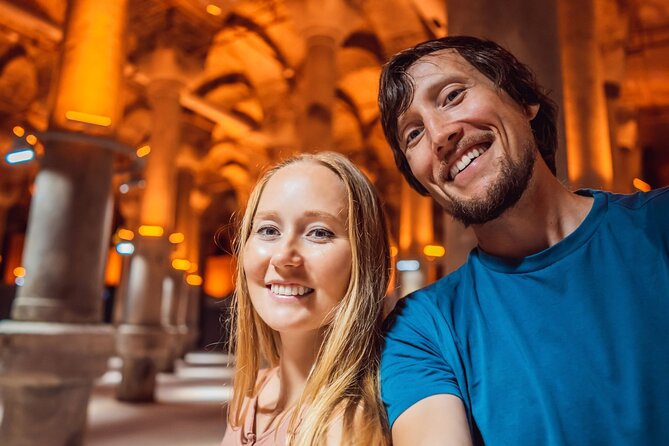
Two things I really like here: the space itself. You’re stepping into a cathedral-size underground hall with 336 marble columns and a cool, quiet mood that makes you slow down. And I like how the audio tour helps you see the place as more than a spooky photo stop by explaining how the cistern fit into the water system of Constantinople.
One thing to plan for: the experience may be marketed as skip-the-ticket-line, but you still can’t skip security. Also, entry depends on the QR details emailed to you—if those codes are missing or lost in spam, you may have a tougher time than you expected.
In This Review
- Key points before you go
- Entering the Basilica Cistern’s underground world of 336 columns
- QR tickets, security lines, and how the skip-the-line part really works
- Medusa head sightings plus the cistern’s water-engineering story
- What the audio guide adds (and what it won’t)
- Time it right: hours, duration, and where this fits in your day
- Price and value: is $55.61 for a one-hour audio visit worth it?
- Should you book this Basilica Cistern audio tour?
- FAQ
- How do I get the QR ticket and audio guide?
- Can I skip security lines with this ticket?
- How long is the Basilica Cistern experience?
- What are the Basilica Cistern opening hours?
- What’s included in the price?
- What is not included?
Key points before you go

- QR entry is email-based: you should expect QR codes and the audio link by separate emails from the supplier.
- Security lines still happen: you can’t bypass them, even if ticketing is streamlined.
- It’s designed for about 1 hour: plan your visit as a focused stop, not a long wandering session.
- The Medusa heads are specific: you’ll see two carvings—one upside down and one on its side.
- Scale is the whole point: the cistern held up to 80,000 cubic meters of water via aqueducts.
- Hours are limited: generally 12:00 PM to 6:00 PM (with special hours on January 1st).
Entering the Basilica Cistern’s underground world of 336 columns
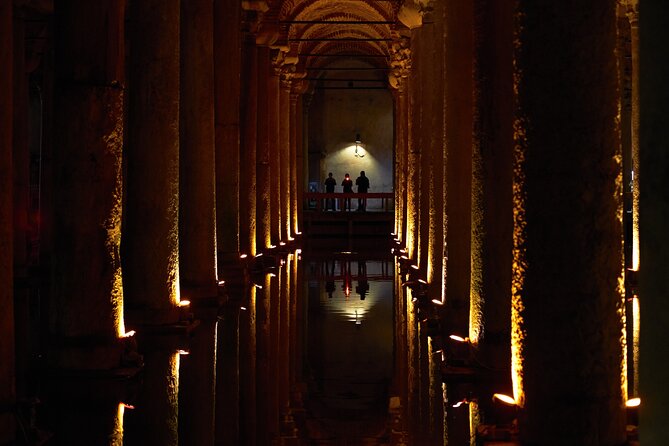
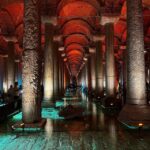
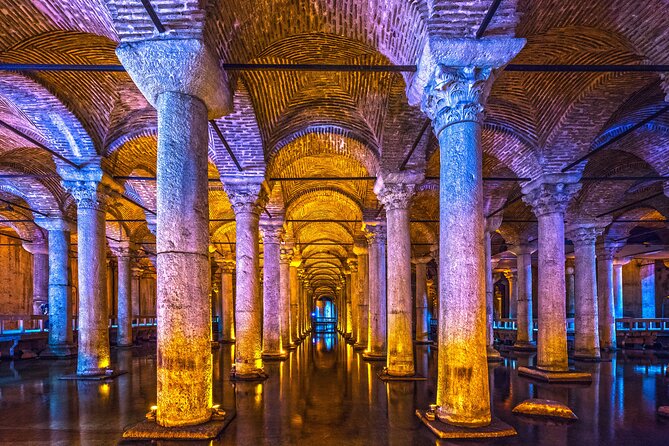
The Basilica Cistern is one of those places where the setting does half the storytelling for you. After you go down the 52 stone steps, you enter a broad underground hall that once stored water for the Great Palace area of Constantinople. Built in the 4th century and enlarged in 532 AD under Emperor Justinian I, it’s basically a massive reservoir turned into a dramatic interior space.
What you’ll notice right away is the sheer geometry. Hundreds of marble columns create long aisles and repeating rows that feel both orderly and unsettling. The air is cooler, and the sound tends to fade, so even a casual walk becomes slower and more thoughtful. If you’re the type who likes standing still and looking up, you’ll have plenty to do here.
The “cathedral” feel isn’t an accident. This is a storage chamber—meant for water, not worship—but the columns and height make it feel like an architectural hall. That contrast is exactly why the place works: it’s not fantasy. It’s engineering, with atmosphere.
You can also read our reviews of more tours and experiences in Istanbul



QR tickets, security lines, and how the skip-the-line part really works
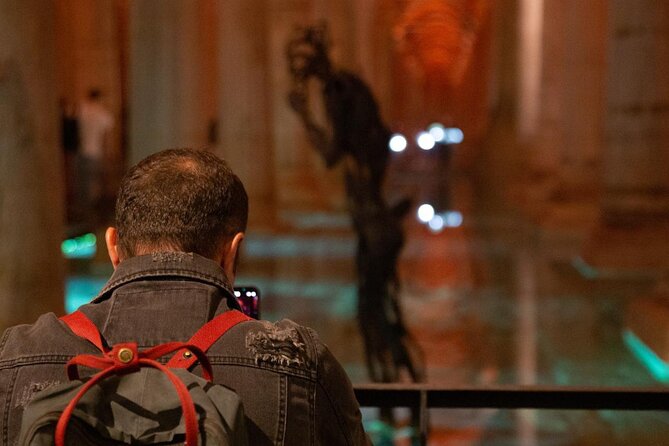
Here’s the practical bit you’ll want to get right. Your access depends on QR codes sent by email prior to your tour date. You’ll receive both entry ticket QR codes and the audio guide link via separate emails from Istanbul Tourist Pass.
Also, and this matters: it isn’t possible to skip the security lines. The operator notes there can be a line at the entrance, and the security step is mandatory for everyone. So yes, you should still expect some waiting time—just not the same thing as buying and queueing for a ticket counter.
If you want this to go smoothly, treat the emails like a checklist item:
- Search your inbox (and spam/junk) for the two separate messages.
- Have your QR code ready on your phone at arrival.
- If your QR details aren’t obvious, pause before you reach the gate and get them located, instead of hoping for last-minute fixes.
One review feedback that matches what you should avoid: a visitor reported that buying online didn’t go well because their QR code didn’t arrive, and the ticket counter couldn’t resolve it easily. Their takeaway was to buy on site instead if QR access fails. I’m not saying you’ll have that problem—but it’s a clear reminder to verify your QR emails before you leave your lodging.
Medusa head sightings plus the cistern’s water-engineering story
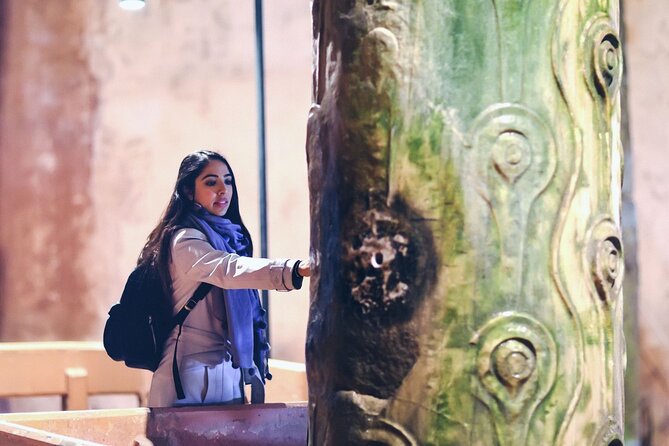
The Basilica Cistern is famous for the Medusa heads, and you’ll see why. Two stone carvings show Medusa—one is placed upside down, and the other is shown sideways. They’re small enough to miss if you rush, but once you spot them, they become the instant focal points for the whole room. The myth gives the cistern a creepy, cinematic vibe, even though it’s fundamentally a utilitarian structure.
What I like about the audio guide here is that it doesn’t stop at the spooky detail. You also get the larger picture: this cistern was built during Justinian I’s reign to supply water to the Great Palace, and it connects to an impressive network of aqueducts. The cistern stored up to 80,000 cubic meters of water and was supplied through 20 kilometers of aqueducts from a reservoir near the Black Sea.
That’s the kind of historical context that makes the Medusa heads feel less random. They’re not just decoration. They’re part of how different eras repurposed objects and materials inside a working water facility. The cistern’s “mystery” is real, but it’s also built from practical decisions—water had to move, storage had to work, and infrastructure had to survive.
What the audio guide adds (and what it won’t)
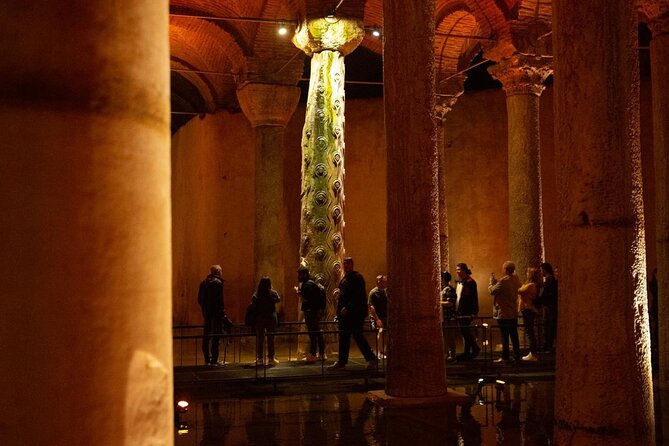
This tour includes an entry ticket plus an audio guide. You’re not getting a live guide with a microphone; you’re getting a self-paced narration delivered by link ahead of time. That can be a real advantage in a place like this, because you’re free to pause, look around, and spend extra time on whatever grabs you most—columns, carvings, or the sense of scale.
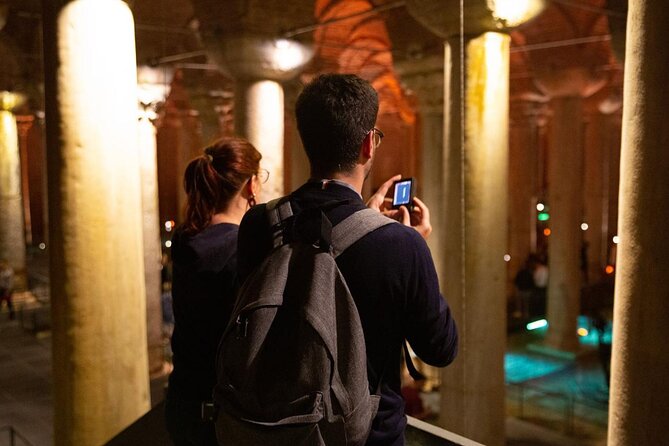
Since your audio guide link arrives by email, your best move is to have it ready before you go underground. You’ll likely be listening on your phone, so make sure your audio is set up to play normally (volume, device sound settings, and screen brightness if you’re the kind who wants to keep your eyes on the room).
A one-hour duration also shapes the experience. The audio is likely paced to keep you moving through the highlights without turning this into a long classroom. That’s a plus if you’re on a schedule and want your payoff to be efficient.
What the audio guide probably won’t do: it won’t magically make every corner equally interesting. Some areas are more visually dramatic than others. If you’re short on time, focus on the columns, then work your way toward the Medusa heads, then end with the overall “how big is this?” feeling while you look back upward.
Time it right: hours, duration, and where this fits in your day
The visit is listed at about 1 hour. That’s a good match for Basilica Cistern: long enough to appreciate the atmosphere and spot the key details, short enough that you won’t lose half your day underground.
Plan around the operating hours: it’s generally open from 12:00 PM to 6:00 PM, and on January 1st the hours are also 12:00 PM to 6:00 PM (special note given for that date). If you’re the kind who likes to start early and beat crowds, this is one of those sites where late morning to afternoon works better than a very early arrival.
The good news: it’s near public transportation, so it’s easy to plug into a larger Istanbul route. Think of it as a “pause the city” stop—take it after a neighborhood walk or before you dive back into daylight.
Also remember: because security is mandatory, don’t plan a perfect timetable where you’ll be exactly on time to the minute. Give yourself buffer time to handle the entrance process.
You can also read our reviews of more guided tours in Istanbul





Price and value: is $55.61 for a one-hour audio visit worth it?
At $55.61 per person, this isn’t a budget activity. So the question isn’t just what you pay—it’s what you get for that price.
You’re paying for:
- Skip-the-ticket-line entry (with the important caveat that security lines still apply)
- A pre-delivered audio guide
- Timed structure that keeps the visit efficient (about 1 hour)
If you value self-paced storytelling—especially one that connects myth (Medusa) to real infrastructure (aqueducts and storage capacity)—the audio guide makes the visit feel richer than a quick walk through dark rooms.
Where value can soften: if your QR codes don’t arrive as expected, or if you end up spending extra time sorting access at the entrance, the experience can feel overpriced for what becomes a hassle. That’s why double-checking your email before you go is not “extra.” It’s part of protecting the value you’re paying for.
If you’re traveling as a group, do quick math. Any time the QR entry process goes smoothly, the per-person value holds up well because you avoid the friction of buying at the site. If you’re traveling solo and you’re worried about QR problems, your own comfort level matters. The cistern itself is worth seeing either way—the question is how much time and stress you want to spend on ticketing.
Should you book this Basilica Cistern audio tour?

I’d book it if you want an efficient, story-driven visit that blends eerie atmosphere with real engineering context, and you’re comfortable using emailed QR access. The Medusa heads, the scale of the space, and the connection to Justinian’s water system make this more than a quick stop—and the audio guide is what turns the room into a guided experience without locking you into a group pace.
I’d think twice if you’re traveling with shaky internet or you know you struggle with accessing emailed tickets on arrival. In that case, have a backup plan for ticket access, because security is mandatory and QR problems can slow you down fast.
If your priority is simply seeing the Basilica Cistern and you’re flexible about how you enter, the cistern’s main “wow” factor is the room itself. If your priority is a smoother start and you can handle QR instructions, this is a sensible choice.
FAQ
How do I get the QR ticket and audio guide?
You’ll receive your entry ticket QR codes and the audio guide link by email prior to the tour date. They are sent via separate emails from the supplier.
Can I skip security lines with this ticket?
No. Even with skip-the-ticket-line entry, it’s not possible to skip the security lines. Security is mandatory for all visitors.
How long is the Basilica Cistern experience?
The duration is about 1 hour.
What are the Basilica Cistern opening hours?
It’s listed as open from 12:00 PM to 6:00 PM. On January 1st, the operating hours are also 12:00 PM to 6:00 PM.
What’s included in the price?
Your ticket includes entrance to the Basilica Cistern and an audio guide.
What is not included?
Tips are not included.