REVIEW · ISTANBUL
14 Days Private Turkey Tour From Istanbul
Book on Viator →Operated by Pupa Travel · Bookable on Viator
One route, lots of wow. This private 14-day tour stitches together Istanbul, the Aegean ruins of Ephesus, and the fairy-chimney world of Cappadocia without you getting stuck in big tour crowds. It’s built around a smooth pacing of famous sights plus a handful of stops most people skip.
I love the focus on private, English-speaking guiding. You’ll also like that the itinerary mixes headline monuments with practical breaks, like market time and museum time, so the days don’t feel like a nonstop stampede.
One thing to consider: this is a busy, multi-stop itinerary that includes domestic flights (not included), so your schedule needs to match the timing of connections and hotel transfers.
In This Review
- Key Things You’ll Actually Notice
- Istanbul First: How the Trip Gets You Oriented Fast
- Sultanahmet Day 2: Blue Mosque, Hagia Sophia, and Topkapı Without the Confusion
- Sultanahmet Day 3: Basilica Cistern and Museums, Plus a Real Taste of Markets
- Traveling to İzmir and Ephesus: Ancient Turkey in a Single, Focused Day
- Priene, Miletus, and Didyma: When the Ruins Get Smarter
- Hierapolis and Pamukkale’s Cotton Castle: Calcium, Tombs, and Big Views
- Antalya Archaeology to Aspendos: Roman Scale With Museum Context
- Konya via the Taurus Mountains: Mevlana Museum and Sufi Culture
- Silk Road Timing: Sultanhan Caravanserai Before Cappadocia
- Cappadocia Day 11: Devrent, Pasabag, Göreme, and Uchisar’s Photo Power
- Underground Christians and Greek Village Life on Day 12
- Price and Logistics: What Your $4,000 Buys (and What It Doesn’t)
- The Final Istanbul Buffer: Leisure Time Instead of a Hard Drop-Off
- Should You Book This Private 14-Day Turkey Tour?
- FAQ
- Is this tour private or shared?
- How long is the tour?
- What’s included in the price?
- Are international flights included?
- Are domestic flights included?
- Are entrance tickets included?
- Do I get airport pickup and drop-off?
- What kind of vehicle is used?
- What happens if I need to cancel?
Key Things You’ll Actually Notice
- Private tour setup so it’s just your group, with a driver and private English guide
- Mercedes Sprinter with A/C for long legs between regions
- Big-ticket ancient sites like Ephesus, Temple of Artemis, and Pamukkale’s travertines
- Cappadocia viewpoints and churches including Devrent, Pasabag, Göreme, and Uchisar
- Underground history with Kaymaklı Underground City
- In-trip meal support with lunch included (drinks and dinners are not)
Istanbul First: How the Trip Gets You Oriented Fast
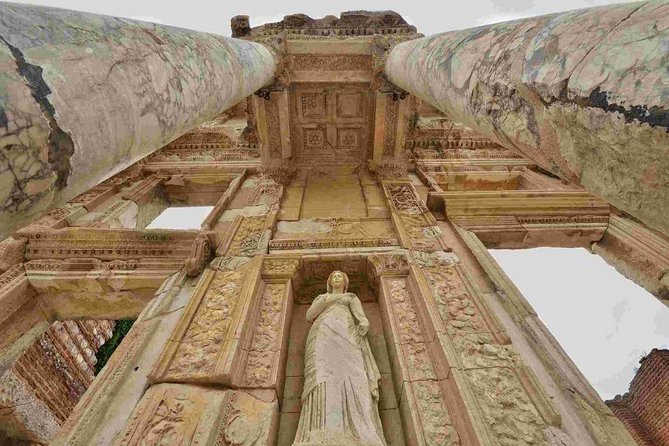
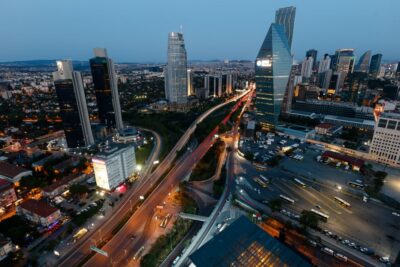
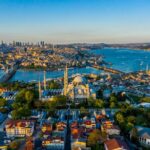
Starting in Istanbul is smart because you get your bearings in one place before you scatter across Turkey. You begin in the Sultanahmet District, and from the airport you go straight to your hotel with a transfer-man waiting for you. That small moment matters: you’re not spending your first evening figuring out transit, just resetting from the flight and getting ready.
Your second and third days do a classic Istanbul combo: monuments first, then museum and market time. This balance is useful. The area around Sultanahmet can be visually overwhelming, so having guided context early makes later wandering feel easier.
You can also read our reviews of more private tours in Istanbul

Sultanahmet Day 2: Blue Mosque, Hagia Sophia, and Topkapı Without the Confusion
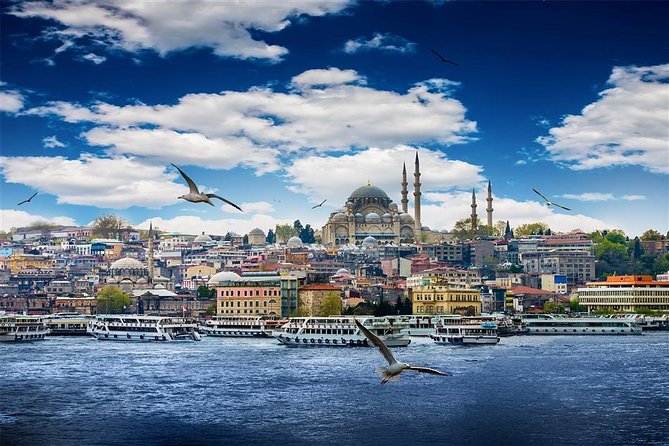
Day 2 is where you get the Istanbul heavyweights. You’ll see the Hippodrome first, including the Obelisk of Tuthmosis III, the German Fountain, the Serpent Column, and the Obelisk of Constantine. Even if you’ve heard the names before, having the guide connect what you’re seeing to the story of the city helps these landmarks click fast.
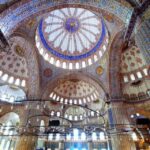
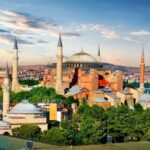
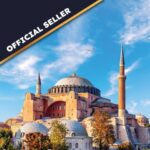
Then it’s the Blue Mosque, built in 1616 by Ottoman Sultan Ahmet I. From there, you’ll move to Ayasofya (Hagia Sophia), the 537 church built under Justinianus. These two together are powerful: you see the Ottoman and Byzantine layers in the same day, and you start noticing how each empire shaped what came after.
Topkapı Palace follows as the practical capstone—Ottoman power, court life, and centuries of rule. You’ll finish back at your hotel. After days like this, I like that the plan returns you to base rather than sending you out into the city with no structure.
Sultanahmet Day 3: Basilica Cistern and Museums, Plus a Real Taste of Markets
Day 3 slows things down in a good way. The Basilica Cistern stop is a perfect example. It was built around the same time as Hagia Sophia, and you’ll see the Medusa heads in the cistern. It’s one of those places where the setting does half the storytelling for you—cool air, stone columns, and an eerie calm.
From there you walk to the Istanbul Archaeological Museums, with Hellenistic Period art and Roman treasures found in Ottoman territories in the 19th century. This is the kind of museum stop that helps you understand the layers before you hit the big ancient sites later in the trip.
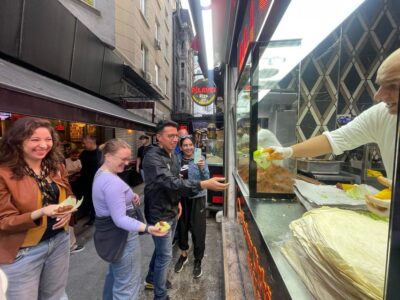
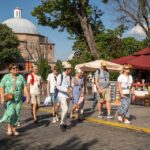
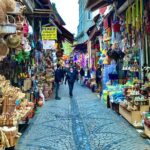
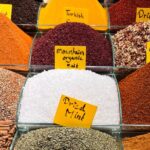
Then you get shopping time that feels useful, not random. You’ll stop at Grand Bazaar Jewelers and also spend time at the Spice Market (Misir Çarsisi). If you want to bring home something small and Turkish, spice shopping is one of the easiest wins—plus it’s fun to compare scents and packaging instead of just buying souvenirs in a blur.
Traveling to İzmir and Ephesus: Ancient Turkey in a Single, Focused Day
On Day 4, your trip leaves Istanbul and enters the Aegean world. Depending on your flights, you’ll fly to İzmir, drive to Selçuk, check in, and then hit Ephesus. Ephesus is one of those sites where you can’t really prepare your eyes enough. The guide helps you prioritize what to see so you don’t waste time guessing.
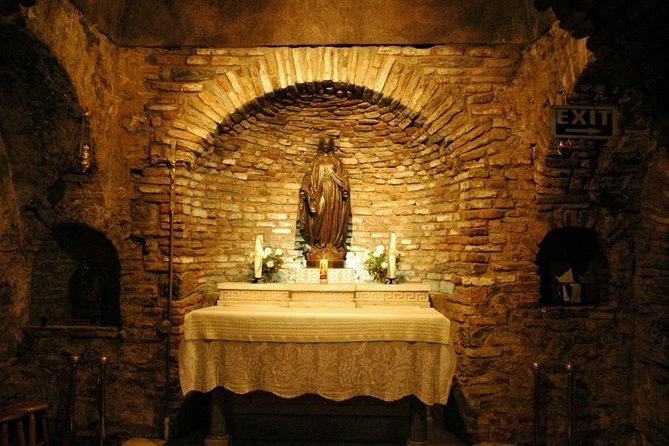
After Ephesus, you go to the Temple of Artemis, one of the Seven Wonders of the Ancient World. Then you continue with St John’s Basilica (Saint John Kilisesi) and Meryemana (The Virgin Mary’s House). That pairing is interesting because it moves from monumental Roman-era space into a different kind of sacred geography.
To keep it from becoming only stone-and-columns, you’ll also visit the Ephesus Museum in Selçuk. Museums can feel slow after big ruins, but this one gives context, so the site you saw later feels less like a highlight reel and more like a connected place.
Priene, Miletus, and Didyma: When the Ruins Get Smarter
Day 5 is for ancient-site lovers who want more than the single famous stop. You start with Priene, an Ionian city first established in the 7th century B.C. as a port city on the sea, later silted by the Meander River. You’ll actually get why location mattered back then: rivers, ports, and trade routes weren’t just background—they shaped what survived.
Next is Miletus, tied to philosophers like Thales, Anaximenes, and Hekaistos. This is a subtle shift in tone: from impressive architecture to impressive ideas.
After lunch, you visit Didyma and the Temple of Apollo, famous for prophecies. If you like the mix of archaeology and belief systems, Didyma is a strong stop because it explains how people made decisions through religion.
This day ends with a return to your hotel and rest. I appreciate that because the itinerary keeps moving, and you’ll need sleep for Pamukkale later.

Hierapolis and Pamukkale’s Cotton Castle: Calcium, Tombs, and Big Views
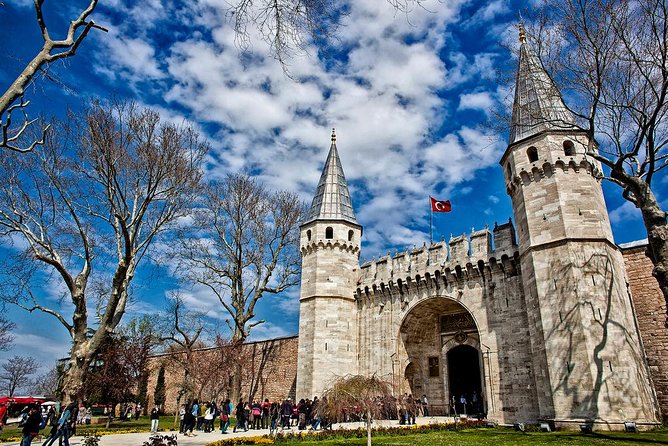
Day 6 is the long-feeling day, in the best way. You head to Hierapolis and Pamukkale, described as one of the greatest healing centers in the ancient world. You’ll also hear the connection to the word Necropolis (cemetery) because people carried tombs there as part of the healing idea.
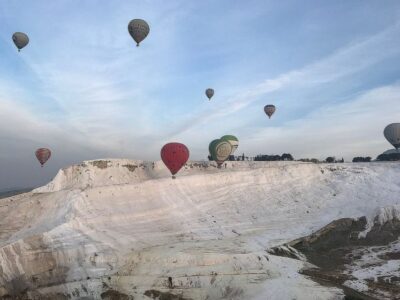
Then comes the signature visual: the travertines, including the Cotton Castle formed by calcium and travertine. This is one of the rare attractions in Turkey where the natural process is the main event. You’ll look at it and feel like you’re walking past a slow-motion art project.
Admittedly, this area can be a lot on the body—stone, stairs, sun. Your advantage here is private pacing and a driver, so you’re not doing frantic line-chasing. Still, wear comfortable shoes and plan for time in bright light.
Antalya Archaeology to Aspendos: Roman Scale With Museum Context
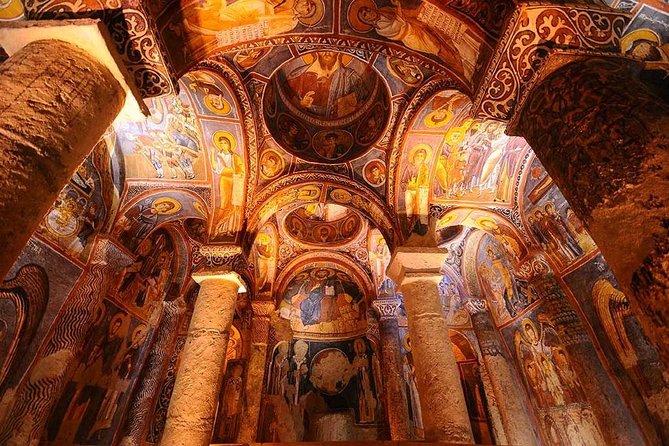
By Day 8 you’re in Antalya and the tour leans into Roman architecture. You begin at the Antalya Archaeological Museum, which is noted for statues mostly found in Perge, plus a large section of sarcophagi examples in Turkey. Museum context before ruins is a smart move because you’ll recognize material patterns and styles later.
Then you go to Perge Ancient City. After that, you visit Aspendos Ruins, including the grand theater built in the 2nd century A.D., with a capacity of 15,000 people. That number is part of the magic here. You stand in a structure designed for a massive crowd, and it helps you picture how public life worked in the Roman world.
Konya via the Taurus Mountains: Mevlana Museum and Sufi Culture
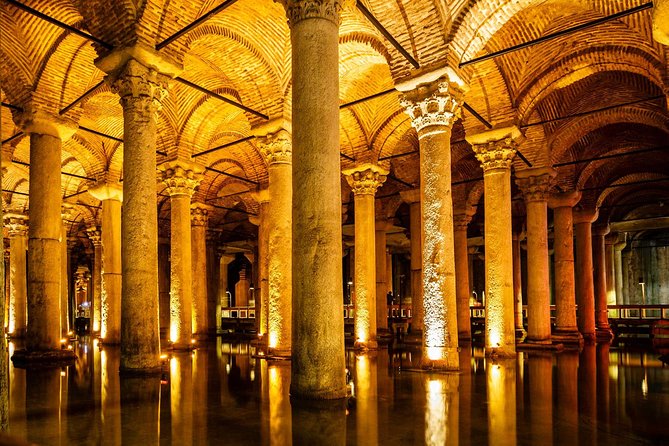
Day 9 shifts gears. You travel from Antalya to Konya via one of the most spectacular routes in Turkey—the Taurus Mountains—and you stop at the Mevlana Museum. It’s centered on Sufism and the whirling dervishes, with a focus on humanistic theology built on love and respect for diversity of the universe.
This day works as a reset. After ancient ruins and temples, Konya gives you a different lens on Turkey: not only what was built, but why people built community around spiritual practice.
You overnight in Konya, which is helpful for rhythm. It also means you don’t have to make another immediate long jump right after Mevlana.
Silk Road Timing: Sultanhan Caravanserai Before Cappadocia
Day 10 is a travel-and-history day. You drive to Cappadocia along what’s described as part of the Silk Road route, stopping at Sultanhan Caravanserai, a 12th-century stopover where ancient travelers stayed overnight.
Caravanserais are one of those travel concepts that sound like a footnote until you see one. Then you understand how long-distance movement used to work: rest, safety, and exchange in one building.
After lunch you reach Cappadocia, get an orientation for what you’ll see over the next two days, check into your hotel, and rest up for Day 11.
Cappadocia Day 11: Devrent, Pasabag, Göreme, and Uchisar’s Photo Power
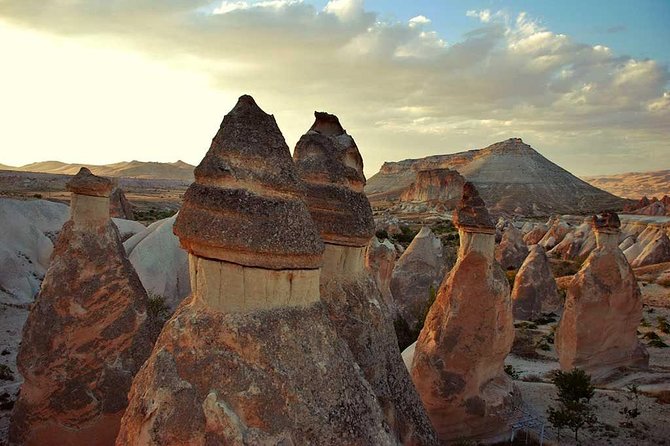
Day 11 is where the Cappadocia “wow” becomes a full circuit. You start at Devrent Valley (Imagination Valley) to see different fairy chimney formations. The formations are described as formed almost 30 million years ago, which helps you appreciate that this isn’t just scenic—it’s time made visible.
Next is Pasabag, also known for the most interesting fairy chimneys and the shapes people compare to the Hobbit and Smurfs. That’s a fun way to describe something very real: rock erosion created unusual silhouettes.
Then you stop by a pottery shop in Avanos (Avanos Oren Yeri), where you learn how people survived and made art dating back to the Hittite period. This adds a human layer. You’re not only looking at rocks; you’re seeing craft continuity.
You finish with Göreme Open Air Museum, known for cave churches, and you’ll also see cave dwellings for views. The day closes with stops at Uçhisar Castle and Pigeon Valley, plus a Göreme Panorama view pause.
This is a photography-heavy day for sure. If you’re the type who wants to take photos without feeling rushed, having multiple viewpoint stops is useful. The only drawback is you’ll want to manage sun and foot fatigue because you’re outside for long stretches.
Underground Christians and Greek Village Life on Day 12
Day 12 adds two sides of Cappadocia that make the region feel more complete.
First is Kaymaklı Underground City, described as a place where Christians protected and defended themselves from persecutions and invasions for centuries. Underground cities change your sense of space fast. You go from fairy chimneys to a survival story, and the shift gives the area depth.
Then you’ll visit Sinassos (Sinasos Kilisesi), a Greek village partially inhabited by Macedonian Turks after Greece and Turkey exchanged goods between 1924 and 1927 to avoid civil war. This stop matters because it shows how migration shaped the lived culture of the region—not just the stone.
After lunch you visit Ayvali, described as an untainted village, and you eat at Aravan Evi Restaurant. The plan then returns you to your hotel with time to rest before your early morning flight back to Istanbul.
Price and Logistics: What Your $4,000 Buys (and What It Doesn’t)
At $4,000 per person for roughly 14 days, you’re not buying a cheap deal—you’re buying time, coordination, and private guiding. The most valuable parts for many people are:
- Return private airport transfers and A/C Mercedes Sprinter transportation
- Private English-speaking guiding
- Local taxes and 18% VAT
- Admissions included for the listed stops
- Lunch during the tour days (drinks and dinners are not included)
What’s not included is also clear: domestic flight tickets and international flights. Your route depends on flying between regions like Istanbul to İzmir and then Istanbul to Antalya, plus returning by flight to Istanbul. So when you compare costs, compare the whole package, not just the tour price.
If you hate uncertainty, tell your guide about your flight details early so timings align smoothly. The itinerary is built around connecting you to the right places, but your tickets are still your responsibility.
The Final Istanbul Buffer: Leisure Time Instead of a Hard Drop-Off
Day 13 brings you back to Istanbul and a lighter end. You check out, drive to the airport depending on your flight, and then after you land, you’re picked up again and taken to your hotel. Then you get the rest of the day free for leisure, which is exactly what you want after days of travel and tight sightseeing schedules.
Day 14 is simply the final transfer to Istanbul Airport if you’re departing.
Should You Book This Private 14-Day Turkey Tour?
I’d book it if you want Turkey’s big icons—Ephesus, Pamukkale, Cappadocia—with the comfort of private guiding and transportation. It’s also a good fit if you dislike crowds and want your days shaped around a plan you can actually keep up with.
I’d think twice if your schedule is tight or your flights are complicated, because the tour includes domestic flying between regions (tickets not included). Also, this is a packed itinerary. If you prefer slow travel and long unplanned afternoons, you may feel rushed by the number of major stops.
FAQ
Is this tour private or shared?
This is a private tour/activity. Only your group will participate.
How long is the tour?
The duration is listed as about 14 days.
What’s included in the price?
The package includes return private airport transfers, A/C Mercedes Sprinter transportation, private English-speaking guiding, local taxes and 18% VAT, and lunch. Admissions are listed as included for the stops shown.
Are international flights included?
No. International flights are not included.
Are domestic flights included?
No. Domestic flight tickets are not included, even though the itinerary includes domestic travel between regions.
Are entrance tickets included?
Yes, admission tickets are listed as included for the stops in the itinerary (with the arrival day shown as free).
Do I get airport pickup and drop-off?
Yes. Return private airport transfers are included, including transfer from Istanbul Airport and later airport transfers during the program.
What kind of vehicle is used?
The tour uses an A/C luxurious Mercedes Sprinter for tours and transfers.
What happens if I need to cancel?
This experience is non-refundable and cannot be changed for any reason. If it’s canceled because a minimum number of travelers isn’t met, you’ll be offered a different date/experience or a full refund.