REVIEW · ISTANBUL
5-Day Best of Cappadocia, Pamukkale and Ephesus
Book on Viator →Operated by City of Sultans · Bookable on Viator
Cave hotels in Cappadocia change your whole pace. This 5-day highlights run strings together UNESCO Cappadocia, the white terraces of Pamukkale, and the big Roman drama at Ephesus with ground transportation handled for you. It’s designed to feel stress-free: pickup in central Istanbul, small-group touring, and English-speaking guides.
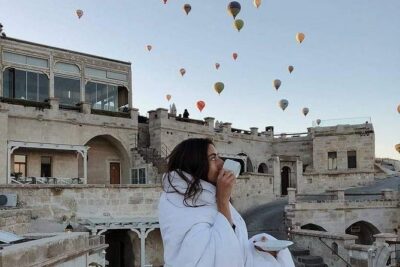
What I like most is the two nights in a cave hotel in Cappadocia. In one group experience I reviewed, the stay was at Luva Cave Hotel, with cave-like rooms and an impressive breakfast, plus a safe, walkable base for evening time.
The second thing I really appreciate is how professionally the days are run: punctual transfers and guides who know how to pace a busy schedule (I saw guide names Dennis in Cappadocia, Funda in Pamukkale, and Riza in Ephesus). The possible drawback is simple: expect a lot of walking and some travel days that feel packed, including cave and ruins terrain.
In This Review
- Key takeaways
- The real value: what you get for $1,199 in 5 days
- Istanbul pickup and the start line in the neighborhoods that matter
- Cappadocia by day: fairy chimneys, valleys, and cave churches
- Devrent Valley to Pasabag: seeing the fairy chimneys up close
- Avanos and Göreme: pottery country and early Christians
- Uchisar: the best kind of payoff after days of rock
- Day 2 in Cappadocia: Red Valley, Pigeon Valley, and the underground world
- Red Valley and Cavusin: color, texture, and quiet stretches
- Pigeon Valley: walking-friendly and good for moving at your speed
- Derinkuyu underground city: when the trip switches to survival history
- Moving to the Aegean: Kusadasi as your base
- Pamukkale and Hierapolis: Roman ruins plus the white terraces
- Hierapolis & Pamukkale: the Roman city layer under the terraces
- Pamukkale Thermal Pools: walking the travertines (and choosing where to spend time)
- Ephesus on a downhill route: Celsus to the Great Theater
- Ancient City of Ephesus: the key structures you’ll actually remember
- Meryemana (Virgin Mary’s House): a quieter spiritual pause
- Temple of Artemis: a classic name even in fragments
- Hotels and meals: what the included breakfasts and lunches mean for your schedule
- Getting around: all-inclusive ground transportation that actually saves energy
- Price and entrance fees: what to budget so nothing surprises you
- Who this tour fits best (and who might want a slower version)
- Should you book 5-Day Best of Cappadocia, Pamukkale and Ephesus?
- FAQ
- What’s included in the tour price?
- Are entrance fees to the sites included?
- Where is pickup offered in Istanbul?
- How many nights will I spend in Cappadocia?
- What should I know about hotel conditions in Cappadocia?
- Is free cancellation available?
Key takeaways
- Two nights in a cave hotel in Cappadocia, so you’re not just passing through
- Guided stops in major UNESCO sites across Cappadocia, Hierapolis, and Ephesus
- Small group size (max 15) helps you move efficiently and ask questions
- Some guided sites include tickets, but entrance fees aren’t fully covered
- Lots of walking, especially in Ephesus and on Pamukkale travertines
- Transfers are praised for being on time, which matters on a tight itinerary
The real value: what you get for $1,199 in 5 days
For $1,199 per person, this tour mostly sells a very practical promise: you travel between major regions without having to plan the moving parts yourself. You get domestic flight tickets, 4 nights of accommodation, and 4 breakfasts plus 4 lunches, with ground transportation handled as part of the package.
That’s the value equation. Paying separately for flights, hotels, and day transfers across Istanbul–Cappadocia–Aegean Turkey–back to Istanbul can add up quickly, especially when you want to hit the big sights without switching rental cars and schedules.
One catch: the tour price does not cover entrance fees to museums and sites. The itinerary labels some stops as free or ticket-included, but you should budget extra for the major ruins entrances.
You can also read our reviews of more tours and experiences in Istanbul

Istanbul pickup and the start line in the neighborhoods that matter
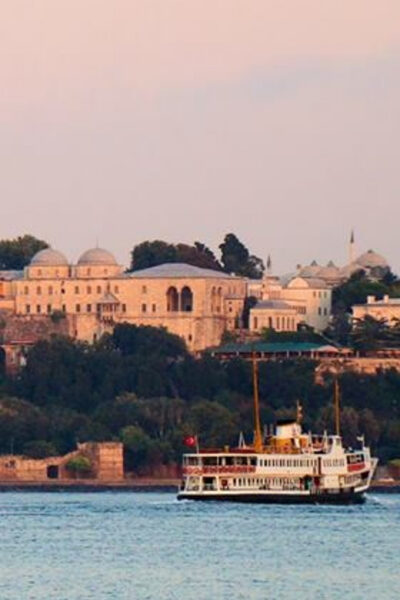
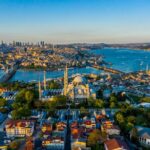
Your first win is how pickup is handled. You can be picked up from centrally located hotels in areas like Taksim, Beyoğlu, Şişli, Beşiktaş, Fatih, Sultanahmet, and Old City Fatih. That helps you avoid long commutes just to start the trip.
You’re also given a mobile ticket and the tour is offered in English. If you like having clear logistics and a straightforward start, this format fits well.
Cappadocia by day: fairy chimneys, valleys, and cave churches
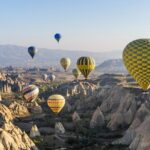
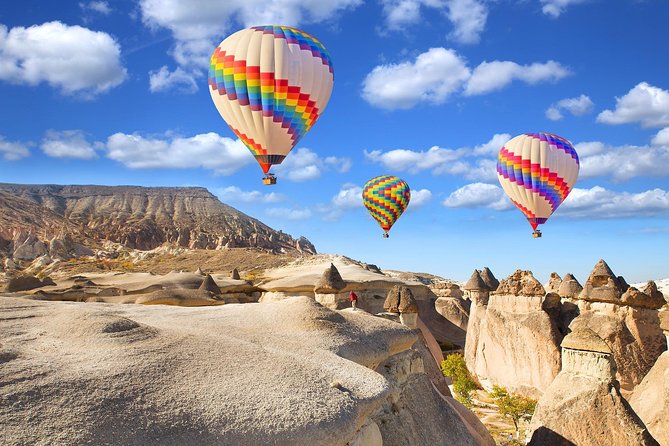
Cappadocia is the kind of place where one viewpoint isn’t enough, because the terrain keeps changing as you move. Day 1 and Day 2 both focus on signature rock formations and old Christian-era spaces carved into soft volcanic tuff.
Devrent Valley to Pasabag: seeing the fairy chimneys up close
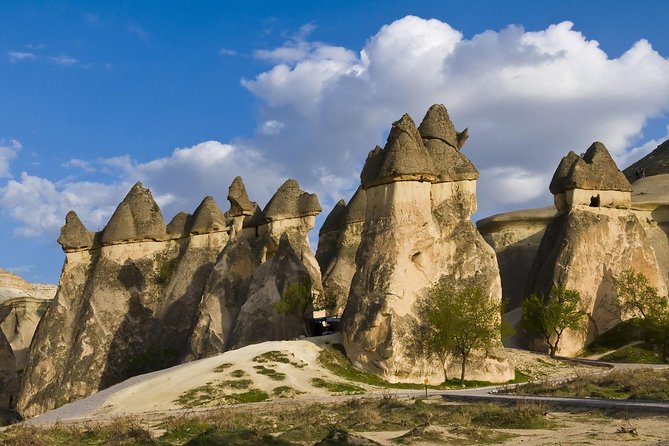
You’ll start with Devrent Valley (tickets included), which is known for its unusual fairy chimney shapes. The goal here is visual: look for the forms nature carved over long time, not just one “perfect photo spot.”
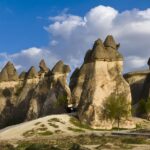
Then you move to Pasabag (ticket not included). Pasabag is famous for its mushroom-shaped pinnacles, and this is where the scenery feels the most theatrical—towering rocks in columns and stacks.
Practical note: even when stops are only 45 minutes, you’ll likely do more walking on uneven ground than you expect. Wear shoes that grip.
Avanos and Göreme: pottery country and early Christians
Avanos is more than a break. It’s a region associated with pottery (plus silk, wool, carpets, and wine cultivation), so it gives Cappadocia a human layer rather than only geology. It’s a good moment to reset before you go deeper into the rock-built world.
Next is Göreme National Park, with time at the cave churches area (ticket not included). This is the part that adds meaning: cave settlements built for protection, with historic churches and layered religious history.
In the tour vibe, Göreme is where you start to feel how people lived here, not only how the rocks look.



Uchisar: the best kind of payoff after days of rock
Uchisar closes Day 1. It sits between Nevşehir and Göreme, and the “castle” viewpoint gives broad panorama views over the valleys. This stop is often a good palate cleanser because it feels like a wide breath after tighter valleys.
Take your time here. If your legs are feeling it, this is a good moment to slow down, watch the shapes shift with the light, and just absorb.
Day 2 in Cappadocia: Red Valley, Pigeon Valley, and the underground world
Day 2 keeps the rock formations coming, then adds a very different scale: life underground.
Red Valley and Cavusin: color, texture, and quiet stretches
Red Valley (ticket included) leans into best-known Cappadocia visuals, including collections of fairy chimneys. It’s also a solid option for people who want a “walk and look” day without turning into a full-on hike festival.
Cavusin (free) adds texture. The formations feel more rugged, and the valley framing helps you understand how the terrain channels views.
Pigeon Valley: walking-friendly and good for moving at your speed
Pigeon Valley (ticket included) is ideal if you like flexible movement. The time on the schedule suggests a viewpoint-and-stroll feel, and it’s also the type of place people use for trekking and hiking.
Even if you don’t hike, you’ll still get value from the open land and long sightlines.
Derinkuyu underground city: when the trip switches to survival history
Derinkuyu Yeraltı Sehri is the big stop on Day 2 (ticket not included). It’s one of the widest and most famous underground cities in Cappadocia, linked to UNESCO, and it’s the kind of place that turns your brain on.
You don’t need to be a historian to enjoy it. The experience works because it’s physical: stone corridors, rooms, and scale that makes you think about how people planned for safety and storage.
Wear closed shoes again. Underground sites are often cool and can be uneven underfoot.
Moving to the Aegean: Kusadasi as your base
On Day 3, you’ll be in Kusadasi, a coastal town on the Aegean Sea known for cruise access and as a gateway for visiting nearby Ephesus. The practical win is that it’s a convenient base, with access to shops, restaurants, and easy day trips to major archaeological sites.
One hotel experience noted in a reviewed stay was Efe Boutique Hotel, described as clean, safe, and in a great walking location for basics like restaurants and ATMs. That’s the type of location you want after long days—somewhere you can step out and reset.
The day timing here is softer than the Cappadocia days, which matters. You’ll want a breather before Ephesus.
Pamukkale and Hierapolis: Roman ruins plus the white terraces
Day 4 is where the trip changes textures again. You go from rock cones and underground passages to Roman remains and the bright travertines at Pamukkale.
Hierapolis & Pamukkale: the Roman city layer under the terraces
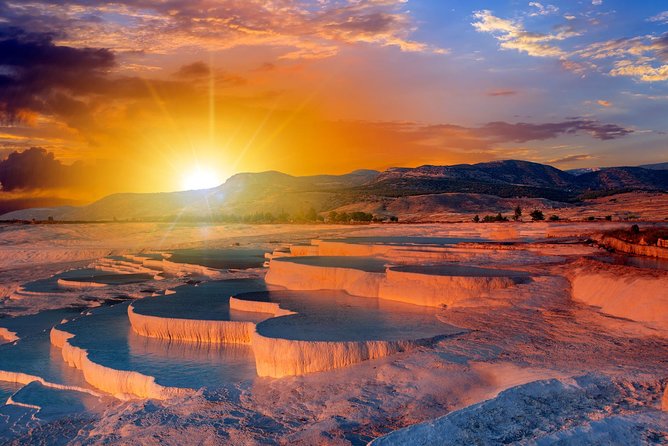
The stop for Hierapolis & Pamukkale is listed at about two hours. Hierapolis is tied to Roman heritage, and the area includes travertines often compared to a cotton castle. The attraction here is two-part: Roman archaeology plus the famous white terraces.
This is also where you should expect more walking than you think. Even when the schedule gives you time blocks, the ruins and terrace viewpoints are spread out.
Pamukkale Thermal Pools: walking the travertines (and choosing where to spend time)
You also visit Pamukkale Thermal Pools (one hour allotted; ticket not included). The focus is the visual effect: terraces, pools, and the remains you can see around them.
One review I saw complained that a Cleopatra pool add-on can feel overrated and very crowded. If you’re given optional photo or soak opportunities, I’d use that as a mental cue: decide quickly, avoid queues when possible, and don’t let one crowded spot eat your whole visit.
Ephesus on a downhill route: Celsus to the Great Theater
Day 5 is the grand finish. Ephesus is one of the most rewarding archaeology sites in the region because it’s laid out like a story—gate to theater to libraries and temples—so you’re guided through it at a comfortable downhill pace.
Ancient City of Ephesus: the key structures you’ll actually remember
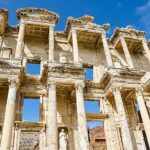
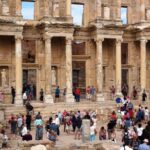
You enter via the Magnesia Gate and then follow a route that passes the Odeum, the Celsus Library, the Temple of Hadrian, the Fountain of Trajan, and the Great Theater. The payoff is that you see both public and cultural spaces, and you understand how a Roman provincial capital functioned.
Time is about two hours, which usually means you’ll get a guided overview plus some free moments to look closer. Bring patience for uneven ground and plan to take breaks if you need them.
Meryemana (Virgin Mary’s House): a quieter spiritual pause
Then you’ll visit Meryemana (The Virgin Mary’s House). This stop is about St. Mary’s last days according to local tradition, and the area also connects to the Basilica of St. John and the belief that St. John spent his later years around Ephesus.
This isn’t about grand ruins. It’s more about atmosphere and reflection, so it works well right after the structured feel of Ephesus.
Temple of Artemis: a classic name even in fragments
You’ll also stop at the Temple of Artemis (about 45 minutes). Even without everything standing, it’s still one of the seven wonders of the ancient world and a good final anchor for the Ephesus day.
If you’re a detail person, give yourself a little time here to study what’s left and how the site is set.
Hotels and meals: what the included breakfasts and lunches mean for your schedule
This is a short trip, so meal timing matters. You’re covered with 4 breakfasts and 4 lunches, and dinner time is not listed as included, so you should plan to pay for evenings on your own.
In Cappadocia, one reviewed stay was at Luva Cave Hotel, described as a great boutique option for that true cave-room feel and with a breakfast that was called amazing. A key practical caution came up too: no A/C was mentioned in that same review, so pack accordingly if you’re traveling in hotter months.
There was also a comment that breakfast may not always be on site, with guests transported to another property for morning meals. That’s not a dealbreaker, but it’s good to know if you’re the type who hates last-minute moving around in the morning.
In Kusadasi, one reviewed option (Efe Boutique Hotel) was praised for being clean, safe, and walkable. After two high-walking cities, that type of location helps your evenings feel normal.
Getting around: all-inclusive ground transportation that actually saves energy
One of the tour’s strengths is that ground transportation is handled and included in the overall experience. That means you’re not negotiating day-by-day logistics across cities and regions, and you can focus on the sights.
Transfers are also praised as professional and on time. For a route that moves across Turkey’s big distances, on-time matters more than people think. Miss one timing window and the whole day can get tense.
Also, the group size is capped at 15 travelers. That’s small enough for a personal feel, but big enough that you’re not waiting around forever for the bus to fill.
Price and entrance fees: what to budget so nothing surprises you
Here’s the honest way to think about cost. You’re paying for flights, accommodation, and transportation plus guided time at major stops. Entrance fees are listed as not included, even though some individual sites on the schedule show free or ticket-included labels.
So build a simple mental budget:
- Assume most museum/ruins entrances will require extra payment
- Expect some valleys/points to have tickets handled based on the tour’s inclusions
- Keep a small buffer for on-the-spot needs like snacks and any optional add-ons
If you hate surprises, I’d also confirm what entrances are covered versus not when you receive your tour details.
Who this tour fits best (and who might want a slower version)
This works best if you want a greatest-hits sampler of Turkey’s big-name regions without doing trip math. The route is also noted as having participation for most travelers, and the pacing is structured with guided stops and included meals.
I’d also say it suits you if:
- You like having a plan built for you
- You want the Cappadocia cave-hotel experience and not only a day trip
- You value English-guided context at Ephesus and the Roman sites
It may feel stressful if you’re easily worn down by walking or uneven ground. There are no days that are truly “rest-only,” and Cappadocia + Ephesus together are leg-heavy.
Should you book 5-Day Best of Cappadocia, Pamukkale and Ephesus?
If your priority is to see Cappadocia, Pamukkale/Hierapolis, and Ephesus in one clean run, this is a strong fit. The biggest reason is value-by-design: flights + hotels + transfers + meals are handled, and you get guided stops through the major highlights with small-group size.
My advice is to book if you can handle walking and you’ll budget for entrance fees. Bring comfortable shoes, expect a busy schedule, and treat optional stops as optional—especially where crowds can take over.
If you want maximum calm, you might prefer a slower, single-region trip. But for a 5-day sampler that tries to be organized from start to finish, this one makes sense.
FAQ
What’s included in the tour price?
The price includes domestic/internal flight tickets, 4 nights accommodation, 4 breakfasts, 4 lunches, and all-inclusive ground transportation. It also includes pickup from centrally located Istanbul areas and the tour is offered in English.
Are entrance fees to the sites included?
No. Entrance fees to museums and sites are not included. Some specific stops are marked as free or ticket-included in the schedule, but you should still expect to pay extra for many ruins and attractions.
Where is pickup offered in Istanbul?
Pickup is available from centrally located hotels in Taksim, Beyoğlu, Şişli, Beşiktaş, Fatih, Sultanahmet, and Old City Fatih areas.
How many nights will I spend in Cappadocia?
You’ll spend two nights in Cappadocia in a cave hotel.
What should I know about hotel conditions in Cappadocia?
One reviewed cave hotel option (Luva Cave Hotel) was described as not having A/C, with a cave-like room style. Another note in reviews suggested breakfast might be at a different nearby location depending on the day.
Is free cancellation available?
Yes. Free cancellation is available if you cancel up to 24 hours in advance of the experience start time.