REVIEW · ISTANBUL
4-Days Cappadocia, Pamukkale and Ephesus Tour from Istanbul
Book on Viator →Operated by MyTrip Travel & Turkey Tours · Bookable on Viator
Cappadocia to Ephesus in four days. That fast jump makes this tour feel like three trips in one, with an English-speaking guide and hotel pickup to help you stay on schedule. I also like how the plan mixes iconic viewpoints with hands-on history—like underground living at Derinkuyu and the Pamukkale travertines walk without shoes.
One thing to keep in mind: you’ll do an overnight bus from Cappadocia to Pamukkale (about 10 hours, leaving around 9:00 pm). If you hate long rides or need more sleep, plan to travel with patience.
In This Review
- Key Things That Make This Tour Worth Your Time
- The Route: How You Get Three Big Destinations Without Losing Your Mind
- Price and Logistics: What Your $900 Actually Buys
- Day 1 in Cappadocia: Panoramas, Underground Life, and Ihlara’s Green Quiet
- Göreme Panorama: Fast, big-picture Cappadocia
- Derinkuyu Underground City: 8 levels of not-just-a-legend
- Ihlara Valley: A real canyon walk with a church stop
- Selime Monastery: A cathedral-like church carved into the rock
- Pigeon Valley: Feed the birds, then move on
- Day 2 in Cappadocia: UNESCO Frescoes, Pottery in Avanos, and the Fairy Chimneys
- Uchisar Castle: Highest viewpoint, quick hit
- Göreme Open-Air Museum: UNESCO and 5th-century frescoes
- Avanos: A pottery stop that connects clay to place
- Pasabagi / Fairy Chimneys: Three-hatted formations
- Devrent Valley and Love Valley: Visual imagination time
- Overnight transfer to Pamukkale: The long part of the plan
- Pamukkale Day 3: Travertines With No Shoes and Hierapolis in One Big Block
- Karahayit: Red Spring Waters
- Pamukkale and Hierapolis: A guided list you’ll actually remember
- Pamukkale Thermal Pools / Cotton Castle: Walk the white terraces
- Day 4 in Ephesus: Ancient Wonder Energy, Then Virgin Mary and a Seljuk Mosque
- Temple of Artemis: A Seven Wonder site, even in fragments
- Ephesus: The best-preserved big-city ruins
- Meryemana (Virgin Mary’s House): A shared holy place
- Isa Bey Mosque: Seljuk architecture in an atmospheric courtyard
- Fly back to Istanbul the same day
- What I’d Watch For Before Booking (So You Don’t Get Caught Off Guard)
- Who This Tour Fits Best—and Who Might Want Something Else
- Should You Book This 4-Day Cappadocia–Pamukkale–Ephesus Tour?
- FAQ
- What’s included in the tour price?
- Is the tour guided in English?
- What time does the tour start?
- How many nights of accommodation are included?
- What meals are provided?
- Are admission tickets included?
- What happens if I need to cancel, or if weather is poor?
Key Things That Make This Tour Worth Your Time
- Small group size (max 15) means less waiting around for photos and clearer guidance at key sites
- English-speaking, professional licensed guides at the stops that really need context (Cappadocia and Pamukkale especially)
- Two hotel nights included (1 in Cappadocia, 1 in Selçuk), so you’re not sleeping on the go
- Meals built in with breakfast and lunch included, but drinks at lunch aren’t
- Big-ticket sites are included (UNESCO Göreme Open-Air Museum, Ephesus, Temple of Artemis, and Pamukkale)
- Derinkuyu + Ihlara Valley give you a break from just viewpoints and add real daily-life history
The Route: How You Get Three Big Destinations Without Losing Your Mind
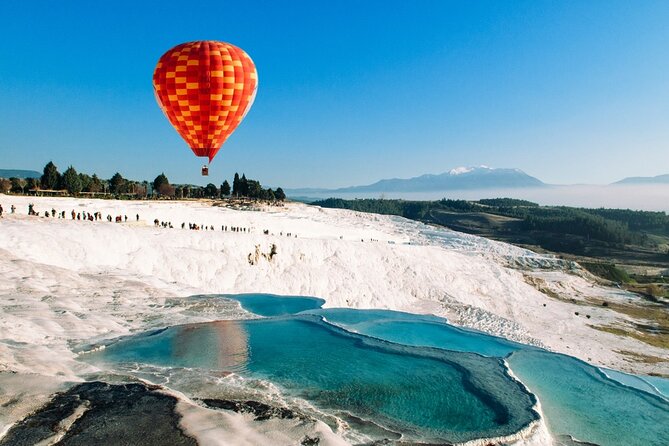
This tour is built around a tight loop: Cappadocia (2 days), Pamukkale/Hierapolis (1 day), and Ephesus area (final day), all starting from Istanbul. The big value here is that you’re not piecing together flights, hotels, and daily admissions on your own—you just show up for pickup and follow the plan.
The itinerary also makes smart use of location. Cappadocia’s caves and valleys are packed into one region on Day 1 and Day 2, while Pamukkale and Hierapolis are handled as a guided block once you arrive in Denizli/Pamukkale. On Day 4, you hit Ephesus and the surrounding religious sites, then finish with an airport transfer to fly back to Istanbul.
One detail that matters for your comfort: the tour lists moderate physical fitness as a requirement. That doesn’t mean you need to be a marathon runner, but you should be ready for walking parts of valley routes and moving through large archaeological areas.
You can also read our reviews of more tours and experiences in Istanbul.



Price and Logistics: What Your $900 Actually Buys
At $900 per person, the headline question is simple: is this a deal, or just a lot of moving parts? In this case, the inclusions are doing real work.
You’re covered for:
- Flights: Istanbul to Kayseri or Nevşehir, and Izmir back to Istanbul
- Overland transport: Goreme to Pamukkale bus ticket (overnight)
- Transfers: pickup and drop from Istanbul Airport, plus Pamukkale hotel transfer
- Hotels: 1 night in Cappadocia and 1 night in Selçuk
- Guide: professional, English-speaking support
- Meals: breakfast (3) and lunch (4)
- Many admissions: included tickets at key stops (and some stops are free)
What’s not included: beverages at lunch, plus accommodation on the second day (because you sleep on the overnight bus instead of getting another hotel night).
Now for the practical reality. Your day starts very early (start time listed as 4:00 am). You’ll also have a long travel stretch at night, which can make Day 3 feel more like “start your engine and go.” If you hate early mornings, bring a sleep strategy (aim for an easy evening before Day 1).
Day 1 in Cappadocia: Panoramas, Underground Life, and Ihlara’s Green Quiet
Day 1 is all about variety. You go from views, to survival-era engineering underground, to a canyon walk that feels like Cappadocia’s calmer cousin.
Göreme Panorama: Fast, big-picture Cappadocia
You’ll stop at Göreme Panorama for about 20 minutes, with free time to take photos and explore a viewpoint area. This is a good warm-up. If you’ve never seen fairy chimneys up close, this stop helps your brain “register” the region quickly before the more technical sites.
Practical note: photo spots at panoramas can get crowded, so bring a charged phone/camera and be ready to move when your guide signals.
Derinkuyu Underground City: 8 levels of not-just-a-legend
Then you head to Derinkuyu Underground City, described as having 8 levels with rooms like kitchen and sitting areas, a stable, tombs, and even a missionary school section. You get about 1 hour, and your guide’s explanation is a big part of why this stop feels memorable rather than just “tour in a hole.”
If you like history that shows how people solved problems with limited resources, this is your stop. Underground cities weren’t built for comfort—they were built to last.



Ihlara Valley: A real canyon walk with a church stop
Next comes Ihlara Valley, framed as the biggest and deepest canyon of Cappadocia. You’ll visit Agacalti Church and then walk near the Melendiz River toward Belisırma Village (about 3 km). The walk is listed as “nearby” and about 2 hours total here, so it’s not just a quick look.
The upside: you get greenery, shade, and a break from the rock formations. The drawback: wear shoes you trust. This isn’t the place for new sneakers you haven’t tested yet.
Selime Monastery: A cathedral-like church carved into the rock
Selime Monastery is described as the oldest cathedral of Cappadocia (with a bit of trivia about possible movie filming stories). You’ll see areas like a kitchen and missionary school sections, plus churches and small churches. The time is shorter—about 40 minutes—but the architecture is what makes it click.
One caution: it mentions that frescoes can be a little difficult to see. So don’t expect every wall to look like a museum display. Still, the roof view is excellent, and it’s a nice photo moment.
Pigeon Valley: Feed the birds, then move on
The day finishes with Pigeon Valley (about 20 minutes). You’ll see hundreds of pigeon houses and have time to feed pigeons. It sounds like a simple stop—and it is—but it adds a local, lived-in feel to a region that can otherwise feel like only ancient stone.
Day 2 in Cappadocia: UNESCO Frescoes, Pottery in Avanos, and the Fairy Chimneys
Day 2 builds on Day 1’s foundation and leans harder into major icons.
Uchisar Castle: Highest viewpoint, quick hit
At Uchisar Castle (20 minutes), you get panoramic views and rock formations that make Cappadocia feel huge. This is a short stop, but it’s useful for orientation—kind of the “okay, now I can picture where things are” moment.
Göreme Open-Air Museum: UNESCO and 5th-century frescoes
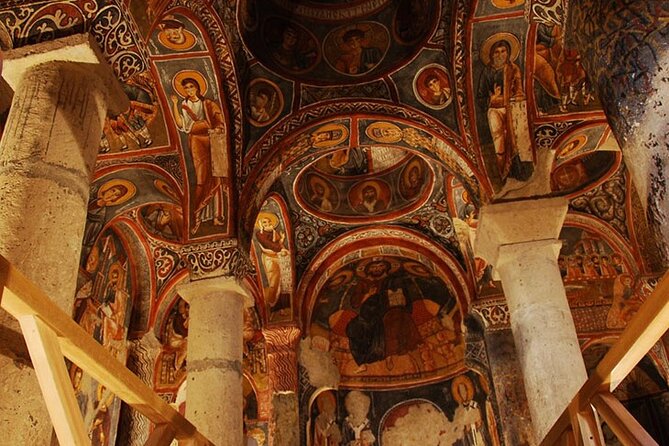
You’ll visit the Göreme Open-Air Museum, listed as UNESCO World Heritage (1985). This is the heart of Cappadocia for many people: rock churches, carved chapels built by early Christians, and an orthodox monastery sheltered from Roman attacks.
What stands out in the tour description: well-preserved frescoes, including paintings from the 5th century. This is one of those places where the guide’s context matters—frescoes are not just pretty details, they’re a visual record of how people understood faith and community.
Give yourself time to look slowly. Rushing it turns it into “caves again.” Take five minutes at each church and let your eyes adapt.
Avanos: A pottery stop that connects clay to place
In Avanos, you’ll watch a traditional pottery demonstration. The tour description ties this to ancient terracotta art dating back to Hittite times and explains the clay source from the Kızılırmak River (called Hallys in antique times).
Even if you’re not buying pottery, this stop helps you understand why Avanos developed this craft and how geography influences art. It’s also a calmer break between bigger walking sites.
Pasabagi / Fairy Chimneys: Three-hatted formations
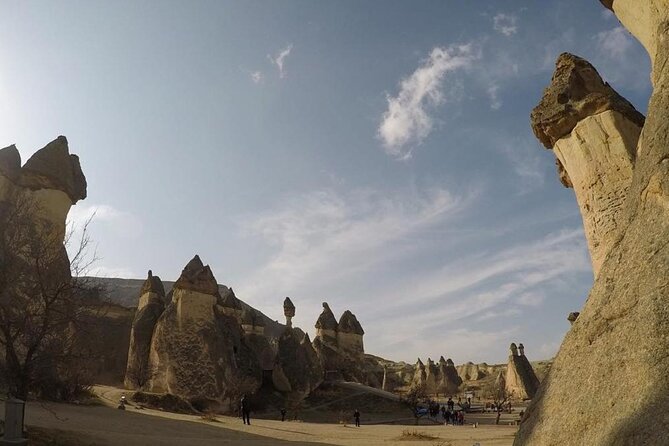
You then move to Fairy Chimneys (Pasabagi), known for the three-hatted chimney shapes. The time is about 1 hour, and the purpose is not only to see them, but to understand how Cappadocia forms from up to down.
If you like geology, this is a good match. If you don’t, it still works because the formations are so distinctive they feel like they were designed for postcards.
Devrent Valley and Love Valley: Visual imagination time
You’ll visit Devrent Valley (20 minutes) for fun rock-formation imagination, and then Love Valley (time not specified in the itinerary details). These are lighter stops. Think of them as the playful part of the route, after the more structured history.
Overnight transfer to Pamukkale: The long part of the plan
After touring, you take an overnight bus to Pamukkale. The itinerary says:
- Departure around 9:00 pm
- Total travel time about 10 hours
- Bus is non-smoking and fully air-conditioned
- Three breaks for personal needs
This is where you’ll feel the schedule. The trade-off is that you keep the full loop in four days. If you’re booking, it helps to pack for comfort: water, a layer (buses can swing chilly), and something to pass time.
Pamukkale Day 3: Travertines With No Shoes and Hierapolis in One Big Block
Day 3 starts with early pickup. You arrive at the Pamukkale/Denizli bus station between 05:30 and 06:00, get transferred to your hotel, and have time for breakfast and a short rest. Around 09:30, you start the guided tour of Pamukkale and Hierapolis.
This pacing is smart. You don’t lose your whole day after the overnight bus. You get refreshed, then you get history.
Karahayit: Red Spring Waters
First stop: Karahayit and the Red Spring Waters. This is about variety—an extra contrast before you hit the main travertines. Time listed as about 1 hour.
Pamukkale and Hierapolis: A guided list you’ll actually remember
You then explore Pamukkale and Hierapolis with lots of named highlights, including the Necropolis, Roman Baths, Domitian Gate, Latrina, Oil Factory, and many other sites (Domitian Gate, Agora, Byzantium Gate, Triton Fountain, Cathedral, Apollon Temple, Plutonium, Theater, and Antique Pool).
The value of a guided approach here is obvious. Archaeology spreads out and can feel like “walk and look.” With a guide, those names connect into one story.
There’s also time for photos from “nice corners,” which matters because the tour isn’t only about standing in place.
Pamukkale Thermal Pools / Cotton Castle: Walk the white terraces
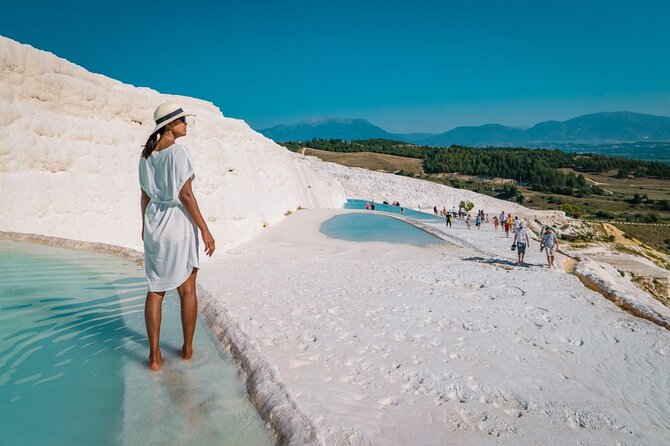
The finale is Pamukkale Travertines, also described as the Cotton Castle. You’ll walk in the travertines from top to down without shoes and socks. Time listed as about 1 hour.
This is one of the most enjoyable parts of the whole route because it’s physical and sensory. Your feet get the feel of the mineral water flow and the terraces’ slick texture. If you’re sensitive to cold water or you prefer fully dry sightseeing, this can be a deciding factor—but the walk is exactly what makes Pamukkale iconic.
Day 4 in Ephesus: Ancient Wonder Energy, Then Virgin Mary and a Seljuk Mosque
Day 4 is all famous names—Temple of Artemis, Ephesus, Meryemana, Isa Bey Mosque—so the pacing needs good attention.
Temple of Artemis: A Seven Wonder site, even in fragments
You start at the Temple of Artemis, once one of the ancient world’s Seven Wonders. The time is about 1 hour, with admission included.
This can be a little tricky if you expect a whole intact temple. But even in ruins, it’s a strong anchor for understanding Ephesus’ importance.
Ephesus: The best-preserved big-city ruins
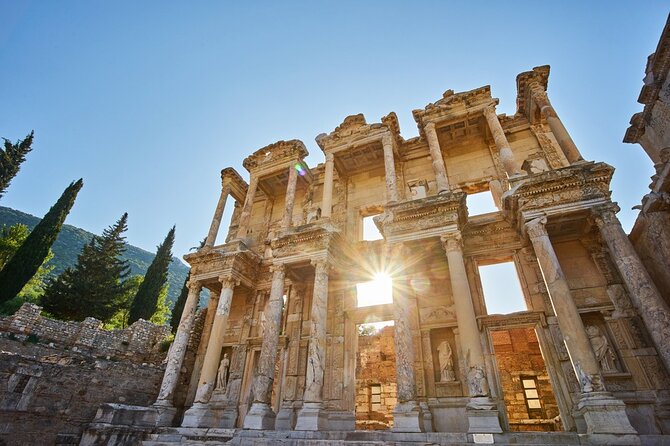
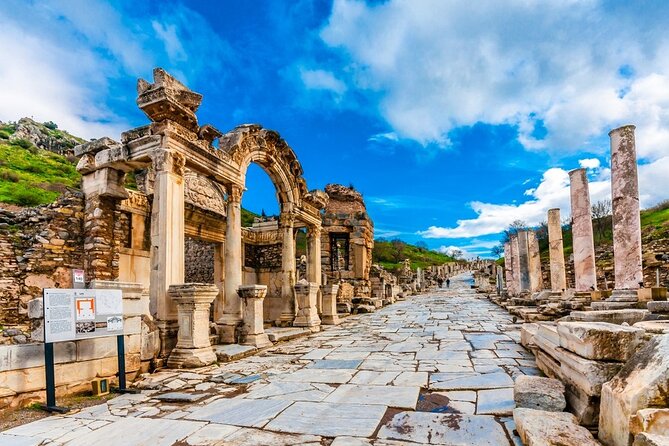
Next is Ancient City of Ephesus, described as the world-famous Greco-Roman city and the most well-preserved example in the world. You’ll have about 2 hours.
Ephesus works because it’s not a single monument—it’s a whole city. From the grand spaces to the smaller details, you get the sense of scale.
Practical tip: bring a water plan. You’re outdoors for long stretches, and the tour time at Ephesus is substantial.
Meryemana (Virgin Mary’s House): A shared holy place
You then visit Meryemana (The House of Virgin Mary), believed to be where Mary spent her last days. Time is about 20 minutes. This is a short stop, but it’s emotionally different from the ruins—more quiet and reflective.
Isa Bey Mosque: Seljuk architecture in an atmospheric courtyard
After that, you see Isa Bey Mosque, described as a beautiful example of Seljuk Turkish architecture, including being the oldest known example of a Turkish mosque with a courtyard. Time is about 20 minutes.
This combination makes sense: the day starts with ancient power, moves through sacred storytelling, and ends with a living architectural style.
Fly back to Istanbul the same day
At around 4:00 pm, you transfer to Izmir airport for a late evening return flight to Istanbul between 7:00 and 10:00 pm. Flight duration is about 1 hour 30 minutes.
That means Day 4 isn’t a “wander and linger” day. It’s a “see it, then go” day.
What I’d Watch For Before Booking (So You Don’t Get Caught Off Guard)
The overall strength of this tour is how much gets handled for you—transport, hotels, guides, and many admission tickets. People also mention guide quality by name, with Cappadocia guides like Sky and Enis coming up, plus Mehmet in Ephesus and Gum gum in Pamukkale.
Still, I’d plan around a few realistic bumps:
- Communication can be last-minute: one account highlights slow replies and cryptic messaging. If you have questions, ask early and keep your essentials ready.
- Driver English may vary: the same account notes surly drivers who couldn’t speak English until the English-speaking guide arrived. You can reduce confusion by staying close to the group and double-checking where you’re supposed to be.
- The overnight bus is the hardest part: if you’re the type who gets cranky without sleep, this part will weigh on your Day 3 energy.
None of this cancels the value. It just helps you show up mentally prepared.
Who This Tour Fits Best—and Who Might Want Something Else
This tour is a great match if you:
- want major sights across three regions in a short window
- prefer a plan with English guidance and admissions handled
- don’t want to coordinate flights, hotels, and transport yourself
- can handle moderate walking and long travel days
It’s less ideal if you:
- need a very relaxed pace
- dislike overnight travel and rough sleep
- want lots of free time to wander without a schedule
Should You Book This 4-Day Cappadocia–Pamukkale–Ephesus Tour?
If your goal is to hit the big, famous highlights with strong structure, I’d say yes. The price is more reasonable when you factor in flights, hotels, guide time, and included admissions, not just the sightseeing list. The best parts are the pairing of Cappadocia’s distinct experiences (underground city + Ihlara Valley + Göreme frescoes) with Pamukkale’s hands-on travertines and then Ephesus on Day 4.
Before you book, think about the one question that matters most: can you handle an overnight bus and an early 4:00 am start? If that’s fine, you’ll likely love the sweep of this route. If not, you might consider a slower plan that reduces night travel.
FAQ
What’s included in the tour price?
The price includes air-conditioned vehicle, all fees and taxes, hotel nights (1 in Cappadocia and 1 in Selçuk), breakfast and lunch, professional tour guide, domestic flight tickets (Istanbul to Kayseri or Nevşehir, and Izmir to Istanbul), Goreme to Pamukkale bus ticket, and pickup and drop-off from Istanbul Airport.
Is the tour guided in English?
Yes. The tour is offered in English, and it includes an English-speaking guide.
What time does the tour start?
The start time is listed as 4:00 am.
How many nights of accommodation are included?
You get 2 nights of accommodation total: 1 night in Cappadocia and 1 night in Selçuk. The itinerary also includes an overnight bus from Cappadocia to Pamukkale, so accommodation isn’t included for that second travel period.
What meals are provided?
Breakfast and lunch are included. The itinerary lists 3 breakfasts and 4 lunches.
Are admission tickets included?
Many admission tickets are included at stops throughout the itinerary (for example Derinkuyu Underground City, Göreme Open-Air Museum, Fairy Chimneys, Pamukkale and Thermal Pools, Temple of Artemis, Ephesus, and Meryemana).
What happens if I need to cancel, or if weather is poor?
The experience is non-refundable and cannot be changed. If it’s canceled due to poor weather, you’ll be offered a different date or a full refund.