REVIEW · ISTANBUL
12 Days Best of Turkey Tour
Book on Viator →Operated by Top Turkey Tours · Bookable on Viator
Turkey’s highlights in one tidy route.
This small-group tour (max 10) strings together Istanbul, the Aegean coast, and Cappadocia with domestic flights and local transfers, so you lose less time figuring logistics out. You’ll hit famous sights like Hagia Sophia, Topkapi, Pamukkale, Ephesus, and multiple rock-cut valleys without having to stitch together separate day tours.
I especially like the balance of big-ticket landmarks plus breathing room to actually enjoy the places. I also like that the guiding is handled by English-speaking pros, with names like Irem, Ayshe, and Tariq showing up in guest feedback for being both organized and kind. The one caution: this is a full-throttle itinerary, with long sightseeing days and travel days built in, so you’ll want decent stamina and a flexible mindset.
In This Review
- Key highlights you’ll feel on the trip
- Why This Small-Group Best of Turkey Route Works
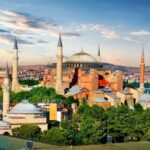
- Istanbul on Days 2: Hagia Sophia, Topkapi, Blue Mosque, Hippodrome, Grand Bazaar
- Bosphorus Cruise + the Flight to Antalya on Day 3
- Antalya’s Kaleiçi Old City + Hadrian’s Gate + Duden Waterfalls
- Pamukkale: Thermal Hotel Time + White Terraces and Hierapolis
- Kuşadası and Ephesus on Day 7: Theatre, Library, Agora, and a Village Break in Şirince
- Cappadocia Days 9–10: Valleys, Rock-Cut Churches, and Özkonak Underground City
- Flights, Transfers, and the Pace You Should Expect
- Food Included, Timing, and What You’ll Need to Budget
- Price and Value: What $2,897.06 Really Covers
- Who This 12-Day Turkey Tour Fits Best
- Practical Tips So You Enjoy Every Day
- Should You Book This 12-Day Best of Turkey Tour?
- FAQ
- What’s the group size on this tour?
- Does the tour include pickup from my hotel?
- Are domestic flights included?
- Is there a local bus involved?
- What languages are tours offered in?
- How many meals are included?
- Are entrance tickets included?
- What’s included in the air and ground services?
- Can I get a refund if I cancel?
Key highlights you’ll feel on the trip
- Max 10 travelers means more questions answered and less waiting around.
- Two-city anchor: Istanbul + Cappadocia, with UNESCO stops added in between.
- Guided tours are long days (often 6–8 hours), so you see a lot without feeling rushed by travel planning.
- Flights + transfers cut down the distance grind between regions.
- Pamukkale includes time to enjoy the thermal setting, plus Hierapolis in the same flow.
- Ephesus + Şirince gives you both major ruins and a slower, local village break.
Why This Small-Group Best of Turkey Route Works
If you’ve ever tried to do Turkey on your own, you know the problem: one “simple” change can wreck your timing. This plan fixes that by stacking regions in a logical sequence—Istanbul → Antalya → Pamukkale/Kuşadası → Cappadocia → Istanbul—and then using domestic flights where they actually make sense.
The small size matters. With up to 10 people, the guide can keep an eye on entrances, timing, and the flow from one stop to the next. You’re not fighting a crowd for a group photo every ten minutes. It also makes the day feel more personal when you’re walking through places like Ephesus or the Cappadocia valleys, where questions and explanations genuinely help.
One more practical perk: pickup is offered at hotels or locations in multiple cities (Izmir, Kuşadası, Pamukkale, Bodrum, Antalya, Istanbul, Cappadocia). That reduces the “where do I meet?” stress, especially after flights.
You can also read our reviews of more tours and experiences in Istanbul.

Istanbul on Days 2: Hagia Sophia, Topkapi, Blue Mosque, Hippodrome, Grand Bazaar
Istanbul is the kind of city where you can lose a whole day just wandering. This tour gives you a focused start with the classics, and it does it in a way that helps you understand what you’re seeing.
Your full-day Istanbul walkthrough is built around the big layers of the city:
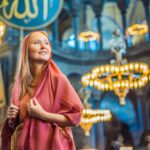
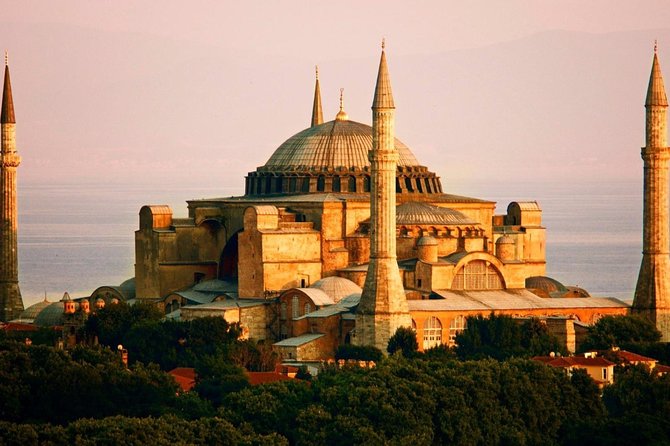
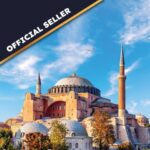
- You start at Hagia Sophia Museum, tied to its 6th-century role as the largest church in the Roman era.
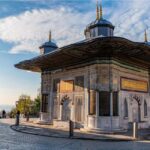
- You move to Topkapi Palace, once the center of Ottoman power in the 15th century.
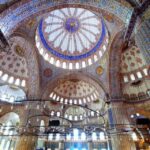
- Then comes the Blue Mosque, famous for the interior blue tiles and its six massive minarets.
- Near there you’ll visit the Hippodrome, where chariot races were held as far back as the Roman Empire.
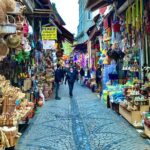
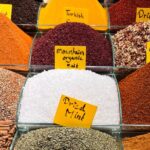
- You finish at the Grand Bazaar, the well-known covered market with around 4,000 shops.
Here’s the real value: these sites are close enough that your guide can connect the story visually. Instead of reading history on a screen, you walk through it—church to palace to mosque to Roman entertainment venue to market life.
The only drawback with a day like this is concentration fatigue. By the time you reach the Grand Bazaar, your brain is full. I’d plan for that and keep expectations simple: enjoy the maze, but don’t feel you must “see everything” inside.
Bosphorus Cruise + the Flight to Antalya on Day 3
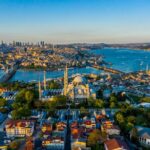
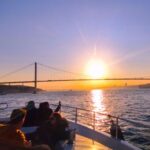
On Day 3, the trip shifts gears from Istanbul’s landmarks to the water view that makes the city make sense. You’ll have a Bosphorus cruise by boat, positioned between Europe and Asia, and it’s a good reset after the intensity of Day 2.
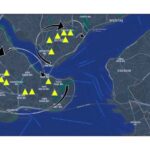
From the boat and along the way, you’ll pass landmarks like Dolmabahçe Palace, Çırağan Palace, Ortaköy, the Bosphorus Bridge, and waterside houses/kiosks. Even if you don’t care about every building detail, the geography explains Istanbul fast.
Then you fly to Antalya and sleep there. That domestic hop is a smart trade. You lose a chunk of one day to transit, but you gain two full days in different regions instead of spending your energy on long road connections.
Antalya’s Kaleiçi Old City + Hadrian’s Gate + Duden Waterfalls
Antalya can feel like a resort town until you peel back the layers. That’s exactly what this day does, starting in Kaleiçi, the old historic core. You’ll get a clear timeline of how the area shifted—from a Roman town to Byzantine, to Seljuk, and then Ottoman.
Expect stops that are memorable because they’re specific:
- Hadrian’s Gate, a triumphal arch built for Roman Emperor Hadrian
- The Broken Minaret of Korkut Mosque, which is unusual because it was originally built as a Roman temple in the 2nd century
- Hıdırlık Tower, a notable landmark tower in tawny stone
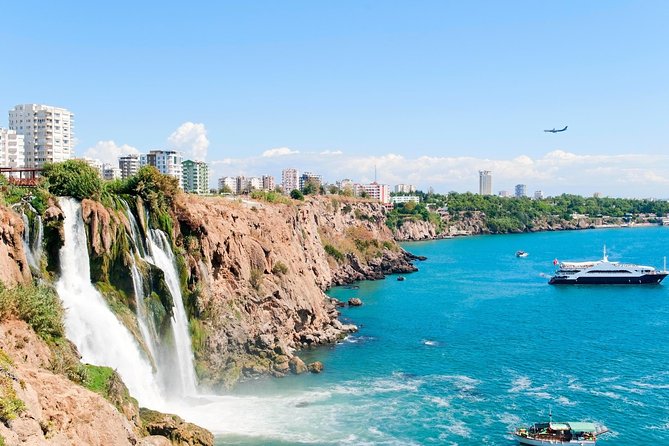
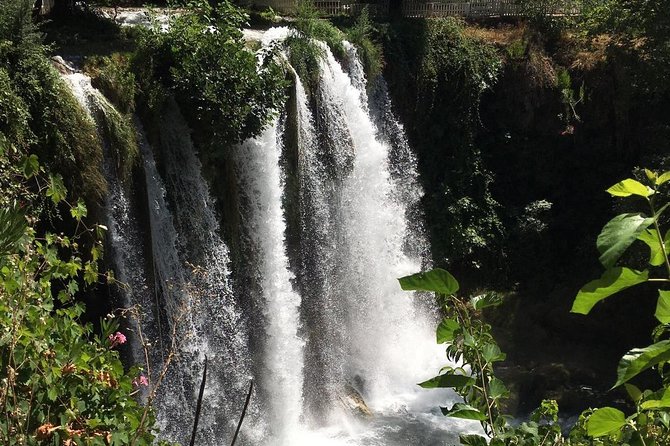
After that, you’ll drive to Duden Waterfalls. The key idea here is that multiple streams in the region make their way to the Mediterranean, sometimes overland and sometimes underground, creating more than twenty waterfalls. It’s a good break from ruins and a change of pace before you head toward Pamukkale.
One consideration: waterfalls are weather-dependent. If it’s a dry spell, it can still be nice, just less dramatic than peak flow. Still, the setting is worth it.
Pamukkale: Thermal Hotel Time + White Terraces and Hierapolis
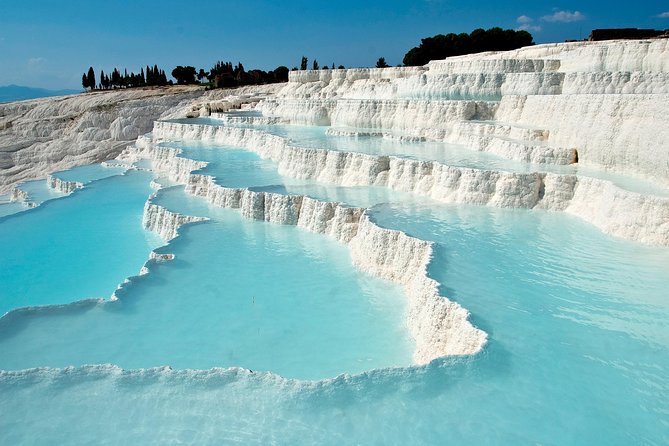
Pamukkale is one of those places where the scenery looks unreal until you’re standing in front of it. Here you get two things in one arc: the famous “cotton castle” and a proper UNESCO archaeological site.
On Day 5, you take a local bus from Antalya to Pamukkale (about 4 hours). After you check in, you stay at a thermal hotel, which means you can unwind in the pool setting without leaving your base. For many people, that’s the difference between just “seeing” Pamukkale and actually recovering a bit.
On Day 6, the day centers on:
- White Terraces (Pamukkale’s carbonate mineral deposits left by thermal water)
- Time to walk in the natural water
- Hierapolis, an ancient holy city and UNESCO World Heritage Site, linked with hot springs and spa use dating back to the 2nd century BC
This mix is smart. The terraces are the main spectacle, but Hierapolis gives it context—why people came here long before Instagram.
Potential drawback? Walking on mineral formations can be slippery depending on conditions. Wear practical footwear and take your time. You’ll enjoy it more if you don’t treat it like a sprint.
Kuşadası and Ephesus on Day 7: Theatre, Library, Agora, and a Village Break in Şirince
From Pamukkale you transfer to Kuşadası, then Day 7 becomes one of the tour’s biggest concentration moments: Ephesus.
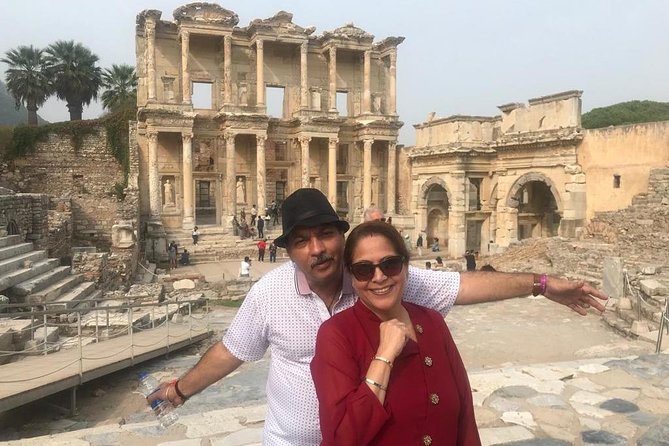
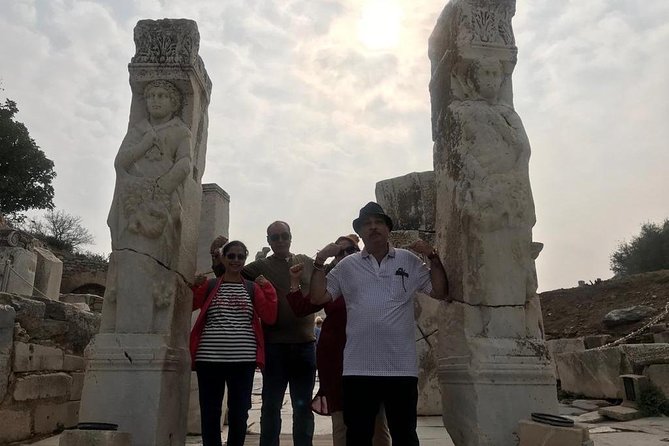
Ephesus is treated like the star. You’ll walk through major areas and key structures such as:
- The theatre (described as the biggest Roman theatre)
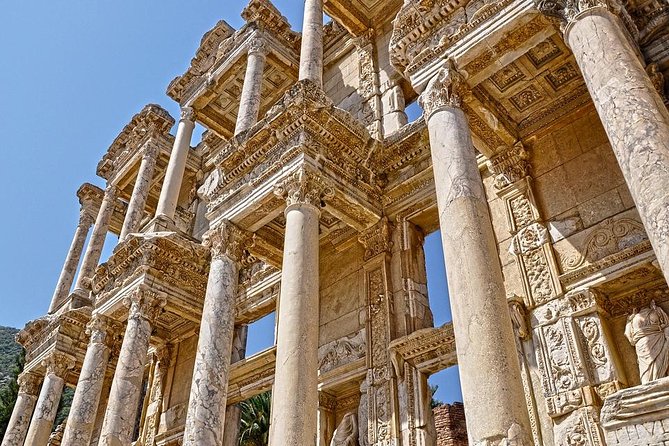
- The Library of Ephesus (noted as the third biggest in the ancient world)
- The agora, baths, and temples
What makes Ephesus work on a guided circuit is that you’re not wandering around guessing what each ruin was. Your guide helps you connect what you see—public life, entertainment, religion, administration—without making it feel like a lecture.
Then comes the slower shift: Şirince, a old Greek village meaning Pretty. Your guide takes you through narrow streets among older houses, and you get free time to wander and see handicrafts being sold. It’s a good counterweight after the scale of Ephesus.
If you’re the type who likes photos, you’ll enjoy Şirince more than you expect. If you’re not, at least treat it as a chance to slow your pace and grab a snack and water without rushing.
Cappadocia Days 9–10: Valleys, Rock-Cut Churches, and Özkonak Underground City
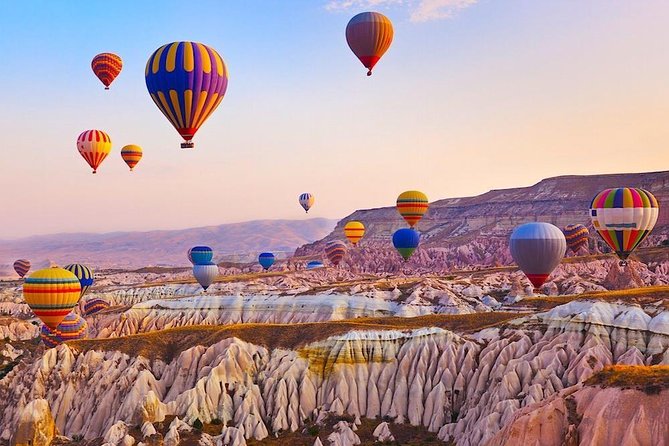
Cappadocia is where the trip turns into a “wow, that’s real” kind of place. Day 8 is travel day: you’ll fly to Cappadocia (via Izmir airport), then settle in and sleep there. After that, you get two full sightseeing days.
Day 9 focuses on signature valleys and viewpoints:
- Devrent Valley for fairy-chimneys
- Love Valley for mushroom-shaped pinnacles
- Avanos in the mix (named as a stop area)
- Zelve Open-Air Museum with rock-cut churches and Christian settlements
- Uchisar, noted for natural castles
- Pasabag Valley, also called Mushroom Valley
Day 10 continues with rock-cut churches and underground life:
- Red Valley and rock-cut churches
- Çavuşin village, described for Christian clergymen’s houses and churches
- Pigeon Valley
- Özkonak Underground City, where early Christians lived in fear and faith
The best practical advice for Cappadocia is simple: dress for real temperature changes. Even when the sun is nice, valley areas can feel cooler, and you’ll be walking.
Also, think of Cappadocia as layers: surface shapes (valleys and pinnacles) plus human use (churches, settlements, underground spaces). With this itinerary, you see both sides, not just the shapes.
Flights, Transfers, and the Pace You Should Expect
This tour is built around moving efficiently between regions. You’ll see that clearly in the schedule:
- Istanbul transfers on Day 1 and Day 12
- A Bosphorus cruise plus a flight on Day 3
- A bus ride (Antalya to Pamukkale) on Day 5
- A flight to Cappadocia on Day 8
- A flight back to Istanbul on Day 11
So yes, there’s travel time. But it’s purposeful travel time, not random road-bus chaos. That matters if you want value from a 12-day trip without losing half your vacation to long-distance transport.
Also note the tour starts around 8:00 am, and many days run long—some listed at 6–8 hours. If you’re prone to late breakfasts and slow mornings at home, plan to adjust.
Food Included, Timing, and What You’ll Need to Budget
Meals are partially covered, so your day doesn’t always center on finding food. You get 11 breakfasts and 6 lunches included. Dinner is not listed as included, so you’ll still want a plan for evenings.
Because meals aren’t fully covered, you can use that flexibility to try local spots near where you are. That’s often the best part of travel—ordering something simple without feeling tied to a set group menu.
What to budget:
- Tips to the guide and driver are not included
- Personal expenses are not included
- Minibars at hotels are not included
This is a common structure for guided tours, and it keeps the main package price from inflating too much.
Price and Value: What $2,897.06 Really Covers
At about $2,897.06 per person for roughly 12 days, the biggest value driver is what’s bundled together. You’re not just buying guided sightseeing—you’re also paying for:
- Hotels
- Domestic flights
- Airport/region transfers
- Local bus ticket from Antalya to Pamukkale
- Air-conditioned vehicle
- All fees and taxes (as listed)
When you compare that to piecing it together yourself, the main “cost” you’re saving is time plus coordination. Flights and transfers are usually where self-planned trips go sideways—timing, luggage handling, and meeting points.
Is it expensive? It can be, but it’s also not a bare-bones tour. With a max group size of 10 and a schedule that moves through multiple major regions, the price feels built for people who want results without the full planning headache.
The consideration is that you’ll still pay for dinners and tips. Also, because the days are packed, you’ll want to make sure you’re happy spending many hours with your group and guide.
Who This 12-Day Turkey Tour Fits Best
This tour fits best if you:
- Want major UNESCO and signature stops without building the route yourself
- Like guided context—understanding what Hagia Sophia, Topkapi, Ephesus, and Cappadocia meant and how they connect
- Prefer a small group (max 10) for a calmer feel
- Don’t mind a packed schedule and long days in exchange for seeing more
It might be less ideal if you want a totally relaxed vacation with minimal touring, or if you’re strongly anti-early mornings.
Practical Tips So You Enjoy Every Day
A few small things can make this kind of itinerary much more pleasant:
- Bring a water bottle you can refill (especially on the walking-heavy days like Ephesus and Cappadocia).
- Wear shoes that handle uneven ground—especially where mineral formations or rock-cut paths are involved.
- Keep your evenings flexible. With dinner not included, you’ll likely want to eat close to your hotel rather than hunting far away.
And if you’re the type who likes to decompress, build that into the plan during village breaks like Şirince and the thermal downtime at Pamukkale.
Should You Book This 12-Day Best of Turkey Tour?
I’d book it if you want a structured, efficient route through Turkey’s biggest names—Istanbul, Pamukkale/Hierapolis, Ephesus, and Cappadocia—with a small group and real guiding. The included flights, transfers, and hotels make it feel like a “ready-to-go” Turkey trip, not a DIY project.
I wouldn’t book it if you’re looking for lots of free time every day or you know you get cranky with early starts and long sightseeing blocks. This tour trades relaxation for scope, and it’s honest about that energy level.
If you want a packed itinerary that still feels human-sized—max 10—and you’re okay budgeting for tips and dinner, this is a strong choice.
FAQ
What’s the group size on this tour?
The tour has a maximum of 10 travelers, which helps keep the experience more personal and organized.
Does the tour include pickup from my hotel?
Pickup is offered. The tour states they can pick you up any hotel or location in Izmir, Kuşadası, Pamukkale and Bodrum, Antalya, Istanbul, and Cappadocia.
Are domestic flights included?
Yes. Domestic flights are included as part of the itinerary, including transfers between regions.
Is there a local bus involved?
Yes. The package includes a local bus ticket from Antalya to Pamukkale.
What languages are tours offered in?
Tours are offered in English, and you’ll have an English-speaking tour guide.
How many meals are included?
The tour includes 11 breakfasts and 6 lunches. Other meals are not listed as included.
Are entrance tickets included?
The schedule shows admission ticket free for the main sightseeing blocks, and the package lists all fees and taxes as included.
What’s included in the air and ground services?
Included items list an air-conditioned vehicle, hotels, local transfers, and the listed flights and bus ticket.
Can I get a refund if I cancel?
Yes. You can cancel up to 6 days in advance for a full refund. A 50% refund applies if you cancel 2–6 days before the experience start time, and less than 2 days before start time is not refunded.