REVIEW · ISTANBUL
Turkey Biblical Tour (Private)
Book on Viator →Operated by Turkey Private Tours · Bookable on Viator
Private Bible sites with real-world logistics. This is a private Turkey tour that links Istanbul’s Byzantine and Ottoman icons with the Aegean coast footsteps of Paul, then finishes in Cappadocia cave country. I especially like that you travel with a local guide who connects the places to Scripture (like the way Umut ties in Acts 19 and Revelation in Ephesus), and I also like that the plan is all-inclusive on entrances—so you’re not doing ticket math all day. One possible drawback: the days move fast, with lots of driving legs between regions, so you’ll want to bring stamina and a flexible attitude.
You’ll get hotel or airport pickup, then you’re handled end to end: van/driver, guiding, parking, entrances, and lunch are built into the experience. That means you spend your energy on seeing and learning, not on coordinating routes or hunting down the right entrance.
The vibe is ideal if you want a faith-and-history trip that still feels practical—especially if you like having context while you’re standing in the middle of it.
In This Review
- Key takeaways before you go
- How the private format changes the whole trip
- Istanbul’s Byzantine-and-Ottoman highlights: where the day starts
- Hippodrome to Blue Mosque to Hagia Sophia
- Topkapi Palace: the Ottoman “power room”
- Grand Bazaar time: shopping without the chaos
- Bosphorus boat cruise and the Spice Market reset
- A 2-hour Bosphorus ride
- Misir Çarşısı (Spice Market): a sensory stop
- Troy to Assos: Paul’s route through places with echoes
- Pergamon and the Seven Churches of Asia Minor
- Pergamon: huge ruins, big theology
- Thyatira (Akhisar): shorter, but still pointed
- Smyrna (Izmir): the church tied to hardship
- Sardis, Philadelphia, and Pamukkale’s white terraces
- Sardis: capitals and early church remains
- Philadelphia (Alasehir): “brotherly love” country
- Pamukkale and Hierapolis: mineral water meets archaeology
- Laodicea and Colossae: the less-frequented letters
- Laodicea: the Lukewarm Church visit
- Colossae: an unexcavated city tied to Paul’s letter
- Ephesus: the core day if you’re here for Revelation and Acts
- Cappadocia classics: Göreme, Pasabag chimneys, Avanos pottery
- Göreme Panorama and the Open-Air Museum
- Pasabag (Monks Valley): fairy chimneys you can actually walk around
- Avanos: a more local pace
- Devrent Valley (Imaginary Valley): animal-shaped formations
- Kaymaklı Underground City and the Red/Rose valley circuit
- Kaymaklı Underground City: defense under your feet
- Red Valley, then the quieter village and views
- Pigeon Valley and Love Valley: small, scenic, and specific
- Price and value: what $3,604.57 actually buys you
- Who should book, and who should rethink it
- Should you book the Turkey Biblical Tour (Private)?
- FAQ
- How long is the Turkey Biblical Tour (Private)?
- Is this tour private?
- What’s included in the price?
- What is not included?
- How do airport and hotel pickups work?
- What language is the tour offered in?
- Is free cancellation available?
Key takeaways before you go
- Private group, real time with your guide: just your party with a guide/driver, not a crowd shuffle.
- Entrance fees included: many major sites are covered, including Topkapi Palace and core Ephesus stops.
- A Paul-and-Revelation storyline: you’ll keep seeing the route through the Seven Churches of Asia Minor.
- Smart pacing through flights: fly out of Izmir and later back toward Istanbul via Kayseri.
- Cappadocia at the end, not a random add-on: Göreme, Pasabag, valleys, and Kaymaklı Underground City are all included.
How the private format changes the whole trip
The biggest difference here is control. This is not a bus tour where you sprint from one photo spot to the next. Because it’s private, your guide can slow down when a question lands, and you can adjust to what your group needs without the stress of waiting on strangers.
You also get practical help from the first moment. Meeting is either in your hotel lobby or at the airport, then pickup and transfers are handled. That matters because you’re covering multiple regions—İstanbul, the Aegean, then Cappadocia—where DIY travel can quickly turn into “who has the tickets and where do we park?” all day.
And yes, the comfort factor counts. Reviews from groups led by Umut and Ertunga mention prompt pickup and smooth van travel, plus the kind of on-the-ground assistance that makes the trip feel taken care of, not just scheduled.
You can also read our reviews of more private tours in Istanbul
Istanbul’s Byzantine-and-Ottoman highlights: where the day starts
Hippodrome to Blue Mosque to Hagia Sophia
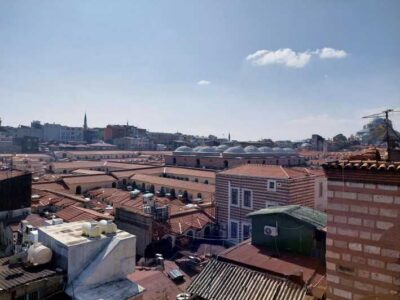
Your Istanbul day is built around iconic layers of the city’s past. You begin at the Byzantine Hippodrome, the old public arena where emperors staged entertainments. It’s a solid opening because it frames Istanbul as more than a modern city—it’s a capital with deep roots.
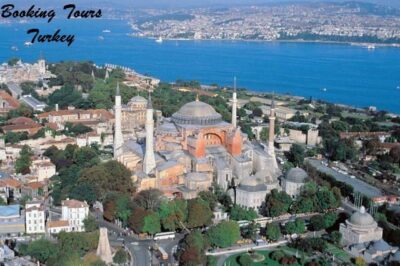
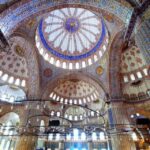
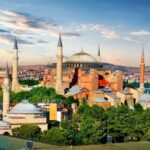
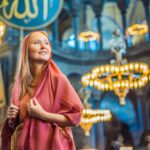
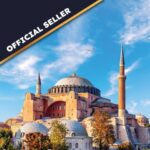
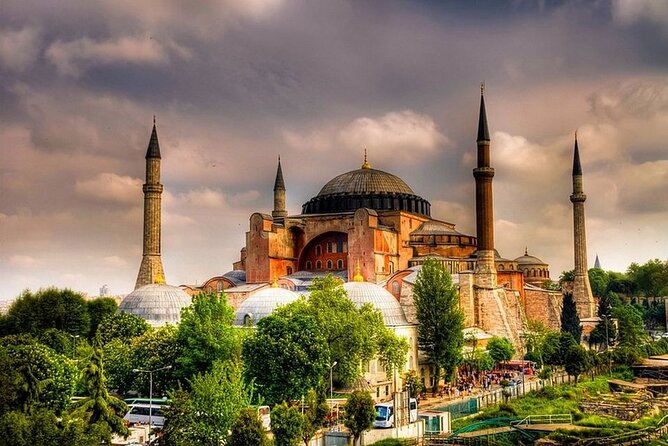
From there, you move to the Blue Mosque (Sultan Ahmed Mosque), famous for the blue ceramic tiles inside. Next comes Hagia Sophia Grand Mosque, where the Church of Holy Wisdom legacy connects art and architecture to world history. The time on these stops is generous for a packed day: about 45 minutes for the Hippodrome, 40 minutes for the Blue Mosque, and 1 hour 30 minutes for Hagia Sophia.
One more practical note: because these are the heavyweights, the timing of your day matters. Your guide’s job is to keep you moving efficiently while still giving you enough time to actually look around.
Topkapi Palace: the Ottoman “power room”
After the big religious sights, you shift into Ottoman imperial life at Topkapı Palace. This is included and gets about 1 hour 30 minutes. It’s one of the clearest ways to see how Ottoman rulers lived, displayed authority, and collected art and objects. If you like history that feels tangible—rooms, layout, and surviving details—this stop is the kind you’ll remember later.
Grand Bazaar time: shopping without the chaos
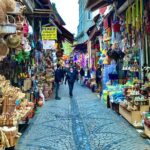
You finish your Istanbul portion at the Grand Bazaar, with about 1 hour to walk and shop in the covered market. It’s described as the oldest and largest covered market place in the world, with more than 4,000 shops.
This is where I recommend you go with a plan: decide what you want (tea, small gifts, textiles, ceramics), then move with purpose. One hour can disappear fast in such a large place, especially if you’re browsing everything at once. Still, it’s a nice close to a day that’s otherwise all monuments.

Bosphorus boat cruise and the Spice Market reset
A 2-hour Bosphorus ride
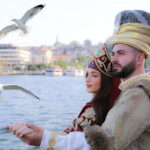
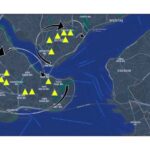
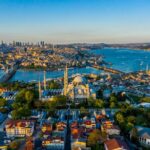
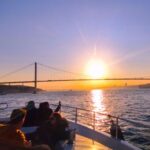
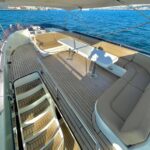
The next major shift is toward the water. You get a 2-hour Bosphorus Strait boat trip that’s designed to show Istanbul from the outside: bridges, palaces like Dolmabahçe and Beylerbeyi, fortresses, and the houses lining the strait. Seeing the city this way helps you understand the geography you’ll keep hearing about—why Istanbul’s “between continents” idea isn’t just a slogan.
This stop is included, so you’re not deciding whether it’s worth the extra cost. It’s also a good mental break before you transition to another part of the country.
Misir Çarşısı (Spice Market): a sensory stop
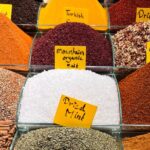
Then you stop at Misir Çarşısı (Spice Market), a covered market structure from the 17th century tied to the city’s spice trade. It’s a quick, high-impact change from grand monuments to everyday commerce. Even if you don’t buy much, it gives your trip texture.
After that, you fly to Izmir, then transfer to a hotel in Kuşadası for the night. This flight-and-transfer rhythm matters: you’re covering a lot of ground, so the itinerary avoids too much backtracking.
Troy to Assos: Paul’s route through places with echoes
This stretch is where the trip gets especially “story-driven,” because the sites are linked to New Testament movement. You start with Troy (Truva), where you’ll see the legendary setting tied to Homer and a replica of the wooden horse. You get about 1 hour, and the point isn’t just myth—it’s that Troy is a historical anchor for stories people have lived with for centuries.
Then it’s Alexandria Troas Antik Kenti, tied to Acts references—Paul sailed onward from here (Acts 16:8) and later Eutychus (Acts 20:5–12). You’ll have about 30 minutes here, plus entrance included.
Finally, you reach Assos, connected to Paul’s third missionary journey and the meeting of companions who traveled by sea. You get about 1 hour. The advantage of ending here is mood: Assos feels more like a coastal pause than a rushed stop, and it helps you reset before inland ruins.
Pergamon and the Seven Churches of Asia Minor
Pergamon: huge ruins, big theology
You spend time at Pergamon (Pergamon Ancient City), with a deep set of stops included in the visit: the Acropolis, Temple of Athena, Serapis Temple, heroons/sanctuaries, Pergamon’s library history, Trajan’s temple, theater, the Altar of Zeus, and the Red Courtyard area. It’s a lot to fit, but the stop is scheduled for about 1 hour 30 minutes and the payoff is clear: Pergamon was one of the major cities of its era.
This is also one of the stops tied directly to the Seven Churches theme, since Pergamon is described as the third of the Seven Churches of Asia and references are included in the tour framing (including a mention of Satan’s throne from Revelation 2:13).
Thyatira (Akhisar): shorter, but still pointed
Then you head to Akhisar, tied in the tour framing to Thyatira, one of the Seven Churches. You get about 45 minutes. It’s a shorter stop, so you’ll want to let your guide point you to what matters instead of treating it like a general sightseeing walk.
Smyrna (Izmir): the church tied to hardship
Next comes Smyrna (İzmir), with a stop of about 1 hour. It’s framed as the second city to receive a letter from Apostle John in Revelation, and the tour description includes a focus on triumph over hardship. If you like when biblical text has a physical geography behind it, this is the kind of stop you’ll appreciate.
Sardis, Philadelphia, and Pamukkale’s white terraces
Sardis: capitals and early church remains
After breakfast, you drive to Sardis (Sardes). The visit includes several early remains mentioned in the tour plan: the Sardis Gymnasium, Jewish Synagogue, and the Diana Temple, plus time at Sardis’s “early church remaining” areas. Entrance is included, and the scheduled visit is about 1 hour 30 minutes.
This is another “don’t rush it” stop. Sardis is not just a name from a chapter—it’s a layered place, and your guide’s job is to connect those layers to the themes in Revelation 3:1–6.
Philadelphia (Alasehir): “brotherly love” country
Then you visit Philadelphia (Alasehir), tied to Revelation 3:7–12. Your stop is shorter—about 30 minutes—but it fits well in the overall rhythm: larger ruins today, then a visual reset toward natural beauty.
Pamukkale and Hierapolis: mineral water meets archaeology
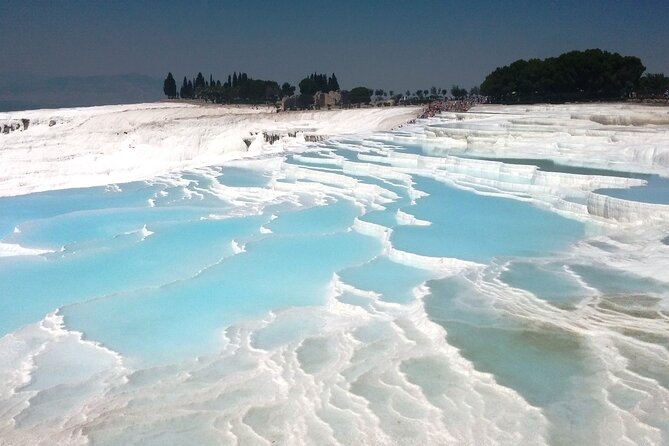
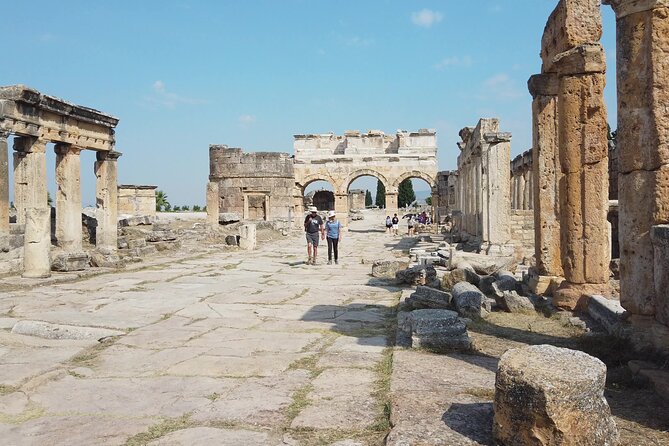
You finish this segment with Pamukkale, described as mineral-rich thermal waters flowing down white travertine terraces, plus the nearby Roman spa ruins of Hierapolis. The visit includes the Gate of Domitian, Arcadian Way, necropolis, and Apostle Philip’s tomb, plus the Antique Pool area with submerged Roman columns. Entrance is included, and this stop gets about 2 hours.
Why this matters: even if you’re not chasing religious sites every day, Pamukkale gives your eyes a different kind of payoff. It’s hard to find that kind of contrast—ruins and theology one moment, white terraces the next—without getting tired of the theme.
Laodicea and Colossae: the less-frequented letters
Laodicea: the Lukewarm Church visit
Next is Laodicea, tied to the “lukewarm” theme. The tour includes Christian ruins plus a Statue of Emperor Augustus, an aqueduct, a stadium, and the Ephesian Gate. Entrance is included, and you’ll have about 1 hour 30 minutes.
This stop works best when you let your guide connect the physical remnants to the text’s message—because Laodicea can feel like “more ruins” if you don’t have that interpretive thread.
Colossae: an unexcavated city tied to Paul’s letter
Then you drive to Colossae, described as an ancient metropolis with Honaz as part of the area and framed as the recipient of Paul’s letter (Colossians). The plan notes it’s an unexcavated city and keeps the focus on the biblical connection, including mention of Philemon. You get about 30 minutes.
After Colossae, the drive goes around 3 hours to Kuşadası for an overnight stay. That’s a long road segment—one reason this tour is best for people who enjoy travel days when there’s a purpose.
Ephesus: the core day if you’re here for Revelation and Acts
Ephesus is the centerpiece, and the tour gives it the time it deserves. The morning drive brings you to Ephesus with multiple included stops:
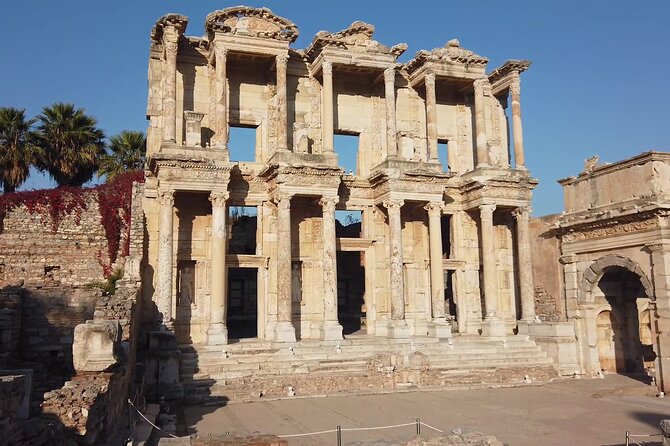
- Library of Celsus and other major remains
- Temple of Artemis
- The Theater
- Temple of Hadrian
- Baths of Scholastica
- and more core Ephesus sites
Entrance is included, and you get about 2 hours.
Then you continue to Meryemana (The Virgin Mary’s House) for about 45 minutes. After that, you visit the Basilica of St. John, described as standing over the believed burial site of John the Apostle, built by Justinian I in the 6th century. This is scheduled for about 45 minutes, with entrance included.
What I love here is the way the guide’s Scripture linking makes Ephesus feel less like a checklist. In reviews, Umut is highlighted for referring to the Scriptures while standing in the sites—especially Acts 19 and Revelation 2—so you’re not just looking at stones. You’re also learning the “why this mattered” story.
After the Ephesus day, you transfer to Izmir airport for your Cappadocia flight.
Cappadocia classics: Göreme, Pasabag chimneys, Avanos pottery
Göreme Panorama and the Open-Air Museum
Your first Cappadocia stops are classic for a reason. You start with Göreme Panorama viewpoint (about 20 minutes), then head to the Göreme Open-Air Museum for about 1 hour 30 minutes. The plan notes it’s a UNESCO World Heritage Site since 1985, tied to extreme monastery life from the 4th to 13th centuries.
This works well because it turns Cappadocia from “cool rock shapes” into a lived place—human history inside volcanic geography.
Pasabag (Monks Valley): fairy chimneys you can actually walk around
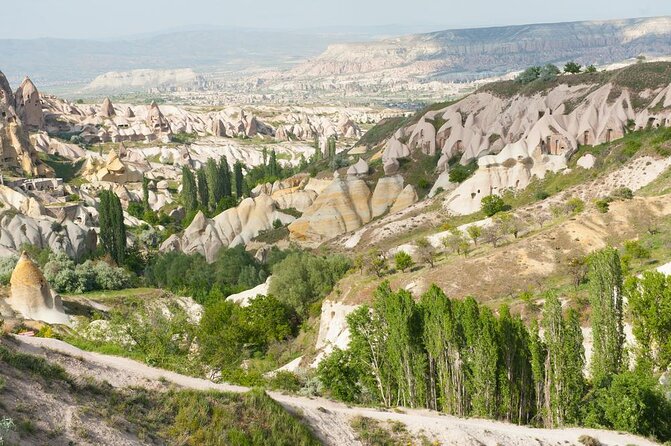
Next is Pasabag (Paşabağ Vadisi / Monks Valley), famous for fairy chimneys formed from ancient lava, ash, and basalt. You get about 45 minutes. It’s one of the stops where the visual impact is immediate, because the shapes are unlike anything else in Turkey.
Avanos: a more local pace
Then you go to Avanos, overlooking the Kızılırmak River. The tour mentions Avanos pottery production as still visible today, and you can visit a pottery workshop (about 1 hour). If you want something practical and hands-on without needing a long explanation, this is a good counterweight to pure archaeology.
Devrent Valley (Imaginary Valley): animal-shaped formations
Finally, you visit Cappadocia Cave Dwellings area described through Devrent Valley (Imaginary Valley), where many rock formations resemble animal shapes. The plan gives you about 30 minutes.
Kaymaklı Underground City and the Red/Rose valley circuit
Kaymaklı Underground City: defense under your feet
On day 10, you start with Kaymaklı Underground City. The plan describes subterranean defense with eight floors, and it notes four floors are open to the public. You’ll spend about 1 hour here, with entrance included.
This stop feels extra memorable because it’s not just “ruins.” It’s evidence of survival strategies—how people adapted to threat. If you like real-world problem-solving in history, this one tends to land.
Red Valley, then the quieter village and views
Next is Red Valley for about 30 minutes, described as good for walking with vineyards and gardens visible through the valley. Then you stop at Cavuşin (Cavusin), described as a Greek village with a 5th-century church of Saint John and views into the Rose and Red Valleys (about 45 minutes).
Pigeon Valley and Love Valley: small, scenic, and specific
Then it’s Pigeon Valley (Guvercinlik Vadisi)—named for the man-made dovecotes carved into soft volcanic tuff, with about 30 minutes. You finish with Love Valley for about 45 minutes, described as an out-of-the-way spot with sunset views and tower-shaped rock formations.
After the tour, you transfer to Kayseri airport for your Istanbul flight.
Price and value: what $3,604.57 actually buys you
At $3,604.57 per person for a roughly 10-day private experience, this isn’t a budget trip. But the value case is strong on what’s included.
You’re paying for:
- private guiding and transport (with parking fees handled),
- all-inclusive entrance fees at listed stops (not just a few),
- lunch included (8 lunches noted),
- and the key flights connected to the route (including the Cappadocia–Istanbul flight connection via Izmir and Kayseri timing described in the schedule).
Also, you can choose from different hotel options, which can help you match expectations to price.
What’s not included:
- hot air balloon in Cappadocia,
- dinners,
- gratuities.
So the best way to judge value is to compare the cost of building this trip yourself—private transport, multiple sites with entrance fees, and the flight legs. If you want the “someone else handles the moving parts” experience while still getting guided, paid entrances, and planned stops, the price starts to look less shocking.
Who should book, and who should rethink it
This tour is a great match if you:
- care about biblical geography tied to places like Ephesus, Smyrna, and the Seven Churches theme,
- want a local guide who connects sites to the text (Umut-style Scripture references in Ephesus are a clear highlight),
- prefer private travel over public group logistics,
- and like a structured route with minimal decision fatigue.
You might want to rethink it if you’re the type who needs lots of downtime or dislikes long travel days. The schedule includes multiple drives (including a noted 3-hour drive after Colossae) plus a steady rhythm of cultural stops.
Also, the tour calls for moderate physical fitness, which is fair given walking through major historic sites and valleys.
Should you book the Turkey Biblical Tour (Private)?
If you want Istanbul, the Aegean Bible sites, and Cappadocia in one coherent story—without spending your vacation managing tickets and transfers—this is the kind of trip that fits. The strongest selling points are the private guiding style (with examples like Umut and Ertunga in reviews), and the fact that so many major entrances are included.
Book it if your ideal vacation includes standing in place while someone explains the meaning of what you’re seeing. Skip it if you want slow travel, lots of free afternoons, or a trip where you can freely ignore the schedule—because this one is designed to keep moving.
FAQ
How long is the Turkey Biblical Tour (Private)?
It’s listed as about 10 days.
Is this tour private?
Yes. It’s a private tour where only your party participates with a guide/driver.
What’s included in the price?
The tour includes private transport, guiding, entrances, parking fees, and lunch (8 lunches), plus Cappadocia–Istanbul flight tickets. Different hotel options are also available.
What is not included?
The plan notes hot air balloon in Cappadocia, dinners, and gratitudes are not included.
How do airport and hotel pickups work?
You meet your group in the hotel lobby or at the airport, depending on where you’re starting.
What language is the tour offered in?
It’s offered in English.
Is free cancellation available?
Yes. You can cancel for a full refund up to 24 hours in advance of the experience’s start time.