REVIEW · ISTANBUL
Istanbul: Whirling Dervish Ceremony next to Hagia Sophia
Book on GetYourGuide →Operated by Cogito Istanbul Seyahat Turizm Bilet Organizasyon Gıda ve Ticaret LTD STI · Bookable on GetYourGuide
Whirling dervishes feel surprisingly close to real Istanbul. I loved that the Sema unfolds in a quiet wooden-house setting beside Hagia Sophia, not in a loud, gimmicky show space. I also loved the live Turkish music plus pre/post explanations, so you’re not just watching spinning—you’re understanding it. The one drawback to plan around: the early spoken intro can be hard to catch if the sound system isn’t perfectly tuned that night.
It lasts about 55 minutes, and the whole atmosphere asks for respectful stillness. You’ll start with instrumental music, then the dervishes enter, and the rhythm builds until the turning looks almost effortless. And yes, you get a simple local drink—tea or sherbet—which makes the experience feel grounded in everyday Istanbul, not frozen in time.
In This Review
- Key things to know before you go
- How a whirling dervish ceremony by Hagia Sophia actually lands
- Getting there near Basilica Cistern: timing that keeps the night smooth
- Inside the wooden-house salon: explanations, audio guide, and the “right mindset”
- The music: classic instruments and why the order matters
- Watching the whirling: how the rhythm builds and what the movements suggest
- The included tea or sherbet: small refresh, local flavor
- Where the value really is: $17 for context, not just a show
- Who should book this and who should skip
- Tips to make the ceremony click for you
- Should you book this whirling dervish ceremony next to Hagia Sophia?
- FAQ
- Where do I meet for the ceremony?
- How early does the gate open?
- How long is the whirling dervish ceremony?
- What’s included in the ticket price?
- Do I need to pay extra for food?
- Is the event wheelchair accessible?
- Is the ceremony suitable for children?
- Is making noise allowed?
- What languages are available for interpretation?
- Can I cancel for a refund?
Key things to know before you go
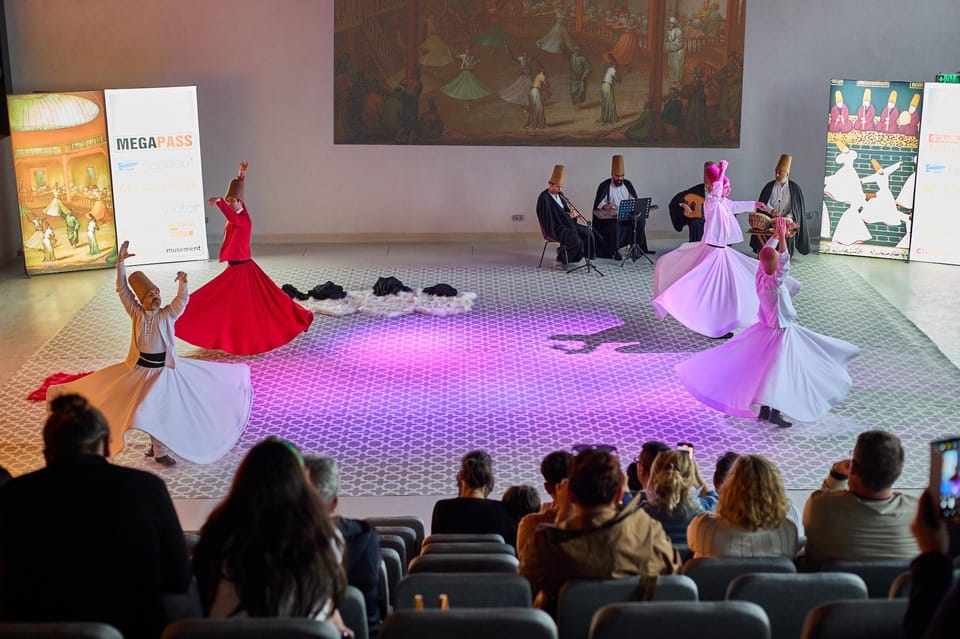
- UNESCO Intangible Cultural Heritage: this is the Sufi ceremony known as Sema.
- Live music from classic instruments: strings, drums, and flutes set the tone from the start.
- A real guide-led flow: a licensed host explains meaning before and after the ritual.
- Smart audio guide in 7 languages: ENG, DE, FR, ITA, RUS, ESP, ARB.
- Silence matters: making noise isn’t allowed, so bring a calm mindset.
- Tea or sherbet is included: a small local touch that helps you come down gently.
How a whirling dervish ceremony by Hagia Sophia actually lands
There are plenty of ways to see Istanbul’s culture, from grand mosques to museums. This is different. The Sema ritual is built to be experienced as worship and reflection, not a “look at this” spectacle.
What I like most about the setting is the emotional contrast. You’re in the center of a city famous for centuries of art and faith, yet the ceremony room itself is made for attention. The sound and the pacing do the work. The whirling isn’t constant chaos—it starts serene, then accelerates as the music and rhythm take over.
Also, you’re not just handed a vague explanation. The organizers include a licensed professional host before and after, plus a smart audio guide in multiple languages. That combination helps you follow the symbolism in real time instead of guessing.
You can also read our reviews of more tours and experiences in Istanbul.


Getting there near Basilica Cistern: timing that keeps the night smooth
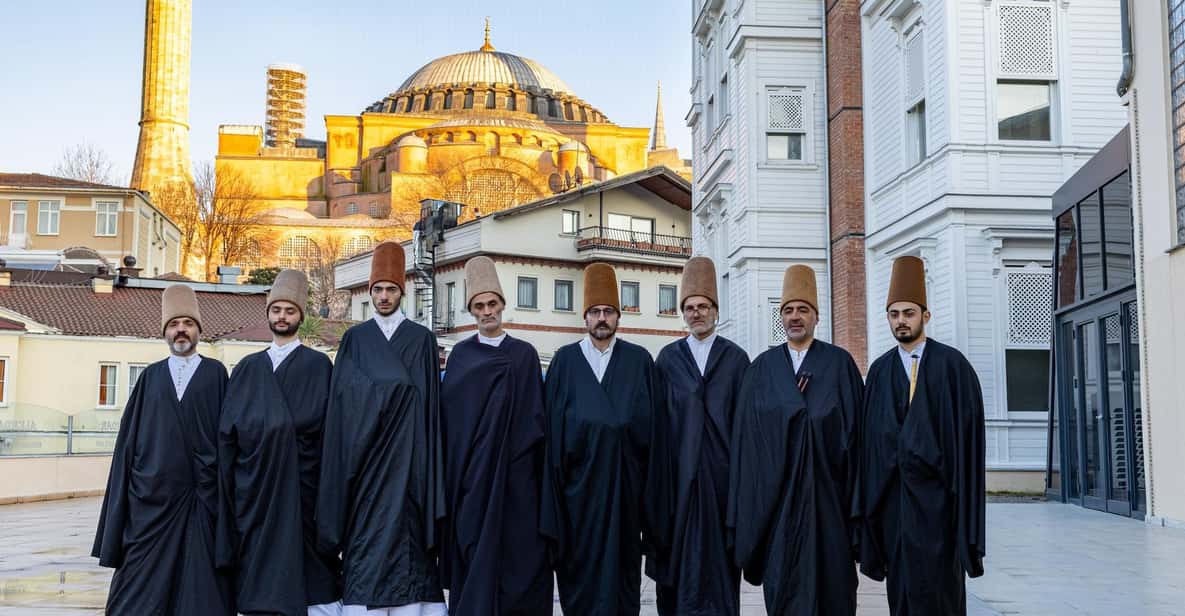
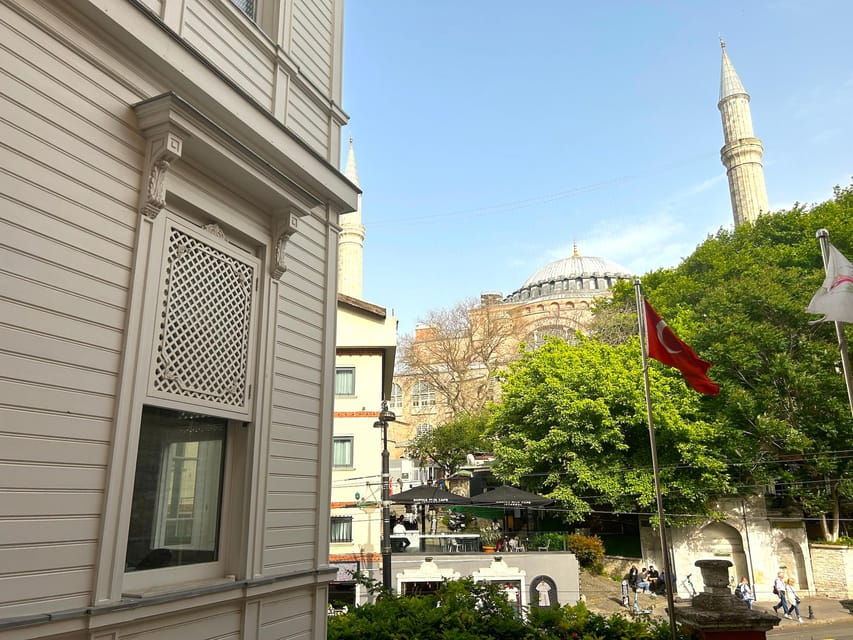
Your meeting point is next to the entrance of the Basilica Cistern. From there, head to the reception desk at the gate of the giant white wooden house. The gate opens about 30 minutes before the ceremony start, so you have time to settle.
This matters more than you’d think. The experience works because you arrive early enough to get oriented, use the restroom (or at least plan to), and quiet your own brain before the prayer begins. Once the ceremony starts, it’s not the moment for late arrivals, phone fumbling, or loud questions.
Practical tip: treat this like a respectful indoor event. If you’re the type who likes to wander 10 minutes after a show begins, switch that habit here.
Inside the wooden-house salon: explanations, audio guide, and the “right mindset”
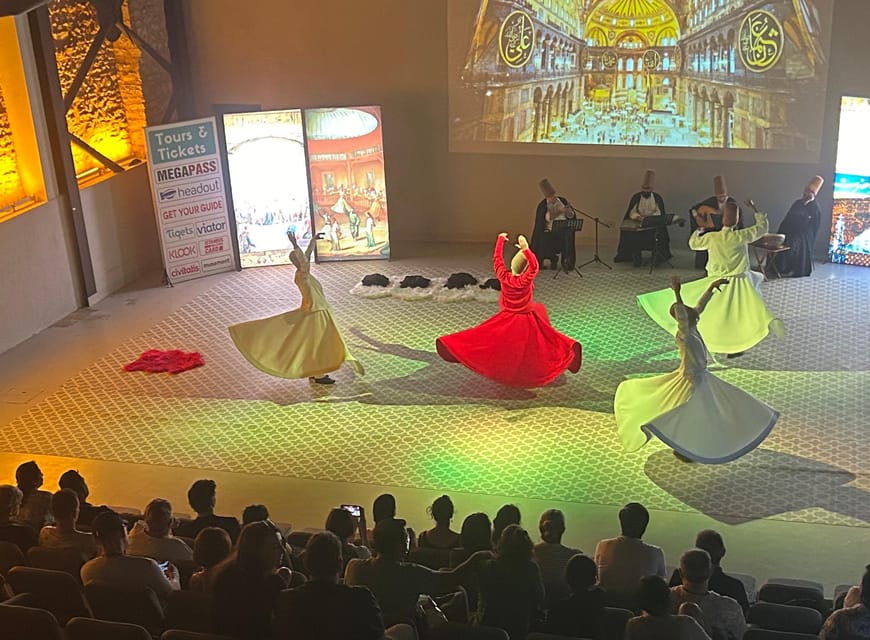
The evening begins in a salon inside a traditional wooden house. The host sets the stage, then you prepare to watch the transcendental prayers of the dervishes.
You’re also given a smart audio guide in seven languages (ENG, DE, FR, ITA, RUS, ESP, ARB). It’s the kind of support that helps if you’re not fluent in Turkish or Arabic chants. Even if you understand some themes already, the guide helps you connect what you’re hearing with what you’re seeing.
And here’s the key rule: silence is important. Making noise isn’t allowed. That means your job is mostly listening—listening to the instruments, the rhythm, and the pauses. One practical annoyance: if you’re expecting constant narration, you might feel like things are slower than a typical “tour performance.” But that slow pacing is part of what makes it work.
If you’re sensitive to sound, know this: a few people found the spoken intro difficult to hear at the start. So if you’re near the back or side seats, pay attention to where the guide is speaking and don’t assume volume will carry everywhere.
The music: classic instruments and why the order matters
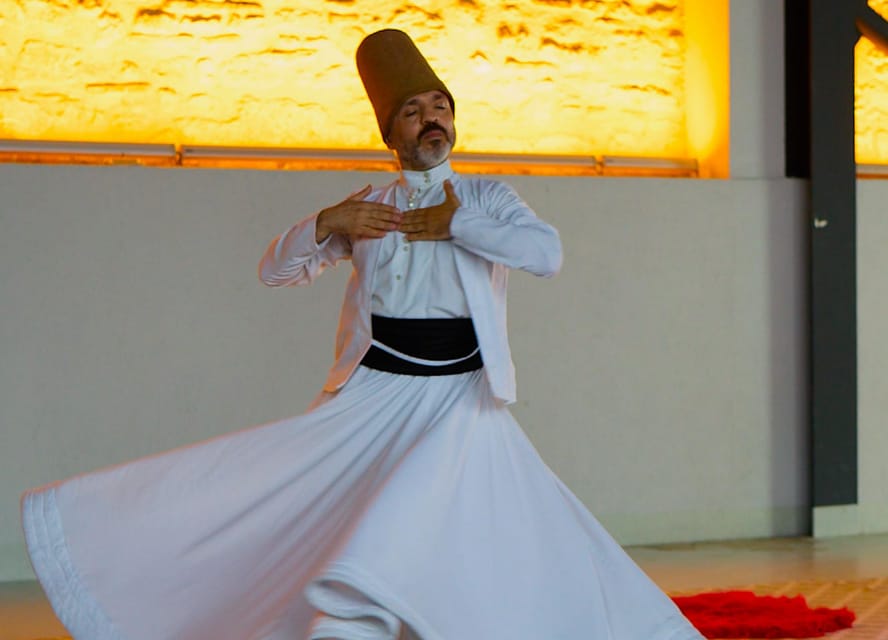
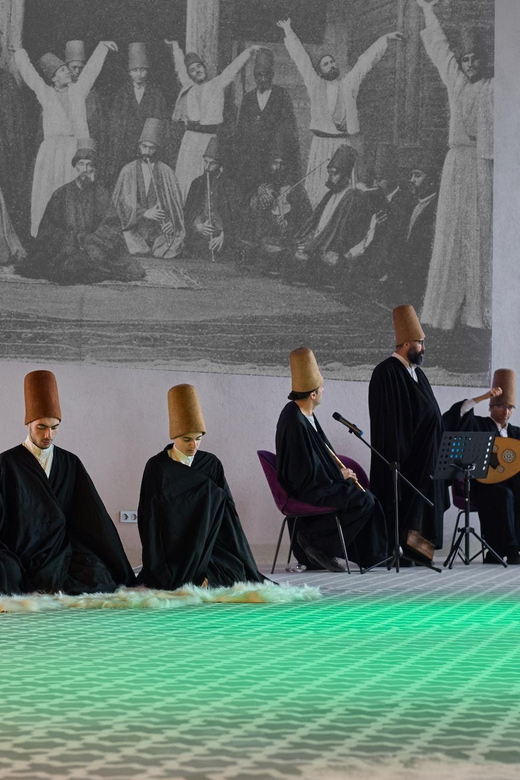
The ceremony starts with instrumental music—traditional sounds using strings, drums, and flutes. This isn’t random background. It’s the setup phase, where your ears adjust to the style of Sufi music and the ritual’s rhythm.
The music pieces are described as compositions from the 1400s through the early 1800s. That time span matters because it tells you this isn’t a modern “stage remix.” You’re hearing material rooted in older musical traditions.
When the music shifts and the dervishes arrive, you can feel the change. Reviews repeatedly describe the experience as meditative and gradual rather than loud and dramatic. That gradual build is exactly why I recommend arriving ready to sit with stillness for a while. If you only half-attend, you miss the meaning of the transitions.
Watching the whirling: how the rhythm builds and what the movements suggest
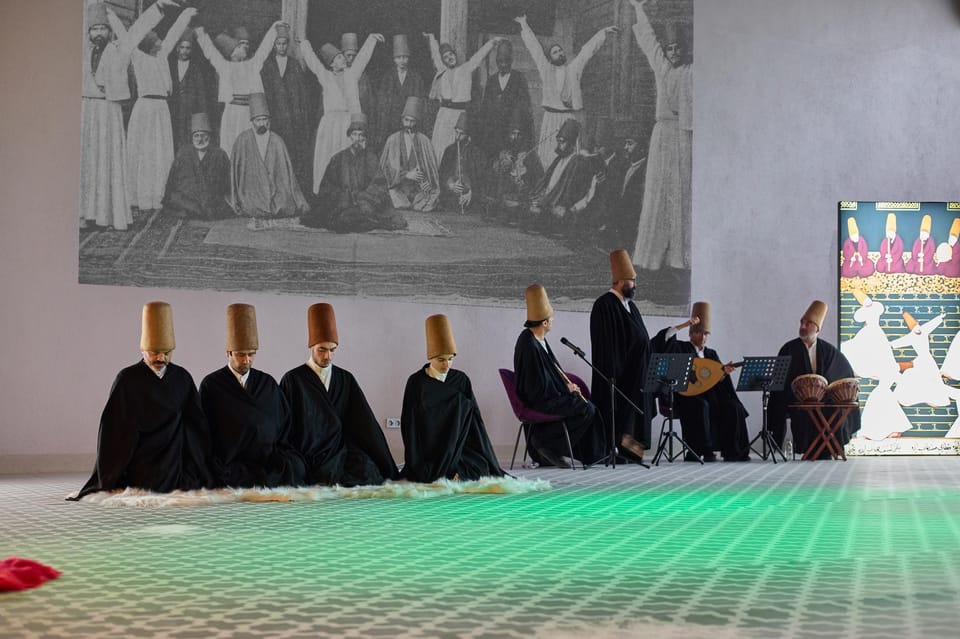
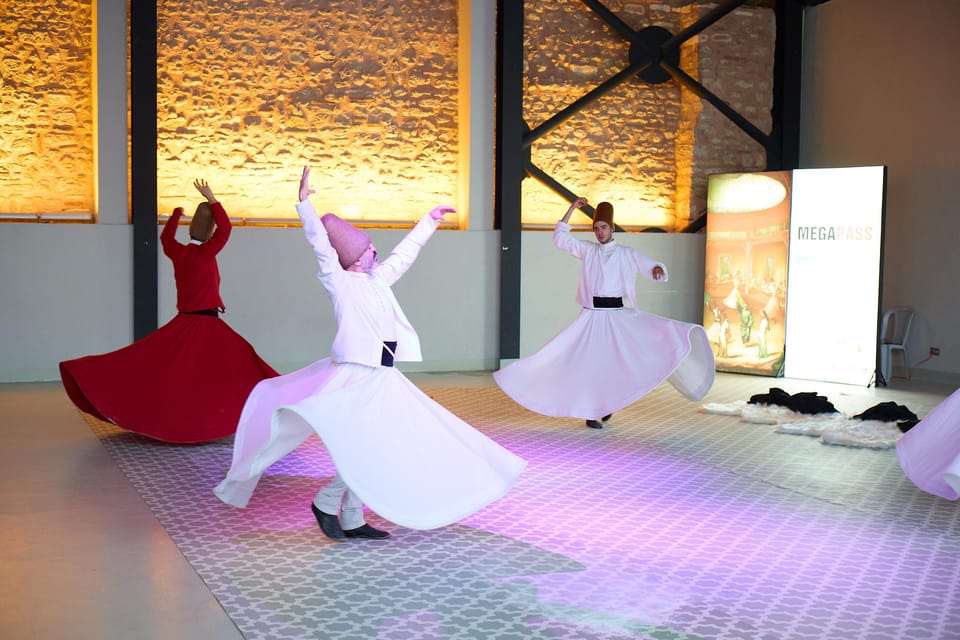
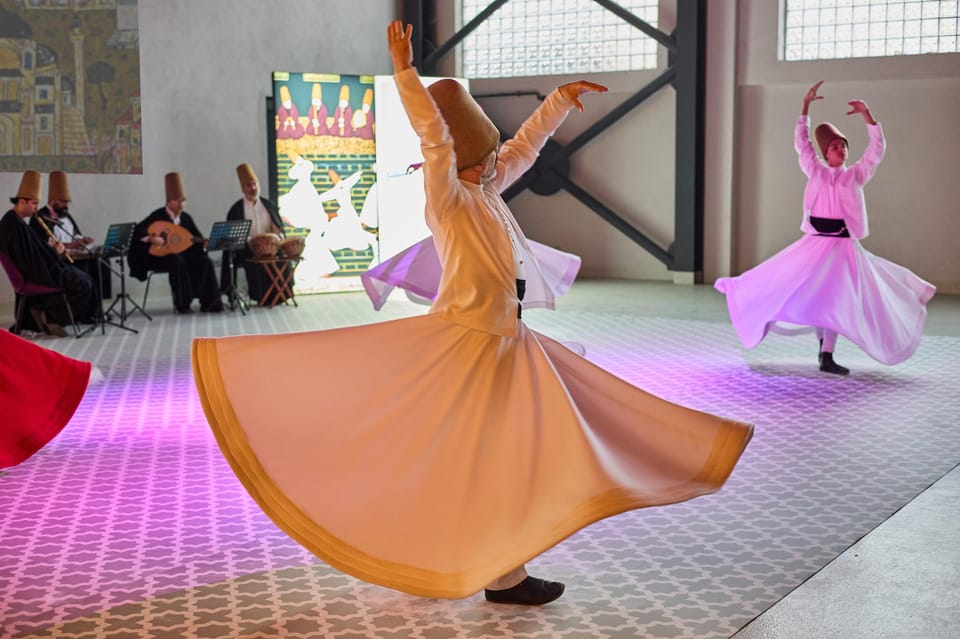
The whirling dervishes enter in serenity, then the motions accelerate according to the rhythm. In practice, that means the early part can feel almost calm and controlled, and the later part looks more kinetic—without turning into chaos.
There’s also a strong symbolic layer to what you see. The ceremony is explained as a mystical journey toward unity and divine love. The turning represents movement and the idea of letting go of the ego. Specific gestures carry meaning too, like one hand lifted toward the heavens and the other pointing toward the earth.
Even if you don’t catch every word of the chanting, the body language and the musical structure communicate a lot. This is one of those cultural experiences where understanding comes from more than translation—it comes from rhythm, repetition, and focus.
How long should you expect to sit still? About 55 minutes total. It’s short enough that you won’t feel trapped, but long enough that the pacing can actually “take.” If you’re expecting a quick photo stop, you’ll likely be disappointed.




The included tea or sherbet: small refresh, local flavor
About the middle-late portion of the experience, you’ll have a chance to try a local drink of the day, choosing between tea or sherbet (plus water). It’s included, so you don’t need to hunt for a café afterward.
This isn’t just a snack break. It’s a gentle cultural landing. After the quiet and concentration of the ritual, having something warm or sweet in hand helps you transition back to regular Istanbul.
If you’re the type who likes to keep energy stable during long evenings, this is a smart inclusion. If you skip it, you’ll still be fine—but it makes the night feel cared for in a very human way.
Where the value really is: $17 for context, not just a show
At $17 per person, this is priced like a cultural admission, not a luxury night out. The big value isn’t only that you’re seeing whirling dervishes. It’s that you’re getting context—live explanation plus a multi-language audio guide.
And there’s another factor that changes the math. The organization behind the ceremony is tied to an arts center and uses ticket income to support scholarships. So your money isn’t only paying musicians and space—it’s also feeding longer-term cultural work.
Compared to many Istanbul “evening events,” where you pay for spectacle and little meaning, this feels more like paying to understand something. Even if you don’t think you’re “a Sufism person,” the structure gives you enough entry points to connect with what’s happening.
Who should book this and who should skip
This is best for you if:
- you enjoy cultural rituals with quiet attention
- you want context, not just visuals
- you like live music and symbolic meaning
- you’re comfortable sitting for about 55 minutes without constant activity
You might skip it if:
- you want an action-packed performance with lots of spoken narration throughout
- you have trouble with respectful silence (there’s a clear “no making noise” rule)
- you’re coming with very young children (it’s not suitable for children under 2 years)
One more honest point: some people come in thinking it will be entertaining like a concert. It isn’t that. It’s a genuine religious ceremony, and the atmosphere is part of the message. If that matches your taste, you’ll likely feel moved. If it doesn’t, it can feel slow.
Tips to make the ceremony click for you
A whirling dervish ceremony rewards preparation in small ways:
- Keep your phone away during the ritual. Distractions pull you out of the rhythm.
- Arrive early enough to settle. The gate opens 30 minutes ahead, and that time helps you avoid stress.
- Use the restroom before or after. The guidance is clear that you should take care of it around the ceremony time.
- Watch the transitions. The ceremony builds. If you only focus on the fastest whirling, you’ll miss how the earlier music prepares you.
- Let the silence work. This is the opposite of a “talk over the event” night.
If you’re especially curious, you can also do a little reading beforehand on themes like Rumi and the role of Shams Tabrizi—people often report that prior knowledge makes the experience hit harder. But it’s not required. The host explanations and audio guide are there for a reason.
Should you book this whirling dervish ceremony next to Hagia Sophia?
Yes—if you want something genuinely cultural, calm, and meaningful, this is a strong choice. The price is fair for what you get: live music, a guided explanation, a multi-language audio guide, and a included local drink. Most importantly, the format respects the ritual.
Skip it if you’re only in Istanbul for fast, loud entertainment. The ceremony is spiritual and intentionally paced. Give it room to work on you, and you’ll come away with a memory that feels more like an experience than a ticket.
FAQ
Where do I meet for the ceremony?
Meet your host next to the entrance of the Basilica Cistern. The reception desk is at the gate of the giant white wooden house.
How early does the gate open?
The gate opens 30 minutes before the ceremony starts.
How long is the whirling dervish ceremony?
The duration is about 55 minutes.
What’s included in the ticket price?
You get entrance to the ceremony with live music and the authentic ritual, a local traditional drink of the day (tea or sherbet) and water, and a smart audio guide with languages including ENG, DE, FR, ITA, RUS, ESP, ARB.
Do I need to pay extra for food?
No. Food and other drinks are not included.
Is the event wheelchair accessible?
Yes, it is wheelchair accessible.
Is the ceremony suitable for children?
It is not suitable for children under 2 years.
Is making noise allowed?
No. Making noise isn’t allowed, and silence is important.
What languages are available for interpretation?
The live tour guide language is English, and the smart audio guide is available in seven languages: ENG, DE, FR, ITA, RUS, ESP, ARB.
Can I cancel for a refund?
Free cancellation is available up to 24 hours in advance for a full refund.