REVIEW · ISTANBUL
Istanbul: Topkapi Palace & Harem Tour Skip-the-Line Ticket
Book on GetYourGuide →Operated by Istanbul Tourist Pass® · Bookable on GetYourGuide
Topkapi can feel like a maze. This skip-the-line guided tour helps you walk straight to the palace’s big ideas, then powers you through the Harem Section where Ottoman court life gets real. You’re not just looking at rooms; you’re learning how the palace functioned for centuries, from the sultan’s public-facing spaces to the private quarters tucked behind walls.
Two things I like a lot: first, you save real time with the skip-the-line ticket, which matters because Topkapi’s queues can be brutal. Second, a live English guide gives you the story arc you’d otherwise miss—Audience Hall, key courtyards, and the treasury areas make more sense when someone connects the dots. One possible drawback: this is a guided experience only—there’s no unguided entry with this setup, and you’ll need an ID card for the mandatory headset.
In This Review
- Key things to know before you go
- Why Topkapi works better with a guide than on your own
- Skip-the-line ticket: the time saver you’ll actually feel
- What the “guided + explore” flow looks like
- Entering Topkapi: four main courtyards and the palace layout
- Audience Hall, high court, and treasury: what to look for
- Audience Hall
- High court and treasury
- Exhibits you’ll see in the mix
- The Holy Relics Chamber: the story behind the objects
- The Harem Section: private Ottoman life in named spaces
- Hagia Irene and the Golden Horn/Bosphorus viewpoints
- How the headset and ID card setup works (and why you should plan ahead)
- Group size, pace, and what to do if the palace feels crowded
- Value and price: is $73 worth it?
- Who should book this tour (and who might not love it)
- Should you book the Topkapi Palace & Harem skip-the-line tour?
- FAQ
- How long is the tour?
- Is the skip-the-line ticket for Topkapi Palace only, or does it include the Harem?
- Can I visit Topkapi without a guide?
- What languages are available?
- Do children need to bring anything special?
- What happens with the headset?
- What should I bring or arrange for transportation?
Key things to know before you go
- Skip-the-line entry helps you get past the worst of the crowd crush.
- Live English guide turns Topkapi from a “pretty building” into a functioning palace.
- Harem access (for this option) lets you see the private Ottoman world, including major named areas.
- Big views: plan for windows and viewpoints aimed at the Golden Horn and the Bosphorus.
- You’ll use a headset, which requires your ID card during the tour.
Why Topkapi works better with a guide than on your own
Topkapi Palace is huge, and that’s not marketing fluff. It’s a palace-complex layout with courtyards, halls, display rooms, and lots of small “stop and read” moments. Without a plan, you can burn energy wandering and still miss the sections that make the whole place click.
That’s where this tour earns its keep. The guide leads you through the main courtyards and signature areas like the Audience Hall, the high court, and the treasury. You also get help prioritizing, so you’re not stuck deciding what matters while other people surge past you. Once the guided part finishes, you typically get time to roam—so you can linger where your interests pull you.
If you’re the type who likes seeing the top highlights and understanding what you’re looking at, the structure of this tour is a smart match.
You can also read our reviews of more tours and experiences in Istanbul



Skip-the-line ticket: the time saver you’ll actually feel

The ticket is built around skip-the-line hosted entry for Topkapi Palace and the Harem section. Translation: you’re not standing in the longest queue just to get inside the complex. That’s the real value here. Topkapi is popular, and the most annoying time waste is at the start—before you can even orient yourself.
A good skip-the-line ticket is also about momentum. With the guide, you don’t just get past the gate—you get pulled into the palace plan right away. Several guide-led visits run smoother when the group stays together during the entry checks, the first orientation, and the “where do we go next” phase.
One practical note: the meeting point can vary based on the option you book. Build in a little buffer so you’re not sprinting across Sultanahmet while everyone else is already lined up.
What the “guided + explore” flow looks like

This tour combines a live guide with an audio guide. You’ll be asked to use a headset during the tour, and your guide will manage the group pacing. Some visits run with a shorter guided sweep, then you’re free to explore sections at your own speed.
What matters is how that setup changes your experience:
- During the guided part, you get the context that makes exhibits and room layout understandable.
- After that, you can slow down for the displays that catch your eye—porcelain, weapons, textiles, relic items, and anything else that draws you in.
In the palace, attention is everything. The difference between “I saw stuff” and “I get it” is usually 10 minutes of explanation at the right spot. This format aims to give you that.
Entering Topkapi: four main courtyards and the palace layout
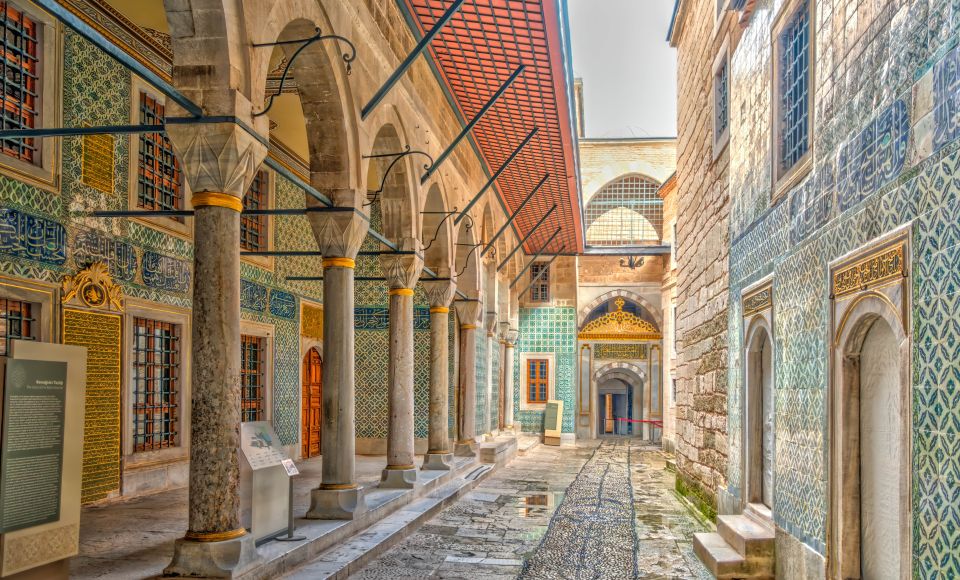
Topkapi is often described as a “palace,” but it behaves like a small city—public spaces, administrative spaces, and private zones that were never meant to be mixed together. The tour’s route focuses on that big picture by taking you through the main courtyards.
You can expect stops that cover:
- Key courtyards that structure movement through the complex
- The Audience Hall, tied to how the Ottoman court presented power
- High court and treasury areas that shift the feel from ceremony to administration and display
When you walk these courtyards with a guide, you start noticing the logic: where the eye is supposed to go, where people would gather, and how the spaces separate roles. Even if you’ve seen photos of Topkapi, the palace’s scale and the way buildings frame sightlines can surprise you.
Audience Hall, high court, and treasury: what to look for
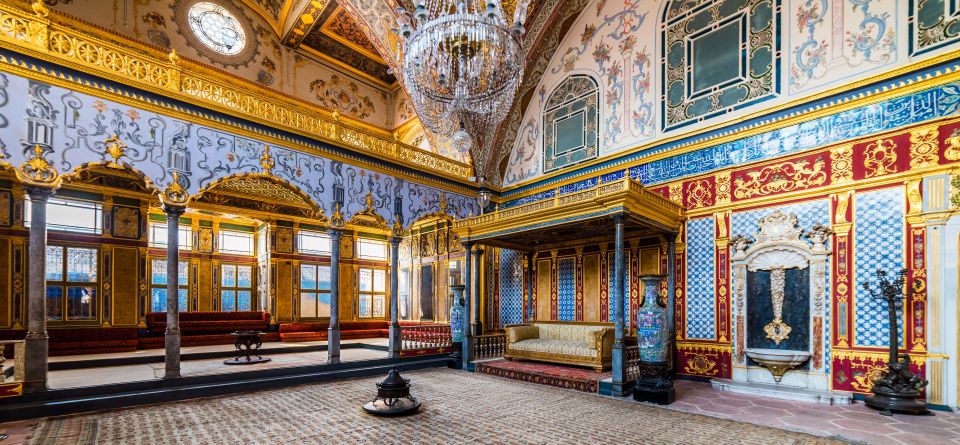
This is one of those tours where the “highlight list” is actually a useful checklist—because these are the places where the story becomes concrete.
You can also read our reviews of more tours and experiences in Istanbul





Audience Hall
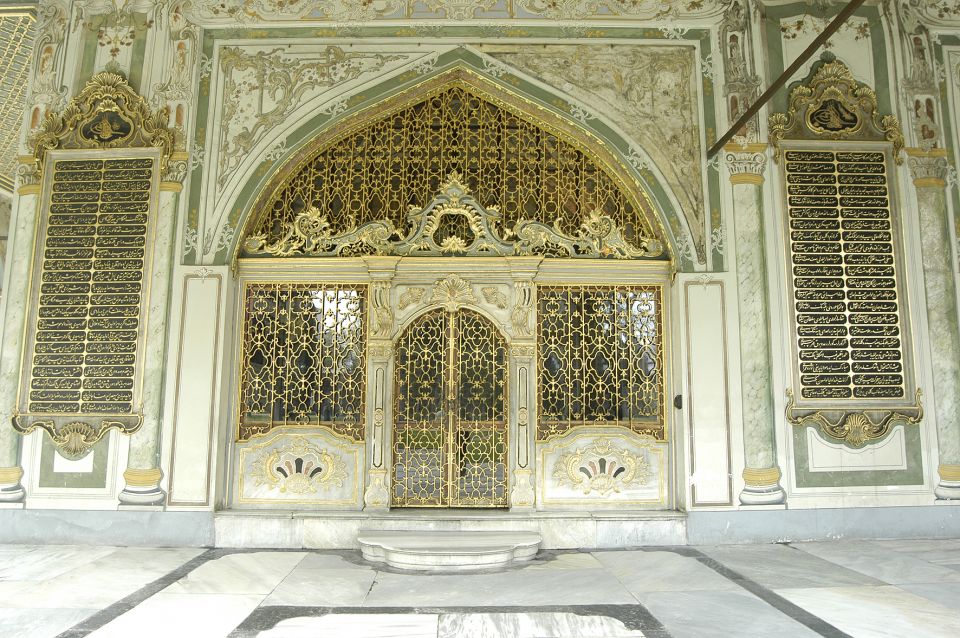
The Audience Hall is where you’re meant to grasp the performance of rule. It’s not only impressive architecture; it’s also the idea that authority had a stage. If you care about political history, this is where the palace starts talking back.
High court and treasury
The high court and treasury areas shift the mood toward governance and the palace’s wealth. The treasury displays connect to the court’s material power—objects that weren’t just decorative, but symbols of status and control.
Exhibits you’ll see in the mix
Topkapi’s collections are famously varied. This tour setup highlights major categories so you don’t just float through rooms:
- Weapons of the Ottoman army
- Fabrics and textiles
- Jewels and decorative arts
- Chinese and Japanese porcelain, which stands out in the collection
That porcelain detail matters. It’s an easy “wow” moment that also hints at Ottoman connections beyond the region—trade, collecting, and the way courts showcased global reach.
The Holy Relics Chamber: the story behind the objects
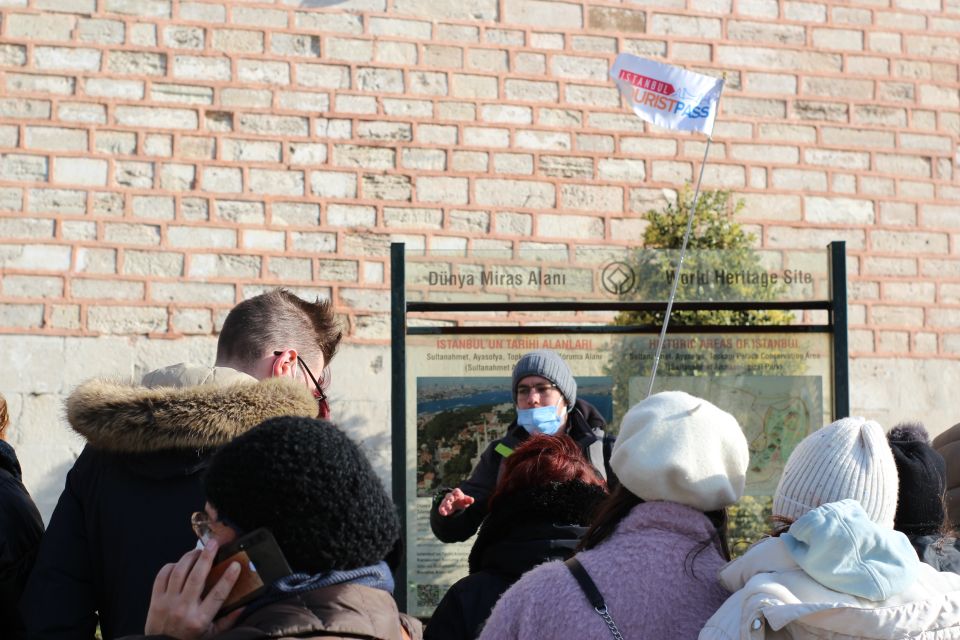
One section that people tend to remember is the Holy Relics Chamber. It’s described as containing personal items associated with important figures, including items attributed to the Prophet Muhammad, the staff of Moses, and the sword of David.
This is the kind of place where the object isn’t only the object—you’ll get explanation about why it was kept, what it meant for the palace, and how such relic collections fit into Ottoman religious and imperial identity. If you’re curious how faith and rule were intertwined in the palace world, this stop is a solid payoff.
Even if you’re not religious, you’ll still likely feel the weight of the display. It’s a reminder that Topkapi wasn’t just a home; it was a center of symbolic authority.
The Harem Section: private Ottoman life in named spaces

The Harem at Topkapi served as the private residence for Ottoman dynasty members and elite women for centuries. In this option, you can access the Harem section with skip-the-line hosted entry.
This part is often the difference between a generic palace visit and a memorable one, because the Harem isn’t presented as a single room. It’s a full complex. You’re looking at Ottoman opulence from the 16th to the 19th centuries, across many spaces.
What you’ll hear and see includes:
- Over 300 rooms
- Nine baths
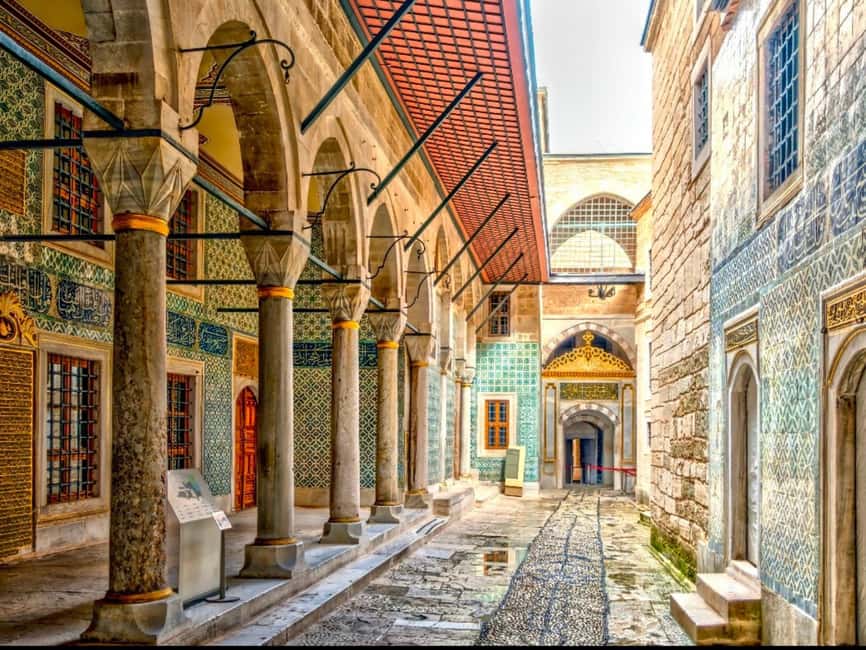
- Two mosques with exquisite tilework
- Named structures such as the Privy Chamber of Murad III
- The Twin Kiosk / Apartments of the Crown Prince
The “named spaces” angle is key. When someone points out the Privy Chamber of Murad III, it turns architecture into story. You start noticing design choices that communicate hierarchy and privacy.
It’s also common to spend a chunk of time in the Harem area, then get time afterward to wander more freely. That mix works well because your attention may spike when you see certain interiors—then you’ll want to stand, look, and absorb.
Hagia Irene and the Golden Horn/Bosphorus viewpoints

One highlight includes Hagia Irene, described here as the second biggest church of Istanbul. You may also get the sense that Topkapi’s outdoor spaces weren’t only for walking—they were for looking outward.
This is where the views matter. The palace offers breathtaking sightlines over the Golden Horn and Bosphorus. A guide helps because they can point out where to stand and what landmarks you’re seeing, so you don’t just get a pretty background—you get a mental map.
If you’re short on time, prioritize viewpoints after the most indoor-heavy sections. Indoors can drain your energy; outdoor breaks help you reset.
How the headset and ID card setup works (and why you should plan ahead)

This tour requires guests to use a headset during the guided portion. For that reason, you’ll be asked to bring your ID card. The ID card is taken during headset use and returned at the end of the tour.
That’s not a deal-breaker, but it is a real logistics detail. Don’t assume you can use a passport instead. Bring the correct ID card as directed, and keep it accessible on arrival.
Also, the tour has a clear rule: the attraction cannot be visited without the guide. So if you’re thinking about splitting off to “handle one thing fast,” don’t. Stay with the group so you don’t lose access to the guided entry flow.
Group size, pace, and what to do if the palace feels crowded
Topkapi crowds can make any plan feel chaotic. The good news is the guided structure helps you cut through confusion. Several guides have been praised for clear communication and pace—names like Augusto, Furkan, Oguzhan (Oğuzhan), Mehmet, Elke, Sedat, and Gustaf show up in guide feedback. You won’t know which guide you’ll get until you’re there, but the consistent theme is that a strong guide improves navigation and meaning.
Here’s how you personally can make a crowded palace work:
- Keep your eyes moving during transitions; don’t stop dead unless you’re at a real point of interest.
- Save your questions for when you’re not blocking the path—guides can answer fast when the group can still flow.
- If you’re a slow walker, aim for earlier time slots when possible, and don’t try to see everything end-to-end.
If the pace feels fast, it’s usually because the palace demands movement. The headset helps—so pay attention to the guide’s directions, then check off the “must-sees” with your own eyes.
Value and price: is $73 worth it?
At $73 per person, the big question is what you’re paying for. You’re not just paying for entry. You’re paying for:
- Skip-the-line hosted entry
- Live English guide
- An audio guide
- A ticket that includes Topkapi and the Harem section (for this option)
- Internet with eSIM (limited time), which can be handy for maps and messaging
Is it worth it? For me, it’s worth it if you want two things: fewer wasted hours in queues and more meaning from the sights. Topkapi is one of those places where “cheaper and self-guided” can turn into “spent, but not satisfied,” especially if you don’t know where the Audience Hall, treasury, and relic areas fit into the bigger story.
If you’re the kind of traveler who loves details and hates navigation stress, the guide pays you back quickly. If you prefer total independence and you’re comfortable exploring historic sites on your own without needing a route, then you might consider whether this format feels too structured.
Who should book this tour (and who might not love it)
This tour suits you best if:
- You want major highlights without getting lost in the scale.
- You like a clear story told while you walk.
- You care about the Harem experience specifically, not just the palace exterior.
- You’ll appreciate architecture plus explanation, not architecture in isolation.
You might not love it if:
- You want to wander freely from the start with no guide constraints.
- You dislike being tied to a group pace.
- You don’t want the headset/ID-card hassle.
A good middle ground is to treat the guided portion as your “orientation and must-sees,” then use your free time afterward to go deeper where your curiosity takes you.
Should you book the Topkapi Palace & Harem skip-the-line tour?
If your goal is to get the most out of Topkapi without losing time to queues, I think you should book this. The skip-the-line entry plus a live English guide is a practical combo, and it’s especially useful at a site this big. The Harem section adds major value because it’s a defining part of Topkapi’s appeal, not a side note.
One final decision tip: check your day. Topkapi Palace is closed only on Tuesdays, so if you’re traveling then, you’ll need a backup plan.
If you like order, context, and efficient sighting, this is a strong way to do one of Istanbul’s most important palace experiences.
FAQ
How long is the tour?
The duration ranges from 20 minutes to 3 hours, depending on the starting time you select.
Is the skip-the-line ticket for Topkapi Palace only, or does it include the Harem?
This activity includes a skip-the-line hosted entry ticket for Topkapı Palace and the Harem section.
Can I visit Topkapi without a guide?
No. This attraction cannot be visited without the guide.
What languages are available?
The live tour guide is in English.
Do children need to bring anything special?
Yes. All children will be asked to present their valid passports at the museum entrance to validate their age.
What happens with the headset?
It’s mandatory to use a headset during the tour. You should bring your ID card, and your ID card will be taken during headset use and returned at the end of the tour.
What should I bring or arrange for transportation?
Transportation to the meeting point is not included, so you’ll need to get there on your own.