REVIEW · ISTANBUL
Istanbul-St Sophia,Blue Mosque,Hippodrome Guided Tour
Book on GetYourGuide →Operated by All Tours Istanbul · Bookable on GetYourGuide
This walk maps Istanbul’s power in 3 stops. From the Hippodrome area to the Blue Mosque and Hagia Sophia, you get a guided route through layers of Byzantine and Ottoman Istanbul. It’s a shared walking tour that keeps moving, but never feels like a cattle line.
I love the professional, licensed English-speaking guide and the way the story connects each stop. I also love the concrete details you can actually spot yourself: the Iznik tiles on the Blue Mosque, and the marked-down footprint of the Hippodrome chariot-racing track.
The main consideration is that access can be a timing wildcard: Hagia Sophia entry is not guaranteed, and both mosques can close last minute without notice.
In This Review
- Key takeaways before you go
- Starting at the Hippodrome obelisk: how to avoid confusion
- Sultanahmet Square and the Hippodrome: chariot racing, now 2 meters down
- A guided palace-style stop: the Ottoman and Byzantine story in one walk
- Blue Mosque (Sultan Ahmed Mosque): what to focus on in 60 minutes
- Common timing reality
- Hagia Sophia: Church of Holy Wisdom, and why lines matter
- Mosques, security, and last-minute closures: your real checklist
- Guide quality and group flow: what you’re likely to experience
- Price and value: is $41 for 3 hours a fair deal?
- Who should book this tour
- FAQ
- FAQ
- How long is the Istanbul–Hagia Sophia, Blue Mosque, Hippodrome guided tour?
- Where do I meet the guide?
- Is hotel pickup included?
- Are entry fees included in the price?
- Is entry into Hagia Sophia guaranteed?
- What should I bring for the tour?
- Do women need a headscarf?
- Should you book this tour?
Key takeaways before you go
- Hippodrome clues you can see now: the chariot track is about 2 meters below ground, but the old course is marked on today’s paving around Sultanahmet Square.
- Real objects, not just stories: you’ll look for the surviving obelisks, the Serpentine Column from Delphi, and the German Fountain of Wilhelm II.
- Blue Mosque focus in one guided stretch: you get to admire the minarets and the famous Iznik tile work, with time to look rather than only stand at a gate.
- Hagia Sophia is big, and lines can affect it: the plan is a guided visit, but long lines mean entry can fail even if you’re there early.
- Group start can be messy: the meeting area has many tour departures close together, so your early arrival matters.
Starting at the Hippodrome obelisk: how to avoid confusion
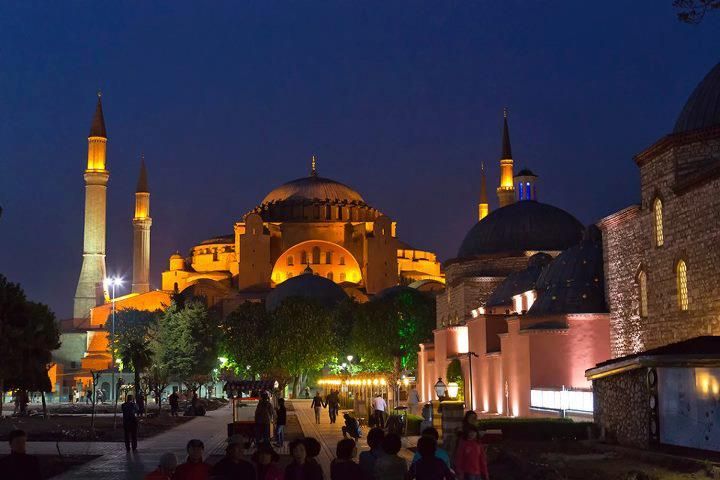
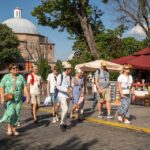
Your meeting point is in Sultanahmet at Marmara Universitesi Rektörlük, opposite the Hippodrome obelisk. The guide will be holding a flag with the All Tours Istanbul logo, so scan for that exact flag when you arrive.
Arrive 10–15 minutes early. This part is not about “being punctual for fun.” It’s about getting sorted before the crowd churn begins, since this area sees a lot of groups starting around the same time. If you show up right on the hour, you might lose time just figuring out which group you’re with.
One practical tip: if you end up delayed finding the flag, quick communication helps. In at least one case, coordination via WhatsApp worked well to get people back on track.
You can also read our reviews of more guided tours in Istanbul


Sultanahmet Square and the Hippodrome: chariot racing, now 2 meters down
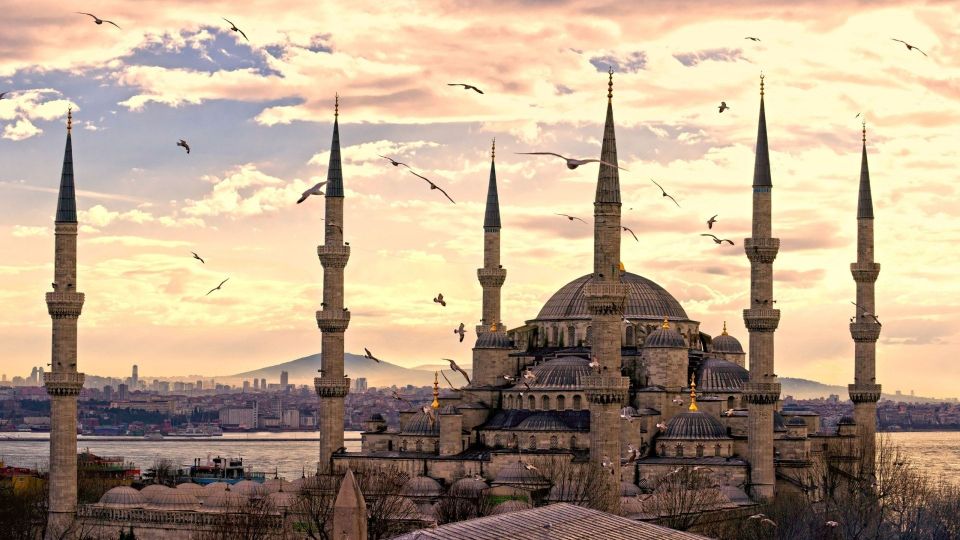
The tour moves through Sultanahmet Square with a guided explanation of what this ground once represented. The big idea here is simple: the Hippodrome wasn’t a museum room. It was the energy engine of Roman-and-Byzantine public life—where chariots raced and crowds gathered.
Here’s what makes this stop feel real. The actual track is now around 2 meters (6.6 feet) below ground, because of centuries of rebuilding and layers of Istanbul. But the course is marked right on the paving so you can stand where those events were once staged. You’re not just hearing about it; you can follow the line on the ground.
Your guide points out key monuments tied to the spectacle:
- Surviving obelisks left as trophies and symbols of power
- The Serpentine Column from Delphi
- The Byzantine German Fountain of Wilhelm II
Even if you’re not a history nut, this makes the time period click. You start understanding why rulers cared so much about public entertainment: it was politics in motion, watched by people who could influence the mood of the city in a single day.
A guided palace-style stop: the Ottoman and Byzantine story in one walk
Between the Hippodrome area and the mosque complex, you’ll get a guided look at a historical palace stop with a local perspective. The benefit of this in a short tour is that you don’t treat the sites like separate postcards.
Instead, you get a storyline that helps you connect what you’re seeing. Istanbul changes hands, languages shift, architecture evolves, and yet the same power centers keep resurfacing in new forms. That makes your mosque visits more meaningful, not just prettier.
Blue Mosque (Sultan Ahmed Mosque): what to focus on in 60 minutes
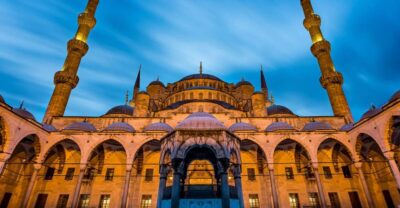
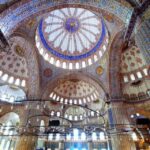
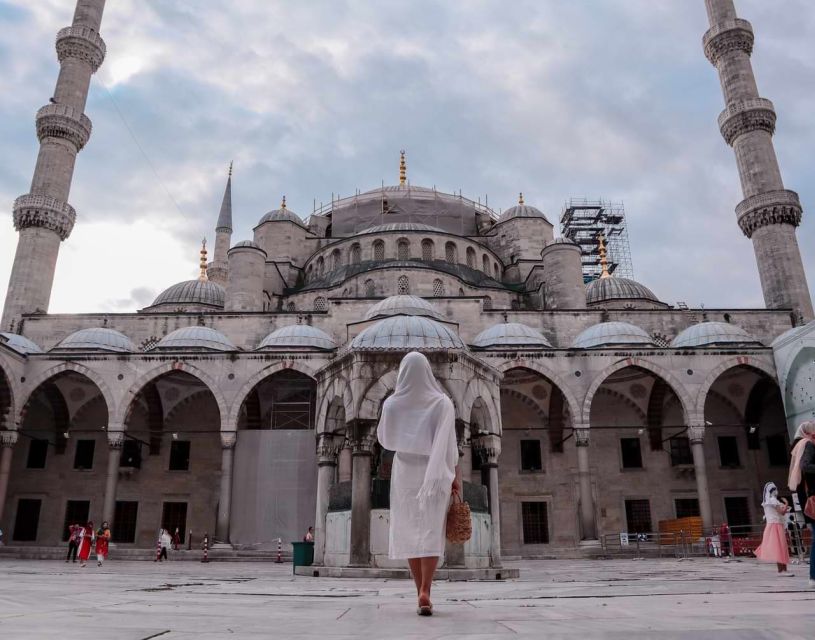
The Blue Mosque is named for its famous decoration using Iznik tiles, and your guide’s job here is to help you read the design. You’ll have around one hour for the guided visit, which is enough time to do two things most people skip:
1) Look closely at the tile work
2) Understand what you’re looking at before you go home
Start by training your eyes on the overall effect of the interior surfaces. The tiles create a repeating pattern of color and detail that makes the space feel more “designed” than you might expect. Then look upward toward the structure and the slender minarets—it helps you see why this mosque became such a signature of the skyline around Sultanahmet.
Because it’s a functioning mosque, there are practical rules. Women must carry a headscarf, and you’ll also pass through airport-style security. Plan your clothing accordingly and keep your bags minimal. Large luggage isn’t allowed, and it’s smart to keep items simple so you aren’t juggling stuff during security.
Common timing reality
One caution based on how this tour runs: mosque hours can be unpredictable. On some days, you might only get partial access or brief info if a mosque is closed unexpectedly. It’s rare, but it’s real—so don’t plan an inflexible itinerary around this one stop.


Hagia Sophia: Church of Holy Wisdom, and why lines matter
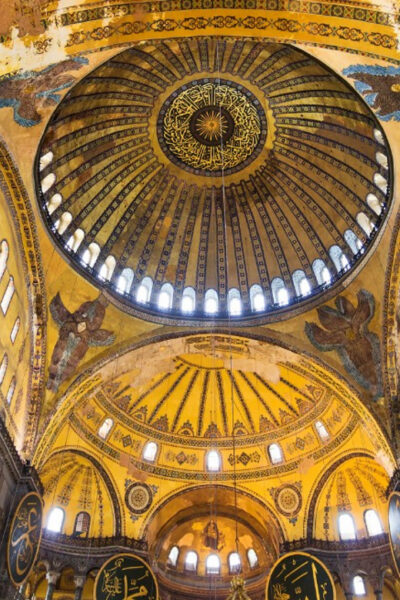
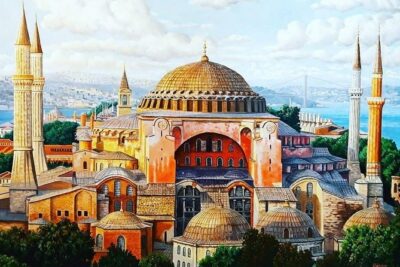
Next is Hagia Sophia, also known as the Church of Holy Wisdom. The guide frames it as one of the world’s most influential architectural creations, shaped by centuries of use and interpretation.
You’ll hear the big claim that the building was so richly decorated that Justinian is said to have surpassed Solomon. Even if you’ve heard that story before, the guided context changes how you process it. The place is not only beautiful; it’s also a visible statement of imperial ambition.
Here’s the key practical part for your planning: entry into Hagia Sophia is not guaranteed because of long lines. The tour is designed to include a guided look, but your ability to go inside can depend on queue conditions that day.
So what should you do when this happens?
- If you’re allowed inside, treat it like a “slow read,” even in a guided setting.
- If access is delayed or limited, use the time to focus on the exterior context and the guide’s architectural explanations, so you still get value even without full entry.
The tour description also suggests the experience begins with Hagia Sophia from outside, and then entry may or may not happen. This is why arriving early and managing your time matters. If you lose time at the meeting point, you can end up paying the price later when lines are the bottleneck.
Mosques, security, and last-minute closures: your real checklist
This is a short tour, so the friction points are the places where rules and crowds show up:
- Airport-style security applies to visitors
- Long lines can block or delay entry at Hagia Sophia
- Both Blue Mosque and Hagia Sophia are functioning mosques, so they can close last minute without notice
That last point is not meant to scare you—it’s meant to help you plan. If one site is closed, your guide may adjust the emphasis, which can make the tour feel different than expected.
Also keep these non-negotiables in mind:
- Bring passport or ID card
- Wear comfortable shoes
- Bring sunglasses and a camera if you like photos
- Avoid pets and luggage/large bags
Finally, Istanbul traffic can be rough. The tour notes you can’t join once it starts, so if you’re taking a pickup option, be ready on time.
Guide quality and group flow: what you’re likely to experience
This tour’s biggest strength is the guided layer. The guide is described as licensed and focused on Byzantine history, art, and architecture, and that matches how the best versions of this experience play out: clear explanations, steady pacing, and stops long enough for you to look.
In one positive booking, the group was small—just a few people—and the tour felt relaxed, with lots of explanations and no rush. In another case, people described it as professional and well organized.
But there are also red flags to know about. One booking felt disappointing because the Blue Mosque was closed that day, which shrank the value of the itinerary. Another issue was frustration at the start because many groups begin around the same area, which pushed the start time later than expected.
And there’s an outlier risk: if you end up placed into the wrong group, you might miss what you paid for. To protect yourself, double-check your confirmation details before you leave the hotel, and be ready to contact the guide quickly if the flag match is unclear.
Price and value: is $41 for 3 hours a fair deal?
At $41 per person for about 3 hours, you’re paying for three things:
1) A licensed English guide
2) Time spent at multiple major sights
3) The ability to understand what you’re seeing without doing all the research yourself
If everything runs smoothly—security is fast, Hagia Sophia entry works, and the Blue Mosque is open—then this is solid value for a compact schedule. The Hippodrome stop alone gives you a “human scale” understanding of what’s now just stone and paving.
If Hagia Sophia entry is blocked by lines, or the Blue Mosque is closed, your time inside key locations shrinks. That’s when the value equation can feel less generous—because the tour becomes more of a guided walk with side notes rather than full access.
So I look at this tour like a good plan with one big dependency: access on the day. If you can handle that uncertainty, the guide-led explanations can be worth more than you’d expect for the price.
Who should book this tour
This is a good fit if you want:
- A focused Sultanahmet walking route without having to stitch tickets and explanations together yourself
- A guide-led understanding of Byzantine and Ottoman themes
- A short time window where you still cover multiple icons: Hippodrome, Blue Mosque, and Hagia Sophia
It’s less ideal if you:
- Need guaranteed entry to Hagia Sophia (this isn’t guaranteed)
- Hate security lines and want minimal friction
- Are easily thrown off by schedule changes if a mosque closes unexpectedly
FAQ
FAQ
How long is the Istanbul–Hagia Sophia, Blue Mosque, Hippodrome guided tour?
The tour lasts 3 hours.
Where do I meet the guide?
Meet in front of Marmara Universitesi Rektörlük, opposite the obelisk on the Hippodrome. The guide will be holding a flag with the All Tours Istanbul logo.
Is hotel pickup included?
Hotel transfers are not included, but pickup is optional. If you choose pickup, you should be ready in your hotel lobby 15 minutes before the scheduled time.
Are entry fees included in the price?
No. All entry fees are not included.
Is entry into Hagia Sophia guaranteed?
No. Due to long lines, entry into Hagia Sophia is not guaranteed.
What should I bring for the tour?
Bring your passport or ID card, comfortable shoes, sunglasses, and a camera.
Do women need a headscarf?
Yes. Women must carry a headscarf.
Should you book this tour?
Yes—if your priority is a guided, story-based walk through Sultanahmet and you’re okay with the reality that Hagia Sophia entry can be blocked by lines. Show up early, keep your bag light for security, and you’ll get a lot out of how the guide connects the Hippodrome chariot-racing ground, the Blue Mosque tiles and minarets, and the scale of Hagia Sophia into one clear picture. If you absolutely need guaranteed indoor access, you’ll want to think twice.