REVIEW · ISTANBUL
Istanbul: Hagia Sophia Skip-the-Line Ticket with Audio Guide
Book on GetYourGuide →Operated by Istanbul Tourist Pass® · Bookable on GetYourGuide
Skip the worst queue at Hagia Sophia. This ticket is built for a smoother visit to one of Istanbul’s most important monuments, with skip-the-line entry and a professional English audio guide. If you want a structured way to see the dome, mosaics, and the building’s Byzantine-to-Ottoman story, this format makes it easier.
What I like most is the way the audio guide turns the visit into something you can actually follow, even if you’re self-exploring. I also really appreciate the option to add the History & Experience Museum, which helps fill in the context behind what you’re seeing inside the Grand Mosque.
One thing to consider: you can skip ticketing lines, but you cannot skip security, and there may still be waiting at the entrance. Also, you’ll receive your entry QR codes and the audio guide link in separate emails, so you’ll want to check email before you arrive.
In This Review
- Key highlights that matter on the ground
- Where this ticket fits in your Hagia Sophia day
- Skip-the-line means skip ticketing, not skip security
- Getting your audio guide and QR codes ready before you go
- Inside Hagia Sophia Grand Mosque: how the audio guide helps you see it
- The dome, mosaics, and the “two empires” feeling
- Hagia Sophia History & Experience Museum: what the tech adds
- Where to focus during your mosque visit (so you don’t miss the point)
- Timing your one-day experience without rushing
- Price value: is $36 worth it for Hagia Sophia?
- Who this ticket suits best (and who might want another plan)
- Should you book this Hagia Sophia skip-the-line + audio ticket?
- FAQ
- What does this ticket include?
- Can I skip security lines?
- How do I get my entry tickets and audio guide?
- Where is the History & Experience Museum located?
- How long is the ticket valid?
- Are kids allowed in the museum, and is there free entry?
Key highlights that matter on the ground
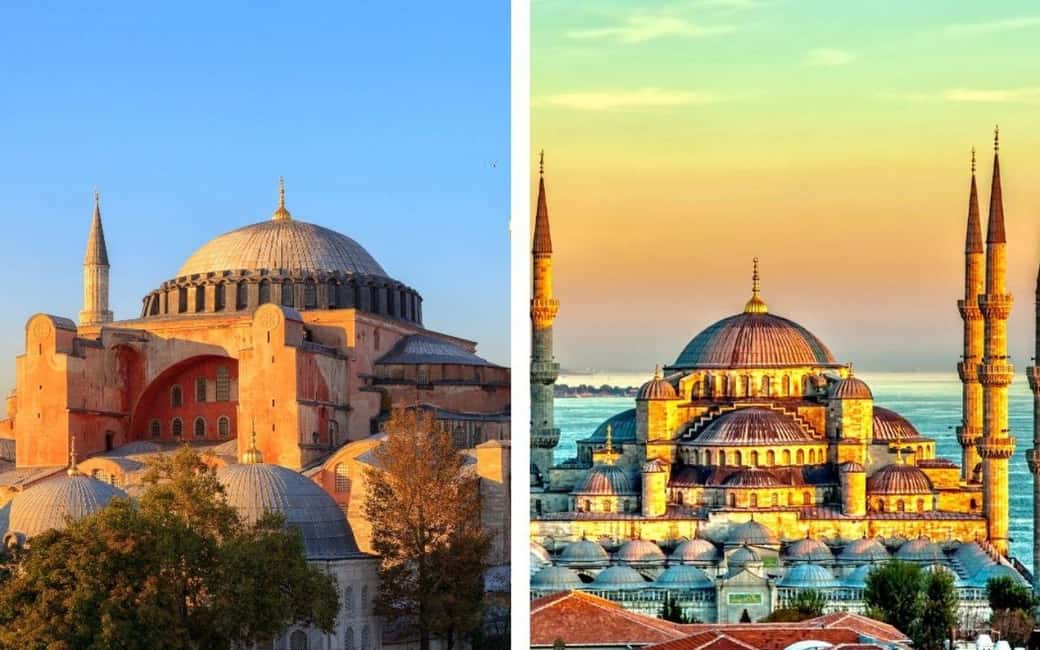
- Skip-the-line entry to Hagia Sophia Mosque Entry (security lines still apply)
- English audio guide designed for a self-paced visit, using your headphones
- Museum add-on in Ibrahim Pasha Palace with immersive, tech-based exhibits
- Big visual payoff: dome details and views over the Golden Horn and Bosphorus
- Clear historical framing: built as a cathedral in 532 AD, later transformed into a mosque
- One-day validity tied to available starting times, so plan your day early
Where this ticket fits in your Hagia Sophia day
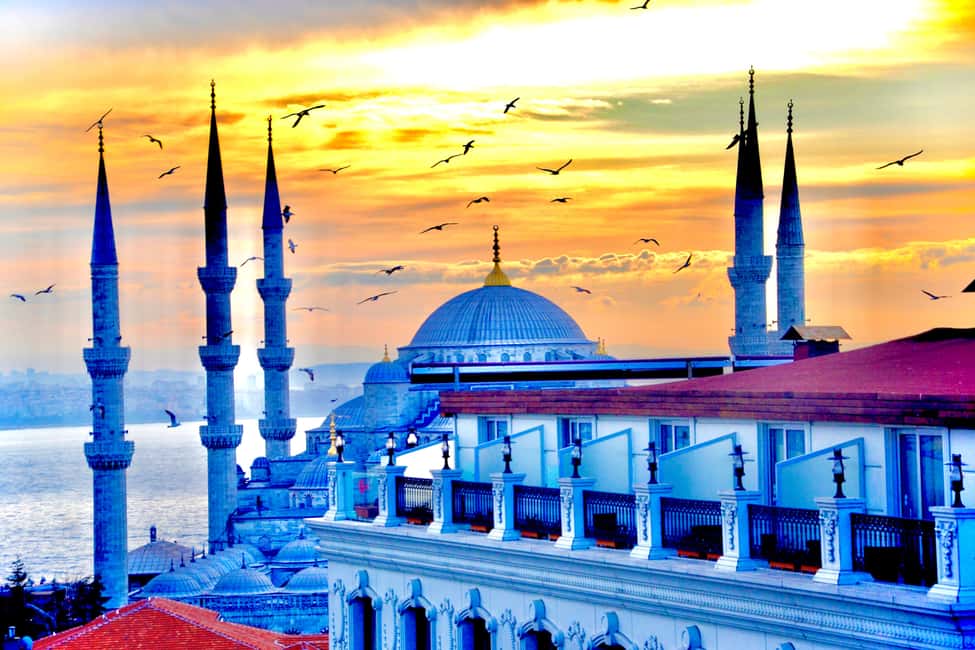
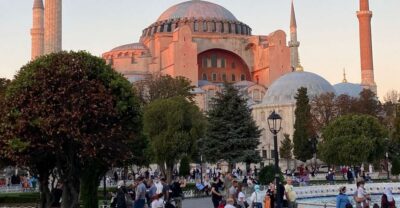
Hagia Sophia is one of those places where crowds, expectations, and lines can eat your time if you don’t plan. This ticket helps you protect your schedule by cutting the ticket line with a skip-the-line entry option. That means you spend more time inside, looking up, and less time watching people move toward a desk.
Your visit is essentially two parts. First, you enter the Hagia Sophia Grand Mosque and explore at your own pace with an audio guide. Second, if you choose the option with it, you add the Hagia Sophia History & Experience Museum inside the historic Ibrahim Pasha Palace.
If you’re trying to see Hagia Sophia as more than a quick photo stop, the combo works well. The mosque entry lets you experience the scale, light, and architecture. The museum then helps you understand why the building looks the way it does, and what changed over time.
You can also read our reviews of more tours and experiences in Istanbul



Skip-the-line means skip ticketing, not skip security
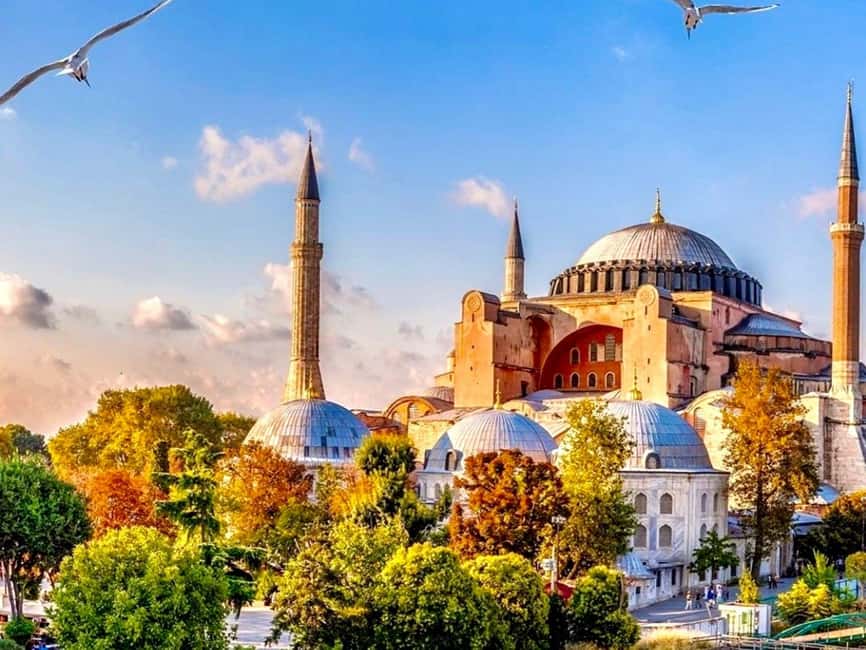
This is important. The ticket gives you skip-the-line entry, but the information is clear that you cannot skip security lines. You might still see a line at the entrance, and security is mandatory for everyone.
In practice, that means your time savings are mostly about ticketing and check-in, not the entire crowd reality. I like knowing that upfront because it helps you set expectations. You should still arrive with enough time to go through security calmly, especially if you have a museum add-on after.
Also, the ticket comes with two separate QR codes plus an audio guide link, sent via separate email messages from Istanbul Tourist Pass®. If you wait until the last minute to check your email, you can waste time right when you want to be moving. Plan to have your phone charged and ready.
Getting your audio guide and QR codes ready before you go
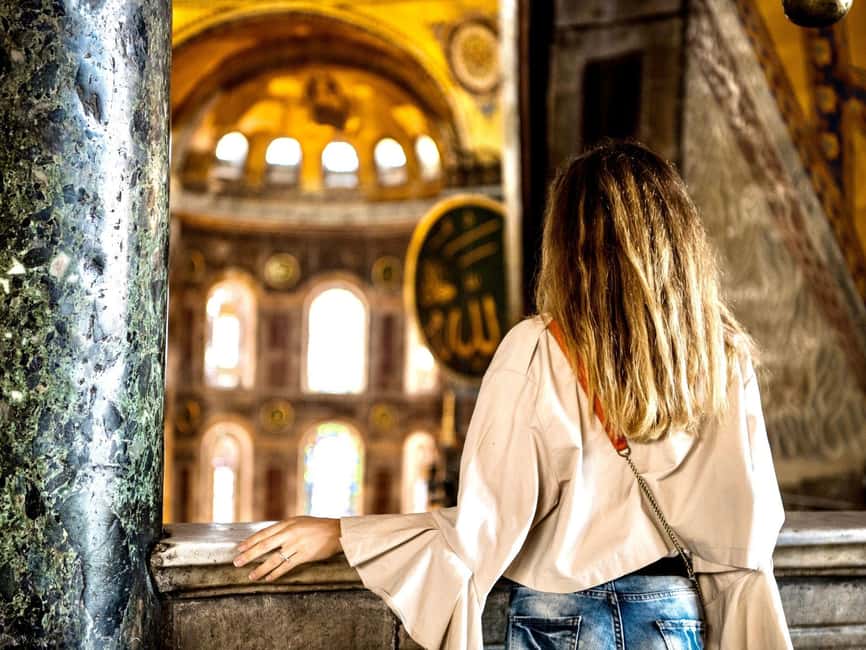
The experience runs on your phone. You’ll receive both entry ticket QR codes and the audio guide link via separate emails from Istanbul Tourist Pass®. The audio guide itself is professional and in English.
Because the guide link arrives separately, I’d treat this like a pre-download and pre-check job. Before you head out, open the email, confirm you have the correct link, and test that it works. If you’re using headphones, make sure they’re working too.
There’s also a limited-time perk: free internet with an eSIM. That can be useful if your phone needs data to load the audio guide link or you want to keep a map running while you’re nearby. It’s not the main reason to book, but it can make the experience smoother if you rely on your phone for everything.
Inside Hagia Sophia Grand Mosque: how the audio guide helps you see it
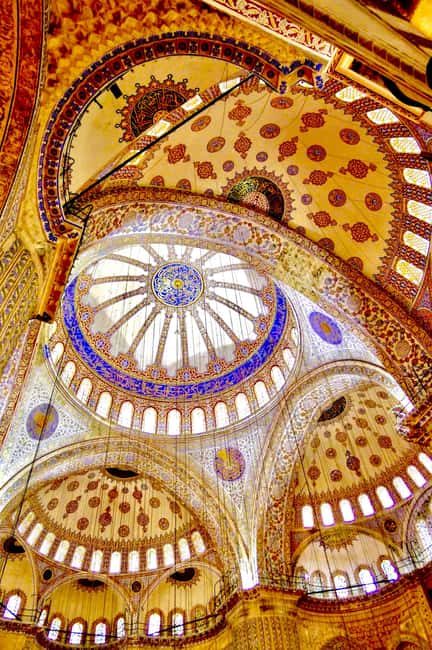
Hagia Sophia began as a cathedral in 532 AD under Emperor Justinian. Later, it transformed into a mosque, which is part of why it feels like the building carries two worlds at once: Byzantine and Ottoman influences side by side.
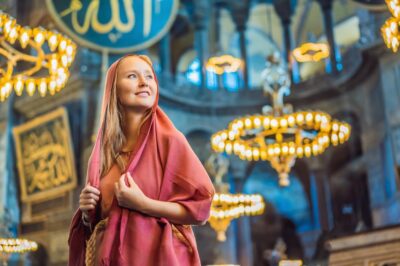
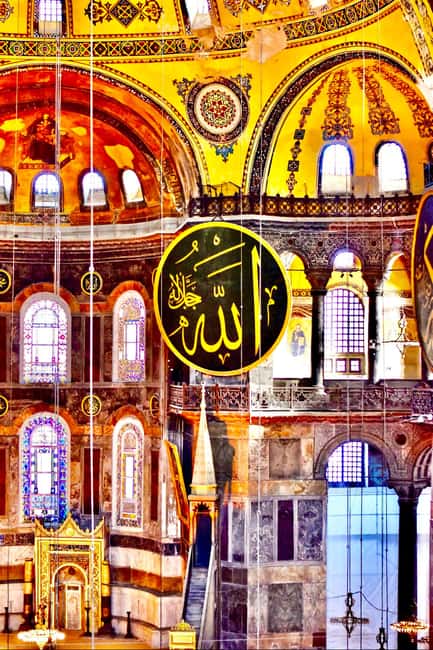
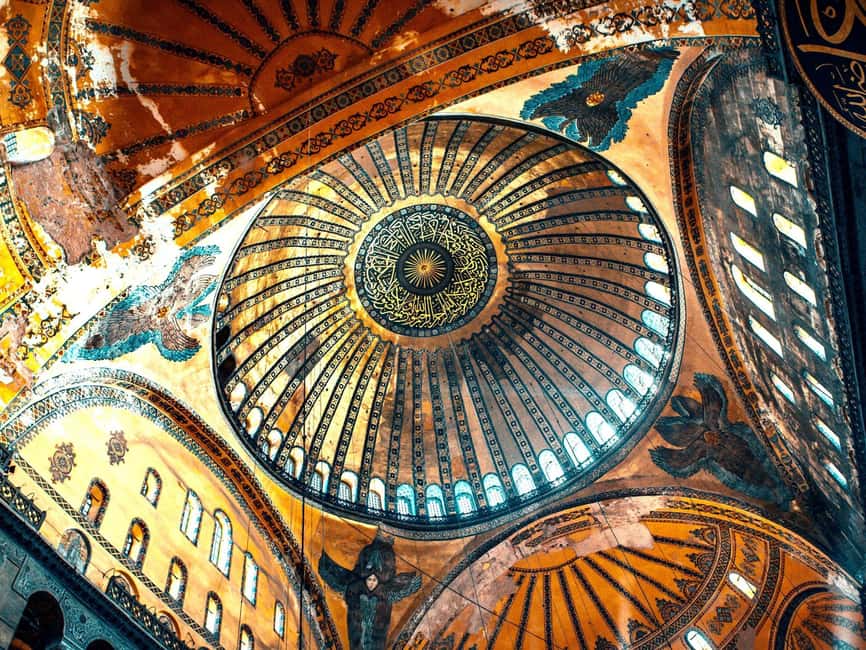
That story matters because the architecture isn’t just decorative. The massive dome is the headline feature, and the audio guide is designed to help you notice the details that connect to those centuries of change. You’ll also get guided attention to the mosaic work and the intricate interior elements that make the space feel layered rather than flat.
I like that you can self-explore instead of being rushed. You’re not forced to stand still for long stretches with no control over your pacing. Instead, you can move through the mosque areas while the audio guide explains what you’re looking at, when you’re ready to listen.
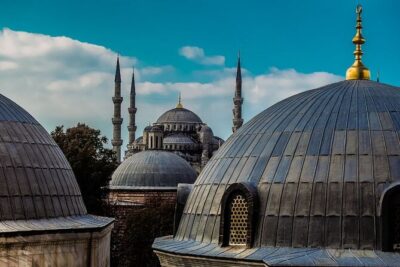
And yes, there are breathtaking viewpoints you can catch as you go. The experience highlights views over the Golden Horn and Bosphorus, which is a big part of why Hagia Sophia sits in the “must-see” category. Don’t treat the photos as the goal. Use the views as a cue to pause, look outward, and then look back up at the dome again—because the contrast is striking.
The dome, mosaics, and the “two empires” feeling
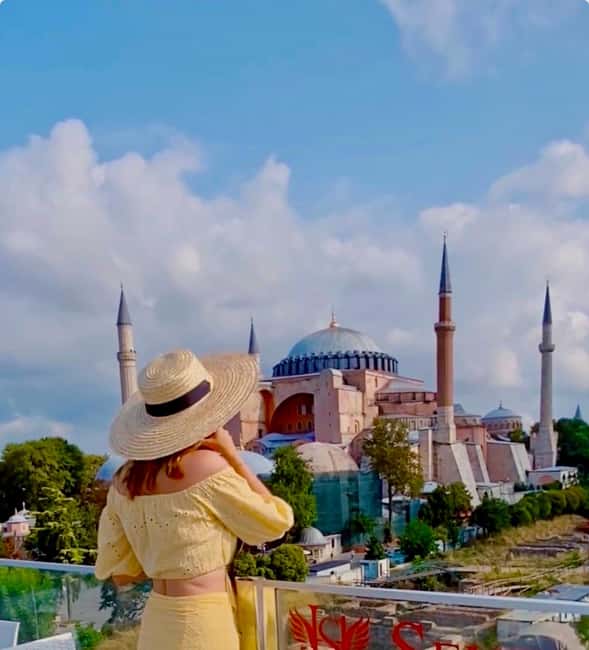
Istanbul’s best monuments often work on you in layers: architecture first, history second, and then emotion last. Hagia Sophia does that fast, especially once you’ve got context in your ears.
The audio guide’s value is not just facts. It helps you connect details to the building’s transformation over time. You’re not trying to memorize dates while people flow around you. Instead, you get a steady narrative while you look at massive scale, mosaic patterns, and the craftsmanship that survived cultural shifts.
One detail from the description that I find useful as you visit: Hagia Sophia is described as the second biggest church of Istanbul. Even if you don’t measure it in your head, knowing that can shift how you interpret the space. You’re not standing in a small, local landmark; you’re inside a structure meant for an enormous presence.
You can also read our reviews of more guided tours in Istanbul




Hagia Sophia History & Experience Museum: what the tech adds
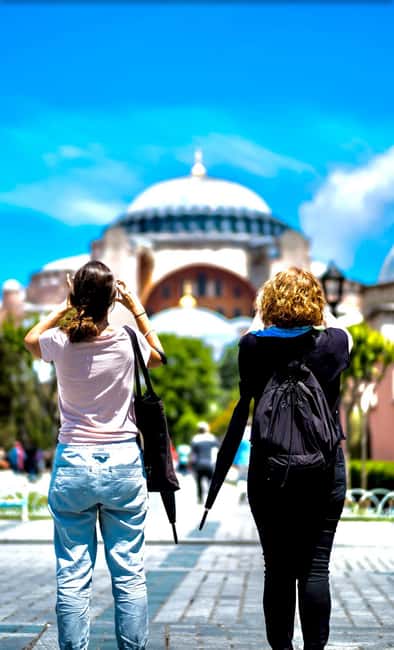
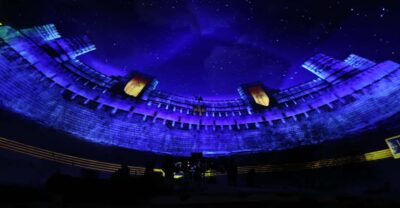
If you pick the option with the museum, you’re adding a smart “why” layer to your “wow” layer. The Hagia Sophia History & Experience Museum sits inside the Ibrahim Pasha Palace, and it’s designed as an immersive, multi-sensory walk through time.
This isn’t a single gallery room. The museum has three floors and a layout that takes you through 13 curated areas. Each area focuses on a different facet of the site’s story, from origins as a temple to its later conversion into a mosque.
What I like here is the museum’s format. It uses state-of-the-art technology, video shows, and audio narratives to explain architecture and hidden stories. That matters because many people only see the biggest visual elements when they tour. The museum gives you ways to notice what might be harder to pick out while you’re standing in the mosque.
There are also never-before-seen artifacts mentioned as part of the exhibits. I can’t tell you which items you’ll see on your day, but the point is that this museum isn’t described as repeating the same basics you can read on a sign.
If you’re visiting with kids or teens, note the rules mentioned: children may be asked to present a valid passport at the museum entrance to validate age. Kids under 8 with a valid passport or ID can enter for free.
Where to focus during your mosque visit (so you don’t miss the point)
With a place this famous, it’s easy to wander and still feel like you didn’t fully “get it.” Here’s how I’d focus, using what the audio guide is built to do.
First, start by listening to the sections that frame the building’s origins and transformations. Once you know it began in 532 AD under Justinian and later became a mosque, the dome and mosaic details make more sense as evidence of change, not just decoration.
Second, treat the outward views over the Golden Horn and Bosphorus like a reset button. When you step out of the interior visual intensity, you’ll return to the dome with fresh attention. Even a short pause helps.
Third, don’t try to cover every corner. The audio guide is meant to support a guided path at your own pace. If you keep moving just to “finish,” you’ll end up with photos but less understanding.
Timing your one-day experience without rushing
The ticket is valid for one day, with available starting times you can check. That’s a clue to how you should plan: treat Hagia Sophia as a morning-or-early-afternoon anchor. Not because you’re guaranteed the fastest day, but because a longer day gives you room for security, museum time, and a slower pace inside.
Your pace is also affected by whether you choose the museum. The museum is a structured, multi-area route with 13 areas across three floors. That usually turns the visit into more of a full experience rather than a quick pass through the mosque.
If you only choose the mosque entry, you’ll still benefit from the audio guide’s narrative. But you’ll likely move through quicker. If you choose both, you should plan for a longer stretch and give yourself breaks for standing, listening, and looking.
Price value: is $36 worth it for Hagia Sophia?
At $36 per person, this ticket sits in the “reasonable for a major attraction” category, especially if you factor in two things: skip-the-line entry and a professional English audio guide.
Skip-the-line helps most when you’re visiting during peak times or when you don’t want to gamble on how long ticketing lines might be. The audio guide adds value because it gives you structured context without hiring a live guide. It’s a cost-effective way to get depth without slowing you down like a traditional tour.
The museum add-on option is what can turn the value up further. If you’re the type who wants to understand what you’re seeing and not just stand in awe, the museum’s 13-area, tech-based storytelling can be worth the extra attention and time.
One caution: since the QR codes and audio guide link arrive by email, you’ll want to make sure you can access them on the day you book. If you lose your phone access or forget to check email, you may have extra stress. That’s not unique to this ticket, but it affects the real-world value.
Who this ticket suits best (and who might want another plan)
This setup is best for you if:
- you want a smoother entry with skip-the-line
- you like self-guided exploring with clear audio narration
- you want the option to add the museum at Ibrahim Pasha Palace
- you want to understand the building’s shift from cathedral (532 AD, Justinian) to mosque
It may not be the best fit if:
- you prefer a live, in-person guide for every question
- you don’t want to rely on phone emails and a link for the audio guide
- you’re planning to rush the visit and only care about a fast photo
The private group note is also a good fit if you’re traveling with a small circle and want a more controlled experience, while still using the audio guide rather than a scripted group walk.
Should you book this Hagia Sophia skip-the-line + audio ticket?
I’d book this if you want the biggest names and the best context in one day, without paying for a live guide. The combination of mosque entry plus an English audio guide is a strong value, and the museum option in Ibrahim Pasha Palace makes it feel like more than just a landmark stop.
You should also book if you’re the type who notices details: dome structure, mosaics, and how the story shifts from Byzantine to Ottoman layers. The museum’s 13 curated areas and tech-based storytelling can help you connect the dots when the mosque alone might feel overwhelming.
Hold off if you know you’ll struggle with phone-based QR codes and email links. In that case, you may prefer a simpler ticket system you can access without setup.
If you do book, I’d recommend showing up with time for security and making the email check part of your morning. That small prep turns a smooth plan into a smooth visit.
FAQ
What does this ticket include?
It includes skip-the-line entry for Hagia Sophia Mosque Entry, plus a professional English audio guide. There is also an option to include the Hagia Sophia History & Experience Museum.
Can I skip security lines?
No. The information states it is not possible to skip security lines, and there could be a line at the entrance for all visitors.
How do I get my entry tickets and audio guide?
You receive both Entry Ticket QR Codes and the audio guide link via separate email messages from the supplier, Istanbul Tourist Pass®.
Where is the History & Experience Museum located?
The Hagia Sophia History & Experience Museum is located within the historic Ibrahim Pasha Palace.
How long is the ticket valid?
It is valid for 1 day. Starting times depend on availability, so you should check what times are offered.
Are kids allowed in the museum, and is there free entry?
Children may be asked to present a valid passport at the museum entrance to validate their age. Children under 8 with a valid passport or ID can enter for free.