REVIEW · ISTANBUL
Istanbul: Basilica Cistern Small Group Tour with Tickets
Book on GetYourGuide →Operated by TOURMANIA · Bookable on GetYourGuide
Walk into a stone underworld. This small-group Basilica Cistern tour is all about fast access and a strong guided walkthrough, since the tickets are handled and you meet your guide at the exit gate to get moving. I especially like the skip-the-line advantage with a live English guide, because you spend your time looking up instead of waiting in line. One possible drawback: with a duration of about one hour, you’ll hit the big scenes but you won’t linger as long as you might on your own.
If you care about details, the Basilica Cistern delivers. The famous Medusa heads plus the mix of column styles and the mirror-like water make it a place where a good guide helps you spot what matters, and your photos benefit from planned viewing stops.
In This Review
- Key things I’d focus on during your Basilica Cistern tour
- Basilica Cistern Basics: what you’re really walking into
- Getting in faster: the skip-the-line setup that actually matters
- Stop-by-stop: what happens in your one-hour visit
- Stop 1: Meet at the exit gate
- Stop 2: Photo stop, visit, and guided walkthrough
- Stop 3: Return to the meeting point
- What makes the Basilica Cistern so visually weird (in the best way)
- Medusa Heads: the most famous mystery you’ll see
- Lighting, sound, and photo tips that don’t require luck
- Guides matter more than you think: who you might meet
- Price and value: is $51 worth it?
- Who this tour is best for (and who should consider another option)
- The practical “before you go” checklist
- Should you book the Basilica Cistern small-group tour with tickets?
- FAQ
- Where does the tour start?
- How long is the tour?
- Is this a guided tour or self-guided?
- Is skip-the-line included?
- Does the tour include entrance tickets?
- What language is the guide?
- Is it a small group tour?
- Where does the tour end?
- How much does it cost?
- Can I cancel for a full refund?
- Are there different start times?
Key things I’d focus on during your Basilica Cistern tour
- Skip-the-line with included tickets so you can start seeing right away
- An English live guide who points out the columns, layout, and standout details
- Medusa Heads: the reused, mysterious sculptures people love to photograph
- Photo-friendly timing with an actual photo stop built into the visit
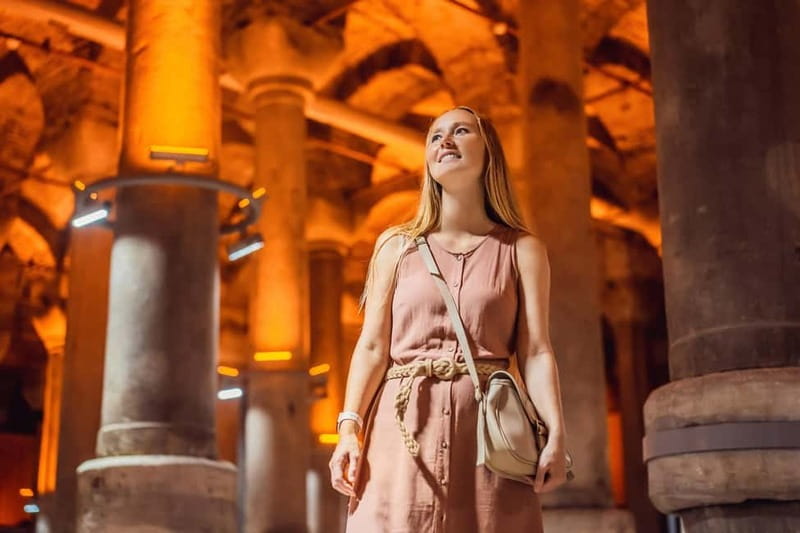
- Atmosphere you can feel: dim light, water reflections, and a quiet, otherworldly mood
- Short and focused: you’ll cover the highlights in roughly one hour
Basilica Cistern Basics: what you’re really walking into
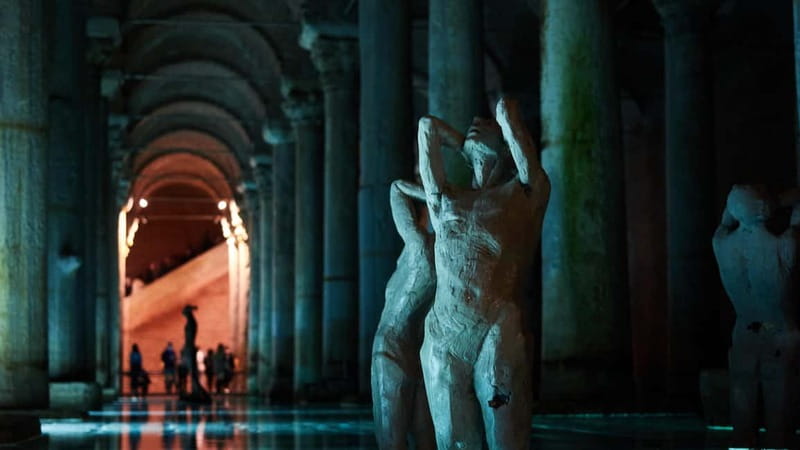
The Basilica Cistern (also called Yerebatan Sarayi) was built in the 6th century under Byzantine Emperor Justinian I. Its job was practical: it supplied water to the Great Palace complex, using underground engineering to keep the palace running. Yes, it’s historical. But it’s also visual. You’re stepping into a man-made “room” where architecture, water, and lighting were designed to work together.
For your visit, that means you’re not just ticking off a landmark. You’re experiencing a functional structure that has survived for centuries, now arranged for visitors. The dim light and the still water create a calm, almost cinematic feel. If you’ve ever wished Istanbul’s history came with a mood ring, this is one of the closest things you’ll find.
You can also read our reviews of more tours and experiences in Istanbul


Getting in faster: the skip-the-line setup that actually matters
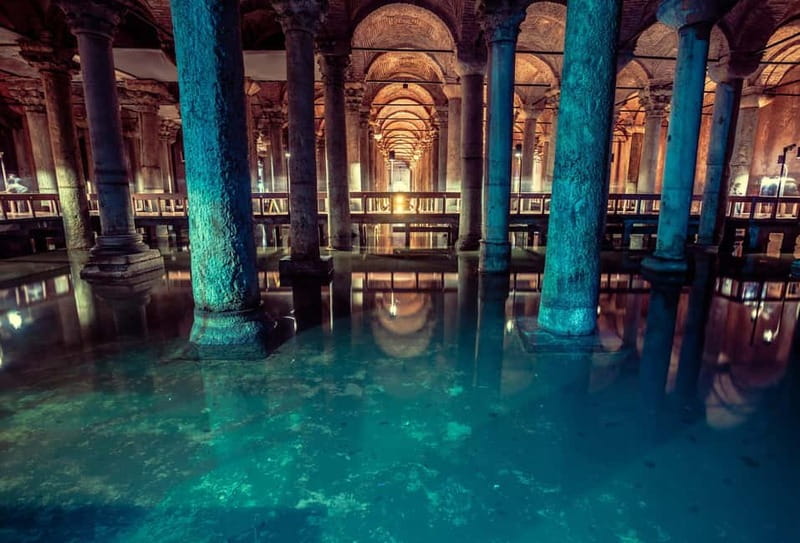
This tour is built around saving time where it counts. You don’t have to stand in the longer queue for entry because the tour includes skip-the-line ticket access. Your guide meets you at the exit gate of the Basilica Cistern. That detail matters: the meeting area can feel crowded, so arriving a little early and keeping an eye on your guide’s instructions is smart.
Here’s why this helps you: the Basilica Cistern is one of those places where most people arrive all at once. When your entry is timed well, you get that rare benefit—seeing the space before it feels overwhelmed by noise and crowd flow. Even if you’re not in a rush, you’ll appreciate the smoother start.
Also, the tour is described as a small group. That doesn’t just sound nice; it changes how the guide can move you through the space and how often you’ll be able to ask questions. One review noted headsets were used to hear better during busy moments—so if the group sound level gets tricky, you’re not left guessing.
Stop-by-stop: what happens in your one-hour visit
Stop 1: Meet at the exit gate
You meet your guide at the Basilica Cistern exit gate. This is where you get your bearings fast and connect with the person who will keep the visit moving. If you see the guide’s clothing highlighted in any pre-meeting message (one guide reportedly contacted a visitor by WhatsApp about what to wear), that’s your clue to look for the right person quickly.
Stop 2: Photo stop, visit, and guided walkthrough
This is the heart of the tour. You’ll go from entry into the cistern’s main interior with a structured route and a guided tour that points out key elements. The experience is designed to combine:
- A photo stop (so you’re not spending the whole time chasing the perfect angle)
- A guided visit that explains what you’re seeing
- A walk through the most important viewpoints
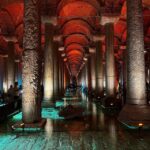
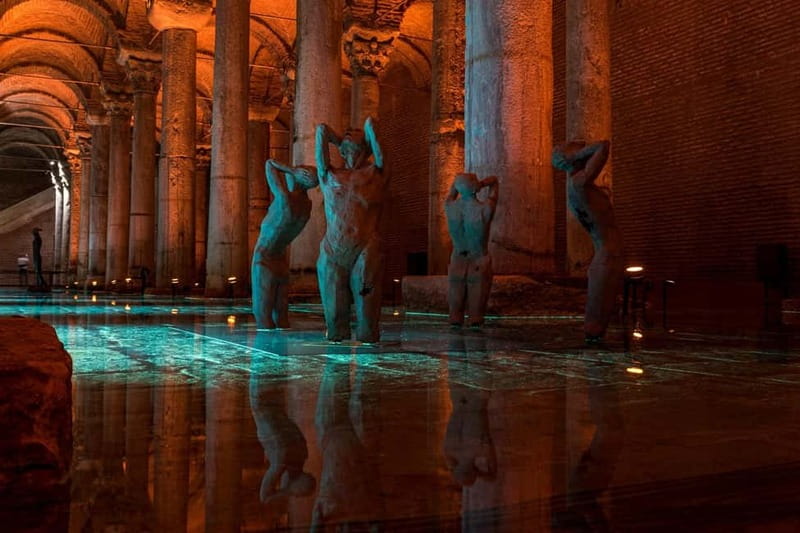
You’ll notice the atmosphere right away: dim illumination, reflections on the water, and the sense that the whole space has been paused in time. The guide highlights architectural details, including columns with different design influences—so you learn what you’re looking at instead of just seeing “lots of stone supports.”




Stop 3: Return to the meeting point
After the guided portion, you end back at the meeting point area (again: the exit gate). Since the tour is listed as about 1 hour, the whole flow feels tight and efficient. You’ll get a complete highlight reel without needing to plan additional time immediately afterward.
What makes the Basilica Cistern so visually weird (in the best way)
The Basilica Cistern is famous for its scale and for the way the interior is composed. You descend into the underground space, and suddenly the world above stops mattering. The columns stand in lines that pull your eye across the water, and the dim light makes everything feel like a set waiting for a film crew.
During your guided visit, the guide typically focuses on how the cistern was built to serve the Great Palace. That context turns the site from “cool photos” into “engineering you can still sense.” You’re seeing an ancient water system made from stone and geometry—built to last.
And yes, it’s also a place where you can be surprised. One traveler noted it can feel bigger than photos suggest, especially once you’re inside and the columns stretch farther than expected. If you’re the type who likes architecture as much as history, this site delivers.
Medusa Heads: the most famous mystery you’ll see
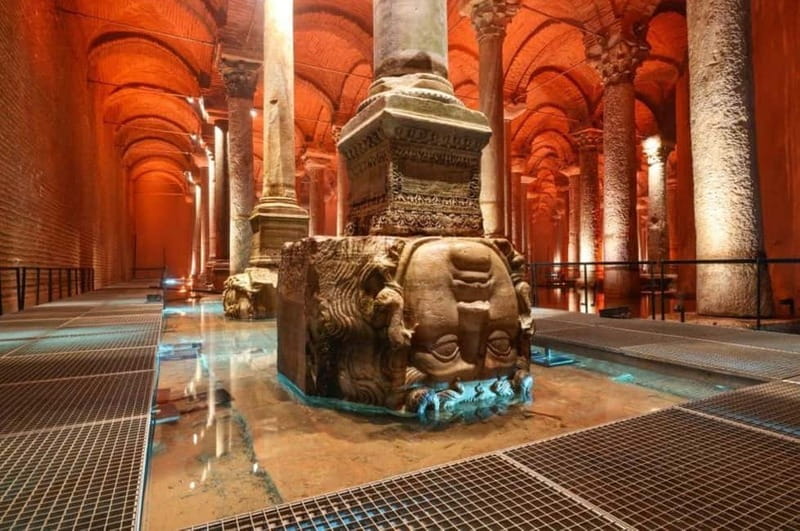
Two sculpted Medusa heads are the star attraction for many visitors. These ornate carvings sit among the cistern’s interior supports and have become iconic precisely because they come with uncertainty. The prevailing explanation is that they were reused from a Roman building, and the story around them has multiple interpretations.
What’s useful on a tour is not just learning the label (Medusa heads), but learning what to look for:
- how the sculptures were positioned
- what makes the carvings stand out among the cistern’s stonework
- why reuse like this mattered in older empires
A guide will also explain why these figures keep sparking debate. That helps you feel less like you’re hunting for trivia and more like you’re reading a visual clue.
If photography is your thing, plan to spend time near these details. Even if the rest of the cistern is beautiful, the Medusa heads are the moments people return to later when they’re sorting their pictures.
Lighting, sound, and photo tips that don’t require luck
The cistern’s lighting is part of the experience. It’s dim and atmospheric, so your photos can look dramatic fast—but you’ll need to adjust your expectations. You’re shooting in low light. A guided photo stop helps because you’re not wandering blindly for a good angle. You’ll likely be pointed to spots that give you clean lines of columns and reflections.
Also, expect a quieter soundscape than you’d guess from a famous site. The space isn’t noisy in the way a bus terminal is, but it can still get crowded. One review specifically mentioned headsets being provided to hear better because the place is busy. If that happens on your tour, use it. It makes a difference, especially for guides explaining small architectural details.
Practical photo-minded advice:
- Take a few wide shots early, before you’re buried in the crowd flow.
- Then switch to medium shots near the Medusa heads and column bases.
- Give yourself permission to try once with a faster shutter for brightness, then try again for mood.
Guides matter more than you think: who you might meet
The tour is centered on a professional guide, and the impact of that guide shows up in the details: pacing, where you’re asked to pause, how clearly the history is explained, and whether you’re helped with photos.
In the experiences shared, several guide names came up: Fatih, Can, Sarah, Furqan, and Faith Mehmet. If you get one of these guides, you may get a style that mixes facts with a human approach—people described guides as patient, friendly, and helpful with picture spots.
One theme was flexibility. Some guides were willing to slow down when visitors wanted extra time for photos. That’s huge in a place where the lighting is working against you and a perfect shot can take a few tries.
If you want the best value from the tour, treat the guide like a local flashlight. Ask a simple question at your first pause, like what detail to watch for next. Then you’ll feel less like you’re just following a route and more like you’re uncovering the structure.
Price and value: is $51 worth it?
At $51 per person, this tour sits slightly above the cost of basic admission in many cases. One review noted the price was just a few dollars over a standard ticket, and the difference buys you two key things:
1) Skip-the-line access
2) A live guide who points out details you’d likely miss on your own
So the value depends on your priorities. If you hate lines and want a structured visit, paying for the skip and the guide often feels fair. If you prefer a slow, self-paced wander with extra time at each corner, you might wonder if one hour is enough.
My take: in this specific site, the guide component pays off. The cistern has repeating visual elements—columns, stone textures, reflections—and without guidance, you can end up seeing it as a pretty room. With guidance, you start to see why those repeating elements matter: the engineering purpose, the architectural mix, and the Medusa head mystery.
Who this tour is best for (and who should consider another option)
This tour fits best if you:
- want to see the Basilica Cistern without wrestling with entry lines
- like architecture and want explanations tied to what you’re seeing
- care about photos and would appreciate a photo stop plus direction
- prefer a short, focused guided experience rather than an all-day plan
It might not be the best fit if you:
- want to spend a long time sitting, sketching, or doing deep independent exploration
- are hoping for lots of different stops beyond the cistern interior itself
One feedback point was simply that there isn’t much else to do besides the cistern, which is true—this is a single-site experience.
Also, the visit includes descending into the cistern area and moving around inside. That’s usually manageable, but if stairs are a concern for you, plan accordingly.
The practical “before you go” checklist
Here’s what I’d do to get the most from your hour underground:
- Bring a camera plan: wide shots first, then close details near the Medusa heads.
- Wear comfortable shoes. You’ll be walking and pausing for photos.
- Keep your meeting point simple: find your guide at the exit gate and don’t overthink it.
- If you’re sensitive to crowd noise, be ready for the possibility of headsets to hear the guide clearly.
Should you book the Basilica Cistern small-group tour with tickets?
If you want the best mix of time saved and meaningful context, I’d book it. Skip-the-line ticket access is the main time-saver, and the guide turns the cistern from a pretty photo stop into a place where the details click—especially around the Medusa heads and column design.
Choose it when you’re:
- short on time in Istanbul
- excited about architecture and small visual clues
- the type who will actually use a guide’s pointers for photos
If you’re the kind of traveler who always wants to linger, and you’re happy to manage entry queues yourself, you can also visit independently. But for most people, paying around $51 for a one-hour guided, ticketed experience feels like good value—because the experience is concentrated, efficient, and designed around what the Basilica Cistern does best.
FAQ
Where does the tour start?
Meet your guide at the exit gate of the Basilica Cistern.
How long is the tour?
The tour duration is about 1 hour.
Is this a guided tour or self-guided?
It’s a guided tour with a live, professional guide.
Is skip-the-line included?
Yes. The tour includes skip-the-line entry tickets for the Basilica Cistern.
Does the tour include entrance tickets?
Yes, entrance tickets are included in the tour.
What language is the guide?
The tour is offered in English.
Is it a small group tour?
Yes. It’s described as a small group tour.
Where does the tour end?
The activity ends back at the meeting point.
How much does it cost?
The price is listed as $51 per person.
Can I cancel for a full refund?
Yes, free cancellation is offered up to 24 hours in advance for a full refund.
Are there different start times?
Starting times depend on availability, so you’ll need to check the schedule when you book.