REVIEW · ISTANBUL
Istanbul: 48-Hour Hop-On Hop-Off Double Decker Bus Ticket
Book on GetYourGuide →Operated by Hop On Hop Off · Bookable on GetYourGuide
The best way to start Istanbul is from above. This hop-on hop-off double-decker bus gives you panoramic views right away, plus multilingual audio so you’re not staring at monuments with zero context. Best part: with a 48-hour ticket, you can hop off, pause for photos, and get back on without rushing.
Two things I like a lot are the simple flexibility of hopping on and off across two routes and the on-board audio guide in multiple languages. One drawback to keep in mind: on busy days the buses can feel full, and if you’re trying to catch a late hop, you’ll want to confirm the final boarding timing at your stop.
In This Review
- Key highlights I’d plan around
- First impressions: what this bus ride really feels like
- Getting your bearings in 2 days without over-committing
- Route red and route blue: how to plan around the stop flow
- What each phase of the ride is best for
- Stop 1 area: your orientation moment
- The red segment up to stop 7: cover ground fast
- The stop 7 pivot: plan your next hop with intention
- The blue segment from stop 7 to stop 11: slow down and choose
- Ending at stop 11 (back to the starting area)
- Sit smart for views: top deck vs. shade reality
- Audio guide: how it helps you travel like a local, not a passenger
- Crowd levels and timing: when you should adjust your day
- Price and value: when $84 makes sense
- Practical rules that affect your comfort
- Who should book this hop-on hop-off bus?
- Should you book this Istanbul bus ticket?
- FAQ
- FAQ
- How long is the ticket valid?
- Do I need to choose between routes ahead of time?
- Is the audio guide included, and what languages are available?
- Are ear phones included?
- Is Wi‑Fi available on the bus?
- Where does the bus end?
- Is the bus wheelchair accessible?
- What should I bring to board?
- What languages are supported by the host or greeter?
- What is not allowed on board?
Key highlights I’d plan around

48 hours from first activation gives you breathing room across two days
Two routes (blue and red) helps you cover more ground without pre-planning every detail
Pre-recorded audio in 8 languages keeps stops understandable even if you do it at your own pace
Wi‑Fi and ear phones onboard make the ride easier, not just scenic
Hop-off flexibility ends at the starting area so you can build a loop in your schedule
First impressions: what this bus ride really feels like
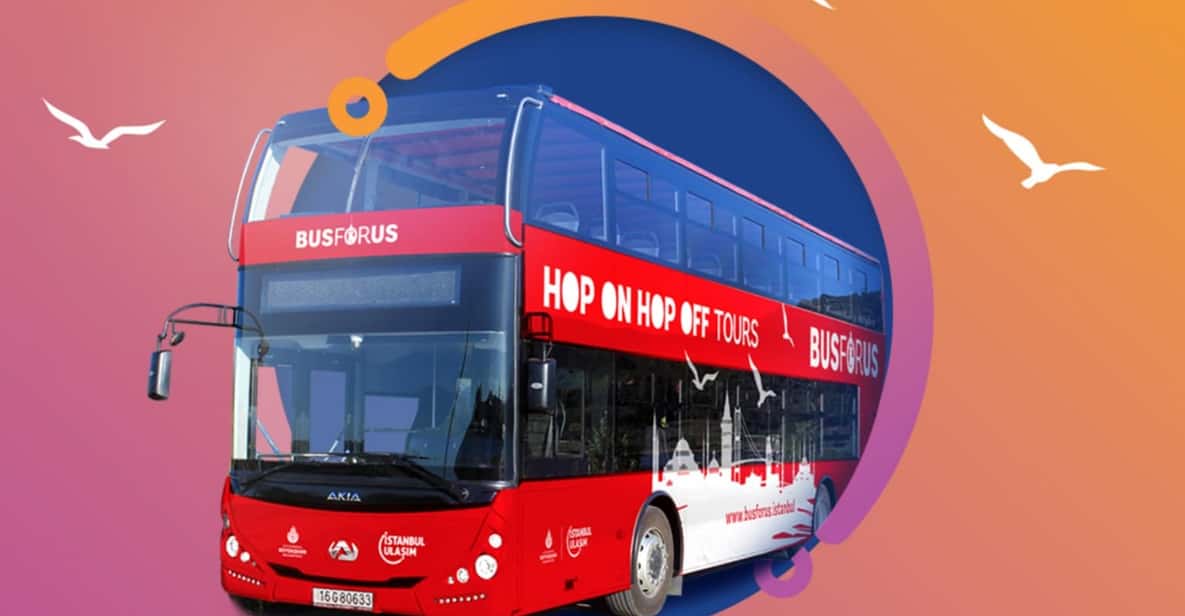
Istanbul is a city of angles—minarets cutting into skyline, bridges that change shape as you move, and neighborhoods that look totally different block to block. This bus helps because it gives you movement without the stress of constant directions. You sit up high, you watch the city slide past, and you decide when you want to step off.
You also get practical guidance, not just a generic “sightseeing” setup. The audio guide is pre-recorded and offered in English, French, Russian, Spanish, Arabic, German, Persian, and Turkish. That matters when you’re traveling with mixed-language companions, or when your day is moving fast and you want context now, not later.
On-board comfort is also part of the value. Wi‑Fi is included, and ear phones are provided so you can hear the commentary without fighting with public sound.
You can also read our reviews of more tours and experiences in Istanbul



Getting your bearings in 2 days without over-committing
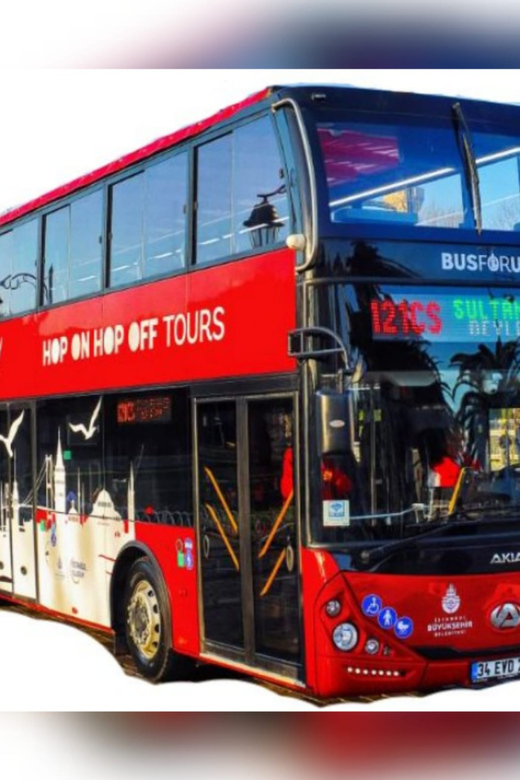
A 48-hour ticket is one of those travel tools that works best when you use it like a strategy, not like a checkmark. Day 1 is for orientation. Ride a lot. Hop off only if something grabs you. Then hop back on and keep going.
Day 2 is where it turns into sightseeing with purpose. You can return to the spots you liked, spend longer on the viewpoints, and fill in gaps. Because your ticket stays valid for 2 days from the first activation, you’re not trapped into one tight schedule.
Here’s a way to think about it: you’re buying options. If you’re tired after a museum visit, you can shift to the bus and keep sightseeing from your seat. If you feel energetic, you can hop off and connect the route with walking time.
Route red and route blue: how to plan around the stop flow

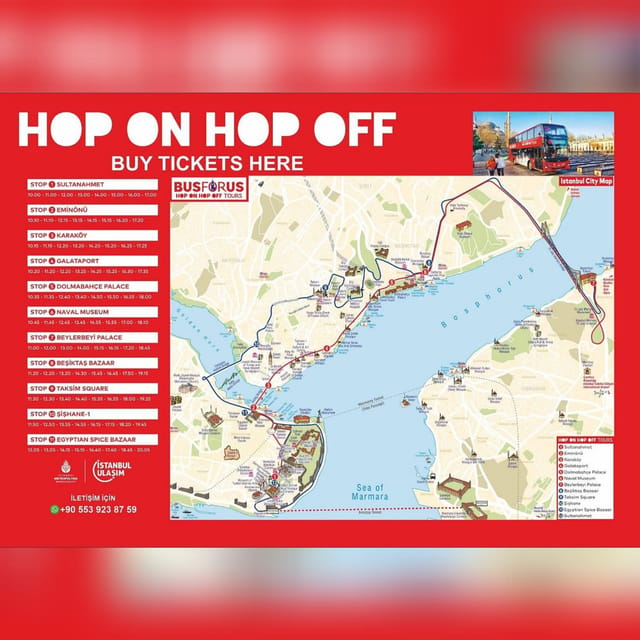
You get two routes, labeled blue and red. The key practical detail is that the system isn’t just two totally separate buses with two totally separate lines. The route works like a continuous run with a switch point at specific numbered stops.
So what should you do with that information? Treat the numbered stops as your timeline:
- The ride starts at the starting stop area (it also ends back there).
- Route red runs along its segment until it reaches stop 7.
- At stop 7, the bus continues and route blue picks up from there (so stop 7 is a shared pivot point).
- Route blue continues from stop 7 onward, through stops like 8, and finishes at stop 11.
- Stop 11 lines up with the starting point conceptually, because the route run cycles back to where you started.
The big takeaway: if you plan your last hop late in the day, don’t rely on guesswork based on what you remember earlier. One real-world complaint pointed out confusion about what happens near the end of the run and how drivers handle remaining boarding at later times. The fix is simple: check the on-bus timetable signage for boarding times at the stop you’re using, then make your move with a safety buffer.
Also note that the bus experience includes “ends at the starting stop.” That’s not a minor detail. It means you can design a day knowing you’ll come back to the pickup area you began from, instead of ending somewhere random far from your hotel.
What each phase of the ride is best for
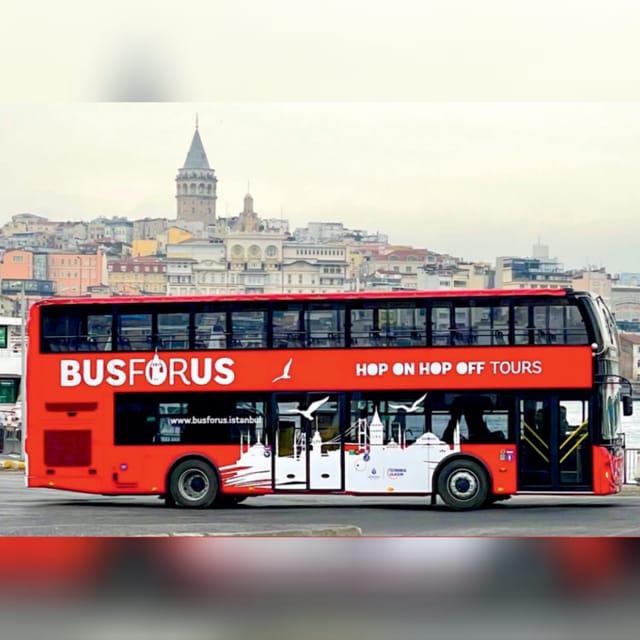
Because you’re moving through stops across the red-to-blue flow, you can use the route like three chunks. Since stop names aren’t provided here, I’ll focus on how each chunk helps you as a traveler.
Stop 1 area: your orientation moment
Early on, you’re learning the rhythm of the city from a height. This is when I’d listen most carefully to the audio so you can later recognize what you’re seeing from street level. If your goal is to understand Istanbul quickly, this is the best time to stay on the top level, keep your eyes open, and use the ear phones before you start jumping off.




The red segment up to stop 7: cover ground fast
This stretch is good for scanning broad connections—where waterfronts and major landmarks sit relative to each other, and how neighborhoods stack up visually. If you’re deciding what to do on day 2, don’t overthink it here. Just hop off once or twice for a quick look, then re-board so you don’t lose your place in the route timing.
The stop 7 pivot: plan your next hop with intention
Stop 7 is the switch point where route red gives way to route blue. Even if you don’t know every stop detail, you can use this as your “re-check moment.” Before the bus moves past, decide: Are you staying on for more coverage, or are you hopping off now because something near your stop deserves a longer look?
The blue segment from stop 7 to stop 11: slow down and choose
Now you’re in the phase where you can pick a direction for walking connections (if you want them), because you’ve already got your bearings. If you’re the type who hates missing views, stay on longer and treat the audio like a guide for what to remember.
Ending at stop 11 (back to the starting area)
This is where the system is convenient: you’re not stuck trying to solve transportation chaos to get back. It also makes the “two-day” idea more realistic—because you can come back to the same starting area both days and build your routine around it.
Sit smart for views: top deck vs. shade reality
Open-top buses give you the best angles for photos, but they’re also affected by weather and crowding. I’d base your seat choice on the kind of day you’re having:
- If the sky is clear and you want photos, take the upper open section.
- If it’s hot or you’re tired of sun, look for more shaded areas lower on the bus.
- If crowds make it hard to move around, staying seated near an exit can make your hop-on hop-off cycle smoother.
The bus gives you the city in motion. Your job is choosing how much you want to record and how much you want to actually feel the place.
Audio guide: how it helps you travel like a local, not a passenger
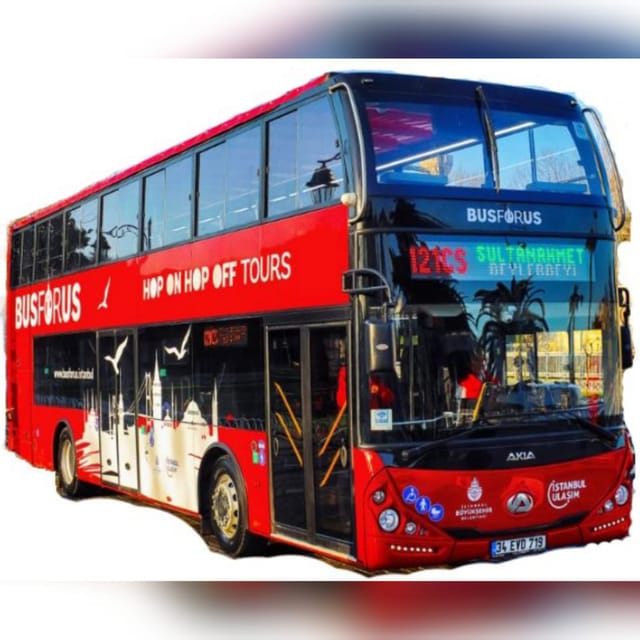
The pre-recorded commentary is the difference between riding a scenic vehicle and learning something useful. With languages listed as English, French, Russian, Spanish, Arabic, German, Persian, and Turkish, you can switch by what’s comfortable for your group.
I like audio on buses because it’s timed to your view. When you hear the description, your eyes match it instantly. That helps you later when you’re standing still—walking around a stop you visited and trying to connect it to what you saw from above.
The audio is also supported with ear phones provided on board, and Wi‑Fi means you can cross-check quickly if you want extra context while you’re moving.
Crowd levels and timing: when you should adjust your day
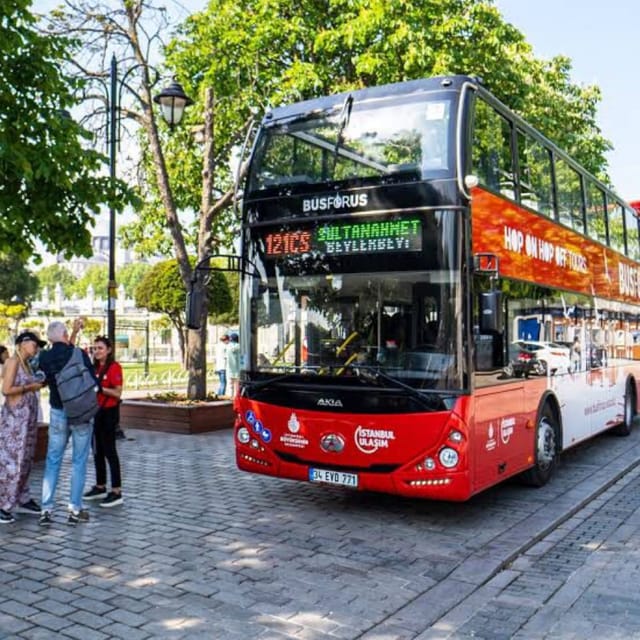
There’s one recurring reality with any hop-on hop-off system in a major city: demand spikes on certain days. One clear example from real use was that a cruise-ship day got very crowded, even though the experience was still positive overall and later improved on the second day.
So don’t treat the bus like a guaranteed empty ride. Treat it like a reliable service that may have lines or full sections during peak demand. If you can, schedule your biggest hops earlier in the day. If you’re traveling during a cruise schedule window, plan for extra waiting and consider doing fewer hops with longer stays between them.
Also, if you’re pushing toward the end of your day: verify boarding times at your stop. One complaint flagged that the last boarding experience didn’t match what was expected from earlier timing information, so you don’t want to assume you can just hop on later and catch up.
Price and value: when $84 makes sense
At $84 per person for a ticket valid for 2 days, this is a mid-range price for Istanbul. Whether it feels worth it depends on how you ride.
This ticket includes a lot of the extras that usually cost you time and effort:
- Two routes (blue and red)
- Multilingual audio guide
- Wi‑Fi onboard
- Ear phones included
- Skip the ticket line
- Hop-on hop-off flexibility for 48 hours from activation
- Wheelchair accessible
If you plan to ride more than just a quick loop—if you use the bus to cover multiple areas over two days—then it can replace several separate transport decisions and help you stay oriented. If you only plan to ride for a short stretch once or twice, you may feel the price more sharply.
My practical rule: aim to use it on both days, and try to make at least a couple of hop-offs where you actually spend time on-site.
Practical rules that affect your comfort
A few clear constraints can help you plan without surprises:
- Alcohol and drugs are not allowed.
- It’s not suitable for people with heart problems. (That’s about safety and physical stress from riding and the open-air setup.)
- Bring your electronic ticket, since you’ll need it to board.
- Host or greeter support is available in English, German, Russian, Spanish, Arabic, Turkish, and French.
And one more practical detail: because it ends at the starting stop, you can build your day knowing you’ll return to your pickup zone. That makes it easier to plan dinner, shopping, or a night walk without long transfer worries.
Who should book this hop-on hop-off bus?
This is a good fit if you:
- Want a low-stress way to see a lot of Istanbul in limited time
- Prefer making decisions on the fly instead of following a rigid tour schedule
- Like having context as you look at the city (audio guide in many languages)
- Need flexibility across two days, not just one afternoon
It may be less ideal if you:
- Only want one short ride and aren’t planning multiple hop-offs
- Are very sensitive to crowding or delays during high-demand periods
- Have concerns that fall under the heart-problems note
Should you book this Istanbul bus ticket?
If your goal is to get your bearings fast and keep control over your schedule, I’d say yes—especially because the ticket covers 48 hours, includes two routes, and comes with audio, Wi‑Fi, and ear phones. The system is built for flexible pacing.
But book with eyes open. Confirm boarding times at the stop you’ll use, and give yourself extra time around the end of the run, particularly if you’re trying to catch a late hop. If you do that, this becomes a smart way to turn limited time into real city understanding.
FAQ
FAQ
How long is the ticket valid?
The ticket is valid for 2 days from the first activation.
Do I need to choose between routes ahead of time?
You get access to two routes, blue and red, with hop-on hop-off use.
Is the audio guide included, and what languages are available?
Yes. The pre-recorded commentary is available in English, French, Russian, Spanish, Arabic, German, Persian, and Turkish.
Are ear phones included?
Yes, ear phones are included.
Is Wi‑Fi available on the bus?
Yes, Wi‑Fi is included.
Where does the bus end?
The ride ends at the starting stop.
Is the bus wheelchair accessible?
Yes, it is wheelchair accessible.
What should I bring to board?
Bring your electronic ticket.
What languages are supported by the host or greeter?
English, German, Russian, Spanish, Arabic, Turkish, and French.
What is not allowed on board?
Alcohol and drugs are not allowed.