REVIEW · ISTANBUL
Dolmabahçe Palace and Sunset Tour on Luxury Yacht
Book on Viator →Operated by Tour Book Turkey · Bookable on Viator
Dolmabahçe Palace meets a sunset yacht ride. This 5-hour Istanbul combo pairs a guided museum visit with a luxury Bosphorus cruise that passes major sights as the light turns golden. You’ll also get onboard comfort food to keep the mood relaxed.
I love two parts of this experience: the Dolmabahçe guide approach and the easy, tasty way the cruise portion feeds you. In the reviews, guide Celil stands out for handling both sides of the tour with real context, not just names and dates, and the onboard spread (cookies, baklava, lemonade, Turkish tea, fruit plates) keeps everyone happy without you hunting for snacks.
One thing to plan for: Dolmabahçe Palace admission is not included. You’ll want to budget for the ticket and arrive with the right timing so the palace visit stays smooth, while the rest of the skyline stops are mostly about views from the water.
In This Review
- Key Things I’d Pay Attention To
- How This Tour Really Feels: Palace Time, Then Bosphorus Sunset
- Dolmabahçe Palace: Ottoman Power, Museum-Style
- What to expect inside
- The one catch
- The Yacht Portion: How the Bosphorus Becomes a Storyboard
- Why passing by matters (and what it doesn’t do)
- Cıragan Palace: Marble Royal Drama, Later Reborn
- Ortaköy: Bazaar Energy and a Waterfront Pause
- The Bosphorus Bridge: A Landmark You Notice Even From Afar
- Bebek: Ottoman Roots, Modern Waterfront Living
- Rumeli Hisarı (Rumeli Fortress): Built in an Incredibly Short Window
- The Fatih Sultan Mehmet Bridge: Modern Scale Over Old Waterways
- Anadolu Hisarı: Outer Walls and the Sense of a Quiet Ruin
- Küçüksu Palace: A Small Summer Palace with Big-View Appeal
- Beylerbeyi Palace: Right Under the Bridge, Built in Multiple Styles
- Kız Kulesi (Maiden’s Tower): Legend-Loaded, Skyline Icon Level
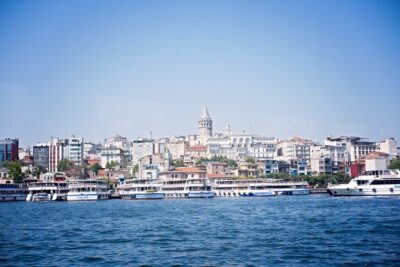
- Galata Tower: Genoese Origins and a Legendary Flight Story
- What You Get On Board: Snacks, Tea, and a Boat Bathroom
- Price and Value: What $78.10 Buys You
- Meeting Point and Route End: Beşiktaş In, Kabataş Out
- Who Should Book This Bosphorus Sunset Yacht Tour?
- Should You Book It?
- FAQ
- How long is the Dolmabahçe Palace and sunset yacht tour?
- What is the price per person?
- Is Dolmabahçe Palace admission included?
- What’s included on the yacht?
- What language is the tour offered in?
- Where does the tour start and end?
- Is this tour recommended for people prone to sea-sickness or vertigo?
Key Things I’d Pay Attention To
- Dolmabahçe Palace with a guide: you’re not just walking rooms, you’re getting the “why it matters” behind the palace.
- Small group size (max 20): easier questions, less crowd chaos on the boat.
- Food and tea onboard: cookies, baklava, lemonade, Turkish tea, plus fruit plates and water.
- Legend + architecture storytelling: from Kız Kulesi to the bridges, you get more than silhouettes.
- Skyline-focused cruise timing: the sunset plan is built for great light over the Bosphorus.
How This Tour Really Feels: Palace Time, Then Bosphorus Sunset
This isn’t a “grab a headcount, see five things fast” outing. The format makes sense: you start with the heavy hitter, Dolmabahçe Palace, where a guide helps you connect the rooms to Ottoman-era power and daily life. Then you transition onto the water for a slower pace—passing neighborhoods and landmarks as the sun drops.
The timing matters too. A 5-hour tour is long enough to feel like you did something meaningful, but short enough that you’re not exhausted by mid-evening. You also get a clear meal-style pause on the yacht with Turkish tea and sweets, which is handy in a city where timing can slide.
And yes, it’s a luxury sunset yacht. That usually means the experience is more about comfort and views than packed-in sightseeing. With a maximum of 20 travelers, you’re far more likely to move at a sane pace, ask questions, and actually hear the guide while the scenery changes.
You can also read our reviews of more boat tours in Istanbul

Dolmabahçe Palace: Ottoman Power, Museum-Style
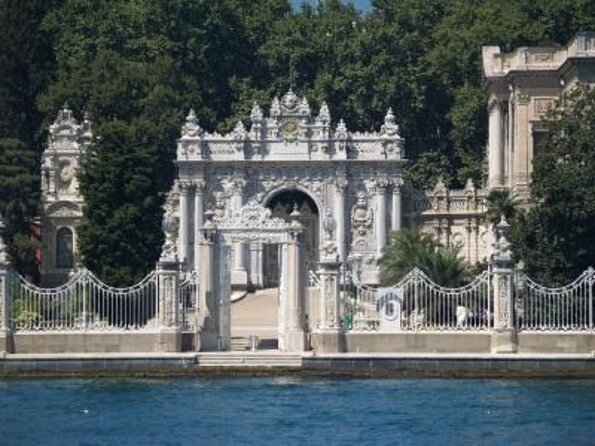
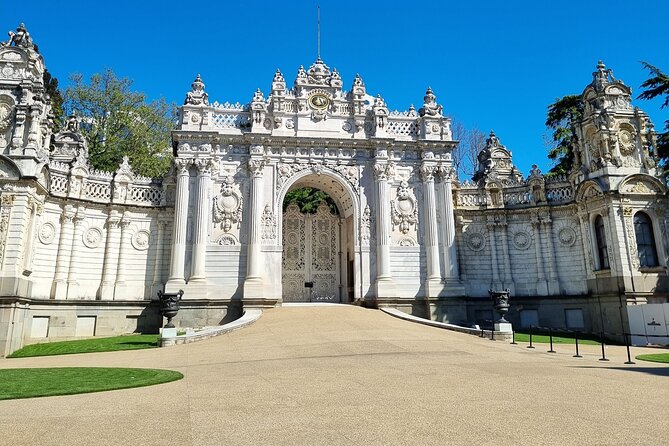
Dolmabahçe Palace is the kind of place where you’ll feel the scale even before you know the backstory. It was the administrative center of the Ottoman Empire and today it’s a museum, so you get the grand rooms and opulent furnishings with guidance on what they represent.
A big value here is the guide-led structure. You’ll tour the palace’s grand halls and lavish gardens, and your guide will explain key context, including the place where the palace-linked leader passed away. That kind of detail changes how you look at the rooms. Instead of admiring decor only, you start noticing how the palace functioned—who would have walked those spaces, what power looked like in physical form, and why it’s remembered.
What to expect inside
You’re allocated about 3 hours for the palace portion. That’s a good amount of time for a guided museum visit without turning it into a sprint. It also means you won’t be trapped on the boat all day before seeing anything.
The one catch
Dolmabahçe admission is not included, so you’ll need to plan for the ticket separately. If you arrive without that sorted, you can lose momentum. I’d rather see you handle the ticket upfront than stress while you’re trying to enjoy the guide.
The Yacht Portion: How the Bosphorus Becomes a Storyboard
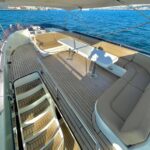
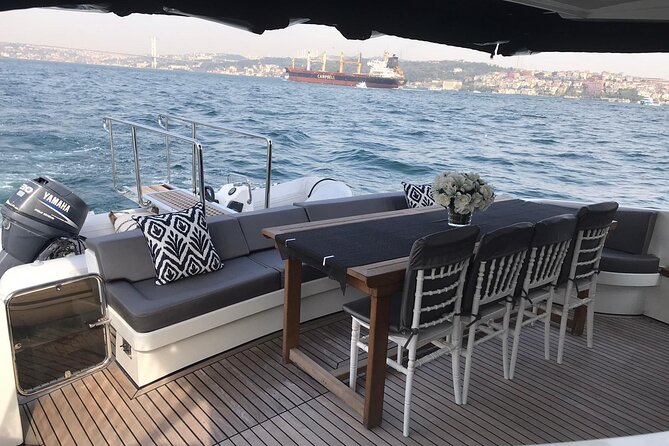
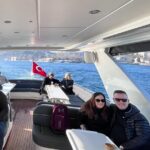
Once you’re on the luxury yacht, the experience shifts from “rooms and objects” to “distance and perspective.” You get the Bosphorus as a moving lens—bridges, palaces, fortresses, and skyline icons sliding by while your guide explains what you’re seeing.
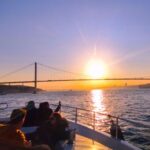
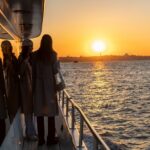
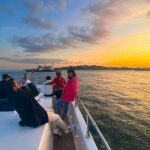
This is also where the tour earns its “sunset” name. Even if you’ve seen Istanbul photos before, the light across the water changes everything. Reflections, bridge silhouettes, and waterfront architecture take on a different mood after late afternoon.
You can also read our reviews of more tours and experiences in Istanbul

Why passing by matters (and what it doesn’t do)
The itinerary lists many major sites as stops or points along the route. Practically, you should expect most of them as sightseeing from the water rather than long on-foot visits. That’s not a flaw—it’s how you cover lots of ground in a 5-hour window—but it does mean you’ll trade depth at each stop for a wide sweep of the Bosphorus highlights.
Cıragan Palace: Marble Royal Drama, Later Reborn
Cıragan Palace is described as commissioned by Sultan Abdulaziz and designed by architect Sarkis Balyan, built from marble across a wide area. What makes it interesting on the cruise is the emotional arc built into the place: after Abdelaziz was deposed, he was imprisoned there for years with his family, and later the palace became a similar prison for Murat V.
Then history turns again. After the 1908 declaration of the Second Constitutional Monarchy, it was used as the House of Parliament—until a fire in 1910 damaged it. The grounds later shifted to sports use, and then toward the early 1990s the palace was restored and reopened as a luxury hotel.
If you like buildings with built-in plot twists, this stop works. You’ll see the waterfront palace idea first, then the guide adds the human story—who lived there, who suffered there, and how it returned as something else.
Ortaköy: Bazaar Energy and a Waterfront Pause
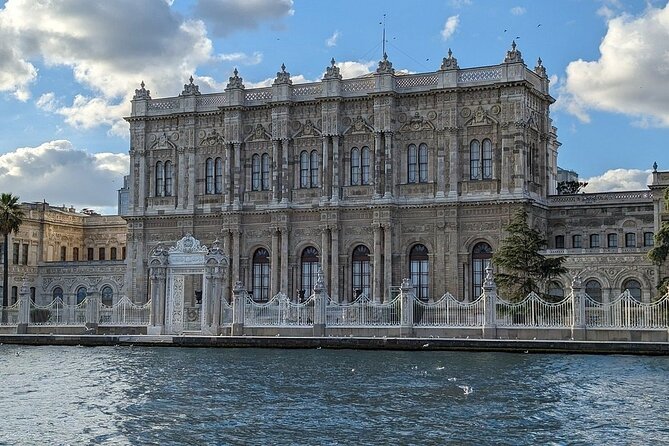
Ortaköy sits on the European side of the Bosphorus in Beşiktaş, and it’s known for a lively waterfront setting. The description calls out an “intellectual market,” plus souvenir shops and cafes and bars inside the bazaar.
The timing note is real: early hours can feel less exciting, with movement picking up after about 10:00. For this tour, you’ll likely be experiencing it as part of the sunset route rather than a deep market stroll, but it still gives you a clear sense of what Istanbul feels like when it’s awake.
Think of Ortaköy as the “social layer” of the Bosphorus—where palace grandeur (nearby) meets street life and food culture.
The Bosphorus Bridge: A Landmark You Notice Even From Afar

You’ll hear about the Bosphorus Bridge landing points: feet of the bridge are in Ortaköy on the European side and Beylerbeyi on the Asian side. It’s framed as the first bridge built on the Bosphorus, linking the two city halves alongside ferries and later bridges.
From the water, that matters. A bridge can look like just infrastructure on land, but from the Bosphorus you get scale. You see how Istanbul actually connects and why that matters historically and today. Even if you don’t remember suspension-bridge trivia, you’ll remember the view.
Bebek: Ottoman Roots, Modern Waterfront Living
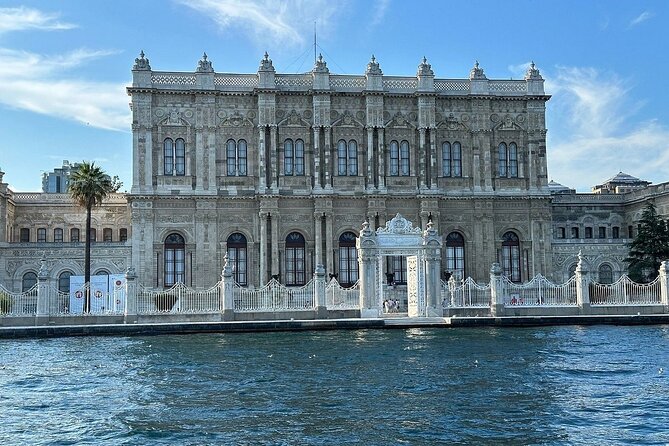
Bebek is described as a historic neighborhood on the European shore, surrounded by Arnavutköy, Etiler, and Rumeli Hisarı. The word Bebek gets linked to its attractive positioning along the Bosphorus, and the area is described as popular residential space since Ottoman times.
What you’ll likely notice from the cruise is the combination of historical buildings and waterfront mansions, plus modern anchors like Bogazici University. It’s also called out for fancy restaurants, which gives Bebek a more “quietly upscale” feel compared with market areas like Ortaköy.
Rumeli Hisarı (Rumeli Fortress): Built in an Incredibly Short Window
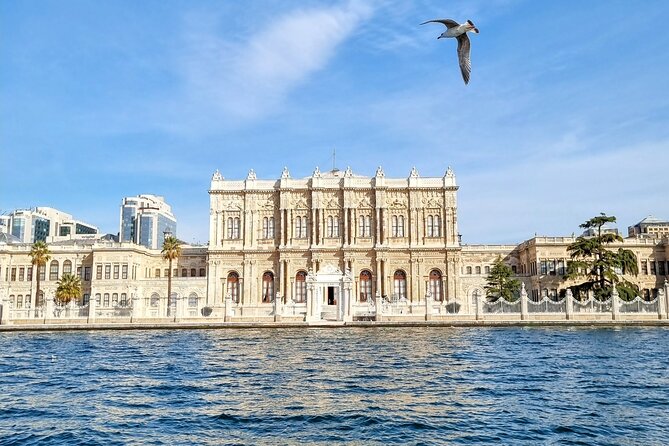
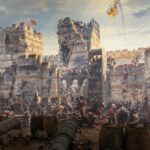
Rumeli Fortress is on the European side in Sariyer and was constructed directly across from Anadolu Hisari. The guide story is strong here: construction started in 1453 under Sultan Mehmet the Conqueror, placed at the narrowest point of the Bosphorus, and completed in only three months.
Before the conquest of Istanbul it protected against naval attacks. Afterward, it became an inspection point for maritime traffic. So on the water, you’re not just seeing an old fortress—you’re seeing a tool of control over who could move where.
If you like military architecture and strategic geography, this section gives you both.
The Fatih Sultan Mehmet Bridge: Modern Scale Over Old Waterways
The cruise also references the Fatih Sultan Mehmet Bridge, Istanbul’s second Bosphorus bridge. It began construction in 1986, opened July 3, 1988, and is described as the 14th largest steel suspension bridge in the world.
Even if you don’t care about rankings, the description hints at the real reason you notice it: it carries a significant portion of trans-Bosphorus traffic, and it has become part of the Istanbul skyline identity.
On a sunset cruise, modern structures can either ruin the mood or frame it. Here, it mostly works as a contrast—proof that the Bosphorus still shapes Istanbul in practical ways.
Anadolu Hisarı: Outer Walls and the Sense of a Quiet Ruin
Anadolu Hisarı is on the Asian side in Beykoz at the Bosphorus narrow point. It was built in 1395 by Beyazıt I and described as having a citadel plus exterior castle walls. After the conquest, it lost strategic importance and became a military hospital.
Today it’s described as an open-air museum and—importantly—only the outer walls can be visited. The restoration work lasted from 1991 to 1993, and there’s also a note that parts are not open to the public. So your “visit” feel here is more visual than hands-on.
From the water, that actually works. You’ll get the silhouette and the setting, and your guide can connect it to the idea of the city’s throat—the narrow stretch of the Bosphorus where control mattered.
Küçüksu Palace: A Small Summer Palace with Big-View Appeal
Küçüksu Palace is described as a small Ottoman summer palace ordered by Sultan Abdulmecit, designed by Nikogos Balyan. It’s on the Bosphorus coast road between Üsküdar and Beykoz and is noted for its excellent views.
This palace is tied to relaxation for sultans and also opens in museum form during the Republican period, with its furniture, paintings, carpets, and delicate details highlighted in the description.
This stop is a good example of what makes a guide helpful on a cruise. Without context, it’s just “a waterfront building.” With context, it becomes an idea: how rulers used the water’s edge for comfort and display.
Beylerbeyi Palace: Right Under the Bridge, Built in Multiple Styles
Beylerbeyi Palace sits on the Bosphorus shores, described as built in the 1860s and located right under the Bosphorus bridge. It’s tied to architect Sarkis Balyan and is described as mixing elements of Renaissance, baroque, and styles from both East and West.
The complex is laid out in parts: the South side as Imperial Mabeyn and the North side as the Valide Sultan’s Apartment. The description also calls out the scale: 6 halls, 24 rooms, plus a hamam and a bathroom, spread across a land area of about 2,500 square meters.
From the yacht, the value is the sense of layers. You see an elegant Ottoman summer palace framed by a modern bridge system, and the guide gives you the architectural map so your brain can place what you’re seeing.
Kız Kulesi (Maiden’s Tower): Legend-Loaded, Skyline Icon Level
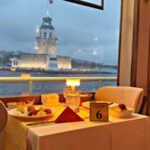
Kız Kulesi is the famous Maiden’s Tower on a tiny island about 200 meters from the Üsküdar shore, and it’s known for legends. The most popular one in the description centers on an oracle’s prophecy: the sultan’s daughter will die on her 18th birthday from a snake bite.
So the sultan tries to protect her by having a tower built where she’s kept in secrecy. On her birthday, she receives a basket of fruits with a hidden snake inside. She dies in her father’s arms, and that’s how the tower got its name.
On a sunset cruise, that legend lands because you’re looking at a real, iconic structure while the guide turns it into a story you can picture. The tower becomes less “photo spot” and more like a cultural memory.
Galata Tower: Genoese Origins and a Legendary Flight Story
The tour also includes Galata Tower in its skyline education. It’s described as built by Genoese in 1348, a nine-story tower at 66.90 meters, and it was the tallest building in the city when built.
In the Ottoman era it served different purposes, including a fire observatory and jail. One standout story: in 1632, Hezarfen Ahmet Çelebi glided from the top of Galata Tower across the Bosphorus to Üsküdar with self-constructed wings. A storm in 1875 destroyed the conic roof, which wasn’t restored during the Ottoman period. The description says the conical cap was restored in the 1960s and the wooden interior was replaced with concrete. Today it has a restaurant and café on the upper floor.
Even if you’re not going inside, the lesson is powerful. It’s a reminder that Istanbul’s “tall skyline” isn’t just modern ambition—it’s old engineering and old daring.
What You Get On Board: Snacks, Tea, and a Boat Bathroom
The included list is simple and genuinely useful:
- Cookies, baklava, Turkish tea, lemonade, fruit plates, and water
- Restroom on board
- A pleasant tour accompanied by an experienced guide
Alcoholic beverages are not included, so if you want beer, wine, or something stronger, you’ll need to plan for that separately.
This onboard setup is part of why the tour works well for real life. You’re not paying for “air time” only. You get food-style comfort while the guide keeps talking, and you don’t have to stop mid-route to find a café.
Also, the tour is offered in English. And it’s built for a typical mix of participants, with a max of 20 travelers. That keeps it from feeling like a cattle-call boat.
One more note: it’s not recommended if you’re prone to sea-sickness, or if you have vertigo. I’d take that seriously, because sunset cruises can still mean some motion depending on conditions.
Price and Value: What $78.10 Buys You
At $78.10 per person, you’re paying for more than just boat time. You’re buying:
- A 3-hour guided Dolmabahçe Palace museum visit (with guide)
- A luxury Bosphorus sunset cruise segment that includes guided storytelling
- Onboard refreshments: baklava, tea, lemonade, fruit, cookies, and water
- A small group size (max 20), which is a quiet quality upgrade
The big “value question” is that Dolmabahçe admission is not included. So your true total cost will depend on that ticket price. Even so, the overall structure is good value when you consider how much time you get in the palace with a guide plus the cruise experience that would otherwise cost more if you booked separately.
One practical reality: the tour is often booked about 71 days in advance on average. That doesn’t mean you must book early, but it does suggest you’re competing for spots if you’re traveling in a busy season or want a specific departure.
Meeting Point and Route End: Beşiktaş In, Kabataş Out
The tour starts at Saat Kule Kafeterya Vişnezade, Meclis-i Mebusan Cd. 38 A, 34357 Beşiktaş, Istanbul. It ends at Kabataş pier (listed with Dentur, Mavi Marmara) at Ömer Avni, 34427 Beyoğlu, Istanbul.
This matters because Istanbul travel is easy until it isn’t. Ending in Kabataş is a helpful finish for connecting to ferries or other city plans, but it also means you shouldn’t assume your hotel situation is on the same side of town.
If you like planning, map your route from Kabataş to where you’re staying before you go. It’ll save you from that classic “nice sunset, now where’s my transport” moment.
Who Should Book This Bosphorus Sunset Yacht Tour?
Book it if you:
- Want the Dolmabahçe Palace experience with an actual guide, not just self-guided wandering
- Love Bosphorus landmarks and want them explained in a logical, route-based way
- Like the idea of a sunset timing cruise with snacks and tea instead of a long, tiring day
- Appreciate small-group experiences (max 20)
Skip or rethink it if you:
- Get sea-sick easily or have vertigo concerns
- Want long, in-depth time inside every stop along the route (this is mostly views and onboard storytelling after the palace)
- Don’t want the extra step of handling Dolmabahçe admission tickets separately
Should You Book It?
I’d book this if your ideal Istanbul evening is part museum insight and part waterline views. The combination of a guided Dolmabahçe Palace visit and a sunset cruise that teaches you what you’re looking at is the main selling point.
Just go in with one plan: budget for Dolmabahçe admission, and don’t forget that you’re cruising past many highlights rather than doing a checklist of deep stops. If that matches your travel style, this tour is a very practical way to see a lot of Istanbul with comfort and stories attached.
FAQ
How long is the Dolmabahçe Palace and sunset yacht tour?
It runs for approximately 5 hours.
What is the price per person?
The price is $78.10 per person.
Is Dolmabahçe Palace admission included?
No. Entry/admission to Dolmabahçe is not included.
What’s included on the yacht?
Snacks like cookies and baklava, Turkish tea, lemonade, fruit plates, and water are included, along with a restroom on board and an experienced guide.
What language is the tour offered in?
The tour is offered in English.
Where does the tour start and end?
It starts at Saat Kule Kafeterya Vişnezade in Beşiktaş and ends at Kabataş pier.
Is this tour recommended for people prone to sea-sickness or vertigo?
It is not recommended for people prone to sea-sickness or for people with vertigo.