REVIEW · ISTANBUL
Basilica Cistern Tickets Skip the-line Entry
Book on GetYourGuide →Operated by Aussie Tours Travel Agency · Bookable on GetYourGuide
One of the strangest rooms in Istanbul is underground. The Basilica Cistern tour takes you into a dim, cool world of stone and water where 336 columns hold up a Byzantine water reservoir. I especially like how the fast track entry gets you inside quickly, and I also like that a real guide turns the Medusa mystery and column mix into something you can actually picture.
The main thing to consider is the time: this is a focused visit, about 30 minutes, so you’ll get highlights rather than a slow, super-detailed wander. Also, the cistern isn’t wheelchair accessible, and you’ll want comfortable shoes because there’s moderate walking on the way in and through the space.
In This Review
- Key things to know before you go
- Stepping into a Byzantine Water Machine (Under Your Feet)
- Skip-the-Line Entry: Why It’s Worth Paying for 30 Minutes
- The 30-Minute Walk: What Happens When You Start at Yerebatan Sarnıcı
- 336 Columns, Reused Marble, and the Surprising Mix You’ll Notice
- Justinian’s 6th-Century Purpose: Why It Was Built
- Medusa Heads: The Mystery That Keeps Pulling You Back
- Guide Style and Audio Options: English Live, Multi-Language Audio
- Price and Value: Is $62 a Good Deal for the Cistern?
- Practical Tips That Make Photos and Walking Easier
- Who This Tour Fits Best (and Who Might Want Something Else)
- Should You Book This Basilica Cistern Skip-the-Line Tour?
- FAQ
- How long is the Basilica Cistern skip-the-line experience?
- Where does the tour start?
- Is there a live guide included?
- Is an audio guide available?
- What does fast-track entry mean here?
- How much does it cost?
- What’s not included in the ticket?
- Can I take photos?
- Is the Basilica Cistern wheelchair accessible?
- What items are not allowed inside?
Key things to know before you go
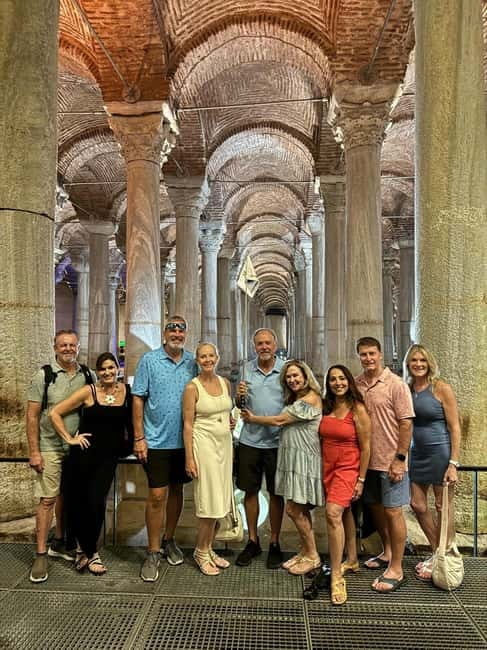
- Fast-track entry via a separate entrance helps you use your time better
- 30 minutes makes this a great fit if you’re juggling a full Istanbul day
- English live guidance (when selected) helps you understand what you’re seeing
- Medusa head bases are part of the story, and their odd placement matters
- Optional audio guide is available in multiple languages
- Flash photography isn’t allowed, so plan for low-light photos
Stepping into a Byzantine Water Machine (Under Your Feet)
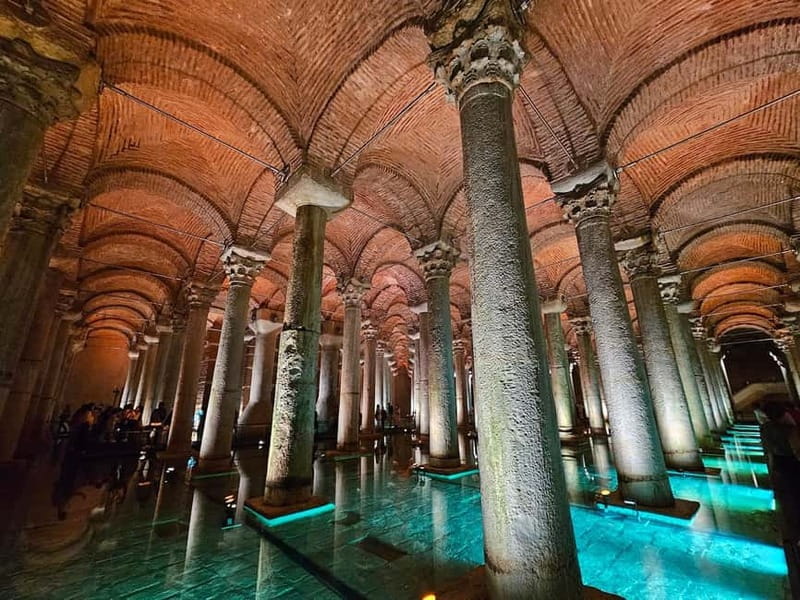
The Basilica Cistern is Istanbul at its most surreal. You walk into a space that feels like a film set, but it’s real and old. It’s the largest and most famous underground water reservoir in the city, built in the 6th century during the reign of Byzantine Emperor Justinian I (532 AD).
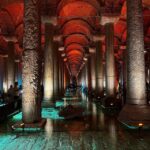
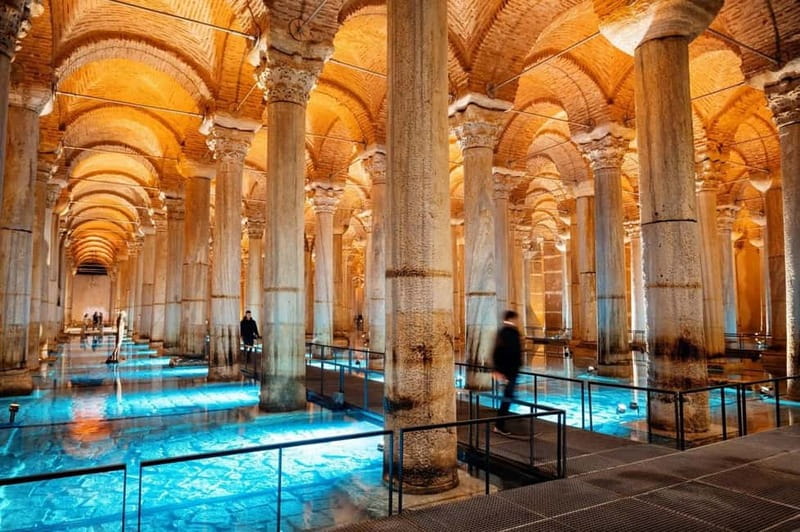
What hits you first is the scale. The cistern is supported by 336 marble columns, each about 9 meters (around 30 feet) tall, arranged in 12 rows of 28 columns. The room is so spacious that your brain struggles to judge distance—then your guide helps you connect the dots.
Another thing I like is how the cistern’s mood does half the storytelling for you: dim lighting, water reflections, and that cool underground air. It’s not just pretty scenery. It’s an engineering space built to move water for a busy imperial area, and you can feel that purpose in the geometry and repetition of the columns.
You can also read our reviews of more tours and experiences in Istanbul



Skip-the-Line Entry: Why It’s Worth Paying for 30 Minutes
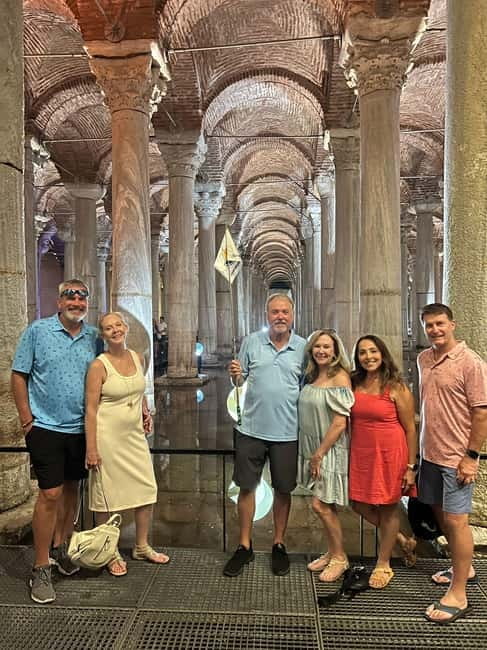
This experience is built around time. You’re getting fast track entry through a separate entrance, so you don’t have to spend your limited schedule stuck waiting for entry.
That matters because the Basilica Cistern is one of Istanbul’s most popular historic stops. When you’re short on time, a 30-minute tour can be exactly the right size—as long as you actually start quickly. Paying for skip-the-line access is basically buying back an hour or more of your day for other sights, meals, or a longer walk outside.
A small practical note: the tour is designed to move. You’re not here for a long meander. You’ll get a guided highlight route and a walk time of about 30 minutes, which is why the fast entry helps even more.
The 30-Minute Walk: What Happens When You Start at Yerebatan Sarnıcı
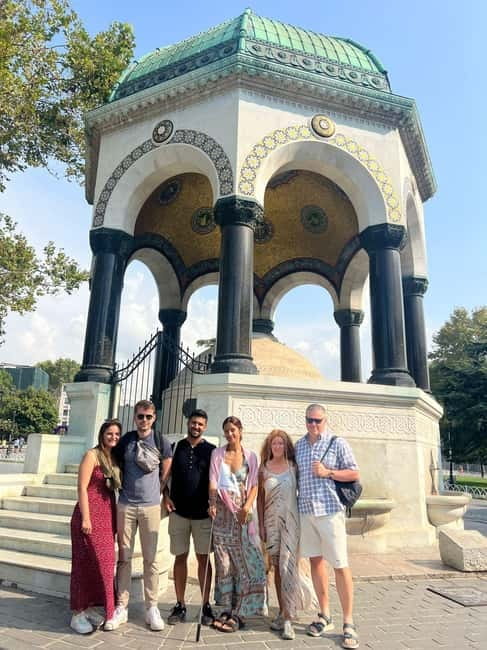
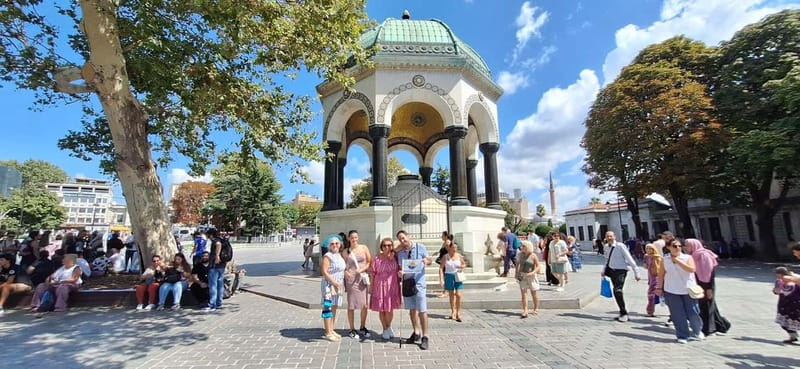
Your starting point can vary depending on what you book. You may start at Alman Çeşmesi or Yerebatan Sarnıcı, and the meeting point can change based on the option you selected.
From there, the experience is straightforward:
- You enter the Basilica Cistern area with skip-the-line access.
- You join a guided tour and do a walk through the main spaces.
- You spend about 30 minutes getting the key sights explained and seeing the signature features up close.
Even in half an hour, the cistern’s major moments land well. Early on, you get oriented: how big the room is, how the columns form rows, and why the space feels both orderly and strange. Then you move toward the iconic details—especially the Medusa sculptures.
The guided part is the value here. Without a guide, you’ll still see the columns and take photos, but you might miss what makes some columns different. With guidance, you start noticing the reused material and the “why” behind the mismatched looks.
336 Columns, Reused Marble, and the Surprising Mix You’ll Notice
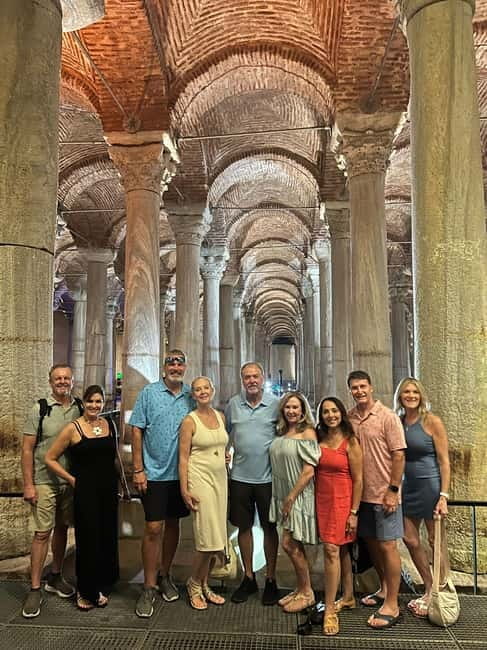
One of the best parts of the cistern is what you can’t unsee once you hear it. Many of the columns were reused from earlier Roman structures. That’s why you may spot different column styles across the room.
This is more than trivia. It tells you that the cistern wasn’t built on a blank slate. The Byzantine project adapted existing materials—practical, efficient, and very Istanbul. It also gives the guide an easy way to explain the city’s layered past: old Rome gets repurposed, then repurposed again through Byzantine use.
As you look around, it helps to remember the layout: 12 rows of 28 columns. The repetition is what creates that hypnotic feel. You’re standing under a grid-like forest of marble that turns “water storage” into architecture.
Justinian’s 6th-Century Purpose: Why It Was Built
The cistern wasn’t built just to be impressive. It was built to supply water to major nearby areas—the Great Palace, nearby public buildings, and the broader imperial city.
Think of it like this: Istanbul’s rulers needed reliable water below street level, and they engineered a system to do it. The cistern’s size and construction reflect that need. Water storage on this scale takes serious planning, and the cistern’s underground position protected the system from everyday conditions above.
When your guide connects the cistern to the Great Palace and the surrounding imperial zone, the space stops being random. You can start seeing it as part of the city’s infrastructure—hidden, but essential.



Medusa Heads: The Mystery That Keeps Pulling You Back
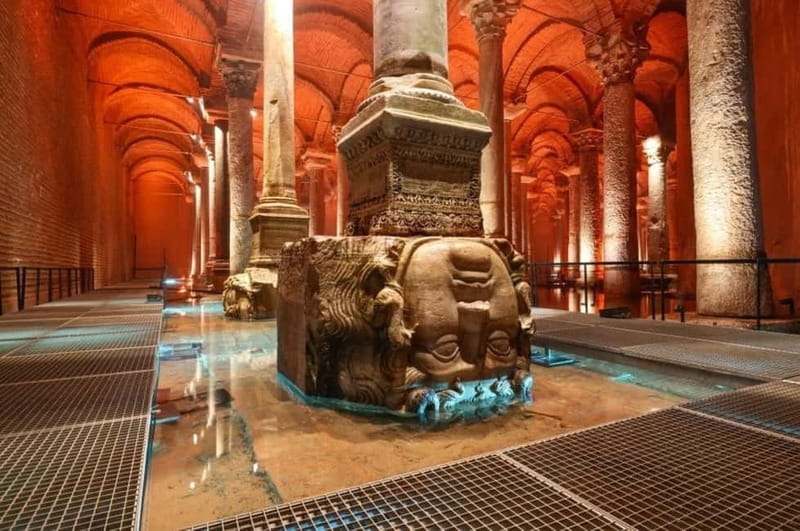
If you only care about one thing, make it the Medusa head bases. Two of them sit in the cistern, placed sideways and upside down. Their exact purpose isn’t known, and that uncertainty is part of the fascination.
The guide’s job here is to help you read what you’re seeing. You’re not just looking at a myth-themed sculpture. You’re looking at an odd placement choice that sparks questions: Why here, why that orientation, and why with the rest of the utilitarian engineering?
This is one of the most “human” parts of the cistern experience. The cistern is functional stonework, but the Medusa details show how stories and symbolism can end up in places built for practical needs. It’s a reminder that history isn’t clean and logical. It’s messy, reused, and sometimes unexplained.
Guide Style and Audio Options: English Live, Multi-Language Audio
This tour can come with an English live guide if you choose the private guide option. If you choose the audio add-on, it can be in English, Spanish, French, Italian, Arabic.
Here’s how I’d think about it:
- If you want the story told in real time, the English live guide is the best option.
- If you prefer going at your own pace with commentary while you look, the audio guide can be great.
The reviews also highlight guide storytelling as a big part of the payoff. One booking specifically mentioned Zeki by name, calling him engaging and patient with questions. That’s a good sign. In a place where details matter—columns, reused materials, the Medusa placement—having someone who can answer follow-ups makes a short 30-minute tour feel longer.
Price and Value: Is $62 a Good Deal for the Cistern?
At $62 per person for a 30-minute experience, you’re paying for three things:
1) Fast-track entry (time savings),
2) a guided interpretation component (or optional audio),
3) a concentrated route that focuses on the cistern’s must-see elements.
If you’re visiting Istanbul with a tight schedule, value usually comes from efficiency. Buying skip-the-line access is often cheaper than buying back your time later with stress. And because the tour stays around 30 minutes, you’re less likely to lose half your day to waiting and wandering.
If you love history but hate rushed tours, you might feel the 30 minutes is quick. But if you want a strong orientation plus the cistern’s biggest visual set pieces, the price can make sense. It’s not a long, sprawling museum day. It’s a fast, clear introduction to one of Istanbul’s signature underground sights.
Practical Tips That Make Photos and Walking Easier
This is an underground stop, so plan for comfort and low light.
- Wear comfortable shoes. There’s moderate walking involved.
- Photography is allowed, but flash photography isn’t permitted. Low light means your best photos will likely come from steady hands and patience.
- The cistern is not wheelchair accessible.
- You should keep your belongings with you at all times.
- Weapons or sharp objects aren’t allowed.
Also, treat this like an atmospheric site. Don’t rush to “get through.” Stand still for a moment and let your eyes adjust. Once you can see the reflections and the column spacing clearly, the place makes more sense—and your guide’s explanations land better.
Who This Tour Fits Best (and Who Might Want Something Else)
This fast-track, guided cistern experience fits best if:
- you’re short on time and want the highlights done right,
- you like being guided through iconic details like the Medusa head bases,
- you want a quick explanation of Byzantine water engineering and reused materials.
You might think twice if:
- you want a very long, slow visit with lots of time for wandering,
- you need wheelchair accessibility (the cistern itself isn’t wheelchair accessible),
- you hate any plan with a fixed duration, because you’re looking at about 30 minutes on-site for the tour portion.
Should You Book This Basilica Cistern Skip-the-Line Tour?
I’d recommend booking if you want the cistern’s core story without wasting time. The fast track entry is the biggest practical reason, and the guided component is what turns a cool underground room into something you understand: Justinian-era purpose, column layout, reused Roman marble, and those upside-down sideways Medusa heads with an unknown purpose.
If you’re the kind of visitor who likes a clear, efficient itinerary and you’ll benefit from someone pointing out the details, this is a smart use of your time. Just go in expecting a highlight tour. You’ll leave having seen the essentials and understood why the place looks the way it does.
FAQ
How long is the Basilica Cistern skip-the-line experience?
The duration is 30 minutes.
Where does the tour start?
The starting location can vary depending on the option booked, with two listed options: Alman Çeşmesi and Yerebatan Sarnıcı.
Is there a live guide included?
A live English tour guide is included when the private guide option is selected.
Is an audio guide available?
Yes. An audio guide is optional, in English and several other languages: Spanish, French, Italian, Arabic.
What does fast-track entry mean here?
You can skip the line through a separate entrance.
How much does it cost?
The price is listed as $62 per person.
What’s not included in the ticket?
Tickets (if the private option selected), transportation, and self expenses are not included.
Can I take photos?
Photography is allowed, but flash photography is not permitted.
Is the Basilica Cistern wheelchair accessible?
No, it is not wheelchair accessible.
What items are not allowed inside?
Weapons or sharp objects are not allowed.