REVIEW · ISTANBUL
8 Day Istanbul – Cappadocia – Ephesus – Pamukkale Discover Tour
Book on Viator →Operated by Ephesus Shuttle Private & Small Group Tours · Bookable on Viator
Four cities, one smooth itinerary. This 8-day mini-group tour strings together Istanbul, Cappadocia, Ephesus, and Pamukkale with domestic flights, daily guided time, and hotel stays that keep you from constantly re-planning your route.
Two things I really like: the small group size (max 10), which makes the day feel more personal, and the skip-the-line system handled by the guide ahead of time. That means less standing around with a ticket in your hand.
One thing to consider: the schedule is full, so even the travel days feel busy—plus Cappadocia and ancient sites involve walking and some uneven footing. You’ll also need to plan for the Hagia Sophia interior rules (smart phone + headphones after mid-January 2024).
In This Review
- Key highlights you’ll care about
- Why this 8-day Turkey loop makes sense
- Istanbul days: Hippodrome to Topkapi to Hagia Sophia rules
- A second Istanbul day with Bosphorus + cistern magic
- Cappadocia in two days: fairy chimneys, underground cities, and viewpoints
- Day 4: Three Sisters and the “downward” side of Cappadocia
- Day 5: Devrent to Pasabag to Göreme to Uchisar
- Fitness and comfort note
- From Kusadasi to Ephesus: what a guided ancient city day feels like
- Practical tip for Ephesus
- Pamukkale and Hierapolis: the travertines plus a thermal finish
- Flight home from the region
- Transportation, hotels, and the small-group advantage
- Price and value check for $1,769 per person
- Who should book this tour, and who should pause
- Should you book this Istanbul–Cappadocia–Ephesus–Pamukkale tour?
- FAQ
- Is pickup from Istanbul Airport (IST) and Sabiha Gökcen (SAW) included?
- What is the maximum group size?
- Which domestic flights are included?
- How much baggage is allowed on the domestic flights?
- Are entrance fees included?
- What meals are included?
- What’s included in Istanbul sightseeing on Day 2?
- Is Hagia Sophia interior access guided?
- Where will I sleep during the Cappadocia portion?
- What happens if a main museum is closed?
- Is the Pamukkale hotel a thermal hotel?
Key highlights you’ll care about
- Max 10 people, guided as a unit so you can ask questions and keep moving at a sane pace
- Skip-the-line tickets arranged by the guide to cut waiting time
- Cave hotel in Cappadocia for that instant fairy-tale vibe
- Thermal hotel in Pamukkale with pool time so the trip ends with comfort, not just sightseeing
- Domestic flights + transfers included (baggage allowance included too) so you’re not timing trains and connections
- A real guide team: past trips note guides like Cankat, Tayfun, Leyla, Gurkan, Ibo, and Sinan Veysi plus drivers such as Ismail
Why this 8-day Turkey loop makes sense
This tour works because it’s built around the hard parts of Turkey travel: distances, flight connections, and site crowding. Instead of stitching everything together yourself, you show up at the airport, meet your representative, and let a driver/guide handle the rest.
In practical terms, you get:
- guided blocks at the major stops (not just a quick drop-off)
- hotel moves that line up with the geography
- domestic flights that save you from losing whole days to overland travel
The trade-off is time. You’re not doing “slow travel.” You’re doing “hit the big stuff well,” with just enough breathing room to enjoy what you’re seeing.
You can also read our reviews of more tours and experiences in Istanbul.

Istanbul days: Hippodrome to Topkapi to Hagia Sophia rules
Istanbul on this route isn’t random. It’s a clean loop through three layers of the city: Roman/Byzantine monuments, Ottoman power, and everyday market Istanbul.
You start at the Hippodrome area, historically tied to chariot races and Byzantine-era unrest. It’s a short stop, but it sets the tone: this city repeats itself in new clothing.
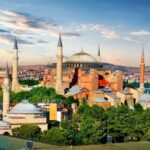
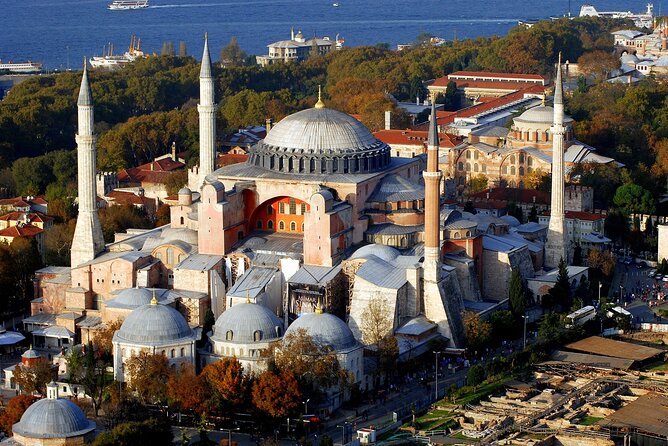
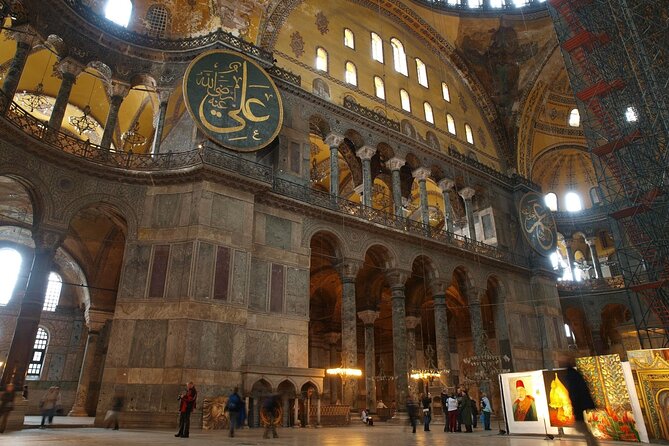
Then comes the big one: Hagia Sophia Grand Mosque. The key practical update is about the interior experience. After January 15, 2024, live guiding inside Hagia Sophia isn’t allowed. You’ll be expected to use a smart phone with headphones (and if you don’t have headphones, you can buy them at the entrance for $3.50). If you don’t have a smart phone, you’ll follow signs and the information on site.
That rule changes the feeling of the visit. It’s still worth it—especially with your guide providing structure before and after—but plan to actually use the audio system rather than thinking of it like a normal guided walkthrough.
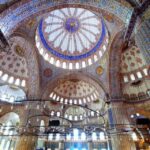
Next up is the Blue Mosque, known for its Iznik tiles. Then you head to Topkapi Palace, including the weapons section. Topkapi is the Ottoman “state brain” as much as it’s a palace—so it gives you context beyond domes and tiles.
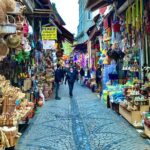
Finally, you end with a look at the Grand Bazaar: dozens of covered streets and a massive shop network. It’s free to enter on this day, and you’ll likely enjoy it more if you treat it like a place to browse textures and craftsmanship rather than a hunt for the perfect bargain.
A second Istanbul day with Bosphorus + cistern magic
The next day gives you a different flavor.
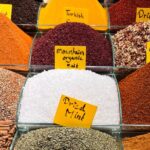
You begin at Misir Carsisi (Spice Bazaar). This is one of those stops where your brain immediately understands why the market matters—because the aromas do half the work for you.
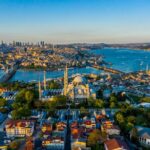
Then you do a Bosphorus Strait boat trip, cruising along the waterway that separates Europe and Asia. The shore is lined with villas, palaces, fortresses, and small villages. Even on a short boat ride, the city suddenly reads like geography, not just landmarks.
After lunch-free pacing (depending on your day’s flow), you visit the Basilica Cistern. It’s underground, atmospheric, and famous for marble columns rising from the water. If Hagia Sophia is your “big statement,” the cistern is the “quiet, weird, unforgettable” follow-up.
Cappadocia in two days: fairy chimneys, underground cities, and viewpoints
Cappadocia arrives on Day 4 by plane. Your driver picks you up, you fly to Kayseri or Nevşehir, and your guide meets you at the airport with your name sign. From there, you head into the region (about 50 minutes), and the terrain starts doing what it does: turning rocks into landmarks.
Day 4: Three Sisters and the “downward” side of Cappadocia
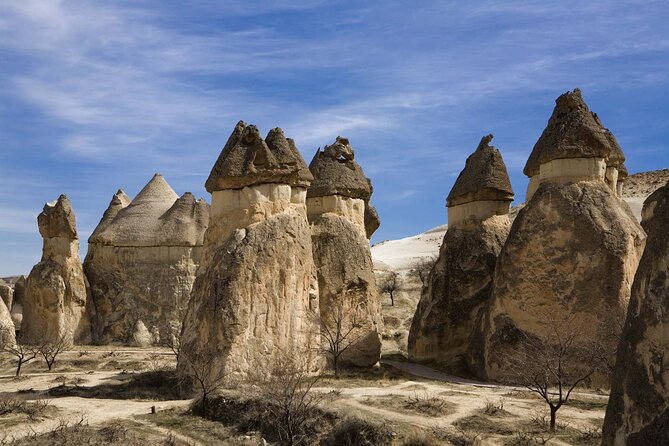
You visit the Three Sisters Fairy Chimneys in Ürgüp. These are among the most photographed formations, and even if you’ve seen them online, seeing them in person gives you scale.
Next you head to Pigeon Valley, where people carved pigeon houses into the rock. It’s a rare moment where you connect the landscape to daily life—Cappadocia wasn’t just a place to admire; it was a place to live.
Then you go underground at Kaymakli Underground City. This is one of the largest and deepest underground complexes in the area. It’s cool, literally and physically, but you’ll want practical footwear and a moderate comfort level with stairs and low spaces.
You end the day back in Cappadocia at your hotel, with time to rest.
Day 5: Devrent to Pasabag to Göreme to Uchisar
Day 5 is the classic Cappadocia sampler, and it’s built well.
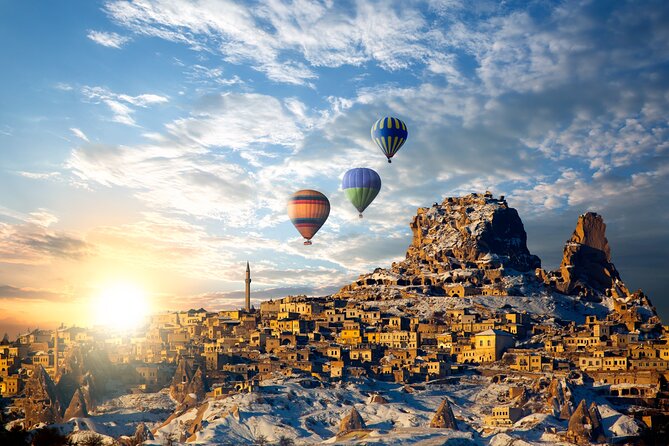
- Devrent Valley: a walk through a lunar-feeling rock area with formations that resemble animals and shapes
- Pasabag Fairy Chimneys Valley: the “mushroom-shaped” chimneys with twin or even triple caps
- Avanos: a pottery/tile town stop, with a lunch break here
- Göreme Open-Air Museum: rock-cut churches with frescoes across centuries
- Uçhisar Castle: the highest, dominant point for wide panoramic views
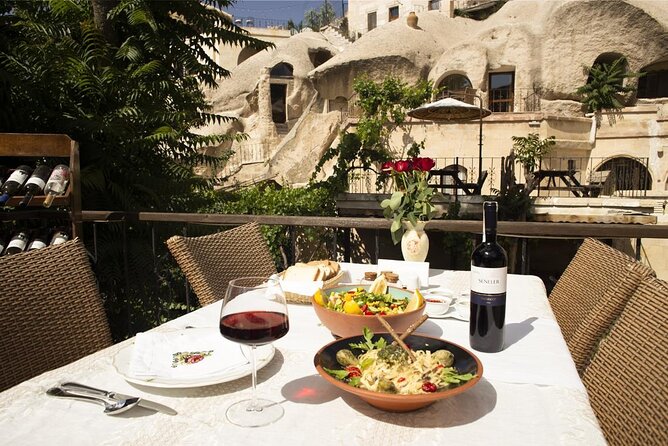
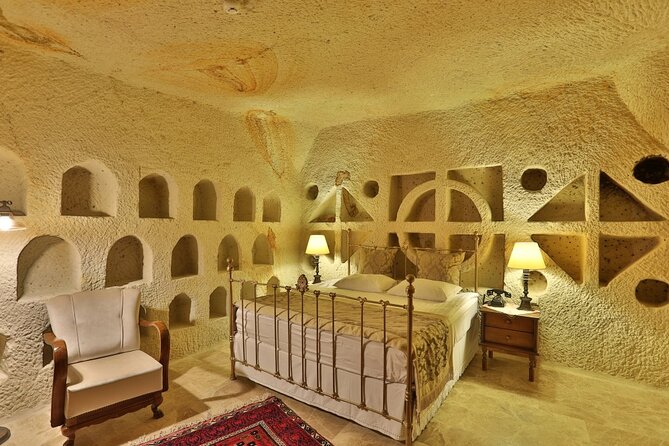
This is also where your cave hotel choice pays off. You’re not just sleeping in a room—you’re sleeping in the setting. Hotels like Yunak Evleri or Gamirasu Cave Hotel (or similar) are used on this route, and that helps the “Cappadocia mode” start as soon as you return.
Fitness and comfort note
The tour asks for moderate physical fitness. That usually means: you can handle museum walking, some uneven ground, and moving through underground spaces without needing frequent breaks. If you’re sensitive to stairs or tight passageways, Kaymakli and Göreme are the parts to think about first.
From Kusadasi to Ephesus: what a guided ancient city day feels like
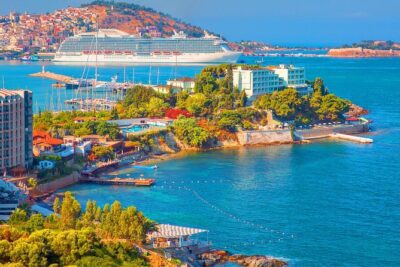
After your flight to Izmir, a representative meets you and transfers you to Kuşadası for the night. Depending on flight timing, arrival can be late (midnight is mentioned as a possibility), so keep your first night flexible.
Ephesus is then the center of Day 6. You start with the Temple of Artemis (quick stop, 20 minutes). It’s short, but it matters as a reminder that this wasn’t a small town—it was one of the great names of antiquity.
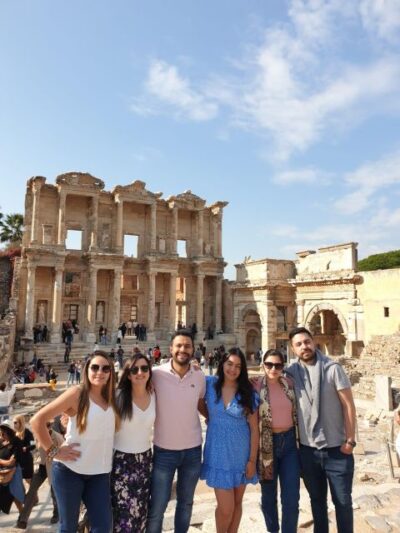
Then you get the main show: the Ancient City of Ephesus for about two hours. This is where your guide’s job matters, because the site is full of named features and different eras. Your walk passes by marble streets and major public structures, including:
- State Agora
- Odeon
- Memnius Monument
- Temple of Domitian
- Curetes Street and the Trajan Fountain
- Baths of Scholastica
- Hadrian Temple and Latrina
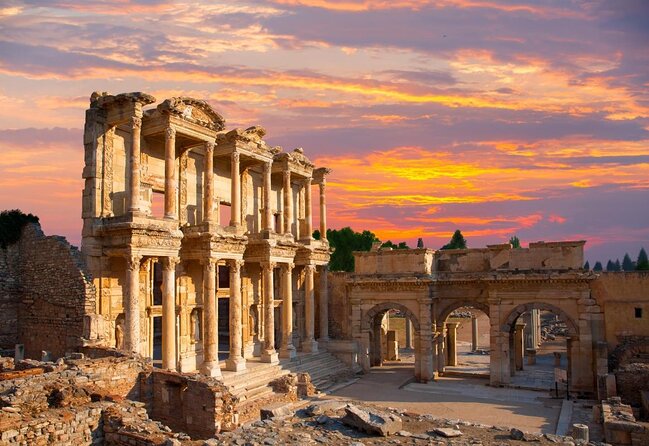
- Celsus Library
- the gate of Mihridates and Mazes
- Commercial Agora
- and the Grand Theatre (expanded to 24,000 spectators under the Romans)
The Grand Theatre is a highlight because you can feel the scale of power and entertainment all at once.
After Ephesus, you go to Meryemana (The Virgin Mary’s House) in the Aladag Mountains area (about five miles from Ephesus). The stop is about 50 minutes, and it’s presented as a Christian pilgrimage site with documented visits and councils in the tour narration.
Practical tip for Ephesus
Wear shoes that can handle stone. Also, plan for sun and dust. Even on a guided schedule, your body still needs water and shade breaks, especially with a full walk.
Pamukkale and Hierapolis: the travertines plus a thermal finish
Pamukkale day is classic Turkey “wow,” and this itinerary gives you time on both sides of the experience.
After Ephesus, you drive to Pamukkale (about three hours). You check into a thermal hotel (examples include Pam Thermal or Colossea Thermal, or similar), and you’re given time to swim in the hotel’s thermal pools. That’s a smart move because it turns Pamukkale from a photo stop into a real reset.
Day 7 starts with Hierapolis and Pamukkale together. You visit Hierapolis first, including the Theatre, Apollo Temple, and the necropolis (the ancient burial area). Then you move to the travertine terraces.
Those terraces are the headline: mineral springs create a vast white cliff-like field that looks like snow or cotton. The Turkish name Pamukkale translates in the tour narration as cotton castle, and the effect is exactly why people remember it.
You also visit Laodicea, described as one of the Seven Churches and an important crossroads because of its roads and commerce. It’s a different kind of ancient ruin day: less of a “crowd selfie” moment and more of a “walk and imagine” stop.
Flight home from the region
After Laodicea, you transfer to Denizli Çardak Airport for the flight back toward Istanbul (about an hour flight time). Then you arrive at either Sabiha Gökçen or Istanbul Airport, and a representative handles the private transfer.
Transportation, hotels, and the small-group advantage
This tour runs with brand new air-conditioned minivan/minibus transport. You’ll usually move as a group, not hop between independent taxis, and that matters when you’re switching between cities and flying.
Where the comfort shows up:
- Hotels are centrally located boutique/4-star options in Istanbul and Kusadası
- Cave hotel stay in Cappadocia (a big part of the vibe)
- 5-star thermal hotel in Pamukkale area
- Bed and breakfast for 7 nights
Hotel examples used on the itinerary include:
- Istanbul: Yasmak Sultan, Dosso Dossi Old City, or similar
- Cappadocia: Yunak Evleri or Gamirasu Cave Hotel, or similar
- Kusadası: Carina Hotel or Marina Suits, or similar
- Pamukkale: Pam Thermal (5-star) or Colossea Thermal, or similar
Also, the tour uses mobile tickets and includes private pick up and private transfer from both Istanbul Airport (IST) and Sabiha Gökcen (SAW).
And yes, the small group number is real value. Max 10 people means your guide can actually keep track of timing, and you’re less likely to get lost in a mass of strangers during entrances.
Price and value check for $1,769 per person
At $1,769 per person, the main question is what you’re buying beyond sightseeing.
Here’s what’s included that usually costs money or time if you DIY:
- 7 nights of lodging (bed & breakfast)
- Domestic flights: Istanbul → Cappadocia → Izmir, plus Denizli → Istanbul
- Baggage allowance: 15 kg check-in and 8 kg cabin
- Entrance fees, handled with pre-paid skip-the-line tickets
- Professional licensed guide
- Meals coverage: 7 breakfasts, plus 1 dinner and 1 lunch
- Air-conditioned ground transport throughout
What’s not included:
- international flights
- drinks and any meals not named above
- personal expenses
So the value isn’t just “you get tickets.” It’s that the tour reduces the friction that normally burns your vacation: airports logistics, ticket queues, and constant route planning.
If you enjoy planning, you can piece together a cheaper itinerary. But if you prefer spending your limited days actually looking at the sites (instead of building transit spreadsheets), the all-in structure has real weight.
Who should book this tour, and who should pause
This plan is best for you if:
- you want Istanbul + Cappadocia + Ephesus + Pamukkale in one trip
- you like guided structure and hate the admin work
- you’re okay with a full schedule and some walking
- you’d rather keep your days efficient with domestic flights
It may not be ideal if:
- you want lots of free time to roam Istanbul at your own pace (this route gives Istanbul time, but not unlimited time)
- you strongly dislike audio-phone style museum guidance, like the Hagia Sophia interior rule
One more practical note: the itinerary includes smart casual dress code. That’s usually easy, but it helps to pack layers. Religious sites can be cool inside, and you’ll be walking.
Should you book this Istanbul–Cappadocia–Ephesus–Pamukkale tour?
I’d book this if you want a first-time Turkey sweep that still feels organized and human-sized. The combination of small group size, skip-the-line access, and domestic flights is the real engine.
Before you click confirm, check two things:
- Hagia Sophia: you’ll need a smart phone + headphones to make the interior visit smooth.
- Comfort level: you’ll do real walking, plus underground spaces in Cappadocia and long ruin days.
FAQ
Is pickup from Istanbul Airport (IST) and Sabiha Gökcen (SAW) included?
Yes. Private pick up and private transfer are included from both Istanbul Airport (IST) and Sabiha Gökcen (SAW).
What is the maximum group size?
The tour is a small group with a maximum of 10 travelers.
Which domestic flights are included?
Domestic flights included are Istanbul to Cappadocia to Izmir, and Denizli to Istanbul.
How much baggage is allowed on the domestic flights?
The tour includes 15 kilos check-in baggage and 8 kg cabin baggage.
Are entrance fees included?
Yes. Entrance fees are included, and the guide carries pre-paid tickets to skip the line.
What meals are included?
Seven breakfasts are included, plus 1 lunch and 1 dinner. Drinks and other meals are not included.
What’s included in Istanbul sightseeing on Day 2?
You’ll visit the Hippodrome, Hagia Sophia Grand Mosque, Blue Mosque, Topkapi Palace (including weapons section), and the Grand Bazaar.
Is Hagia Sophia interior access guided?
After January 15, 2024, live guiding is not allowed inside Hagia Sophia. You’ll use a smart phone and headphones (headphones can be bought at the entrance for $3.50), or follow signs if you don’t have a phone.
Where will I sleep during the Cappadocia portion?
You’ll stay in a cave hotel in Cappadocia, such as Yunak Evleri or Gamirasu Cave Hotel, or similar.
What happens if a main museum is closed?
The tour notes planned replacements: on Tuesdays Topkapi Palace can be replaced by Underground Cistern, and on Sundays Grand Bazaar can be replaced by Spice Market. It also lists specific date-based replacements for Grand Bazaar with Arasta Bazaar and a Friday timing note for Blue Mosque.
Is the Pamukkale hotel a thermal hotel?
Yes. You check into a thermal hotel and you can swim in the hotel’s thermal pools.